

Establishing a Long-Term Patient-Doctor Relationship
October 25, 2026
Lab tests for chronic fatigue: what they can reveal
October 27, 2026
The first month on semaglutide is often about adjustment, not dramatic scale changes. If you’re wondering what to expect in the first month of your semaglutide journey, 2-5 lb is described as typical weight loss, though the scale may not move noticeably for everyone. Appetite and fullness can shift before weight changes become clear.
It’s understandable to look for an early sign that treatment is working. Semaglutide may affect appetite during the first weeks, while an introductory dose gives your body time to adjust. Nausea, constipation, or fatigue can also arise as treatment begins, so progress includes how you feel, not just what the scale shows.
This guide explains what early weight loss may look like, why semaglutide doses are adjusted gradually, and how nutrition and hydration can support your adjustment. It also covers common symptoms and when to seek medical attention, helping you approach the first month with clearer expectations about what comes next.
Key Takeaways
- Early progress can show up in changing hunger and fullness cues before the scale reflects a clear trend.
- Gradual dose adjustments allow treatment tolerance and response to inform the next step; follow the prescribed plan rather than changing a dose yourself.
- Smaller balanced meals, protein, and steady hydration can support daily nourishment when appetite changes.
- Keep track of symptoms as well as weight, and contact your provider about ongoing vomiting, severe abdominal pain, dehydration, or difficulty tolerating fluids.
So, How Fast Does Semaglutide Work for Weight Loss?
Semaglutide may affect appetite during the first week, while visible weight loss often takes longer. The first month focuses on adjusting to treatment, so changes on the scale may be modest or not yet noticeable. If you’re wondering what to expect during the first month of a semaglutide journey, appetite changes may come before weight changes.
Early Appetite Changes
Early appetite changes are shifts in hunger and fullness that can begin during the first weeks of semaglutide treatment. Some people notice these changes within the first week, although timing and intensity vary. Feeling full sooner or having fewer cravings can affect meal choices before weight changes become clear. Tracking appetite alongside weight can reveal changes a single scale reading may miss.
Week-by-Week Appetite Adjustment
Appetite adjustment describes how hunger and fullness cues can change as your body adapts during the first month. In week one, some people notice less hunger or greater fullness. In week two, these changes may feel more consistent. By week three, you may become more aware of hunger and fullness signals. Meals can feel different even while weight loss remains gradual.
Early effects, including reduced appetite and increased fullness, can begin during the first 1 to 4 weeks. Semaglutide is a GLP-1 receptor agonist that may support appetite regulation and weight management. The initial response isn’t a reliable measure of the full treatment effect. Dose, adjustment, and lifestyle choices all influence how the first month feels. Knowing what to expect in the first month of a semaglutide journey can help you focus on more than the scale.
Weight Changes and Expectations
Weight changes in the first month are often gradual, and some people don’t see a clear difference on the scale. A typical first-month range described for semaglutide is 2-5 lb, but this isn’t a personal forecast. Starting weight, appetite changes, dose, and lifestyle choices all influence the result. A slower start doesn’t tell you what later progress will look like.
For broader context, average semaglutide-associated weight loss is reported as 5%-10% of body weight by the 12-week mark, depending on starting dose and lifestyle choices. That longer timeframe helps put the initial month in perspective. Weighing under similar conditions and recording the date can make a trend easier to interpret than comparing isolated readings.
Cost and Missed-Dose Questions
In the United States, semaglutide cost varies with insurance coverage, prescribed formulation, and pharmacy. The price depends on the case and is given after a quote request.
If you remember a missed dose within 5 days after a missed dose, inject it as soon as possible. Following the prescribed schedule helps keep treatment consistent during the introductory month.
Nutrition and hydration
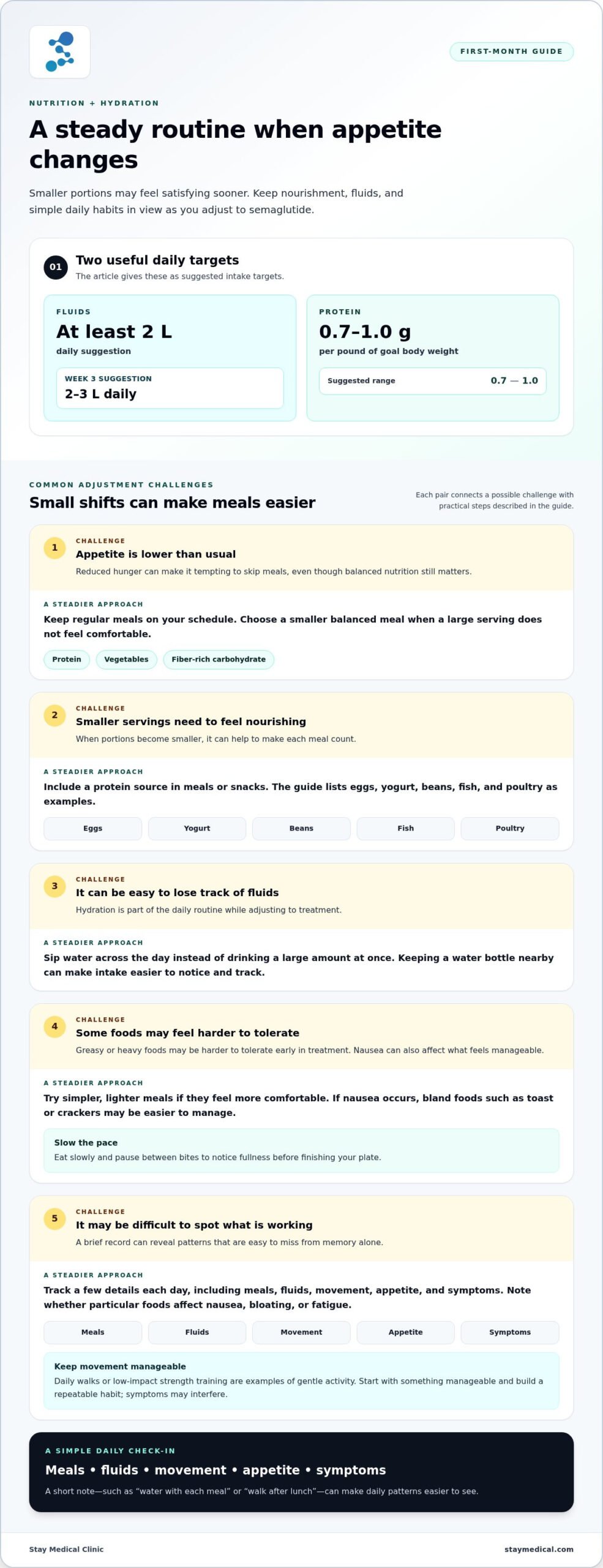
During the first month of semaglutide treatment, appetite changes can make meals feel different. Smaller portions may satisfy you sooner, but reduced hunger doesn’t remove the need for balanced nutrition. Keep regular meals on your schedule, even when your appetite is low. A simple plate with protein, vegetables, and a fiber-rich carbohydrate provides structure without requiring a large serving.
Hydration supports everyday function and can be especially useful while adjusting to treatment. One recommendation is to aim for at least 2 L of fluids daily; during the third week, another suggested target is 2-3 L daily. Sip water across the day rather than trying to drink a large amount at once. A water bottle nearby can make fluid intake easier to notice and track.
Protein helps make meals nourishing when smaller portions become your norm. A suggested protein intake is 0.7-1.0 g per pound of goal body weight. For example, include eggs, yogurt, beans, fish, or poultry in meals and snacks. A food log can help you see whether your usual choices include protein, fluids, and varied foods, rather than relying on memory at the end of the day.
Eating slowly gives you time to notice fullness before finishing your plate. Try smaller, lighter meals and pause between bites. Greasy or heavy foods may be harder to tolerate early in treatment, so choose simpler options if they feel more comfortable. If nausea occurs, bland foods such as toast or crackers may be easier to manage.
Don’t skip meals because your appetite has decreased. A smaller balanced meal is still useful, and regular eating can help maintain a consistent routine. Have fluids with meals, and note whether particular foods affect nausea, bloating, or fatigue. These observations can guide practical adjustments without unnecessarily eliminating whole food groups.
Movement can complement nutrition without requiring an intense exercise plan. Gentle activities such as daily walks or low-impact strength training can fit alongside balanced meals and hydration. Start with an activity that feels manageable, then build a repeatable habit. The goal is to support lasting routines, not compensate for meals or force exercise when symptoms interfere.
Track a few useful details each day: meals, fluids, movement, appetite, and symptoms. A brief note such as “water with each meal” or “walk after lunch” makes patterns easier to spot. If your nutrition or hydration routine feels difficult during treatment, personalized support for weight management can help connect everyday habits with your broader care plan.
Semaglutide’s introductory phase and gradual dose adjustment
Wegovy and Ozempic are branded semaglutide medicines, while compounded semaglutide may have a customized dose based on progress. Starting doses and instructions depend on the prescribed treatment, and dose changes require medical supervision.
Starting Doses and Gradual Increases
Gradual dose adjustment means beginning with a lower dose and increasing it in planned steps. Semaglutide treatment typically starts at 0.25 mg once weekly. This introductory dose gives the body time to adjust and helps limit side effects while treatment begins. The purpose isn’t to make an immediate jump to a higher dose, but to balance tolerance with the treatment plan.
The described sequence increases to 0.5 mg weekly starting week 5, then later to 1.0 mg, 1.7 mg, and 2.4 mg. Each increase may require 2-4 weeks for the body to adapt fully. These figures describe a titration sequence, not instructions to change your own dose. Take semaglutide as prescribed, and don’t increase or reduce it without medical supervision.
At the fourth-week review, tolerance can help guide whether the dose stays the same or changes later. If the 0.5 mg dose isn’t tolerated, the 0.25 mg dose may be extended for an additional 2-4 weeks. The focus is a measured adjustment, not reaching a higher dose as quickly as possible.
Starter-Dose Expectations
The starter-dose phase is the first month of treatment, focused on adjustment, tolerance, and building habits. In week one, the prescribed starting dose is typically 0.25 mg once weekly. Appetite or side effects can change during this period, so note symptoms and timing rather than judging treatment by the scale alone.
During weeks two and three, continue the prescribed weekly dose and monitor how you feel. A dose increase isn’t scheduled simply because appetite or weight hasn’t changed quickly. By week four, a provider may review tolerance and decide whether the dose should remain the same or be adjusted in the future. The described sequence moves to 0.5 mg weekly starting week 5.
Track alcohol and headaches alongside other symptoms. Record whether a headache occurs after an injection, a missed meal, or alcohol, and note how long it lasts. This log can make treatment reviews more specific without assuming alcohol or a headache has a single cause. Include other medications and changes in your routine, too, as they can help explain how the introductory phase is going.
With compounded semaglutide, the dose may be customized based on progress. Follow your individual prescription closely: don’t substitute a branded product’s schedule or someone else’s dose. A consistent weekly routine and clear symptom notes can help inform dose decisions.
Symptoms that warrant contacting a provider
During semaglutide treatment, contact your provider about severe, persistent, or concerning symptoms. Ongoing vomiting, severe abdominal pain, dehydration, or inability to tolerate fluids require medical attention, rather than being treated as routine adjustment discomfort.
Before starting semaglutide, discuss your health history, current medications, weight-management goals, and possible risk factors with your healthcare provider. Include prescription medicines, over-the-counter products, and supplements. This information helps your provider assess whether treatment is clinically appropriate and decide what symptoms to monitor during the first month.
Contact your provider if symptoms interfere with eating, drinking, or normal activity. In particular, report:
- Ongoing vomiting or difficulty keeping fluids down.
- Severe abdominal pain, especially if it persists.
- Signs of dehydration or an inability to tolerate fluids.
- Nausea or digestive discomfort that is severe, persistent, or concerning.
Describe what’s happening in practical terms. Note when a symptom began, whether it followed an injection, how long it lasted, and whether you could manage smaller meals or fluids. For example, “vomiting continued through the day and I couldn’t keep water down” gives your healthcare provider clearer information than “I felt unwell.” Don’t change your dose on your own to manage symptoms.
Regular healthcare-provider check-ins help track progress and adjust treatment as needed. At the fourth week, a provider may review tolerance and decide whether the dose should remain the same or be adjusted in the future. A first clinical follow-up is recommended on day 28 of treatment. Bring a record of nausea, vomiting, abdominal pain, hydration, eating, and activity to make that review more useful.
Symptoms can also affect daily habits. If nausea makes meals difficult, describe what you can eat and drink and whether symptoms are changing. If fatigue or discomfort disrupts your usual activities, include that detail. A simple daily note can capture symptom timing, fluids, meals, and medication doses without relying on memory during an appointment.
Follow-up isn’t only for severe symptoms. Regular check-ins let your healthcare provider review how well you tolerate treatment, discuss your response, and make appropriate adjustments. Contact your provider sooner about severe, persistent, or concerning symptoms rather than waiting for a scheduled review. Clear communication about symptoms and medications supports safer, more individualized treatment decisions throughout the introductory phase.
What are the most common semaglutide side effects during the first month, and how long do they last?
During the first month, semaglutide can cause digestive symptoms as your body adjusts. Possible symptoms include nausea, constipation, diarrhea, vomiting, bloating, reflux, decreased appetite, and abdominal discomfort. Fatigue or light-headedness after meals can also occur early in treatment. Symptoms vary from person to person, so note which ones appear and whether they affect eating, drinking, or daily activities.
Nausea is a commonly reported effect: one estimate says about 44% of patients experience it. It is most common during the first 1-3 weeks at each new dose. Mild nausea after the first injection may peak 12-48 hours afterward. Nausea usually improves over 4-8 weeks, though the timing can differ, especially when the dose changes.
- Nausea: Track when it starts, including whether it follows an injection or dose increase.
- Constipation or bloating: Note changes in bowel habits and abdominal comfort during the first month.
- Diarrhea or vomiting: Record how often symptoms occur and whether you can keep fluids down.
- Reflux or abdominal discomfort: Note whether symptoms follow a meal or affect your appetite.
- Fatigue or light-headedness: Record when it occurs, such as after eating or during usual activity.
To manage mild nausea, try smaller, lighter meals and eat slowly. Bland foods such as toast or crackers may be easier to tolerate. Drink water regularly, and note whether greasy or heavy foods seem to worsen discomfort. These adjustments can support eating and hydration while you monitor symptoms. Don’t skip balanced meals just because your appetite has decreased.
Keep a brief symptom record during the first month and after each dose increase. Include the symptom, its timing, meals, fluid intake, and whether it interfered with daily activities. For example, note “nausea after injection, toast tolerated, water stayed down.” These details make it easier to describe changes at a treatment check-in.
Contact your provider about severe, persistent, or concerning symptoms, including ongoing vomiting, severe abdominal pain, dehydration, or inability to tolerate fluids. These symptoms need medical attention, not just meal adjustments. Use the timing and details in your record to explain what changed and when, especially if symptoms began after a new dose.
Stay Medical Clinic: Weight Loss Program
Stay Medical Clinic’s Weight Loss Program offers a place to discuss whether semaglutide fits your health goals and circumstances. If you’re weighing early appetite changes, managing symptoms, or unsure how dose adjustments relate to your progress, a medical conversation can clarify possible next steps. Your health history, current medications, treatment tolerance, and weight-management goals all matter when considering care.
The first month can raise useful questions, even when weight changes are gradual. Bring notes about appetite, meals, hydration, symptoms, and any concerns about your prescribed plan. This can make a discussion about treatment more specific and support decisions based on your individual needs.
Visit staymedical.com to learn more or contact Stay Medical Clinic.
Make Your Next Step a Thoughtful One
As you consider your semaglutide journey and what to expect in the first month, look beyond the number on the scale. Think about what you want treatment to support in your daily life and which questions would help you feel prepared. Your priorities can shape a more useful conversation about whether this approach suits your health needs and what ongoing care may involve.
You don’t need to have every decision settled before seeking guidance. Bringing your questions and personal goals to a healthcare conversation can help turn uncertainty into a clearer, more considered next step.
Give yourself room to make informed choices at a pace that feels right. A considered start can help you move toward your health goals with confidence.
Frequently Asked Questions
How much weight can I expect to lose with semaglutide?
A typical first-month estimate is 2-5 lb, but individual results vary. Starting weight, dose, appetite response, and lifestyle habits all affect the scale. Treat that range as context, not a target you must reach. For example, if your weight changes little while your appetite shifts, keep following your prescribed plan and consider the overall trend rather than judging progress from one weigh-in.
What side effects might delay my results?
Nausea, vomiting, constipation, diarrhea, bloating, and fatigue can make eating, drinking, or maintaining your usual routines harder. These disruptions may affect how consistently you follow nutrition and activity habits that support weight management. Track when symptoms appear and what they interfere with. Contact your provider about severe or persistent symptoms, especially ongoing vomiting, severe abdominal pain, dehydration, or inability to tolerate fluids.
How fast does semaglutide start working?
Some effects may begin during the first week, particularly changes in hunger or fullness. A noticeable change on the scale can take longer, and weight-loss results may begin appearing within 4 to 6 weeks. For instance, you might find that a usual portion feels more filling before seeing a clear weight trend. The medication’s early appetite effects and scale results don’t necessarily arrive together.
Is Semaglutide a Long-Term Solution?
Semaglutide may be part of longer-term weight management, rather than a brief course with an automatic end point. Treatment duration depends on ongoing health goals, response, and tolerability. According to the available research summary, patients who discontinue after successful weight loss regain about two-thirds of their lost weight within a year. Discuss maintenance planning with your healthcare provider before changing or stopping treatment.
Is nausea normal in the first month on semaglutide?
Nausea is a common possible effect during early treatment, especially while adjusting to a new dose. It may be most noticeable during the first 1-3 weeks at each dose, and usually improves over 4-8 weeks. Smaller meals, eating slowly, and bland foods such as toast may help. Contact your provider if nausea becomes severe or persistent, or prevents you from keeping fluids down.
Should I count calories on semaglutide?
Calorie counting isn’t the only way to build useful eating habits during treatment. Focus on balanced meals, regular nourishment, and noticing how appetite changes affect your portions. For example, you could record meals, protein-rich foods, fluids, and symptoms without calculating every calorie. A food log can reveal patterns and support a practical conversation with your provider about nutrition and weight-management goals.
What Happens During the First Month?
The first month generally introduces treatment and gives you time to observe how your body responds. You may notice changes in appetite or fullness, while weight changes remain gradual. Keep a simple record of injection days, symptoms, meals, and appetite. This can help you describe your experience at follow-up and distinguish a temporary symptom from a pattern that needs attention.
What if I can’t tolerate the 0.5 mg dose at week 5?
Don’t increase or adjust the dose on your own. If the 0.5 mg dose isn’t tolerated, the 0.25 mg dose may be extended for an additional 2-4 weeks under medical guidance. Contact your prescriber and describe the symptoms, when they began, and how they affect eating or hydration. That information helps guide a safe adjustment to your treatment plan.
Disclaimer
This content is for informational purposes only and does not replace evaluation, diagnosis, or treatment by a medical professional. Always consult a qualified healthcare provider for personalized care.