

Questions to Ask a New Primary Care Doctor for Better Visits
November 21, 2026
The most useful check-up details aren’t limited to lab results: routine measurements help build a clearer picture of your health. A men’s health check-up list includes blood pressure, height, weight, and body mass index at each exam, along with diabetes screening and a conversation about prostate cancer screening.
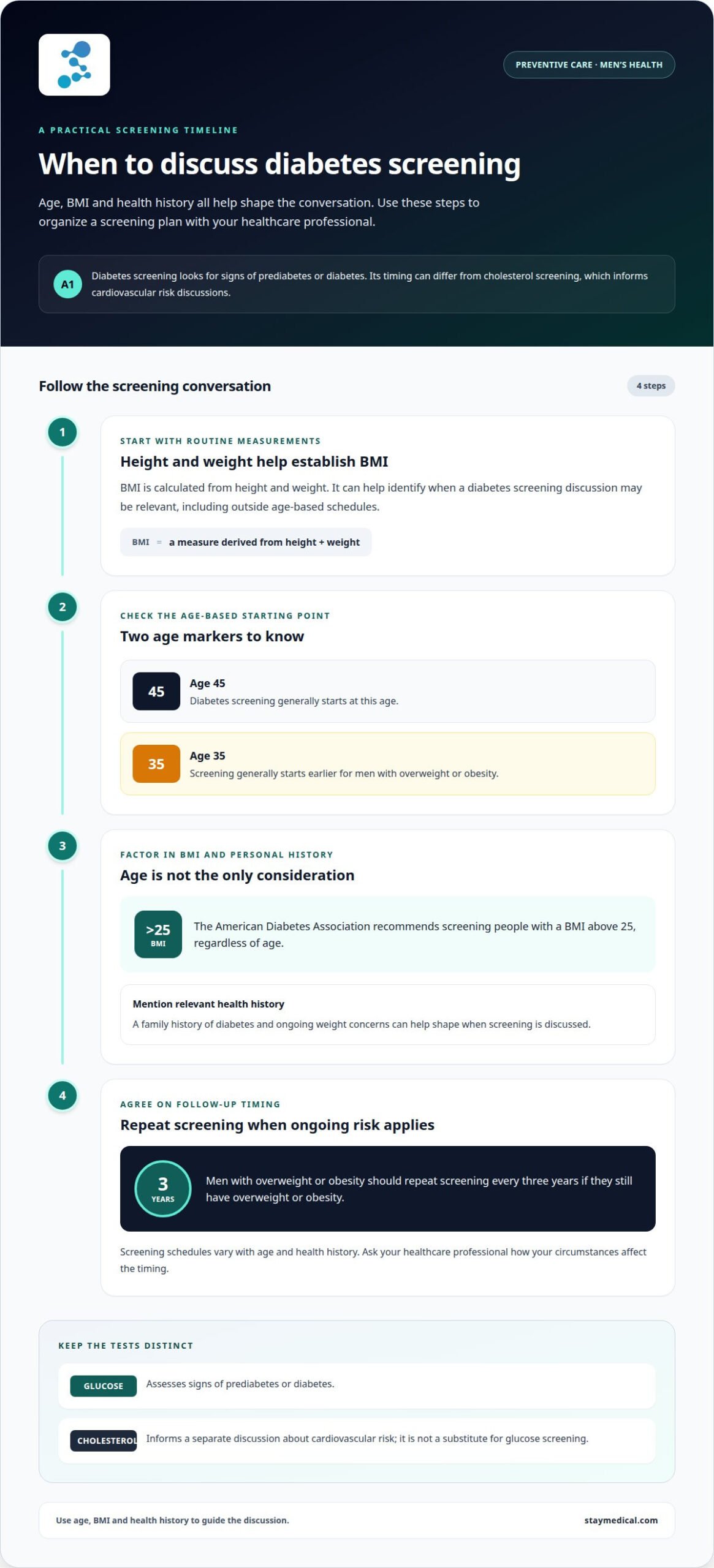
Diabetes screening generally starts at age 45, or at age 35 for men with overweight or obesity. Prostate screening is a personal decision to discuss with a healthcare professional, often beginning around age 50; African American men and men with a close family history of prostate cancer may consider that conversation in their mid-40s.
It’s understandable to want a simple checklist, but screening schedules vary with age and health history. This guide explains which blood pressure, diabetes, and prostate checks to discuss, what routine physical measurements involve, and how they fit into preventive care.
Key Takeaways
- Use age and personal risk factors to guide when diabetes screening begins and how often it’s repeated.
- Approach prostate cancer screening as a shared decision, weighing family history and other risk factors in the discussion.
- Keep routine physicals focused on more than a single reading: measurements can help track health patterns over time.
- In the United States, the Centers for Disease Control and Prevention recommends that everyone between ages 13 and 64 be tested for HIV at least once.
- Some preventive tests are scheduled separately from a physical, so organize your care around the screenings relevant to your health history.
Blood pressure checks
A men’s health check-up list can make routine measurements easier to review with a care provider. At each exam, record blood pressure, height, weight, and body mass index (BMI). These readings provide a baseline for future visits and can help identify changes to discuss, even when you feel well. For example, you can compare a new reading with earlier results instead of viewing it on its own.
- Have blood pressure measured during routine exams. The reading shows pressure in the arteries and helps track changes over time.
- For normal blood pressure, plan another check every two years. Men over age 40 should have their blood pressure checked at least annually.
- Include cholesterol screening in preventive-care discussions. Average-risk men should begin screening at age 20 and repeat it every five years.
- Ask how risk factors affect screening timing. Cholesterol testing measures LDL, HDL, triglycerides, and total cholesterol.
How much does a men’s health checkup cost in the United States with and without insurance? There is no single standard cost: the total depends on the visit and tests performed. Insurance coverage and plan benefits affect out-of-pocket costs, while the services included shape the bill without insurance.
When should men get blood pressure, cholesterol, and diabetes screening? Men with normal blood pressure should be checked every two years, or at least annually after age 40. Average-risk men should begin cholesterol screening at age 20 and repeat it every five years; diabetes screening generally starts at age 45, or age 35 for men with overweight or obesity.
Blood glucose testing looks for signs of prediabetes or diabetes. Men with overweight or obesity should repeat screening every three years if they still have overweight or obesity. A family history of diabetes can also affect screening decisions, so mention it when discussing timing.
Blood glucose and liver enzyme tests address different health questions. Glucose testing can identify signs of diabetes, while liver enzyme testing measures enzymes in the blood to assess liver health. The tests selected depend on the concern being evaluated, so ask what each planned test is intended to assess.
Preventive screenings may also include topics beyond blood pressure and cholesterol. According to the Centers for Disease Control and Prevention, all people between ages 13 and 64 should be tested for HIV at least once. A routine visit can also include a review of vaccines and other preventive-care questions.
What should men do to prepare for a health checkup, including fasting and medications? Bring a medication list, previous readings, and questions. Fast only if the test instructions call for it. Tell the provider which medicines you take, and don’t change or skip them without guidance. A men’s health check-up list can help organize these details before the visit.
Diabetes screening
Diabetes screening can be part of a broader review of metabolic and cardiovascular health. The American Diabetes Association recommends screening people with a body mass index above 25, regardless of age. BMI is calculated from height and weight, so it helps identify when a screening conversation may be relevant beyond age-based schedules.
- Discuss diabetes screening in light of BMI and health history. A family history of diabetes and ongoing weight concerns can help shape the timing of screening.
- Keep glucose and cholesterol checks distinct. Glucose screening assesses diabetes risk, while cholesterol testing informs cardiovascular risk discussions.
- Review abdominal aortic aneurysm screening between ages 65 and 75. The VA advises average-risk men in this age range to discuss screening with their provider.
- Plan tuberculosis testing around the follow-up step. A tuberculosis skin test requires a follow-up examination 48 to 72 hours after the injection.
- Discuss sexually transmitted infection testing based on sexual activity. Sexually active men should be tested annually for syphilis, chlamydia, and gonorrhea.
- Include cervical screening in care for some transgender men. Cervical cytology may be relevant, so make it part of an individualized medical screening discussion.
Screening results are most useful when they guide the next conversation. For example, a diabetes screening plan can take BMI, family history, and ongoing weight-related risk into account. Cholesterol testing offers a separate view of cardiovascular health, but it is not a substitute for glucose screening.
An abdominal aortic aneurysm is an enlargement in the aorta, the major blood vessel carrying blood through the abdomen. For average-risk men ages 65 to 75, discussing screening with a provider can clarify whether this preventive check belongs in the care plan. Age and risk category matter here, so the recommendation differs from routine glucose testing.
Timing matters for tuberculosis testing. The required return visit falls 48 to 72 hours after the skin test injection, when the site is examined. For sexually transmitted disease screening, testing may be discussed in light of sexual activity and individual circumstances.
Screening should also reflect the person receiving care. Some transgender men need cervical cytology, making a respectful discussion of screening history and current needs relevant. A focused screening discussion can help organize these distinct preventive topics into a practical plan.
Prostate cancer screening
Prostate screening is a decision to discuss, not a single routine test that fits every man. Many organizations advise starting that conversation at age 50. The VA recommends average-risk men ages 55-69 discuss screening with a provider. African American men and men with a close family history of prostate cancer may consider discussing it in their mid-40s.
Screening discussions can include prostate-specific antigen (PSA) testing, which measures PSA levels in the blood, and whether an exam is appropriate. A digital rectal exam uses a gloved, lubricated finger to check the prostate for tenderness, enlargement, lumps, or hard spots. Discussing these options helps weigh individual risk and preferences before deciding about testing.
What cancer screenings are recommended for men, including colorectal and lung cancer? Colorectal screening is recommended for average-risk men ages 45-75, with the schedule depending on the test; lung screening applies to eligible adults ages 50-80 with a qualifying smoking history. Prostate screening is a separate shared decision, with age and family history informing the conversation.
For colorectal cancer, screening may use a stool test or colonoscopy. A fecal immunochemical test checks a small stool sample for hidden blood, while colonoscopy examines the colon and rectum with a flexible tube and camera. Men choosing colonoscopy generally repeat it every 10 years unless their physician recommends more frequent testing. Family history can change when screening begins, so share relatives’ diagnoses and ages with the care team.
Lung cancer screening uses annual low-dose CT for adults ages 50-80 who currently smoke, quit within the past 15 years, or have a smoking history of 20 pack-years or more, according to the U.S. Preventative Services Task Force. A pack-year reflects smoking amount and duration; the history helps determine whether this screening recommendation applies.
Skin cancer checks can be considered as needed for men in their 30s and older. Changes in a mole or other spot are examples to raise during a medical visit, alongside personal history and concerns about skin lesions.
What are the risks of unnecessary screening tests, including PSA and full-body scans? Testing without a clear indication can lead to further evaluation of findings, including results that may not change care. Before choosing a screening test, discuss what a result could mean and how it might affect the next steps.
Annual physical exams and routine measurements
Regular physical exams help connect current symptoms with changes in health history, medications, and daily habits. Men younger than 50 should have a physical exam every three to five years; men older than 50 should have one every year. A care provider can use each visit to review preventive needs and decide which screenings fit the person’s age and risk factors.
What screenings are recommended at an annual men’s health checkup by age? Men ages 45-75 should discuss colorectal cancer screening, while prostate screening is a shared decision informed by age and family history. Men ages 50-80 with a qualifying smoking history should discuss annual low-dose CT lung screening.
- Review health history and symptoms. Note new concerns, changes since the last visit, and family history that could affect screening decisions.
- Discuss heart disease prevention. Cholesterol screening intervals depend on age and risk factors, including known cardiovascular concerns.
- Review preventive care needs. Use the visit to discuss vaccines, tobacco use, and screenings that may be scheduled separately.
Some checks are personal rather than appointment-based. Regular self-checks can help men notice changes and discuss them with a healthcare provider. A regular self-check can help someone notice a new lump, swelling, or other change and report it during a medical visit. If a change is present, describe when it began and whether it has changed.
Prostate exams need a thoughtful conversation, not an automatic yearly test for every man. Prostate screening decisions are best discussed with a doctor, who can help determine whether further testing is appropriate. Prostate screening choices should account for family history and personal risk; a close relative’s diagnosis is useful information to share during the discussion.
Bring a current medication list and any home readings to a routine physical. Mention specific concerns, such as recurring fatigue, a new urinary symptom, or a change in exercise tolerance. These details help distinguish preventive screening from evaluation of an existing concern. If a test needs a separate appointment, record its purpose and timing in your care plan.
An annual physical exam can also create a clear record of follow-up decisions. Ask which screenings are due now, which depend on age or history, and which need separate scheduling. A written plan helps organize preventive care between visits without assuming every test is right for every person.
Physical exam measurements
A physical exam records measurements that describe your current health and provide a reference for future visits. At each exam, check blood pressure, height, weight, and body mass index (BMI). Consider these measurements together rather than treating any one of them as a complete picture.
Record blood pressure. This reading gives the care team information about pressure in the arteries. Comparing readings over time can help identify a change worth discussing, even when you have no noticeable symptoms.
Measure height and weight. These figures provide the inputs for BMI and help interpret it consistently. A change in weight since your previous physical exam is useful to discuss alongside your health history, activity, and other factors.
Review BMI in context. BMI relates weight to height, but it should be considered alongside other information rather than used alone. The same BMI figure, for example, does not describe your full medical history, symptoms, or individual health risks.
- Confirm that height and weight are recorded. Both measurements are needed to calculate BMI and interpret it in relation to the person’s body size.
- Compare current readings with prior records. A trend can give more context than a single measurement taken during one appointment.
- Discuss an unexpected result. Share relevant factors, such as a recent change in routine or a new symptom, so the reading can be considered alongside other information.
- Connect measurements with screening decisions. BMI can inform a discussion about diabetes screening, while blood pressure and cholesterol relate to cardiovascular risk assessment.
Measurements can help reveal patterns, but they do not replace a conversation about how you feel. A result that looks normal doesn’t rule out every health concern, and an unusual result does not explain its cause by itself. A physical exam brings measurements together with symptoms, history, and other findings.
For a clear record, note which measurements were taken and ask how they compare with earlier results. If blood pressure or weight has changed, discuss when the change occurred and whether anything else has changed with your health. This makes the physical exam a more useful point of comparison at later visits.
These measurements also help put other screenings in context. BMI may be considered when discussing diabetes screening, while a blood pressure reading contributes to a cardiovascular health review. Use measurements as connected clues, then interpret them alongside your personal health factors.
Stay Medical Clinic
Stay Medical Clinic offers primary care for men who want to turn screening information into a considered plan. A visit can provide space to discuss health history, current concerns, and which preventive screenings may fit your age and individual risk factors. This is also a place to raise questions about blood pressure, diabetes, prostate screening, or routine physical measurements, then discuss appropriate next steps with a provider.
Primary care can support continuity, so changes in measurements and screening decisions have context across visits. If you’re ready to talk through your health checklist and priorities, contact Stay Medical Clinic.
Make Your Next Health Step Personal
A useful men’s health check-up list is a starting point, not a fixed script. Your priorities may shift as your health, family history, and daily life change. Before your next appointment, choose the concerns you most want to address and note any changes you’ve noticed. That preparation can help keep the conversation focused and practical.
Preventive care can also support wider health goals. Stay Medical Clinic offers primary care, a Weight Loss Program, Testosterone Replacement, and IV Therapy. Each service addresses different needs. A conversation with the clinic can help you clarify which questions belong in your care plan and which need separate attention.
One considered step is enough to keep the conversation moving. You don’t need to resolve every health question at once. Start with the concern that matters most to you and build from there.
Your health deserves attention shaped around you. Keep asking questions, stay engaged with your care, and approach your next visit with confidence.
Frequently Asked Questions
What blood tests are commonly included in a men’s wellness checkup?
Common blood tests may assess cholesterol, blood glucose, and liver enzymes, depending on why testing is being done. A cholesterol panel measures LDL, HDL, triglycerides, and total cholesterol. A glucose test looks for signs of diabetes, while liver enzyme testing evaluates different aspects of health. Before a blood draw, clarify which tests are planned and whether fasting instructions apply. Results are interpreted in light of your health history and the question each test addresses.
At what age should men discuss prostate cancer screening and PSA testing?
Many organizations advise discussing prostate cancer screening around age 50, while the VA recommends that average-risk men ages 55-69 discuss it with a provider. Men with a close family history of prostate cancer and African American men may consider starting the conversation in their mid-40s. Ask what a PSA result could mean and what follow-up might involve. This helps make the choice an informed discussion, rather than an automatic test.
What vaccines should adult men receive during a routine checkup?
Vaccine needs depend on age and vaccination history. Adults should receive a flu shot every year, and a tetanus-diphtheria booster every 10 years. Adults who missed Tdap as adolescents should receive it at or after age 19. The VA recommends two shingles vaccine doses for adults age 50 and older. Bring any available vaccine records to the visit, so the care team can identify which doses may be due.
What screenings for sexually transmitted infections are recommended for men?
Sexually active men should be tested annually for syphilis, chlamydia, and gonorrhea. The tests discussed can depend on sexual activity and personal risk, so describe relevant exposure and any symptoms directly. HIV testing is recommended at least once for people between ages 13 and 64, according to the Centers for Disease Control and Prevention. Testing can be discussed even when symptoms aren’t present, since some infections may not cause noticeable signs.
What should men discuss with a doctor about mental health, sleep, and substance use?
Discuss mood changes, persistent stress, sleep quality, and use of tobacco, alcohol, or other substances. Give specific examples: trouble falling asleep, waking often, low mood, or difficulty cutting back. The VA recommends annual depression screening for average-risk adult men. Explain how these concerns affect work, relationships, or daily routines. That context can help the doctor determine what support or further evaluation may be useful.
How often should men have a physical exam, and how does frequency vary by age and risk?
Men younger than 50 should have a physical exam every three to five years, while men older than 50 should have one every year. A shorter interval may be appropriate when health history, symptoms, or risk factors call for closer follow-up. Screening schedules can also differ from physical-exam schedules, and some tests require separate appointments. Ask which preventive checks are due and when to revisit the plan.
Disclaimer
This content is for informational purposes only and does not replace evaluation, diagnosis, or treatment by a medical professional. Always consult a qualified healthcare provider for personalized care.