
Family Doctor in Coral Gables for Checkups and Preventive Care
November 20, 2026
Questions to Ask a New Primary Care Doctor for Better Visits
November 21, 2026
A “detox” label doesn’t explain what an infusion contains or what benefits it may offer. IV therapy for detoxification in Aventura delivers a solution containing vitamins and nutrients directly into the bloodstream, bypassing the digestive system for rapid absorption. A session commonly takes about 30-60 minutes, while glutathione is one option associated with detoxification support.
It’s reasonable to want clear information before choosing an infusion, especially when wellness claims can be broad. This guide explains how IV therapy works, how a clinician considers your health history and goals when selecting an infusion, and what to expect when planning an appointment. It also distinguishes detoxification claims from what the treatment involves, so you can make a decision with realistic expectations.
Key Takeaways
- Plan for an IV session that commonly takes about 30-60 minutes, while allowing time for the appointment process.
- Learn how health goals, medical history, and individual wellness needs can inform infusion selection.
- Understand how IV delivery works and why it differs from taking nutrients by mouth.
- Review the detoxification benefits sometimes claimed for glutathione and chelation therapy with a clear, informed perspective.
- See how Stay Medical Clinic’s IV therapy may fit into a personalized approach to care.
Appointment scheduling and treatment duration
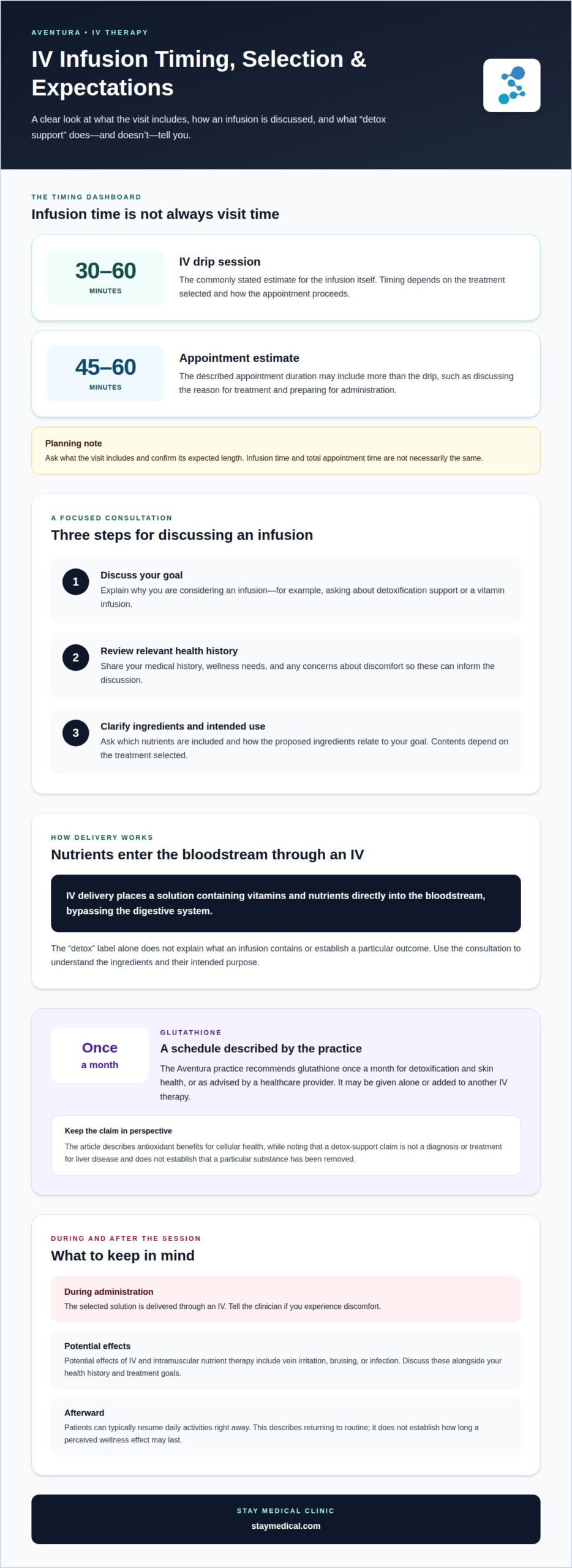
In Aventura, an IV drip session typically takes 30-60 minutes. Scheduling should account for the infusion itself and the time needed to discuss the purpose of treatment.
Appointment Timing and Session Length
The 30-60-minute estimate refers to the IV drip session, not necessarily the entire appointment. An appointment also includes time to discuss the reason for the infusion and prepare for administration. This distinction helps set realistic expectations when planning the visit around work, travel, or other commitments.
During a session, a nutrient solution is administered through an IV. Infusion time depends on the treatment selected and how the appointment proceeds. When arranging your visit, ask what the session includes and how it is timed. A clear estimate can help you plan while recognizing that infusion time may not equal the full appointment length.
IV therapy for detoxification in Aventura is different from treatment for alcohol or drug withdrawal. A nutrient infusion delivers vitamins and nutrients; it is not withdrawal treatment or a substitute for clinical assessment and evidence-based withdrawal care.
Before, During, and After the Session
Before an infusion, be ready to discuss your wellness goal, relevant medical history, and any concerns about discomfort. This context helps guide the conversation about whether the infusion suits your needs. During administration, the IV delivers the selected solution into your bloodstream. Tell the clinician if you experience discomfort.
Afterward, patients can typically resume daily activities right away. That recovery expectation describes returning to routine, not how long a person will notice a wellness effect. The session’s 30-60 minutes measures infusion time; it doesn’t establish the duration of any perceived benefit.
Potential effects of IV and intramuscular nutrient therapy include vein irritation, bruising, or infection. Discuss these considerations alongside your health history and treatment goals. If a concern arises during or after the infusion, tell the clinician rather than assuming it is part of an expected recovery.
When planning your visit, separate three practical questions: how long the infusion takes, what the appointment includes, and what recovery may involve. This helps you plan realistically without assuming how long any detoxification effects will last.
An IV therapy appointment is described as lasting 45-60 minutes, which may include more than the infusion itself. Confirming the expected appointment length can help distinguish overall visit time from the drip duration.
Consultation and customized infusion selection
An initial consultation considers your health goals, medical history, and specific wellness needs. This information helps shape a discussion about the infusion’s ingredients and purpose, rather than treating every request as the same.
Which clinics in Aventura offer IV detox therapy, and what are their credentials? IV therapy is offered by clinics in the area, but the clinician’s role and credentials should be clear during the consultation. The information available here doesn’t identify individual Aventura clinics or provide their credentials.
Does health insurance cover IV detox therapy in Florida? Coverage depends on your plan’s benefits and how it classifies the infusion. Don’t assume a wellness-focused treatment is covered; your plan determines coverage.
Matching an Infusion to Your Goals
Start by identifying why you’re considering an infusion. For example, someone asking about detoxification support may want to discuss glutathione, while another person may ask about a vitamin infusion. A clinician considers your health history and wellness needs alongside your goals before discussing an approach.
Glutathione may be administered on its own or added to another IV therapy. It’s described as providing antioxidant benefits for cellular health, and the Aventura practice recommends it once a month for detoxification and skin health, or as advised by a healthcare provider. That recommendation is a schedule, not a promise of specific effects for every person.
Ingredients, Claims, and Cost
Infusion contents depend on the treatment selected. Vitamins and nutrients are delivered directly into the bloodstream rather than passing through the digestive system first. Use the consultation to clarify which nutrients are included and how the proposed ingredients relate to your goal. “Detox support” describes a treatment claim; it does not specify the infusion’s contents or establish an outcome.
Prices for the infusion depend on the case and are provided after a quote request. Cost factors include the infusion type and additional nutrients selected. Ask for the proposed ingredients and cost together, so you can understand what the quote covers before deciding.
A practical consultation can follow three steps: discuss your goal, review relevant medical history, then consider an infusion’s ingredients and intended use. If your priority is glutathione, clarify whether it’s being considered alone or alongside another infusion. If you’re considering vitamins, ask how the selection relates to your wellness needs and what effects are claimed. This makes the decision more specific than choosing by a “detox” label alone.
A personalized IV therapy discussion can help connect your goals with an appropriate infusion plan.
Liver function and detoxification support
Glutathione IV therapy is promoted in Aventura for detoxification and skin health, but that claim should be understood as a wellness benefit, not a diagnosis or treatment for liver disease. The distinction matters: an infusion marketed for detox support does not establish that the liver needs treatment or that a particular substance has been removed.
Glutathione may be given alone or added to another IV therapy. The Aventura practice recommends it once a month for detoxification and skin health, or as advised by a healthcare provider. It also describes glutathione infusions as offering antioxidant benefits for cellular health. These are the stated aims of the infusion, not a guarantee that you’ll feel a specific effect. The same practice reports that some patients notice changes in skin and overall well-being within a few days, but individual experiences can differ.
After a hangover, someone may seek an infusion to feel better or support hydration and wellness. However, detoxification claims do not establish that an infusion reverses alcohol’s effects or speeds alcohol clearance. A hangover-related request is different from alcohol withdrawal, which requires appropriate medical care. A nutrient infusion is not a substitute for withdrawal treatment or assessment of serious symptoms.
People also consider nutrient infusions for energy and immune support. An infusion may be described as supporting overall wellness, but this does not show that it prevents illness, treats an immune condition, or resolves persistent fatigue. Explain the specific concern, such as low energy, and discuss whether an infusion’s ingredients align with that goal. Ongoing symptoms call for medical assessment rather than reliance on a wellness claim alone.
For weight management, IV therapy is described as a supplement to a weight-loss program when paired with a healthy diet and routine exercise. It isn’t a standalone weight-loss method. A weight-loss program can provide a broader context for discussing goals, while the infusion’s role remains supportive. This distinction helps keep claims about energy, immune function, and detoxification separate from the core work of sustainable weight management.
Before choosing an infusion for a hangover, energy, or detox support, identify the concern and the outcome being claimed. Then consider whether the claim fits your health needs, rather than assuming every IV formula supports liver function in the same way.
IV drip solution with vitamins and nutrients
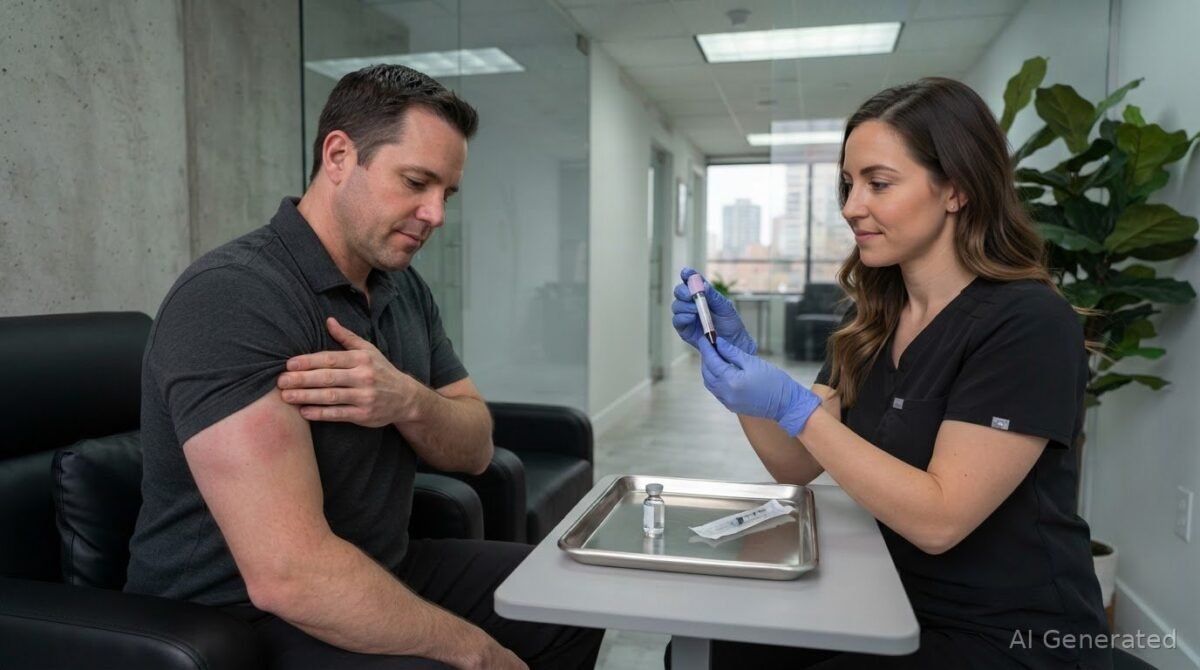
An IV drip delivers a solution containing vitamins and nutrients directly into the bloodstream, bypassing the digestive system. Understanding this route helps distinguish IV delivery from oral supplements, but it does not establish which nutrients a person needs or what effects an infusion will have.
Licensing requirements in Florida depend on the professional’s role and clinical setting. For safety, understand who determines the treatment, who administers the IV, and who is responsible for your care. The solution’s ingredients alone do not establish a clinician’s credentials.
An infusion plan should identify its purpose and ingredients. For example, a glutathione infusion may be offered alone or added to another IV therapy. A vitamin infusion is another option, but the label “vitamin drip” doesn’t describe every ingredient. The consultation’s discussion of health goals and medical history gives context for considering whether a particular formula fits.
“Replenish” can describe the intention behind a nutrient infusion, but it is not proof that a deficiency or dehydration has been corrected. The IV route bypasses digestion; it does not show on its own that a person needs a nutrient or that symptoms will improve. A clear explanation connects the proposed ingredients with the stated wellness goal.
IV and intramuscular, or IM, nutrient therapy use different routes. An IV places a solution into a vein, while an IM injection delivers medication into muscle. Potential effects of IV and IM nutrient therapy include vein irritation, bruising, or infection. The route and administration process are important parts of the treatment discussion.
For someone concerned about dehydration, the reason for that concern matters. A nutrient drip contains a solution, but a wellness infusion should not be assumed to diagnose or treat the cause of dehydration. The proposed ingredients, symptoms, and health history all shape the clinical discussion. Persistent or serious symptoms call for medical assessment, not reliance on an infusion label.
Before a session, clarify three points: what the solution contains, why those ingredients were selected, and which route will be used. This makes it easier to understand the difference between IV fluids with nutrients and an IM injection. It also helps set realistic expectations: direct delivery describes how an infusion enters the body, not a guaranteed outcome or substitute for individualized care.
The Aventura clinic says glutathione IV therapy is often combined with other treatments to enhance detoxification and overall wellness.
Claimed detoxification and heavy-metal removal benefits
“Detoxification” can describe different claims, so identify the specific substance and treatment being discussed. In Aventura, chelation therapy is described as assisting with heavy-metal removal for detoxification. That claim concerns chelation, not every vitamin or nutrient infusion marketed for general wellness.
Is IV therapy medically proven to detoxify the body? IV delivery puts a solution into the bloodstream, but that route alone doesn’t prove detoxification. The described chelation claim concerns heavy-metal removal; it shouldn’t be treated as evidence that standard wellness infusions remove toxins broadly.
The distinction matters because “detox” can suggest a general cleansing effect without naming a substance. A claim about removing a particular substance is more specific than a promise to reduce stress, improve hydration, or ease chronic symptoms. Ask what the treatment is intended to address, and distinguish that purpose from broader wellness language.
Glutathione is also described as an infusion with antioxidant benefits for cellular health and claimed detoxification support. Those claims differ from chelation’s stated heavy-metal-removal purpose. A product name or ingredient doesn’t show that an infusion removes a particular substance, nor does it establish what someone’s symptoms mean.
Consider the example of a person seeking an IV after feeling tired or dehydrated. Those concerns don’t, by themselves, identify heavy-metal exposure or show that chelation is appropriate. Likewise, a general infusion for hydration or wellness shouldn’t be presented as a substitute for assessing persistent or chronic symptoms. The reason for treatment should guide the clinical conversation.
Before consenting to a treatment described as detoxification, clarify three points: the substance or concern being addressed, the intended role of the infusion or chelation, and the benefits being claimed. For example, ask whether the discussion concerns glutathione’s antioxidant claim or chelation’s stated role in heavy-metal removal. This makes the difference between a specific treatment claim and a broad wellness promise easier to understand.
Keep expectations precise. “Supports detoxification” is not the same as demonstrating that a treatment removes a named substance or resolves symptoms. A discussion grounded in the treatment’s purpose, ingredients, and claims helps you make an informed decision without treating hydration, stress relief, or general wellness as proof of detoxification.
Stay Medical Clinic: IV Therapy
Stay Medical Clinic offers IV Therapy for people considering an infusion as part of their wellness goals. A conversation about your health priorities and medical history can put detoxification claims in context and clarify what the available IV options are intended to address. This is a helpful next step if you want to discuss an infusion with a medical practice rather than treating broad “detox” language as a guaranteed outcome.
If your concerns involve ongoing symptoms or broader health questions, Primary Care may be a more appropriate starting point for discussing them. For weight-management or hormone-related goals, Stay Medical Clinic also offers a Weight Loss Program and Testosterone Replacement.
Contact Stay Medical Clinic to discuss your care.
Make Your Next Wellness Decision With Clarity
Choosing IV therapy for detoxification in Aventura is a personal health decision, not a shortcut or promise of a particular result. Consider what you want help with, what outcomes are being claimed, and whether the proposed care aligns with your broader health priorities. A focused conversation can turn general wellness goals into a clearer discussion about appropriate care.
Stay Medical Clinic offers IV Therapy, along with a Weight Loss Program and Testosterone Replacement. These services address different goals, so the right starting point depends on the concern you want to discuss. You don’t need every answer before your appointment; a clear description of your priorities is a useful first step.
Take the next step at your own pace, with an informed conversation guiding your choices.
Frequently Asked Questions
What is IV therapy?
IV therapy delivers a prepared solution into a vein through a small catheter. Depending on the selected infusion, the solution may contain fluids, vitamins, or other nutrients. Because it enters the bloodstream directly, it bypasses digestion. This describes how ingredients are delivered, not whether a particular person needs them or will experience a specific wellness effect. Those questions depend on the treatment goal and clinical assessment.
Do IV recovery and wellness drips work?
An infusion delivers its ingredients, but that does not establish that every advertised recovery or wellness benefit will occur. A drip may provide fluids and nutrients, while claims about energy, immunity, or detoxification describe intended benefits. Consider the specific ingredients and claimed outcome rather than relying on a broad label such as “recovery.” IV therapy is not a substitute for care addressing an underlying medical problem.
Does it hurt?
IV placement involves inserting a needle into a vein, so brief discomfort at the insertion site is possible. The infusion itself may also cause local irritation. Vein irritation, bruising, and infection are possible effects of IV or intramuscular nutrient therapy. Tell the clinician about discomfort during administration, and discuss concerns about needles or previous reactions before treatment. This gives the care team useful context for your appointment.
How long does a session take?
An IV drip session in Aventura typically takes 30-60 minutes. That estimate refers to the drip, not necessarily every part of the appointment. Time for discussion and preparation can affect how long you’re at the clinic. If you’re arranging your day around treatment, distinguish the infusion duration from the complete visit and allow flexibility for the appointment process.
How often should I come in?
There isn’t one schedule that applies to every infusion or wellness goal. For glutathione, the Aventura practice recommends treatment once a month for detoxification and skin health, or as advised by a healthcare provider. That recommendation is specific to glutathione, not a schedule for all IV drips. The treatment goal, selected ingredients, health history, and clinician’s guidance inform an appropriate plan.
Is it safe?
No IV treatment is risk-free, and the ingredients and administration matter. The Aventura clinic describes glutathione IV therapy as safe when administered by an experienced practitioner and well-tolerated by most individuals. Possible effects of IV nutrient therapy include vein irritation, bruising, or infection. Discuss your medical history and concerns before the infusion so the clinician can consider whether the proposed treatment is appropriate for you.
What are the IV treatment complications, and who should be screened first?
Possible complications of IV or intramuscular nutrient therapy include vein irritation, bruising, and infection. Screening should account for your medical history, current health concerns, and the ingredients being considered. Share relevant information with the clinician before administration, including past reactions to infusions or injections. This supports an informed discussion of potential risks and whether the proposed route and treatment fit your circumstances.
What does IV therapy for detoxification involve?
IV therapy marketed for detoxification involves administering a solution into a vein, with ingredients selected for the stated treatment goal. Glutathione is described as an antioxidant infusion, while chelation therapy is described as assisting with heavy-metal removal. These are distinct treatment claims, not proof that every wellness drip removes toxins. IV nutrient therapy also isn’t treatment for alcohol or drug withdrawal.
Disclaimer
This content is for informational purposes only and does not replace evaluation, diagnosis, or treatment by a medical professional. Always consult a qualified healthcare provider for personalized care.