

TRT and cardiovascular health risks for people with heart disease
November 17, 2026
Family Doctor in Coral Gables for Checkups and Preventive Care
November 20, 2026
TRT side effects are a reason to review treatment, not simply endure discomfort. Knowing how to manage TRT side effects starts with telling your physician about changes and using symptom reviews and follow-up testing to guide any treatment adjustments. Effects vary: acne and oily skin may begin in weeks 1-6, while changes in blood counts or fertility can develop later.
It’s understandable to want clear guidance on what to expect and what needs attention. This article explains possible effects, including skin changes, mood shifts, fluid retention, and increased red blood cell production, and how clinical monitoring can help manage health risks. You’ll also learn when to contact a physician and which factors may shape treatment decisions, so you can discuss your concerns with greater clarity.
Key Takeaways
- TRT effects can involve skin, mood, fertility, blood counts, and other aspects of health, and they may appear at different times.
- Regular follow-up and blood testing help a physician assess your response and identify changes that may need attention.
- Tell your physician about new or persistent symptoms, including changes in mood, urination, sleep, or swelling.
- Treatment adjustments depend on the side effect, test results, symptoms, and your health priorities, including fertility plans.
- Learn which concerns can be monitored over time and which symptoms call for prompt medical advice.
Increased red blood cell production and blood clots
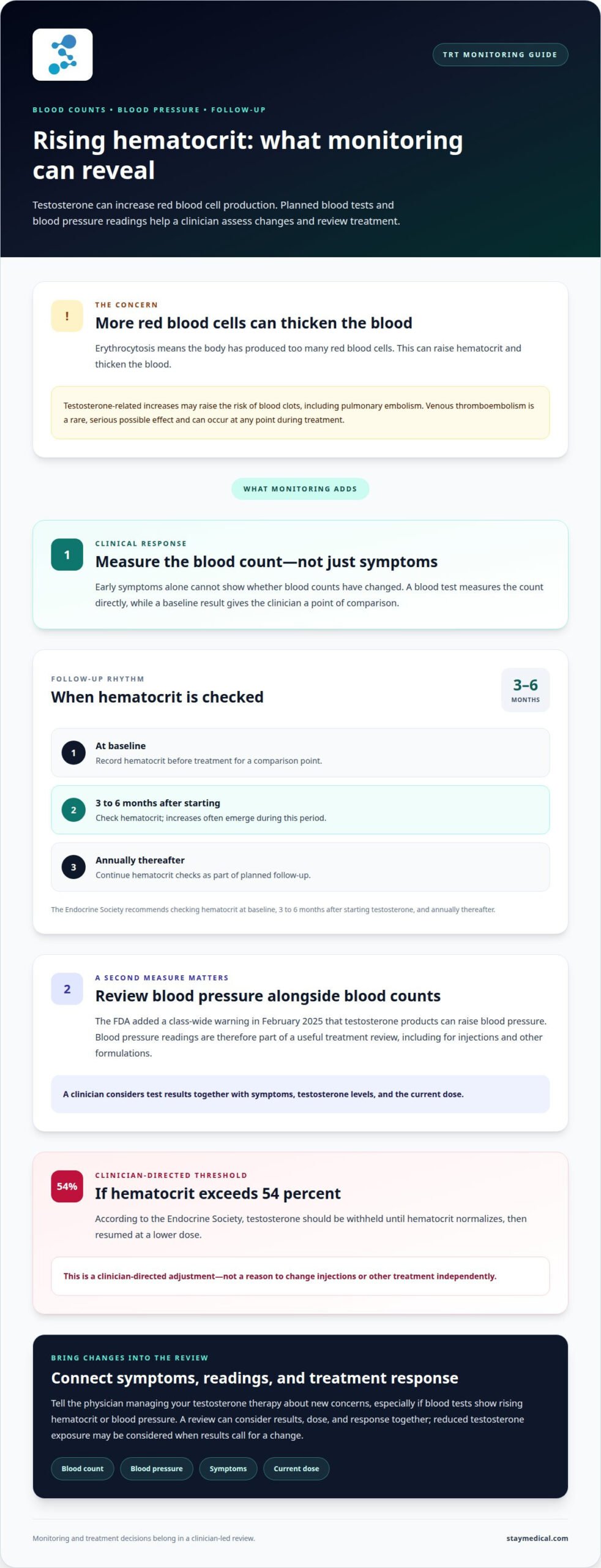
Testosterone can increase red blood cell production, sometimes raising hematocrit and thickening the blood. Monitoring blood counts and blood pressure helps identify changes that may call for a treatment review.
Erythrocytosis and Thickened Blood
Erythrocytosis means the body has produced too many red blood cells, which can raise hematocrit and thicken the blood. Testosterone-related increases may raise the risk of blood clots, including pulmonary embolism. Venous thromboembolism is a rare, serious possible effect that can occur at any point during treatment.
Elevated hematocrit often emerges during months 3-6, so early symptoms alone cannot show whether blood counts have changed. A blood test measures the count directly. A very high red blood cell count can also lead a clinician to delay or avoid testosterone therapy, rather than proceed without considering that risk.
Blood pressure needs attention alongside blood counts. In February 2025, the FDA added a class-wide warning that testosterone products can raise blood pressure. That warning makes blood pressure readings part of a useful treatment review, including for people using testosterone injections or another formulation.
Blood Tests and Dose Reviews
Blood-test monitoring means measuring hematocrit and testosterone at planned follow-ups, then using the results to guide care. The Endocrine Society recommends checking hematocrit at baseline, 3 to 6 months after starting testosterone, and annually thereafter. Regular monitoring may also include blood pressure, blood counts, and PSA.
A clinician considers the test results alongside symptoms, testosterone levels, and the current dose. According to the Endocrine Society, if hematocrit exceeds 54 percent, testosterone should be withheld until it normalizes, then resumed at a lower dose. This is a clinician-directed adjustment, not a reason to change injections or other treatment independently.
Follow-up timing can help catch a developing change before it becomes a larger concern. A blood count at baseline provides a comparison point; a later result shows whether hematocrit has risen during treatment. The Endocrine Society’s schedule includes a check at 3 to 6 months and then annually. Blood pressure checks add another measure of response, particularly after the FDA’s February 2025 warning.
Bring new concerns to the physician managing your testosterone therapy, especially if blood tests show rising hematocrit or blood pressure. A review can consider the results, dose, and treatment response together. If the results call for a change, reduced testosterone exposure may be considered. Other effects, such as gynecomastia, need their own assessment.
What are the side effects of TRT?
Testosterone therapy can affect sperm production, testicular size, and breast tissue. Fertility goals matter because these effects may change the balance between treatment benefits and reproductive plans.
TRT can suppress sperm production and reduce fertility, while the testicles may shrink. If preserving fertility matters to you, discuss this before starting therapy and ask whether an approach other than testosterone suits your health needs.
Fertility and Sperm Suppression
Fertility suppression means testosterone therapy can reduce sperm production, making conception more difficult during treatment. This matters if you hope to have children, even if sexual desire or erectile function improves. Discuss TRT’s effects on fertility before therapy begins, rather than waiting for it to become an unexpected concern.
Tell the prescribing clinician about your current or future plans for children. This helps shape a discussion about whether testosterone is appropriate and whether another approach better aligns with your priorities. Do not assume that maintaining sexual function means sperm production is unchanged.
Testicular Shrinkage
Testicular shrinkage is a reduction in testicle size that can occur as testosterone therapy suppresses the body’s own reproductive activity. It is listed among common TRT effects, typically appearing within 3-12 months. The timing and visible change can vary, so new or concerning changes belong in a treatment review.
This effect matters beyond appearance. Reduced testicular activity can accompany reduced sperm production, making changes in size worth discussing if fertility is important to you. Mention the change and your reproductive goals at follow-up so the clinician can consider them alongside your treatment response.
TRT can also enlarge breast tissue, a change called gynecomastia. It is considered an uncommon effect and may appear after 3-6 months or later. Report breast enlargement or tenderness during a review, especially if it is new or continues to change. A clinician can assess the symptom in context rather than treating it as a fertility measure by itself.
Prostate health also belongs in a broader discussion of testosterone therapy. Testosterone can stimulate noncancerous prostate growth and the growth of existing prostate cancer. This is separate from sperm suppression, but it may affect whether therapy is appropriate. Share relevant health history and symptoms so reproductive goals and other health factors are considered together.
If fertility is a priority, a personalized discussion of treatment options can help clarify how testosterone therapy fits your goals before you begin.
Acne and other possible TRT effects
Testosterone replacement therapy can affect skin and other body systems, so new symptoms deserve attention during follow-up. Acne and oily skin commonly begin in weeks 1-6, while other effects may involve sleep, fluid balance, or urination.
Acne and Oily Skin
Acne and oily skin are skin changes that can develop as testosterone therapy begins. They commonly appear in weeks 1-6, making early follow-up useful when symptoms are new or changing. A physician can consider their timing alongside treatment and other changes, rather than assuming every breakout has the same cause.
Tell the doctor if acne appears after you start testosterone or becomes more noticeable. Explain when it began and whether it affects your daily comfort. These details give the clinician a clearer picture during a treatment review. Don’t change your dose or stop replacement therapy without discussing symptoms with the prescriber.
Libido and skin changes are separate measures of response. A change in libido does not explain the cause of acne, just as a normal-looking skin exam does not establish how testosterone affects other health concerns. Keeping these issues distinct helps the doctor assess each symptom on its own merits.
Skin Reactions
Skin reactions include irritation associated with a testosterone product, not just acne. Testosterone patches are applied every day as directed, and their location is usually changed to help prevent skin reactions. If irritation appears where a patch sits, tell the clinician which area is affected and when the reaction began.
Other forms of testosterone, including injections, don’t involve patch placement, so the treatment form matters during an assessment. A doctor can review the product, application routine, and symptom pattern before discussing a change. This helps distinguish a local reaction from acne or another skin concern.
Skin symptoms aren’t the only possible effects to discuss. Testosterone therapy can worsen sleep apnea, a condition in which breathing repeatedly stops and starts. Raise new or worsening sleep concerns during a clinical review, particularly if you already have sleep apnea.
TRT can also cause ankle swelling due to mild fluid retention. Report swelling that develops during treatment so a clinician can assess it alongside other symptoms and health factors. Don’t assume it is simply a skin issue because it is visible at the ankle.
Testosterone can stimulate the prostate and cause urinary symptoms. Discuss changes such as new difficulty urinating with a physician instead of attributing them to normal aging without review. Timing matters for each example: tell the clinician whether acne, irritation, sleep disruption, swelling, or urinary changes began after treatment started.
Mood changes and when to contact a physician
Mood, memory, weight, and sexual function can change during testosterone replacement therapy. The timing of a symptom, including whether it followed a dose change, helps the physician assess what may be contributing.
Mood Changes and Drug-Level Stabilization
Mood changes are emotional shifts that arise during treatment and should be considered alongside testosterone levels and dose timing. After a dose change, drug levels usually stabilize within 4-6 weeks. This interval matters because symptoms noticed soon after an adjustment may occur before levels settle.
Contact the prescribing physician about new, persistent, or worsening mood changes rather than adjusting treatment yourself. Testosterone levels typically stabilize after approximately 4-8 weeks, and blood tests around 10 weeks can help confirm stability. These time points support a more informed review of symptoms and treatment response.
Memory and Concentration Changes
Memory or concentration changes can affect everyday tasks, such as following a conversation or completing familiar activities. Note when the change began and whether it followed a dose adjustment. This timeline helps the physician assess the concern alongside testosterone levels and other symptoms.
Hormone therapy for prostate cancer can lower testosterone and may be associated with memory loss and mood changes. This differs from testosterone replacement, which raises testosterone. Mention any cancer treatment and changes in concentration during a medical review so the clinician can consider the right therapy and context.
Weight gain also deserves a measured discussion. Diet and exercise changes have been shown to relieve some side effects of hormone therapy, while a healthy lifestyle can help reduce cardiovascular, stroke, and type 2 diabetes risks. Patients receiving hormone therapy should ask their doctor about screening for diabetes, heart disease, stroke, weight gain, high cholesterol, and osteoporosis.
Sexual changes can include shifts in desire or erectile function. Testosterone therapy might somewhat improve sexual function in some men, but that does not establish a change in energy or overall vitality. Tell the physician what changed, when it began, and whether it affects daily life. A symptom timeline can help distinguish an ongoing concern from a short-lived change after a treatment adjustment.
Contact a physician if changes in mood, memory, weight, or sexual function persist, worsen, or interfere with daily activities. Also share relevant medical history, including active or suspected prostate cancer or male breast cancer, because TRT is generally not recommended or may be delayed in these situations. A focused review can consider symptoms, treatment timing, testosterone levels, and health risks together.
Managing side effects and treatment choices
Understanding how to manage TRT side effects starts with considering symptoms alongside treatment form, dose, test results, and health goals. Injections, gels, patches, and pellets differ in how they’re administered and in some related effects. Clinicians use these details to guide treatment decisions. Don’t change your dose or schedule yourself, as unsupervised changes can complicate monitoring and assessment.
Side Effects by TRT Form
Side effects by form are effects associated with how testosterone is delivered, and the distinction matters when choosing treatment or assessing a new symptom. Intramuscular injections may be given every one to two weeks, while subcutaneous injections are given every week. Some long-acting injections are given every 10 weeks in a medical office.
Testosterone gel is applied every day as directed, and skin-to-skin contact should be avoided while it’s wet. Patches are also applied every day as directed, with the location usually changed to help prevent skin reactions. Pellets are implanted under the skin every three to six months. These differences can guide a clinical discussion, but they do not mean one form prevents every side effect.
Dose and Schedule Adjustments
Dose and schedule adjustments are clinician-directed changes based on symptoms, response, and monitoring. They matter because drug levels usually stabilize within 4-6 weeks after a dose change. Changing treatment before levels settle can make it harder to determine whether a symptom reflects the adjustment or another factor.
A clinician may review the dose or schedule when symptoms or test results warrant attention. For example, the Endocrine Society recommends withholding testosterone if hematocrit exceeds 54 percent, then resuming at a lower dose after it normalizes. Patients shouldn’t make this change themselves; blood tests and clinical assessment guide the decision.
Monitoring connects reported symptoms with measurable changes. Blood tests can assess testosterone levels and hematocrit, while blood pressure readings provide another relevant measure. The clinician considers these results alongside treatment form, dose, timing, and your concerns. Together, this information supports decisions about whether to continue, adjust, or reconsider testosterone replacement therapy.
Keep the discussion specific: describe a skin reaction beneath a patch, a symptom after an injection, or a change following a dose adjustment. Explain when it began and whether it persists. This context can help the clinician distinguish a formulation-related issue from a broader response to treatment.
Clinical follow-up also considers the reason for therapy, relevant health history, and treatment goals. An endocrine assessment weighs these factors alongside laboratory results, rather than treating one symptom as the whole picture. Knowing how to manage TRT side effects means understanding why changes should follow a review of the full clinical picture, not just one symptom or test.
Stay Medical Clinic
Stay Medical Clinic can help you review TRT side effects through personalized medical care and follow-up. If symptoms emerge, blood-test results change, or you’re unsure whether treatment still fits your health goals, a clinician can assess your concerns and discuss next steps. Testosterone Replacement and Primary Care provide relevant pathways for reviewing treatment and broader health factors. Bring details about your symptoms and any recent dose changes to make the discussion more focused.
Contact Stay Medical Clinic to discuss your concerns.
Make Your Next Step Personal
Deciding what to do next starts with a clear conversation about what matters to you. Your goals may include improving symptoms, protecting fertility, or addressing changes that affect daily life. Bring these priorities to a clinical discussion so treatment decisions reflect more than a single test result. A thoughtful plan for how to manage TRT side effects also leaves room to revisit what is working and what needs attention.
Stay Medical Clinic offers Testosterone Replacement, a Weight Loss Program, and IV Therapy. These services can support discussions about testosterone treatment alongside broader health goals. If your symptoms have changed or you’re ready to discuss treatment, book a conversation with Stay Medical Clinic in Miami to clarify a suitable next step.
Take the next step at your own pace, with your health goals at the centre.
Frequently Asked Questions
Is TRT safe?
TRT safety depends on the reason for treatment, health history, and ongoing clinical review. In the United States, FDA approval covers males with low testosterone caused by a known medical condition. TRT is generally not recommended or may be delayed in cases of active or suspected prostate cancer, male breast cancer, or a heart attack or stroke within the past six months. A clinician can weigh these considerations before treatment begins.
What are common side effects of testosterone replacement therapy (TRT)?
Common effects can include acne or oily skin, increased hematocrit, and reduced sperm production. Some people also notice testicular shrinkage, mood changes, or fluid retention. The pattern matters: a skin change near a patch differs from a change in blood counts. Tell the prescribing clinician what changed and when so the review can consider the treatment form and your overall health.
Which TRT side effects require urgent medical attention?
Seek urgent medical care for sudden, severe symptoms, especially difficulty breathing or chest pain. TRT can increase red blood cell production, and venous thromboembolism, including pulmonary embolism, is a rare, serious possible effect that can occur at any point. Sudden swelling in one leg also warrants prompt assessment. Don’t wait for a routine follow-up if symptoms feel acute or worsen rapidly.
How can a clinician help manage acne and oily skin from TRT?
A clinician can assess whether a change resembles acne or a reaction to the treatment form, then consider its timing and severity. For example, irritation limited to a patch site provides different context from breakouts across the face or back. Explain when symptoms began and whether they’re progressing. The clinician can use these details to decide whether a treatment review or a different skin assessment is appropriate.
How can a clinician manage TRT-related fluid retention or high blood pressure?
A clinician can review swelling, blood pressure readings, current treatment, and other health factors together. Note whether ankle swelling is new, persistent, or accompanied by other changes, and share recent blood pressure measurements if available. This context helps distinguish a treatment-related concern from other possible causes. The clinician can then decide whether further assessment or a change to the treatment plan is warranted.
How can a clinician monitor and treat elevated hematocrit from TRT?
Hematocrit is assessed through a blood count, compared with baseline results, and reviewed alongside testosterone levels and symptoms. The Endocrine Society recommends checking hematocrit at baseline, 3 to 6 months after starting testosterone, and annually thereafter. If it exceeds 54 percent, the Society recommends withholding testosterone until it normalizes, then resuming at a lower dose under clinical supervision.
How can a clinician help manage TRT-related mood changes, sleep apnea, or worsening sleep?
A clinician can review when mood or sleep changes began, whether they followed a dose adjustment, and whether sleep apnea is already present. Testosterone drug levels usually stabilize within 4-6 weeks after a dose change, which helps place new symptoms in context. Describe concrete changes, such as disrupted sleep or difficulty managing usual activities, so the review can address each concern individually.
How often should a clinician monitor testosterone levels, blood counts, PSA, and blood pressure during TRT?
The Endocrine Society recommends hematocrit testing at baseline, 3 to 6 months after starting testosterone, and annually thereafter. Testosterone levels, PSA, blood counts, and blood pressure also belong in ongoing monitoring, but their timing should reflect treatment form, dose changes, results, and health history. A consistent follow-up plan makes it easier to compare results over time and respond to meaningful changes.
Disclaimer
This content is for informational purposes only and does not replace evaluation, diagnosis, or treatment by a medical professional. Always consult a qualified healthcare provider for personalized care.