

Semaglutide Journey: What to Expect From Weight Loss
October 26, 2026
Tirzepatide Weight Loss Results Month by Month and Over Time
October 28, 2026
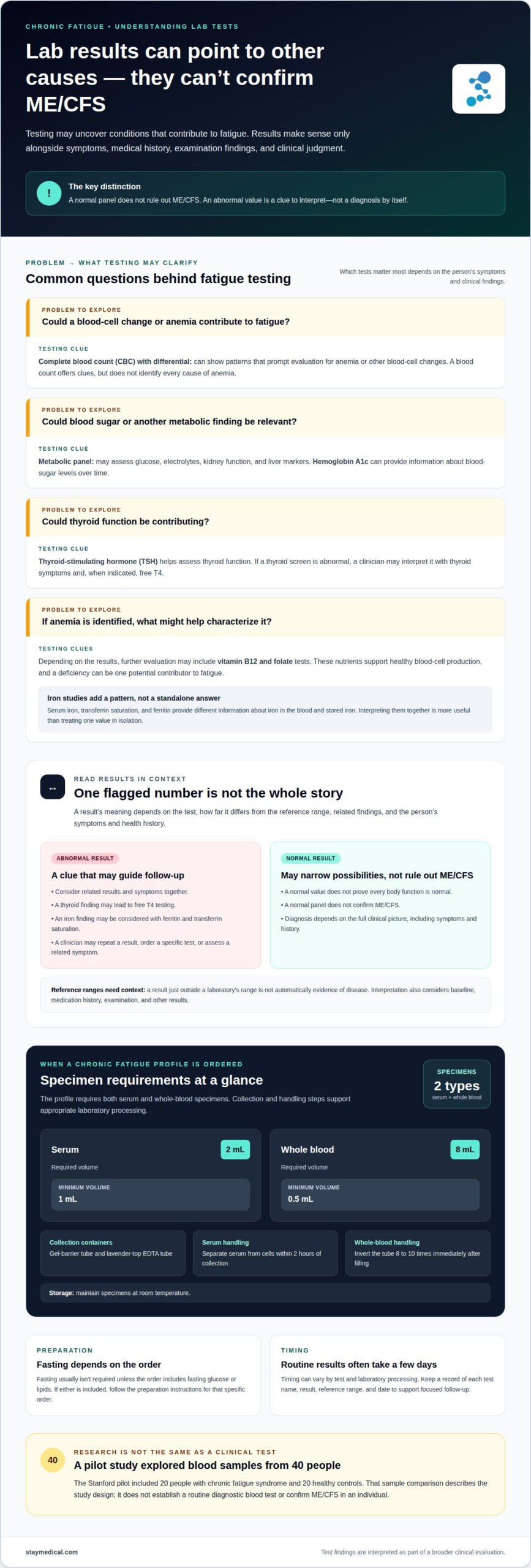
Lab tests for chronic fatigue can help identify other possible causes, such as anemia, diabetes, or an underactive thyroid, but no single lab test confirms ME/CFS. Normal results don’t rule it out: diagnosis also considers symptoms, medical history, examination findings, and clinical judgment. Testing can be part of an evaluation for persistent fatigue, including fatigue that began after COVID-19.
When exhaustion affects daily life, it is natural to want clear answers. Lab tests may identify a treatable condition contributing to fatigue, while normal results can leave important questions to explore.
This article explains which tests may be considered, what abnormal results can mean, and why testing is tailored to each person rather than ordered as an extensive panel by default. It also covers how the assessment process may affect symptoms, so you can understand what testing can and cannot clarify.
Key Takeaways
- Testing can help uncover other conditions that contribute to fatigue, but normal results don’t rule out ME/CFS.
- Abnormal findings need to be interpreted alongside symptoms, medical history, and examination results.
- A focused testing plan can limit unnecessary investigations that may add to the burden of ongoing symptoms.
- Persistent fatigue, including after COVID-19, calls for an assessment shaped around the person’s symptoms and health history.
- Primary care at Stay Medical Clinic can help connect test results with a broader evaluation of your health.
Blood tests to check for other causes of fatigue
Lab tests for chronic fatigue can help identify other conditions, including anemia, diabetes, and an underactive thyroid. No single blood test confirms ME/CFS, so results are considered alongside symptoms and medical history.
Without insurance, the cost of common fatigue blood tests depends on which tests are ordered, the laboratory, and any separate collection or interpretation charges. The price depends on the case and is provided after a quote request.
A complete blood count with differential can show patterns that prompt evaluation for anemia or other blood-cell changes. A metabolic panel may assess glucose, electrolytes, kidney function, and liver markers. Thyroid-stimulating hormone, or TSH, helps assess thyroid function; hemoglobin A1c can provide information about blood-sugar levels over time. Which tests matter most depends on the patient’s symptoms and clinical findings.
If anemia is identified, further studies can help characterize it and guide treatment. Depending on the results, evaluation may include vitamin B12 and folate tests. These nutrients support healthy blood-cell production, and a deficiency can be one potential contributor to fatigue. A blood count offers clues, but it does not by itself identify every cause of anemia.
Iron studies can assess iron deficiency and iron overload. Serum iron, transferrin saturation, and ferritin each provide different information about iron in the blood and stored iron. Interpreting these results together is more useful than treating one value as a standalone answer. If results are abnormal, their pattern and the patient’s broader health history help guide further evaluation.
A chronic fatigue profile requires both serum and whole-blood specimens. Its listed collection containers are a gel-barrier tube and a lavender-top EDTA tube. The profile requires 2 mL of serum and 8 mL of whole blood; minimum volumes are 1 mL of serum and 0.5 mL of whole blood. Serum should be separated from cells within 2 hours of collection. The whole-blood tube should be inverted 8 to 10 times immediately after filling, and specimens should be maintained at room temperature. These handling steps support appropriate laboratory processing.
Drug screening may be considered when a patient’s history or examination makes it clinically relevant. During ME/CFS evaluation, a urine drug screen may be considered, but it is different from a blood test. Results need context: screening addresses a specific question and does not confirm ME/CFS or explain every fatigue symptom.
Fasting usually isn’t required unless the order includes fasting glucose or lipids. If either test is included, follow the preparation instructions for that specific order.
How to interpret abnormal results
An abnormal result is a clue, not a diagnosis of myalgic encephalomyelitis/chronic fatigue syndrome (ME/CFS). Its meaning depends on the test, how far the result differs from the reference range, related results, and the patient’s symptoms. A flagged value may point to another condition or one occurring alongside ME/CFS. Clinical interpretation brings these details together rather than treating one number as the full explanation.
Look at related findings as a pattern. For example, an out-of-range thyroid-stimulating hormone (TSH) result is interpreted with thyroid symptoms and, when indicated, free T4. An abnormal glucose result is considered alongside the test type and other evidence of blood-sugar problems. A blood-count change can prompt further assessment for anemia. These results direct follow-up; they don’t independently establish why fatigue developed.
Reference ranges also need context. A result just outside a laboratory’s range isn’t automatically evidence of disease, and a normal value doesn’t prove every body function is normal. The clinician reviews how the finding fits the patient’s baseline, medication history, examination, and other results. If anemia is identified, additional studies, such as B12 or folate testing, can help characterize it.
Next steps follow the abnormality. A clinician may repeat a result when verification is appropriate, order a more specific test, or assess a related symptom. For example, an abnormal thyroid screen can lead to free T4 testing; an iron finding can be considered with ferritin and transferrin saturation. The choice depends on the pattern, not simply the number of flagged items.
Most routine laboratory results are reported within a few days. Timing can vary by test and laboratory processing, so note when results are expected and plan follow-up. A normal panel can reduce support for some alternative explanations, but it doesn’t confirm ME/CFS. Under a symptom-based guideline, diagnosis depends on the full clinical picture.
A Stanford pilot study tested blood samples from 40 people: 20 with chronic fatigue syndrome and 20 healthy controls. That participant count describes the pilot design, not a test result proving that a diagnostic blood test exists. A small pilot study can explore a research approach, but its sample comparison doesn’t establish routine clinical accuracy or confirm myalgic encephalomyelitis in an individual patient.
Keep a record of each test name, result, reference range, and date. Bring it with a concise symptom timeline, including how fatigue changes after activity or rest. This helps connect lab findings with daily function and makes follow-up more focused. A useful interpretation explains what an abnormal result may suggest, what it cannot establish, and which clinical question the next step addresses.
Laboratory testing to rule out other illnesses
For suspected ME/CFS, laboratory evaluation helps identify other illnesses that may explain or contribute to fatigue. It supports diagnostic reasoning, but no standalone test confirms the syndrome.
Screening and Initial Laboratory Evaluation
Initial laboratory screening uses selected tests to look for conditions that can resemble ME/CFS. These tests provide a baseline; further studies may be added when symptoms or findings call for them.
An initial evaluation may include urinalysis, a complete blood count, a comprehensive metabolic panel, phosphorus, thyroid-stimulating hormone (TSH), and C-reactive protein (CRP). These tests assess different areas, including blood cells, kidney and liver markers, thyroid function, and inflammation.
A broader routine workup may also include erythrocyte sedimentation rate, electrolytes, fasting glucose, calcium, and kidney measures such as creatinine and blood urea nitrogen. Not every test is needed at the first visit or all at once. Symptoms, medical history, and examination help determine which studies are relevant.
Guidance on ME/CFS Testing
Yes. ME/CFS evaluation includes laboratory testing to look for other possible causes, although testing cannot confirm the diagnosis.
Diagnosis draws on symptoms, medical history, physical examination, laboratory findings, and clinical judgment after other plausible illnesses have been assessed. A normal result doesn’t rule out ME/CFS; it means that particular test didn’t identify an alternative explanation.
NICE recommends screening for celiac disease with immunoglobulin A endomysial antibodies. Urine drug screening, rheumatoid factor, and antinuclear antibody testing may be considered when a patient’s history or examination supports them. Viral titers generally aren’t part of routine evaluation without specific signs of infection. This targeted approach connects further testing to a clinical question.
Thyroid Testing in a Fatigue Workup
Yes. Thyroid function testing is commonly included because an underactive thyroid can cause fatigue and symptoms that overlap with ME/CFS.
TSH is a key screening test, and evaluation may include free T4 to clarify thyroid function. An abnormal TSH result should be interpreted alongside free T4 and the patient’s symptoms, rather than treated as a complete explanation on its own.
When TSH falls outside the expected range, free T4 testing on the submitted sample can help characterize the finding. This provides additional context for deciding whether thyroid disease may contribute to fatigue or whether other causes need attention.
Symptoms can overlap with other conditions. Sleep disorders, irritable bowel syndrome, and fibromyalgia can occur alongside fatigue and may need separate assessment. For example, a sleep study can help evaluate obstructive sleep apnea, restless legs syndrome, or insomnia.
Further testing should have a specific clinical reason. Cultures or serology may be appropriate when infection is suspected; hormone or stimulation tests may be considered for possible endocrine causes. Matching each test to a symptom, examination finding, or suspected illness makes the evaluation more useful than ordering every available study at once.
Potential symptom impact of extensive testing
Testing can uncover treatable causes of fatigue, but investigations also take energy. A focused approach weighs the symptoms, likely benefit, and demands of each procedure.
Laboratory Tests and Symptoms
Investigations can affect symptoms when they require exertion, travel, or repeated appointments. A two-day cardiopulmonary exercise test can assess functional impairment and post-exertional malaise, but it can also trigger that malaise.
Cognitive assessment examines concentration, memory, and processing speed. These findings can guide practical strategies, particularly for children and adolescents managing school demands. The National Academy of Medicine’s 2015 ME/CFS criteria focus on hallmark symptoms, so test findings complement, rather than replace, a symptom-based evaluation.
Blood and Urine Testing
Blood and urine tests look for conditions that may contribute to fatigue. A complete blood count and metabolic panel assess blood-cell findings and markers related to glucose, kidney function, and liver function.
Some ME/CFS clinicians include vitamin B12, folate, and vitamin D studies in initial testing. Urinalysis can add information about urinary findings, while each result needs interpretation alongside symptoms and history. A finding of deficiency can direct further evaluation and inform treatment planning.
Diabetes, kidney, or liver testing may be appropriate when symptoms, medical history, examination, or initial findings raise those possibilities. A metabolic panel can assess glucose, creatinine, blood urea nitrogen, and liver-related markers, helping direct follow-up rather than testing without a clinical reason.
Infection testing, including tests for mononucleosis or Lyme disease, is guided by symptoms, exposure history, and examination. Serology may be used when an infectious cause is clinically suspected; routine viral titers generally aren’t recommended without specific signs of infection.
For possible autoimmune disease or inflammation, CRP and erythrocyte sedimentation rate can screen for inflammatory findings. Rheumatoid factor and antinuclear antibody testing may be considered when the patient’s history or examination supports them. These results inform further evaluation; they don’t diagnose ME/CFS on their own.
Extensive testing without clinical suspicion can produce false-positive findings and lead to more investigations without clarifying symptoms. Frequent appointments can also worsen ME/CFS symptoms, so the schedule matters. Prioritizing tests linked to a specific question can reduce avoidable demands on activity and recovery.
When symptoms include reduced concentration or memory, cognitive assessment can identify areas where tools or strategies may help. For children and adolescents, findings can inform educational support and academic performance. For adults, assessment can clarify functional challenges without requiring an exercise-based test.
Use for chronic and post-COVID-19 fatigue assessment
Persistent fatigue after COVID-19 can warrant medical evaluation, but routine lab results alone can’t explain every symptom. Chronic fatigue syndrome, also called ME/CFS, has no stand-alone diagnostic blood test. The CDC describes symptoms persisting for six months or longer as part of its diagnostic approach. Assessment considers symptom patterns, medical history, examination, and tests that may identify other causes.
Normal laboratory findings don’t rule out ME/CFS, even when fatigue substantially limits daily activity. That distinction matters after COVID-19: a test can provide evidence about a specific condition, but it doesn’t measure every effect of illness or establish the cause of all ongoing symptoms. A focused evaluation connects findings with the person’s timeline, including how physical or mental activity affects recovery.
Symptoms of orthostatic intolerance, such as feeling worse while upright, may lead to a different type of assessment. The US ME/CFS Clinician Coalition describes a 10-minute NASA Lean Test or stand test for people with signs or symptoms of orthostatic intolerance. Blood pressure and heart rate can be measured every 1-2 minutes during a standing or leaning test lasting 10 minutes or longer, depending on response and tolerance.
A tilt-table test lasting 10-45 minutes is another option for evaluating orthostatic symptoms. The Coalition also describes a 4-point salivary cortisol test, collected at waking, noon, 4:00 PM, and bedtime, as a way to support assessment for suspected ME/CFS. These tests assess particular physiological patterns; they aren’t substitutes for a full clinical evaluation or proof of chronic fatigue syndrome.
Sleep disruption can also shape fatigue after COVID-19. For adults with ME/CFS and sleep disturbances, the Coalition recommends considering overnight oximetry, a home sleep study, or polysomnography. The symptoms and clinical context guide the choice. Identifying a sleep disorder can clarify one possible contributor and help shape appropriate interventions, while leaving other causes open for evaluation.
Testing should account for post-exertional malaise, in which activity can worsen symptoms after a delay. A 2-day cardiopulmonary exercise test may assess functional impairment and post-exertional malaise, but it can trigger post-exertional symptoms. This potential burden matters when weighing medical evidence against the patient’s current capacity. Cognitive assessment can instead examine memory, concentration, and processing speed, helping identify practical support needs without an exercise challenge.
For ongoing fatigue after COVID-19, the clearest takeaway is to match each test to a specific symptom or clinical question. A normal panel and a targeted functional assessment answer different questions, and neither alone captures the full experience.
Stay Medical Clinic: Weight Loss Program
Stay Medical Clinic offers Primary Care and Laboratory Testing for people who want a thoughtful review of fatigue, symptoms, and test findings. If weight management is also one of your health goals, the Weight Loss Program may be relevant as part of broader care, not as a test or treatment for ME/CFS. Discuss your concerns in light of your health history, current symptoms, and any results you already have. This keeps the conversation focused on your needs rather than assuming one explanation for fatigue. Stay Medical Clinic also offers Testosterone Replacement and IV Therapy for different health needs; neither substitutes for evaluating persistent fatigue. Contact Stay Medical Clinic to discuss your concerns.
Make your next health conversation count
Use lab tests for chronic fatigue as a starting point for a broader conversation about changes in your health and the support you want next. Share the concerns that matter most in daily life, so the discussion can focus on practical priorities rather than a lab result in isolation.
Stay Medical Clinic offers a Weight Loss Program, Testosterone Replacement, and IV Therapy for distinct health needs. These services are not substitutes for evaluating persistent fatigue, but may fit into care when they align with your goals. Discuss which concerns you want addressed and how they relate to your overall well-being.
You deserve care that treats your experience with attention and respect. Move forward at a pace that feels manageable, with your health questions clearly in view.
Frequently Asked Questions
What blood tests are commonly ordered for chronic fatigue?
Common initial tests include a complete blood count, metabolic panel, TSH, glucose testing, and inflammatory markers. A clinician may also include urinalysis based on your presentation. Test selection depends on the clinical question, such as whether findings suggest a blood, thyroid, metabolic, or inflammatory issue. For patients in Miami, bringing prior results and a clear symptom timeline can help focus a Primary Care discussion.
What conditions can lab tests identify as causes of chronic fatigue?
Results may point toward anemia, diabetes, thyroid disease, kidney or liver problems, and some nutrient deficiencies. Targeted tests may also assess celiac disease or inflammation when symptoms and examination findings support those possibilities. A result is evidence to interpret, not always a diagnosis by itself. For example, a flagged marker may prompt a more specific test to clarify whether a condition is present or needs further evaluation.
Are iron studies, ferritin, or vitamin B12 tests recommended for fatigue?
They can be useful when a blood count, symptoms, or medical history raises concern about anemia or nutrient deficiency. Iron studies may include serum iron, transferrin saturation, and ferritin; B12 and folate testing can help characterize anemia. These tests aren’t automatically needed for every person with fatigue. Their value comes from matching the result to the suspected cause and deciding whether it changes the next step in care.
How should patients prepare for blood tests for fatigue, including fasting requirements?
Fasting usually isn’t required unless the order includes fasting glucose or lipids. Check the instructions for the specific tests ordered, since preparation depends on the panel. If advised, avoid high-dose biotin for 24-48 hours before testing, because it can affect some laboratory results. Make a note of supplements and medications you take so the testing team has relevant context when interpreting findings.
What are the risks of broad or unnecessary testing for chronic fatigue?
Testing without a clear clinical reason can produce false-positive findings and prompt additional investigations that don’t explain symptoms. Each added test may also mean another appointment or follow-up task. For people with ME/CFS, extensive testing and frequent visits may worsen symptoms. A useful plan links each test to a specific concern, then weighs whether its likely information will affect evaluation or treatment.
Disclaimer
This content is for informational purposes only and does not replace evaluation, diagnosis, or treatment by a medical professional. Always consult a qualified healthcare provider for personalized care.