

What Happens When You Stop Taking Semaglutide? Changes, Risks, and Next Steps
October 20, 2026
How to Prepare for Your First Primary Care Visit
October 22, 2026
Testosterone therapy can support health over time when a man has clinically low testosterone, but it isn’t a general treatment for aging. Potential long term benefits of testosterone therapy include improved sexual function, lean body mass, and bone density, while evidence for lasting gains in energy and vitality is less clear. Testosterone is a hormone produced primarily in the testicles and plays a role in sexual function, muscle, bone, and red blood cell production.
It’s understandable to connect low testosterone with low energy, mood changes, or reduced strength. But these symptoms can have other causes, too. Treatment should start with assessing the person, not just a lab result. Clinicians typically measure testosterone levels twice before recommending therapy.
This article explains how treatment may relate to vitality, prostate monitoring, bone density, metabolism, cardiovascular health, sexual function, and lean body mass. It also covers the limits of current evidence and why ongoing monitoring matters during long-term testosterone therapy.
Key Takeaways
- Testosterone treatment is intended for men with low testosterone, not as a general anti-aging therapy; symptom changes and energy gains can differ.
- Ongoing care includes monitoring testosterone, prostate health, and blood chemistry, including red blood cell levels.
- In men with low testosterone, treatment may support bone density, sexual function, and lean body mass, especially alongside exercise.
- Metabolic and cardiovascular effects are complex, so interpret potential benefits in the context of overall health and current evidence.
- Weight management and testosterone care address different health needs; the article explains when a Weight Loss Program may fit alongside broader care.
Can testosterone therapy promote youth and vitality?
For men with hypogonadism, testosterone replacement may improve some symptoms, including sexual function, mood, and energy. Potential long term benefits of testosterone therapy should be understood as treatment of diagnosed low testosterone, not as a general way to reverse aging or extend life.
For an accessible overview of how therapy works over time, watch Is TRT for you? from Renaissance Periodization:
Sexual Function and Libido
Sexual function includes desire, erections, and satisfaction, all of which low testosterone can affect. Therapy may improve libido and some aspects of sexual function, but increased desire doesn’t necessarily resolve erectile difficulties. A man may feel more interest in sex and still have trouble with erections. This distinction matters because sexual symptoms can have causes beyond testosterone, and improvement in one area doesn’t mean every concern will change.
Testosterone therapy can suppress the body’s own testosterone production, reduce sperm production, and shrink the testicles. Men who want biological children should discuss fertility before starting treatment. Human chorionic gonadotropin, or hCG, may support fertility preservation and testicular size when used alongside testosterone. Planning for children is therefore an important part of weighing treatment’s potential effects.
Energy, Stamina, and Vitality
Energy and stamina describe everyday capacity for activity, not a promise that you’ll feel younger. In men with low testosterone, treatment may improve energy or overall stamina. The American College of Physicians indicates that testosterone therapy might somewhat improve sexual function in some men, but there is little evidence it improves vitality or energy. This distinction matters when fatigue is the main concern, since hormone treatment may not address every cause.
Low motivation, trouble concentrating, and reduced self-confidence can accompany low testosterone, but other conditions can cause similar symptoms. A blood test helps diagnose low testosterone, and clinicians typically measure levels twice before recommending therapy. Those measurements, considered alongside symptoms, help assess whether testosterone deficiency may explain the changes.
Mood and Quality of Life
Mood and quality of life include emotional well-being, focus, and the ability to manage daily responsibilities. In men with low testosterone, therapy may improve mood or reduce depressive symptoms. Any effects on memory and concentration may vary. These potential effects matter when symptoms interfere with work, relationships, or routines, but they don’t replace evaluation of depression or other health concerns.
Symptoms attributed to low testosterone can also be related to sleep apnea, thyroid problems, diabetes, or medication side effects, which may call for different care. The long term benefits of testosterone therapy are most relevant when a diagnosed deficiency explains the symptoms, rather than when treatment is pursued as an anti-aging measure.
Therapy can address the effects of hypogonadism, while benefits for otherwise healthy older men remain unclear. Set expectations around specific symptoms, such as libido or mood, and assess whether they change during care. This gives a more useful picture of treatment response than judging vitality by age alone.
Testosterone therapy and prostate cancer monitoring
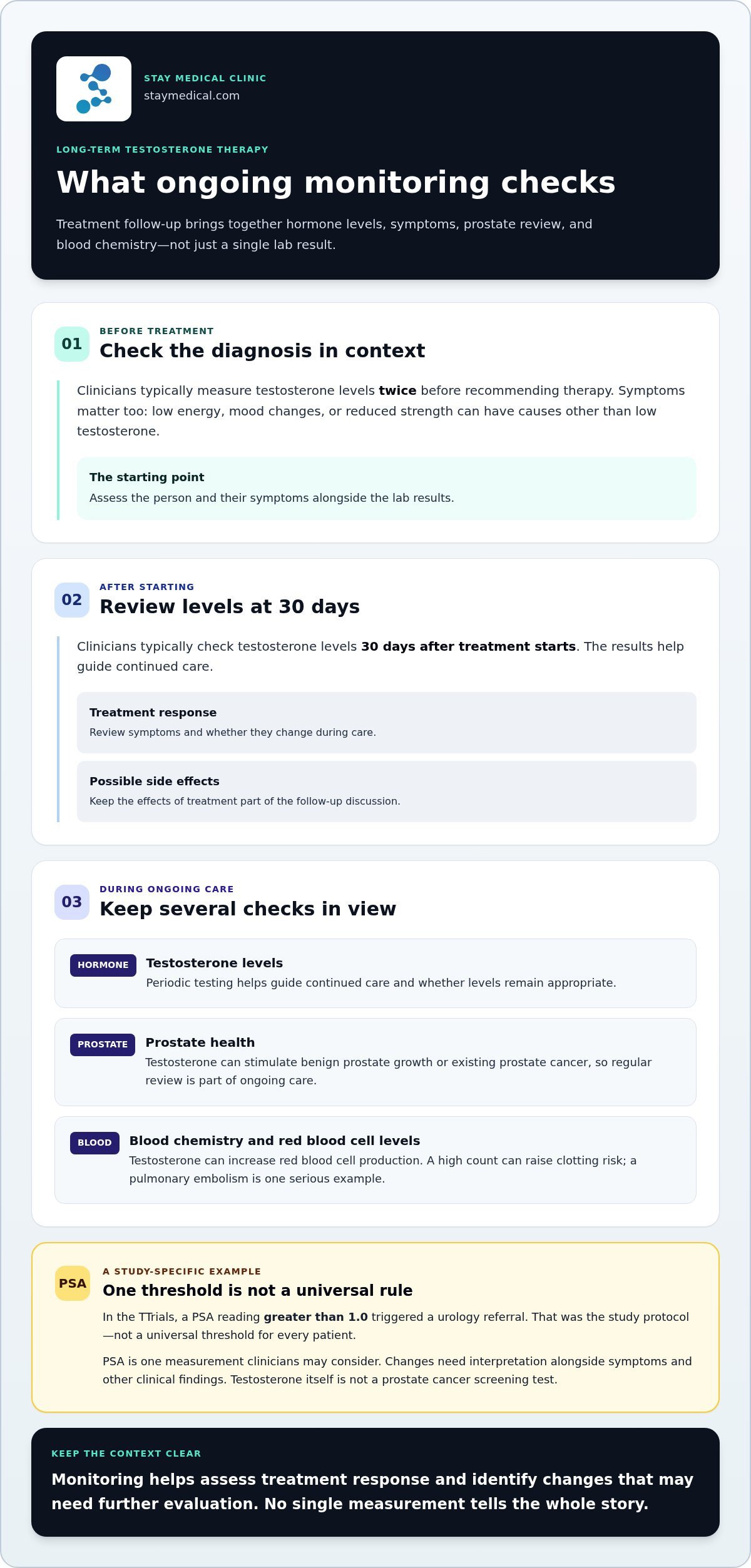
Long-term testosterone replacement therapy calls for periodic review of symptoms, testosterone levels, prostate health, and blood chemistry. Injections, patches, and pellets follow different schedules, but that alone doesn’t show that one form delivers better long-term results or fewer side effects.
There’s no single average cost that applies to every treatment plan: price depends on the case and is given after a quote request, with formulation, laboratory testing, and follow-up among the cost factors; insurance coverage depends on the plan and medical indication.
Prostate Cancer Monitoring
Prostate monitoring means tracking prostate-related findings during treatment so changes can be assessed in context. It matters because testosterone can stimulate benign prostate growth or existing prostate cancer, making regular review part of ongoing care.
Prostate-specific antigen, or PSA, is one measurement clinicians may consider. In the TTrials, a PSA reading greater than 1.0 triggered a urology referral. That was a study protocol, not a universal threshold for every patient. A change in PSA needs interpretation alongside symptoms and other clinical findings.
Testosterone itself isn’t a prostate cancer screening test. Monitoring helps clinicians identify changes that warrant further assessment, rather than assuming that a symptom or lab result proves cancer. As of 2025, the FDA approved testosterone replacement for males with low testosterone due to a known medical condition, not natural age-related decline.
Ongoing Treatment Monitoring
Ongoing monitoring means regularly reviewing treatment response and possible side effects. It matters because testosterone can increase red blood cell production, and a high count can raise clotting risk. A pulmonary embolism is one serious example of a clot-related complication.
Clinicians typically check testosterone levels 30 days after treatment starts, then use periodic testing to guide continued care. Blood chemistry and red blood cell levels also matter; prostate review is another part of the picture. These checks help identify whether levels remain appropriate and whether treatment is affecting health beyond the original symptoms.
Monitoring applies across delivery methods, although routines differ. Injections are typically given every one to two weeks, patches are applied every day as directed, and pellets are implanted every three to six months. The schedule helps shape follow-up timing, while lab results and symptoms guide clinical decisions.
Long-term treatment should be reviewed, not treated as automatic. Clinicians weigh symptom response against findings such as rising red blood cell counts, prostate changes, or worsening sleep apnea. If symptoms haven’t improved after three to six months, a healthcare provider may recommend stopping treatment.
For readers considering treatment, testosterone replacement care is a natural point to discuss the purpose of therapy, lab monitoring, and ongoing follow-up.
Free testosterone and bone mineral density
Testosterone supports bone health, and low levels can contribute to decreased bone density. For men with low testosterone, replacement therapy may help improve bone health and prevent osteoporosis. But a change in bone mineral density isn’t the same as proof that treatment prevents fractures.
How Free Testosterone Relates to Bone
Free testosterone is the portion used in calculated free testosterone measurements. In a study, each 0.1 nmol/L increase in calculated free testosterone was associated with a 0.40-SD increase in heel bone mineral density. This is an association between hormone levels and a bone measurement, not evidence that therapy itself produces the same change.
The study did not establish a clear relationship between calculated free testosterone and fracture risk. Its confidence interval included no effect, so that finding does not establish lower fracture risk. A patient should interpret bone density and fracture outcomes as related, but distinct, measures.
Bone Density and Osteoporosis
Bone mineral density describes the amount of mineral in bone and helps characterize bone strength. Osteoporosis involves weakened bones and greater susceptibility to fractures. For a man with low testosterone and reduced bone density, addressing the hormone deficiency may be relevant to bone health, while clinical decisions also account for overall fracture risk.
Testosterone is only part of the picture. A measured testosterone level can help identify deficiency, but concerns about bone still need their own assessment. For example, someone with a history of fracture can’t infer bone strength from a testosterone result alone. Depression or fatigue may coexist with low testosterone, but those symptoms don’t measure bone density.
Study findings also need careful context. The 0.40-SD association concerns heel bone density, while the fracture estimate had a confidence interval that included no effect. Neither number promises the same outcome for an individual. They show why researchers distinguish a change in a measurement from a demonstrated reduction in fractures.
The delivery method doesn’t change that distinction. A testosterone patch is applied every day as directed, but its schedule describes how it’s used, not a proven bone outcome. The same principle applies to other forms of testosterone replacement: consider whether deficiency is present, how bone health is assessed, and whether follow-up findings support continued treatment.
In practical terms, testosterone therapy may support bone health when low testosterone is part of the clinical picture. It isn’t a stand-alone measure of bone strength or a guarantee against osteoporosis. Interpreting testosterone levels alongside bone findings gives a more complete view than relying on either result alone.
Metabolic syndrome, type 2 diabetes, and cardiovascular disease
Metabolic health and testosterone levels can influence each other, but that connection doesn’t prove testosterone therapy prevents diabetes or heart disease. Among obese men, 20% to 64% have low total or free testosterone. Obesity can accompany low levels, while metabolic illness may also affect hormone balance. Testosterone replacement is therefore not a stand-alone treatment for metabolic syndrome.
Research associations help explain the uncertainty. In one study, each 0.1 nmol/L increase in calculated free testosterone was associated with a 0.34 mmol/mol decrease in hemoglobin A1c, but the confidence interval included no effect. The same increase had an odds ratio of 1.02 for type 2 diabetes, also with a confidence interval including no effect. A separate association linked it with a 0.085-SD decrease in C-reactive protein.
Those findings describe statistical relationships, not proof that treatment changes a patient’s diabetes risk. Testosterone may affect muscle, fat distribution, and red blood cell production, but changes in those measures don’t establish a cardiovascular benefit. When interpreting a study, distinguish measured hormone associations from outcomes caused by testosterone replacement.
Cardiovascular evidence has shifted over time. In 2015, the FDA warned that testosterone use was possibly associated with increased cardiovascular risk, based on two studies. A 2013 study of more than 1,200 Veterans found that, after three years, 26% of testosterone-treated men had died or experienced a heart attack or stroke, compared with 20% of men who didn’t receive therapy. A 2015 database study of more than 83,000 patients found lower risks of heart attack, stroke, or death among men whose low testosterone was restored to normal.
More recent evidence adds context, not a simple verdict. Results from a large randomized trial in 2024 found testosterone gel wasn’t associated with increased heart risks over a medium-length period. Few studies examine effects over decades, so those findings don’t settle lifetime cardiovascular safety. They also don’t erase earlier conflicting results.
Prescribed treatment aims to keep testosterone within the normal physiological range, not at excessive levels. Supraphysiological levels can raise blood pressure and cardiac stress, elevate hematocrit, and cause unfavorable lipid changes. Increased red blood cell production matters because a high count can raise clot risk. Testosterone levels, blood pressure, blood chemistry, and symptoms all help clarify treatment’s balance of effects.
Sexual function, lean body mass and bone mineral density
For men with low testosterone, treatment may affect sexual desire, body composition, muscle strength, and bone health. These are different outcomes, so a change in one doesn’t establish improvement in the others.
Sexual Desire and Erectile Dysfunction
Sexual desire means interest in sexual activity, while erectile dysfunction means difficulty achieving or maintaining an erection. Testosterone therapy may improve sexual desire and overall sexual satisfaction in men with low levels. It can also improve some aspects of erectile function, but increased libido doesn’t necessarily resolve erection difficulties.
This distinction helps set a clearer treatment goal: a patient may notice greater desire while still experiencing erectile problems. Consider sexual changes alongside other symptoms and clinical findings, rather than treating them as the sole measure of hormone response.
Lean Body Mass
Lean body mass includes body tissue other than fat, including muscle. Testosterone replacement may support increased muscle mass and strength when combined with exercise, so treatment alone isn’t the whole picture. For example, resistance exercise gives muscles a direct stimulus alongside the hormone’s effects.
One study found each 0.1 nmol/L increase in calculated free testosterone was associated with a 1.91% increase in body fat-free percentage and a 1.88% decrease in body fat percentage. These are associations, not a promised result from injections or another treatment form. They also describe body composition, not strength by itself.
Testosterone affects more than muscle. It can enlarge breasts in some men and suppress sperm production, so weigh changes in body composition alongside other effects. A medical assessment considers a patient’s goals and symptoms, rather than treating a normal-looking physique as evidence of healthy testosterone levels.
Bone Mineral Density
Bone mineral density measures the mineral content of bone and helps assess bone health. In men with low testosterone, therapy may support bone density, but density and fracture risk are separate outcomes. A stronger result on a bone measurement doesn’t by itself establish that fractures will be prevented.
For example, a study linked each 0.1 nmol/L increase in calculated free testosterone with a 0.40-SD increase in heel bone mineral density. Its estimate for all fractures had a confidence interval that included no effect. Those findings help explain why clinicians consider bone measures and fracture history separately.
Sexual function, muscle, and bone each offer a different view of health. Reviewing symptoms, exercise, hormone levels, and relevant medical findings together gives a more balanced picture of treatment response.
Stay Medical Clinic: Weight Loss Program
Stay Medical Clinic’s Weight Loss Program may be relevant if weight management is part of your broader health goals. Obesity and low testosterone can occur together, but weight care and testosterone replacement address different needs. A primary care visit can help put symptoms, health priorities, and treatment options into context for patients in Miami, Brickell, Coral Gables, and surrounding communities.
If you’re exploring testosterone replacement, discussing your symptoms and medical history can help clarify whether it fits your needs. If weight loss is your focus, Stay Medical Clinic’s Weight Loss Program provides an opportunity to discuss that goal as part of your care. The right next step depends on what you hope to address.
Contact Stay Medical Clinic to discuss your health goals.
Take the Next Step Toward Personalized Care
The potential long term benefits of testosterone therapy matter most when treatment fits your health priorities, symptoms, and medical goals. Bring those priorities to a focused conversation rather than choosing treatment based on a single outcome or expectation.
Stay Medical Clinic offers Testosterone Replacement for men exploring hormone care, a Weight Loss Program for those working toward weight-related goals, and IV Therapy as another wellness service. These options address different needs, so start by identifying what you want support with and discussing it as part of your care.
Approach the decision with curiosity and clear goals. A conversation can help you consider the direction that feels appropriate for your health journey.
Each informed step can bring greater clarity to your path forward.
Frequently Asked Questions
What is testosterone?
Testosterone is a hormone produced primarily in the testicles. It supports functions such as sex drive, sperm production, muscle strength, bone density, and red blood cell production. The body regulates hormone levels through signals involving the brain and testicles. A blood test measures testosterone, but the result needs to be interpreted alongside symptoms and health history, not treated as a complete picture on its own.
Does a naturally declining testosterone level cause the signs and symptoms of aging?
A natural decline can contribute to some changes, but it doesn’t explain every sign of aging. Testosterone levels typically decline by about 1% per year after age 30 or 40. Fatigue, low mood, or reduced concentration can also relate to medication effects, sleep apnea, thyroid problems, diabetes, or depression. In the United States, as of 2025, the FDA approved therapy for low testosterone due to a known medical condition, not natural age-related decline.
How does TRT work?
TRT supplies testosterone from outside the body, using a prescribed formulation such as a gel or injection. The added hormone can raise measured testosterone levels while reducing signals from the brain that stimulate testicular function. This can lower the body’s own testosterone and sperm production. The type of treatment affects how it’s administered: injections and products applied to the skin, for example, follow different routines.
How long can you stay on testosterone replacement therapy?
Testosterone replacement therapy can continue long term while it helps the symptoms being treated and doesn’t cause health problems. Continued treatment involves reviewing both benefits and potential effects, rather than assuming it must continue indefinitely. The reason for treatment, symptom response, lab findings, fertility plans, and changes in health all inform that decision. A useful discussion includes what improvement would mean for you and how it will be assessed.
How long does it take to see results from TRT?
Different symptoms can change on different timelines, so track the specific concern that led you to consider treatment. For example, note changes in sexual desire separately from changes in strength or day-to-day energy. A healthcare provider typically checks testosterone levels 30 days after treatment starts, but that lab result alone doesn’t show whether you feel or function better. Compare symptom patterns and test results during follow-up.
Is TRT safe?
TRT safety depends on the reason for treatment, dose, health history, and follow-up findings. Possible effects include acne, breast swelling or tenderness, ankle swelling, and worsened sleep apnea. Treatment can also raise red blood cell production, which may increase clot risk. Men planning biological children should discuss fertility before starting, because testosterone can reduce sperm production. Monitoring helps identify changes that affect the balance of benefits and risks.
Once you start TRT, can you stop?
Yes, treatment can be stopped, but the decision should account for suppressed natural testosterone production. Some men feel a marked difference after stopping while their own production recovers. Symptoms may return if the underlying deficiency remains. Before changing treatment, consider why it was started, what has changed, and whether fertility is a current goal. These details help frame a safe discussion about stopping or revising the plan.
Should you talk to your doctor about testosterone therapy?
Yes, discuss persistent symptoms such as reduced sexual desire, fewer spontaneous erections, or loss of strength, especially when they affect daily life. Testosterone is measured with a blood test, typically between 7 am and 10 am, and clinicians usually take two measurements before recommending therapy. Readers in Aventura, Bal Harbour, Bay Harbor Islands, Biscayne Park, Coral Gables, Cutler Bay, Doral, El Portal, Florida City, Golden Beach, Hialeah, Hialeah Gardens, Miami, Brickell, and Key Biscaya can seek local medical guidance.
Disclaimer
This content is for informational purposes only and does not replace evaluation, diagnosis, or treatment by a medical professional. Always consult a qualified healthcare provider for personalized care.