

Best Foods to Eat on Testosterone Therapy: A Practical Guide
October 19, 2026
What if stopping semaglutide is less like flipping a switch and more like planning a transition? If you’re asking what happens when you stop taking semaglutide, it helps to know that appetite, weight, and blood sugar may change as the medication’s effects fade. That can feel unsettling, especially if you’re unsure whether a symptom is a medication effect or your body returning to its previous patterns.
Your questions are understandable. Increased hunger or weight changes aren’t a personal failure, and stopping semaglutide isn’t typically associated with clinical withdrawal. If you take it for type 2 diabetes, your blood sugar may rise after stopping, so a plan for monitoring and ongoing care matters.
This article explains what may change, why experiences differ, and which symptoms deserve a conversation with a healthcare professional. You’ll also learn how a clinician can help you consider whether a gradual dose change is appropriate, monitor your health, and plan practical next steps around your individual needs. A supported transition can bring more clarity to your decision, whether you’re stopping because of side effects, a change in your goals, or another health consideration.
Key Takeaways
- What happens when you stop taking semaglutide can vary based on your treatment goals, health history, and other individual factors.
- Learn why hunger and fullness cues may shift as the medication’s effects fade, and why this doesn’t mean everyone will regain weight.
- Understand why follow-up considerations differ for weight management and type 2 diabetes, including the importance of monitoring blood sugar when relevant.
- Use a clinician-guided checklist to clarify your reasons for stopping, discuss your options, and plan monitoring and follow-up.
- Explore how Stay Medical Clinic’s Weight Loss Program provides ongoing monitoring, medication management, and clinical oversight in Brickell, Miami.
What Happens When You Stop Taking Semaglutide? The Changes to Understand First
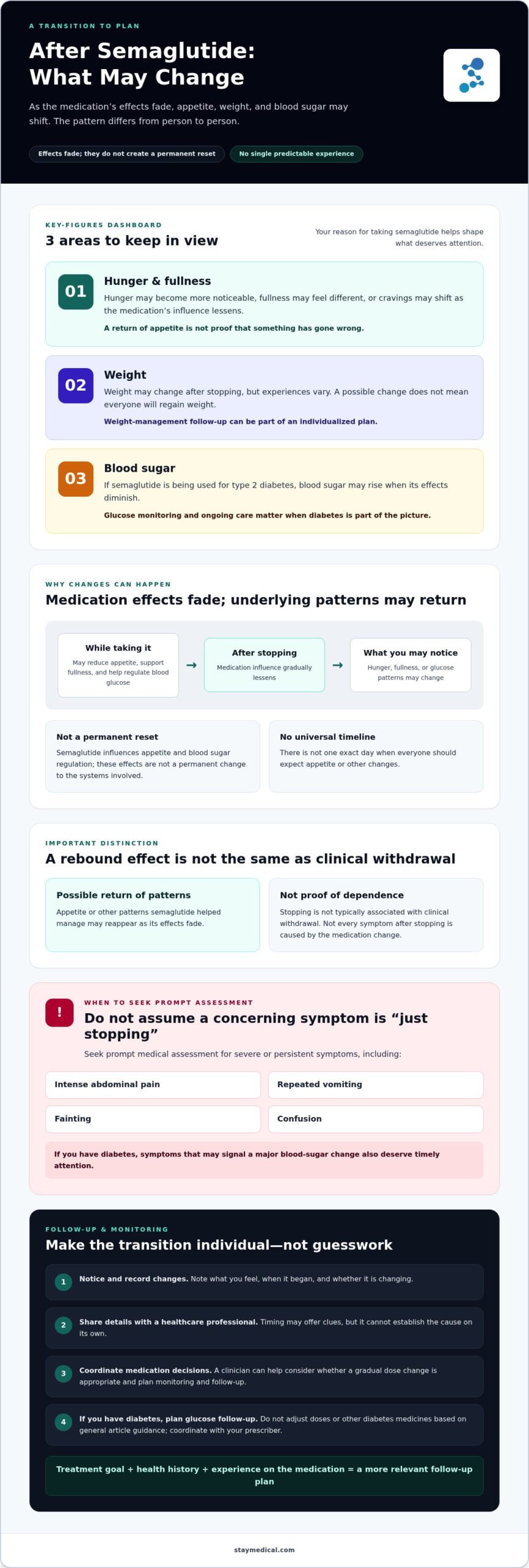
Uncertainty after a medication change is understandable. You may wonder whether a new sensation is related to stopping, whether the effects semaglutide helped manage are returning, or whether something else is going on. There isn’t one predictable experience: changes can differ from person to person, and the reason you were prescribed semaglutide matters.
Rebound effects are the possible return of symptoms or health patterns that semaglutide had been helping manage, not proof of addiction or a universal withdrawal syndrome. For example, appetite may increase as the medication’s effects on hunger and fullness fade. That possibility doesn’t mean everyone will notice the same change, or that every symptom after stopping is caused by the medication change.
Is stopping semaglutide the same as having withdrawal?
“Withdrawal” can be an imprecise way to describe what happens after treatment ends. It may suggest a classic syndrome caused by physical dependence, while changes after semaglutide may instead reflect the fading of its effects and the return of underlying patterns. For background on the medication’s uses and effects, see Semaglutide on Wikipedia.
That distinction helps, but it doesn’t mean stopping is always symptom-free. A change in appetite may fit a rebound effect; a new or worsening symptom could have another cause, including an unrelated health issue or a condition the medication was helping manage. Timing can offer clues, but it can’t establish the cause on its own. Note what you’re experiencing, when it began, and whether it’s changing, then share that information with a healthcare professional.
Mild, familiar changes may be appropriate to discuss during planned follow-up. Seek prompt medical assessment for severe or persistent symptoms, such as intense abdominal pain, repeated vomiting, fainting, or confusion. If you have diabetes, symptoms that may signal a major blood-sugar change also deserve timely attention. Don’t assume that a concerning symptom is simply part of stopping.
Why the reason for taking semaglutide matters
Semaglutide may be prescribed to support weight management or to help control blood sugar in type 2 diabetes. These goals can overlap, but the health considerations after stopping aren’t identical. A person focused on weight management may be watching for changes in hunger or weight; someone taking it for diabetes also needs to consider how treatment changes could affect glucose control.
This is why the question what happens when you stop taking semaglutide needs an individual answer. Your treatment indication, health history, and experience on the medication all shape what deserves attention. The next sections look more closely at how appetite, weight, and blood sugar may differ, then outline how to discuss a transition with your prescriber.
How Semaglutide Works, and Why Its Effects Can Change After Stopping
Semaglutide belongs to a group of medicines called GLP-1 receptor agonists. In plain language, it acts like a natural hormone involved in appetite and blood sugar regulation. This can influence how hungry you feel, how quickly you feel full, and how your body responds to glucose. These are medication effects, not a permanent reset of the systems that regulate appetite or blood sugar.
By activating GLP-1 receptors, semaglutide can reduce appetite, support fullness, and help regulate blood glucose; as its effects diminish after treatment ends, those influences may lessen too. That helps explain why what happens when you stop taking semaglutide may include changes in hunger cues or blood sugar, though the pattern and degree vary between individuals.
How semaglutide affects appetite and fullness
Semaglutide acts on pathways involved in appetite and may slow the movement of food from the stomach, supporting a longer-lasting sense of fullness for some people. While taking it, you might find that a usual portion feels satisfying or that thoughts about food are less prominent. Those experiences aren’t identical for everyone, and they can also be shaped by habits, health, and other factors.
After stopping, the medicine’s influence gradually fades rather than disappearing as a permanent change. Hunger may become more noticeable, fullness may feel different, or cravings may shift. A return of appetite doesn’t necessarily mean anything has gone wrong; it may reflect the reduction of a medication effect. There isn’t one exact day when everyone should expect these changes.
How semaglutide relates to blood sugar
Semaglutide also supports glucose regulation. It helps the body release insulin in response to elevated blood sugar and reduces glucagon, a hormone that can raise blood sugar. It may also slow stomach emptying, affecting how quickly glucose from food enters the bloodstream. These actions help explain its role in treatment for type 2 diabetes.
If you take semaglutide for diabetes, reduced medication effects may affect your glucose levels. That’s why blood sugar follow-up and a plan tailored to your treatment matter. Don’t change doses or adjust other diabetes medicines based on general article guidance; coordinate medication decisions and monitoring with your prescriber. If your readings change or you notice symptoms that concern you, share those details promptly with your healthcare professional.
The medication’s influence doesn’t end immediately after the last dose. Semaglutide leaves the body gradually, so changes may emerge over time rather than all at once. The pace can differ, and an individual’s experience can depend on treatment history and health circumstances. A clinician can help interpret changes in context instead of assuming every shift in appetite or glucose has the same explanation.
If you’re considering a change and would value an individualized conversation, explore personalized weight-management care as one way to discuss your goals and questions with a clinician.
Appetite, Weight, and Blood Sugar After Stopping: What May Differ
The changes to watch depend partly on why semaglutide was prescribed. Appetite, weight, and glucose may respond differently after treatment ends, and a general pattern can’t predict what will happen to you. This comparison highlights questions to discuss with your prescriber, not guaranteed outcomes.
| Treatment goal | What may change | Follow-up to discuss |
|---|---|---|
| Weight management | Hunger or fullness cues may shift, and weight may change. Regain is possible, not inevitable. | How to track changes and support sustainable nutrition and activity habits. |
| Type 2 diabetes | Blood glucose may rise if medication effects that supported control diminish. | Glucose monitoring and whether the treatment plan needs adjustment. |
If semaglutide was prescribed for weight management
As treatment effects diminish, you may notice that hunger returns sooner between meals or that a portion feels less filling than it did while taking semaglutide. Weight can increase for some people, but the amount and timing vary, and not everyone regains weight. These changes aren’t a measure of willpower or personal failure; they’re a reason to revisit the plan with care.
Focus on routines you can sustain rather than reacting to a short-term change. Regular meals with satisfying sources of protein and fiber, movement that fits your abilities, and consistent sleep can support overall health. If you track weight, consider looking at patterns over time instead of treating a single measurement as a verdict. A clinician can help put changes in context and discuss practical next steps. Stay Medical’s Weight Loss Program in Brickell includes ongoing monitoring, medication management, and clinical oversight.
If semaglutide was prescribed for type 2 diabetes
For diabetes, the central concern is whether glucose remains managed as treatment changes. Your readings may shift, and symptoms alone can’t reliably show whether blood sugar is in your target range. Discuss with your prescriber how and when to monitor, which readings or symptoms should prompt contact, and whether another treatment approach is appropriate for you.
Don’t stop, restart, or change semaglutide or another diabetes medication on your own. The right plan depends on your health and the full treatment regimen. If you’ve already stopped, tell your prescriber when your last dose was and share any glucose readings you have. Seek prompt medical advice for concerning symptoms or readings, rather than waiting for a routine visit.
In short, what happens when you stop taking semaglutide depends in part on the condition being treated. Weight-management follow-up can focus on appetite, weight trends, and supportive habits; diabetes follow-up must also account for glucose control. In either case, a personalized plan is more useful than assuming everyone will have the same response.
How to Prepare for Stopping Semaglutide: A Clinician-Guided Checklist
A thoughtful transition starts with a conversation, not a guessed schedule. If you’re considering stopping semaglutide, the right approach depends on why you take it, your health history, and other medications. Stopping or tapering isn’t a one-size-fits-all decision, so don’t change your dose without guidance from your prescriber.
- Clarify your reason. Note what’s prompting the decision, such as side effects, a change in treatment goals, or another health consideration. Be candid about what feels difficult and what you hope will change.
- Contact your prescriber before changing treatment. Discuss whether stopping is appropriate for your circumstances and whether a transition plan is needed. Tapering may be considered in some situations, but it isn’t a universal instruction or a schedule to create on your own.
- Agree on what to monitor. Decide which changes matter for you and how often to record them. If you have diabetes, follow the glucose-monitoring and reporting instructions your clinician gives you.
- Arrange follow-up. Set a plan for checking in and reviewing changes, especially if your symptoms, appetite, weight pattern, or glucose readings raise concerns.
What to discuss with the prescribing clinician
Bring your reason for stopping, current concerns, symptoms, treatment goals, and a list of medications you take. Mention changes you’ve already made, including the date of your last dose if you’ve stopped. Ask what signs or readings should prompt a call, what follow-up makes sense, and whether other treatment options should be discussed. A conversation is a way to make an informed plan, not a commitment to continue semaglutide.
For people pursuing weight management, a Weight Loss Program in Brickell can include ongoing monitoring, medication management, and clinical oversight as goals or treatment needs evolve.
What to monitor after the last dose
Keep notes that are useful, not burdensome. You might record changes in appetite, how full you feel after meals, symptoms, and weight trends at a frequency that feels reasonable. Avoid frequent weighing if it increases distress, and don’t use a log to diagnose the cause of a symptom. For diabetes, follow your clinician’s specific instructions for glucose checks and reporting, rather than creating a new schedule yourself.
Contact a healthcare professional promptly about severe, persistent, or unusual symptoms, or glucose readings outside the range your clinician has advised you to act on. If symptoms feel urgent or rapidly worsen, seek urgent medical assessment. Don’t assume a concerning change is simply part of stopping; a clinician can help assess what may be happening and what to do next.
Personalized Semaglutide Follow-Up in Brickell, Miami
Deciding what to do after stopping semaglutide can bring up questions that don’t have one universal answer. A follow-up conversation can help you review why you stopped, what you’ve noticed since treatment ended, and what matters most to you now. The goal is to understand your circumstances and consider appropriate next steps, not to assume you should continue or restart medication.
Bring practical details if you have them: when you stopped, any symptoms or appetite changes, weight trends you’ve noticed, and questions about your treatment goals. If you take semaglutide for diabetes, share relevant glucose readings and follow the monitoring instructions from your clinician. These details can help make the discussion specific to your experience rather than based on general expectations about what happens when you stop taking semaglutide.
What a personalized follow-up conversation can cover
A clinician can discuss your reasons for stopping, concerns about changes, and the role medication has played in your care. Together, you can consider whether further follow-up, medication management, or other weight-management support is appropriate for your situation. That conversation doesn’t obligate you to take semaglutide; it creates space to weigh your options with clinical guidance.
Stay Medical’s Weight Loss Program includes ongoing monitoring, medication management, and clinical oversight. Its Weight Loss Program in Brickell can support follow-up that considers your goals and concerns as they evolve. The focus is on individualized care and informed decisions, without promising a particular outcome.
A welcoming next step for Miami-area patients
Stay Medical is located at 33 SW 2nd Ave Suite 502, Miami, FL 33130. Care is intentional and personalized, built on trust, clarity, and integrity, with attention to what truly matters in your health journey. You can bring your questions whether you’re unsure about stopping, have already stopped, or simply want to understand what changes deserve attention.
For readers in Aventura, Bal Harbour, Bay Harbor Islands, Biscayne Park, Coral Gables, Cutler Bay, Doral, El Portal, Florida City, Golden Beach, Hialeah, Hialeah Gardens, Miami, Brickell, and Key Biscaya, Stay Medical’s Miami clinic offers a local place to discuss weight-management care and your questions with a clinician.
A conversation can help you make sense of your experience and identify a practical path forward. It isn’t a prescription to continue treatment, and you can discuss your circumstances without pressure to restart medication. If your treatment goal or health needs have changed, that belongs in the conversation too.
For Miami-area patients, personalized follow-up can provide a clearer way to review treatment goals, concerns, and changes after stopping. Whether you want to discuss ongoing weight-management care or understand what questions to raise with a clinician, a supportive next step begins with your individual needs.
Connect with Stay Medical
Choose a Next Step That Fits Your Health
Deciding what happens next after semaglutide is a personal health choice, not a test you need to pass. There’s no single path that fits everyone. A thoughtful next step is to bring your questions, priorities, and any changes you’ve noticed to a clinician, then consider your options with support and clear information.
If you’re still weighing the decision, you don’t have to settle it all at once. A conversation can help you focus on what matters to you now and what kind of follow-up feels appropriate. Stay Medical’s approach is intentional and personalized, built on trust, clarity, and integrity. Its Weight Loss Program includes ongoing monitoring, medication management, and clinical oversight, without making any one medication the required choice.
Your experience deserves thoughtful attention, and your next step can begin with an honest conversation. Move forward at a pace that feels informed and grounded in your individual needs.
Frequently Asked Questions
Can semaglutide cause withdrawal symptoms if you stop taking it?
Stopping semaglutide isn’t generally described as causing a classic withdrawal syndrome, but that doesn’t mean you’ll feel no changes. Increased hunger or changes in glucose or weight may reflect effects the medication had been helping manage. Other symptoms can have different causes, so don’t dismiss them or assume they’re related to stopping. Tell your prescriber what you’re experiencing, especially if symptoms are severe, unusual, or worsening.
How long does semaglutide stay in your body after your last dose?
Semaglutide leaves your body gradually, not immediately. The research cited for this article estimates that it may take about five to seven weeks to clear after the last dose. That estimate doesn’t tell you exactly when appetite, glucose, or weight changes will happen, since those responses vary. Ask your clinician how the medication’s elimination timeline relates to your treatment history, health, and other medicines.
Will you regain all the weight after stopping semaglutide?
No, regaining all the weight isn’t inevitable. People’s experiences differ, and changes in appetite or weight can depend on factors such as treatment duration, health circumstances, and support after stopping. Instead of treating a particular number on the scale as a prediction, discuss a realistic way to follow your weight trend with your clinician. They can help you consider supportive next steps without promising that any one approach will prevent regain.
Can you restart semaglutide after stopping it?
Restarting should be a decision made with your prescribing clinician, not an automatic next step. They’ll need to consider why you stopped, how long it’s been since your last dose, your current health, and the medication’s prescribing instructions. Don’t restart using a previous dose or make your own schedule. If treatment is being reconsidered, contact the prescriber for individualized direction before taking another dose.
Should you taper semaglutide or stop it all at once?
There’s no universal stopping schedule that an online article can safely prescribe. Whether changing the dose gradually is appropriate depends on your treatment plan and individual circumstances. Don’t create a taper yourself or take this as advice to stop suddenly. Before changing how you take semaglutide, speak with your prescriber about your reason for stopping and the plan that best fits your care.
What should people with diabetes monitor after stopping semaglutide?
Follow your clinician’s instructions for checking and reporting blood glucose, since readings may change when treatment changes. Keep a record in the format your clinician recommends, and share readings as directed. Don’t adjust semaglutide or other diabetes medicines on your own. Get prompt medical advice about concerning readings or symptoms; for an emergency, follow local emergency guidance and seek urgent care.
When should you contact a clinician after stopping semaglutide?
Contact your prescriber if you’re considering stopping, have already stopped and have questions, notice meaningful changes, or need a plan for weight management or diabetes care. Seek prompt assessment if symptoms are severe or getting worse. For Miami-area readers, a clinician conversation can help put your concerns in context and identify appropriate follow-up. An article can offer general information, but it can’t determine what’s causing your symptoms.
Connect with Stay Medical to discuss personalized weight-management care at the Brickell clinic.
Disclaimer
This content is for informational purposes only and does not replace evaluation, diagnosis, or treatment by a medical professional. Always consult a qualified healthcare provider for personalized care.