

Vitamin C IV Drip Near Me: What to Know Before Choosing Care in Miami
October 18, 2026
What is the best food to eat on testosterone therapy? Usually, it is not one special ingredient but a balanced meal you can enjoy consistently. It is understandable to look for clear answers when online advice ranges from sensible nutrition tips to bold claims about “boosting” testosterone. Food can support general health during treatment, but it is not a substitute for medical care or a guaranteed way to change hormone levels.
This guide explains how to build practical, balanced meals during testosterone therapy, which food groups can contribute to overall well-being, and how to combine them in realistic ways. You will find straightforward examples featuring protein, vegetables, whole-food carbohydrates, and sources of healthy fats, without rigid rules or miracle-food promises.
Nutrition needs vary with health history, preferences, and treatment goals, so one eating pattern will not suit everyone. We will also clarify where food choices end and clinician guidance begins, including when to raise questions about symptoms or treatment at follow-up. The aim is a thoughtful, sustainable approach that complements personalized care.
Key Takeaways
- Think of food as support for overall health during testosterone therapy, not a replacement for prescribed treatment or a guaranteed hormone booster.
- Build a flexible eating pattern with varied protein, colorful produce, fiber-rich foods, and sources of unsaturated fats.
- Find the best food to eat on testosterone therapy by focusing on balanced combinations and practical swaps, rather than searching for one perfect ingredient.
- Use a simple meal-building framework to adapt everyday meals to your schedule, preferences, and ingredients on hand.
- Bring questions about symptoms, nutrition, or treatment to clinician follow-up; personalized care can help keep those conversations grounded in your needs.
Best Foods for Testosterone Therapy: Pros and Cons
Nutrition during testosterone replacement therapy (TRT) is part of your broader health routine, not a substitute for prescribed treatment. A balanced eating pattern can help you meet everyday nutritional needs, but it should not be presented as a way to guarantee a change in testosterone levels or treatment outcomes. There is no single “best food” that reliably boosts testosterone for everyone.
Individual needs depend on health history, food preferences, activity, and clinician guidance. For background on what TRT involves, see this Testosterone Replacement Therapy (TRT) Overview. The distinction is simple: food can support general health, while TRT is a medical treatment guided by a clinician.
For a visual discussion of eating during TRT, watch this video:
Can food improve testosterone therapy results?
Healthy eating can contribute to overall well-being, but a particular meal cannot be counted on to improve how TRT works or produce a specific change in energy, muscle, mood, or hormone levels. If you are looking for the best food to eat on testosterone therapy, focus on a sensible, varied pattern rather than a single ingredient.
Food cannot diagnose low testosterone or replace clinician-directed treatment. A symptom or treatment concern deserves medical discussion, not a diet-based assumption. Questions about clinician-guided Testosterone Replacement, nutrition, or changes in how you feel can be raised during follow-up and considered in the context of your care.
Why a balanced eating pattern matters more than a miracle food
Variety makes meals adaptable and avoids relying on a narrow list of supposedly hormone-boosting foods. Across the day, rotate protein foods, vegetables and fruits, grains or other fiber-rich foods, and sources of unsaturated fats. Choose options that suit your tastes and routine; there is no single required combination.
Consistency is often more practical than strict rules that are difficult to maintain. Instead of eliminating whole food groups or following a short-term “TRT diet,” build meals from foods you enjoy and can access regularly. If a health condition, allergy, prescribed eating plan, or activity level affects what suits you, individual guidance matters. Aim for an approach that complements care, not a rigid formula that promises medical results.
Which Nutrients and Food Groups Belong in a TRT-Supportive Eating Pattern?
A practical eating pattern uses food groups that contribute different things to general nutrition. Protein foods provide protein; vegetables, fruits, beans, and whole grains add variety and fiber; and foods such as nuts, seeds, avocado, and oily fish offer unsaturated fats. These are useful building blocks, not foods proven to boost testosterone or alter TRT outcomes.
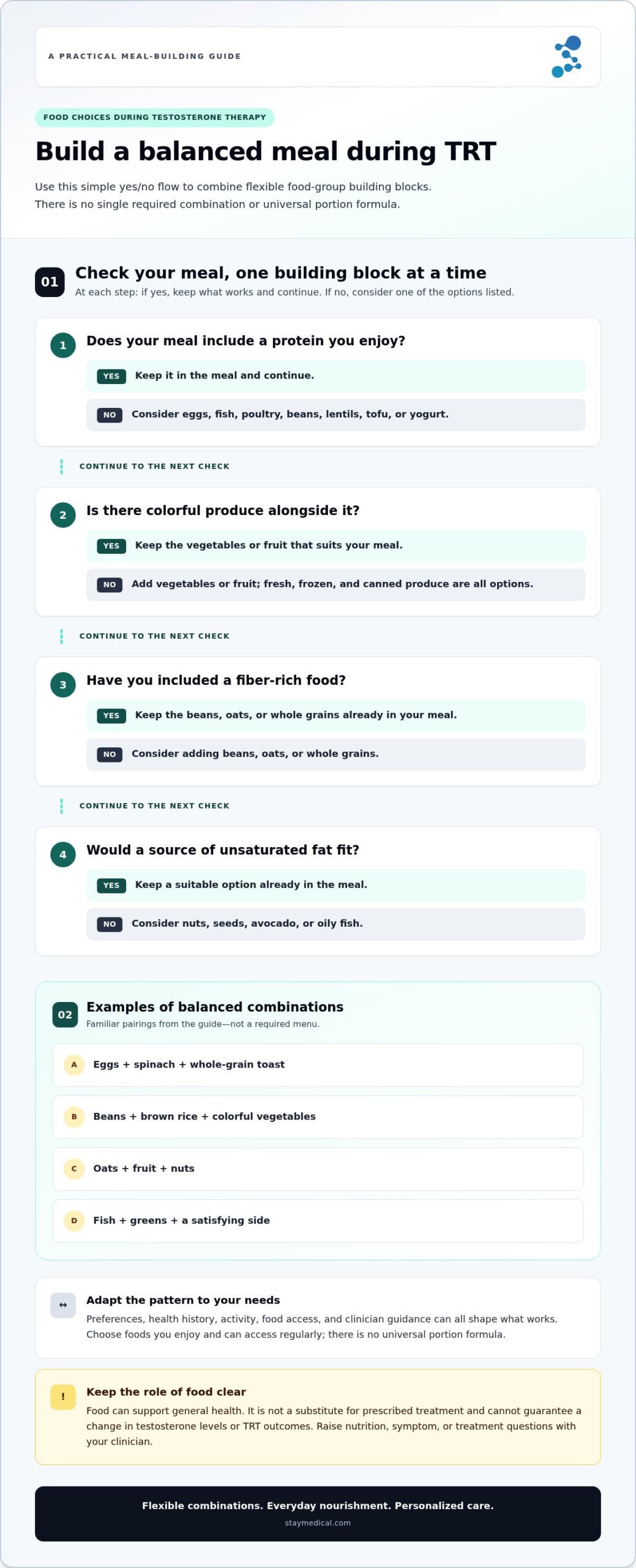
A balanced plate can bring together a protein you enjoy, colorful produce, a fiber-rich food, and a source of unsaturated fat, with choices and portions suited to your needs. There is no universal portion formula. Appetite, health history, activity, food preferences, and clinician guidance can all shape what works for you.
Protein, fiber, and colorful produce: practical everyday choices
Protein can come from animal or plant foods. Depending on your preferences, options include eggs, fish, poultry, beans, lentils, tofu, or yogurt. Rotating sources can make meals more interesting and flexible without requiring a TRT-specific protein target.
For fiber and variety, add vegetables or fruit alongside beans, oats, or whole grains. Eggs with spinach and whole-grain toast, or beans with brown rice and colorful vegetables, combine several food groups in familiar meals. Fresh, frozen, and canned produce can all make it easier to include fruits and vegetables in different schedules and budgets.
Dietary fats, hydration, and micronutrient-rich foods
Unsaturated fats are found in foods such as nuts, seeds, avocado, and oily fish. Add nuts or seeds to oatmeal, use avocado in a sandwich, or choose fish as a meal protein when it suits your preferences. These foods contribute to a varied pattern; they should not be framed as a direct way to optimize testosterone.
Water is a straightforward everyday drink, while nutrient-dense foods such as vegetables, fruit, beans, eggs, and fish can contribute a range of nutrients. Supplements or exact nutrient doses are not routine requirements for everyone on TRT. If you have a health condition, dietary restriction, or question about a specific nutrient, discuss that context with your clinician rather than assuming a food or supplement is right for you.
In short, the best food to eat on testosterone therapy is not a single item. Think in combinations: oats with fruit and nuts; beans with vegetables and grains; or fish with greens and a satisfying side. Choose options you can return to consistently, then adapt them to your routine and personal needs. For questions about how nutrition fits alongside Testosterone Replacement care, a clinician can connect the discussion to your individual health.
How Do Common TRT Food Choices Compare in Everyday Meals?
Use food groups as flexible building blocks, not a scorecard of “good” and “bad” foods. A meal can vary with what you enjoy, what is available, and any health needs or clinician advice that shape your choices. The comparisons below offer practical options, not a prescription or a promise about TRT results.
| Food group | Everyday examples | Practical reason to include them |
|---|---|---|
| Protein foods | Eggs, fish, lean meat, beans, lentils, or tofu | Adds a protein source to meals, with animal and plant options to choose from. |
| Vegetables and fruit | Spinach, peppers, frozen mixed vegetables, apples, or berries | Brings color, variety, and useful options for sides, toppings, or snacks. |
| Fiber-rich foods | Oats, beans, brown rice, or whole-grain bread | Can make meals more filling and pair easily with protein and produce. |
| Unsaturated-fat sources | Nuts, seeds, avocado, or oily fish | Offers flexible additions, such as seeds on oats or avocado in a sandwich. |
| Convenience choices | Canned beans, frozen vegetables, or plain yogurt | Can simplify meals when time, ingredients, or cooking options are limited. |
These choices are interchangeable. Fresh fish may suit one dinner, while beans or eggs may be more convenient another day. A minimally processed option can be a useful default, but an occasional packaged meal or treat does not define your overall pattern.
Simple swaps for breakfast, lunch, dinner, and snacks
Think in combinations rather than a fixed menu. At breakfast, try eggs with fruit or oats topped with nuts and berries. For lunch, pair fish or beans with vegetables and a whole-grain side. At dinner, lean meat, tofu, or lentils can each work alongside vegetables and rice or another grain.
For a snack, fruit with yogurt or a small handful of nuts may be convenient; preferences and individual needs can guide the choice. Swapping ingredients is the point. You do not need a fixed daily menu to make balanced, workable choices.
Foods to limit without creating a forbidden-food list
Sugary drinks and heavily processed foods can be moderated as part of an overall eating pattern, rather than treated as foods that must always be avoided. Choose water or an unsweetened drink more often, and add a simple side such as fruit or vegetables when it fits. One meal or snack will not negate TRT or cause treatment failure.
Alcohol guidance can vary with health history, medications, and personal circumstances, so one limit will not suit everyone. If you have a specific concern about alcohol, diet, or treatment, discuss it with your clinician. Your preferences and health needs matter more than rigid food rules.
For questions about how food choices fit your care, speak with your clinician. Stay Medical Clinic offers Testosterone Replacement care in Brickell, Miami, with attention to individual needs and long-term well-being.
How Can You Build a Flexible Day of Meals While on TRT?
A useful meal routine does not need a strict menu or special “TRT foods.” Start with a few combinations you can adjust to your schedule, preferences, and what is in the kitchen. The best food to eat on testosterone therapy is not a universal choice; the right fit depends on your health needs and the way you like to eat.
A simple meal-planning method for busy schedules
Use this three-part framework as a starting point, not a portion prescription. It works for a packed workday, a meal assembled at home, or a quick choice from available ingredients.
- Choose a protein. Consider eggs, plain yogurt, canned fish, beans, tofu, or lean meat, based on your preferences and dietary needs.
- Add produce. Include fruit or vegetables, using fresh, frozen, or canned options that fit the meal and your routine.
- Select a grain or fat. Add oats, rice, or whole-grain bread, or include a source of unsaturated fat such as nuts, seeds, or avocado.
For example, a workday breakfast might be plain yogurt with oats and fruit, while lunch could combine canned beans, frozen vegetables, and rice. Canned fish with whole-grain bread and sliced vegetables is another convenient combination. Plant-based preferences can shape the protein choice without changing the overall framework.
Rather than preparing an exact seven-day menu, choose a few repeatable combinations and keep adaptable ingredients on hand. Beans, frozen vegetables, plain yogurt, and canned fish can help when time is short. Account for allergies, foods you avoid, and any dietary advice your clinician has given you. Portions, calories, and nutrient targets should reflect individual circumstances, not a one-size-fits-all TRT rule.
When personal health needs change your food choices
Health conditions, medications, food intolerances, and personal preferences may affect which ingredients suit you. A meal that works well for one person may not be appropriate for another. Do not treat a restrictive diet or supplement routine as a required part of TRT, and discuss major eating-pattern changes with an appropriate healthcare professional, especially if you already have specific dietary guidance.
If weight management is part of your broader health goals, the weight loss program in Brickell, Miami is one option to discuss in the context of your individual needs. Keep weight-related questions separate from claims that a particular food will change TRT outcomes. Food planning can be practical and personal without becoming rigid.
Use the framework flexibly: swap ingredients, repeat convenient meals, and adjust choices as your routine changes. If a food question is connected to a health condition, medication, or treatment concern, bring it to your clinician so it can be considered alongside your care.
How Stay Medical Clinic Connects Testosterone Replacement with Personalized Care
Nutrition questions belong in a wider conversation about health, but they do not replace clinical evaluation or treatment. If you are receiving testosterone replacement, share meaningful diet changes, supplement use, new symptoms, or concerns about your treatment with your clinician. That context helps keep decisions grounded in your health history rather than online claims about one ideal food or diet.
Stay Medical Clinic offers Testosterone Replacement for men over 35 who exhibit symptoms such as tiredness, weight gain, decreased sexual desire, lack of concentration, or bad mood. The clinic’s approach is intentional and personalized, built on trust and focused on clarity, integrity, and attention to what truly matters. For Miami and Brickell readers, the clinic is located at 33 SW 2nd Ave Suite 502, Miami, FL 33130. Learn more about testosterone replacement in Brickell.
When to discuss nutrition questions with your TRT clinician
Bring questions about supplements, restrictive diets, or significant changes in eating habits to your clinician, especially if you have a health condition or take medication. Food advice does not replace evaluation, monitoring, or prescribed treatment. If testing is appropriate to your care, your clinician can guide that decision; Stay Medical Clinic offers blood testing as part of its clinical services.
Be specific: explain what you have changed, what you are considering, and whether you have noticed symptoms or other concerns. This helps place your question in the context of your treatment and health history. An online suggestion may not suit your needs, and no food choice should replace clinician guidance.
A personalized next step for Miami-area readers
There is no single nutrition plan for everyone receiving TRT. Your preferences, medical history, activity, and clinician guidance all matter. Stay Medical Clinic provides care that is intentional, personalized, and built on trust, with clarity, integrity, and attention to what truly matters. The aim is to support informed conversations about care, not to promise a particular result or prescribe a nutrition plan.
If you are a man over 35 experiencing symptoms such as tiredness, weight gain, decreased sexual desire, lack of concentration, or bad mood, a conversation about Testosterone Replacement can help clarify appropriate next steps. Questions about food can be part of that discussion, alongside symptoms and treatment concerns. Food choices may support general health, while treatment decisions remain a matter for you and your clinician.
Stay Medical Clinic serves patients in Miami and Brickell, as well as Aventura, Bal Harbour, Bay Harbor Islands, Biscayne Park, Coral Gables, Cutler Bay, Doral, El Portal, Florida City, Golden Beach, Hialeah, Hialeah Gardens, and Key Biscaya. Its clinic is at 33 SW 2nd Ave Suite 502, Miami, FL 33130.
Explore Testosterone Replacement in Brickell
Take Your Next Step with Clarity
Rather than chasing every new food claim, use nutrition questions as a starting point for a thoughtful conversation about your health. The best food to eat on testosterone therapy is not a magic ingredient; what matters is how your choices fit your needs and clinician-guided care. Keep track of questions about your diet, supplements, symptoms, or treatment so you can raise them during a medical visit.
Stay Medical Clinic offers Testosterone Replacement for men over 35 who experience symptoms such as tiredness, weight gain, decreased sexual desire, lack of concentration, or bad mood. The Brickell clinic is located at 33 SW 2nd Ave Suite 502, Miami, FL 33130. Care is grounded in an intentional, personalized approach built on trust, clarity, integrity, and attention to what matters to you.
Take an informed next step by discussing your questions and care needs with Stay Medical Clinic.
Frequently Asked Questions
Can food increase testosterone while I am on testosterone therapy?
Food is not a reliable way to increase testosterone or adjust the effects of prescribed therapy. A nutrient-dense diet supports general health, but no specific food can substitute for your treatment plan. If you are searching for the best food to eat on testosterone therapy, think in terms of meals that suit your needs, not a hormone-boosting fix. Do not change your medication or dose based on diet advice; raise treatment questions with your clinician.
What is the best breakfast to eat while on TRT?
There is no single best breakfast for everyone on TRT. A practical option might be eggs with whole-grain toast and fruit, or yogurt with oats and berries if that suits your preferences and health needs. If mornings are rushed, prepare oats ahead or choose a simple breakfast you can eat consistently. Allergies, appetite, medication instructions, and any clinician-provided diet guidance can all shape what works for you.
Should I take vitamins or supplements while on testosterone therapy?
Do not assume supplements are necessary just because you are receiving testosterone therapy. Whether a vitamin or mineral supplement is appropriate depends on your diet, health history, medications, and whether a clinician identifies a specific need. Share the product name and dose with your care team before starting it, since supplements can have side effects or interact with medications. Food and supplements are not replacements for prescribed TRT or medical follow-up.
Is soy safe to eat while taking testosterone?
For most people, ordinary soy foods such as tofu, edamame, or soy milk can fit into a varied diet, and there is no general need to avoid them solely because you take TRT. Individual allergies, intolerances, or medical advice may change what is appropriate for you. If you eat soy regularly and have a specific concern about your treatment, mention it at follow-up rather than making a major diet change based on online claims.
How much protein should I eat while on TRT?
There is no single protein target that applies to everyone on TRT. Needs can vary with body size, activity, overall diet, health conditions, and personal goals. Instead of following a number from a generic plan, discuss your needs with a qualified healthcare professional, especially if you have kidney disease or another condition affecting food choices. A clinician can help you consider your full health picture without treating TRT as a reason for a universal high-protein diet.
What happens if my diet changes while I am receiving testosterone therapy?
A change in eating habits does not automatically mean your TRT has stopped working, but it may affect aspects of your health that your clinician considers during follow-up. If you start a restrictive diet, experience a substantial weight change, or notice new symptoms, share those details rather than adjusting treatment yourself. Keeping a brief note of what changed and when can make it easier to discuss the situation clearly during care.
Do I need to avoid any foods before a testosterone blood test?
There is no one food restriction that applies to every testosterone blood test. Preparation depends on which tests were ordered and the instructions for your appointment. Follow the directions provided by your clinician or testing location, and do not fast unless instructed. If your test is in Miami or Brickell, clarify any preparation questions before the visit, particularly if other blood tests are being done at the same time.
Disclaimer
This content is for informational purposes only and does not replace evaluation, diagnosis, or treatment by a medical professional. Always consult a qualified healthcare provider for personalized care.