

Long term benefits of testosterone therapy for health
October 21, 2026
Your first primary care visit is a conversation as much as an exam. If you’re wondering what to expect at a first primary care visit, plan to share your health history, medications, symptoms, and questions, then have basic vital signs taken and discuss next steps. Bring photo identification, your insurance card, and any completed forms, and aim to arrive 15 minutes early.
It’s understandable to feel unsure about what to bring or what the appointment will involve. Primary care is a team effort: physicians, nurse practitioners, physician assistants, nurses, and medical assistants may all contribute to your care.
This guide explains what primary care includes, how to prepare your records and questions, and what may happen during the discussion and physical exam. You’ll also learn how to make the visit more useful by sharing your concerns clearly and understanding the plan before you leave.
Key Takeaways
- Gather your medical history, medication details, and questions so you can use appointment time well.
- Know which check-in documents to bring and how arriving prepared can make the process smoother.
- Understand what vital signs and parts of a physical exam may be included, and why screenings can vary.
- Learn how different members of a primary care team may contribute to your care.
- Leave the visit with a clearer sense of possible next steps, from tests to follow-up care.
Check-in documents and medical records
A new-patient visit establishes your health history, current concerns, and care needs. It may include an exam, but it covers more than a single checkup. An annual wellness check or physical focuses on preventive care, and wellness checks may not happen every year or include a physical exam.
To prepare, gather identification, insurance information, medical records, and questions before you leave home. Arriving 15 minutes early gives you time to complete paperwork and correct details before meeting the care team.
For practical guidance on sharing your concerns, watch this video from NPR:
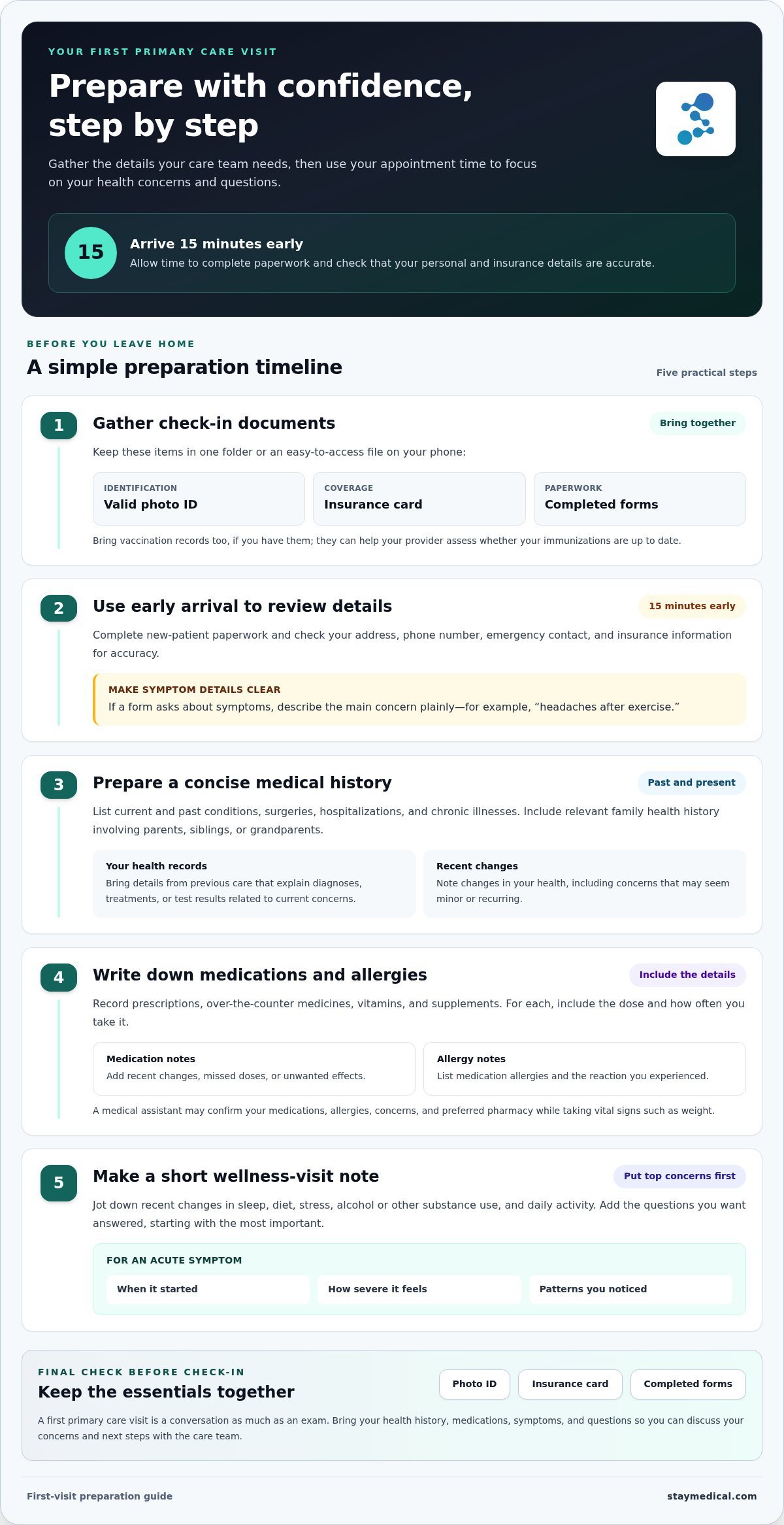
- Gather your check-in documents. Bring a valid photo ID, your insurance card, and any completed forms. Keep them together in a folder or an easy-to-access file on your phone. If you have vaccination records, bring those too; they can help your primary care provider assess whether your immunizations are up to date.
- Arrive 15 minutes early. Use that time to finish new-patient paperwork and review your personal details. Check your address, phone number, emergency contact, and insurance information for accuracy. If a form asks about symptoms, write down the main concern in clear terms, such as “headaches after exercise.”
- Prepare a concise medical history. List current and past conditions, surgeries, hospitalizations, and chronic illnesses. Include relevant family health history, such as changes affecting parents, siblings, or grandparents. If you have records from previous care, bring details that explain diagnoses, treatments, or test results related to your current concerns.
- Write down every medication and allergy. Include prescriptions, over-the-counter medicines, vitamins, and supplements, along with each dose and how often you take it. Note medication allergies and the reaction you experienced. A medical assistant may confirm your medications, allergies, concerns, and preferred pharmacy while taking vital signs such as weight.
- Make a short wellness-visit note. Record recent changes in sleep, diet, stress, alcohol or other substance use, and daily activity. Add questions you want answered, putting the most important concern first. For an acute symptom, note when it started, how severe it feels, and any patterns you’ve noticed.
Before you check in, use identification, your insurance card, and completed forms as a final three-part reminder. Set these items together so you can provide them when asked, rather than searching for each one separately. If a form is still incomplete, distinguish it from the forms you have finished; the requested check-in materials include any completed forms. Keep the identification and insurance card available alongside that paperwork. This simple grouping keeps the focus on the specific items needed at check-in: identification, an insurance card, and completed forms. Once you have gathered those materials, you can present them together and make sure each of the requested document types is represented.
What is primary care?
Primary care brings routine health needs, ongoing conditions, and preventive care into a continuing relationship with a care team. To make your first conversation useful, prepare details about your health history, current medicines, lifestyle, and concerns.
- Choose the health history details that matter now. Note past and current illnesses, surgeries, hospitalizations, and chronic conditions. Include any recent changes in your health, even if they seem minor. For example, mention recurring headaches, a new diagnosis, or a change in mobility. These details help the provider understand what needs attention and how separate concerns may be related.
- Review your family health history. Write down important conditions affecting parents, siblings, and grandparents, along with any recent changes. If a close relative was recently diagnosed with a chronic illness, include the condition and your relationship to them. Family history can inform a discussion about your own risks, preventive screenings, and questions for the care team.
- Organize medication information for review. List prescriptions, over-the-counter medicines, vitamins, and supplements, including doses and how often you take them. Note recent changes, missed doses, or unwanted effects. A clear list helps the provider understand your current treatment and consider interactions or adjustments as part of your overall care plan.
- Prepare to discuss chronic conditions and emotional health. For a condition such as asthma or diabetes, describe what has changed, what treatment you use, and which challenges affect daily life. Include concerns about stress, mood, or sleep. These topics belong in a health conversation because they can affect daily routines and the support that may be useful.
- Connect lifestyle details to your health goals. Make brief notes about sleep, exercise, diet, stress, and alcohol or other substance use. Then identify a goal, such as improving sleep or building a regular walking routine. Specific examples help turn broad hopes into practical recommendations suited to your circumstances.
- Prioritize concerns and agree on next steps. Put your most important question first, then list other symptoms or health concerns. Ask for clarification if a diagnosis, recommendation, or treatment plan is unclear. A plan may include lifestyle recommendations, medication prescriptions or adjustments, specialist referrals, follow-up visits, or tests. If ongoing support is your next step, explore primary care visit options that address routine and continuing health needs.
Physical examination
A first physical exam may combine basic measurements with checks guided by your health history. Use these steps to understand what staff may measure, what an examination can cover, and how screenings fit into your overall health plan.
Check Vital Signs
- Review each measurement with the care team. Staff typically measure height, weight, blood pressure, pulse, and temperature during a first primary care visit. These vital signs give the provider a starting picture of your health. If a result seems unexpected, ask what it means and whether it should be considered alongside your symptoms, medications, or other health information.
- Share relevant context before measurements. Mention a recent illness, a symptom affecting you that day, or a concern about weight. A medical assistant may collect vital signs before the provider’s examination, so share anything that could help interpret the readings. Don’t assume a measurement alone explains how you feel; connect it to your concern.
Complete the Physical Exam and Screenings
- Describe symptoms before the examination begins. Explain where a symptom occurs, when you notice it, and how it affects your daily routine. The provider may use these details, your family history, and your overall health to decide which parts of a general physical exam are relevant. Ask before an unfamiliar examination begins, and speak up if you feel discomfort.
- Understand the areas a general exam may cover. A physical examination may include checks of the heart, lungs, eyes, ears, nose, throat, abdomen, reflexes, and mobility. The provider may focus on particular areas based on your concerns and health history. For example, breathing symptoms can make a discussion of lung checks especially relevant. Ask what a finding means before moving on.
- Clarify the follow-up plan before you leave. Ask what happens next if the exam includes a screening, lab work, or an unexpected finding. The care plan may involve tests, follow-up visits, or specialist referrals. Note what is recommended and why, so you can distinguish routine monitoring from a next step related to a specific concern.
Discuss tests and preventive screening options. A provider may recommend blood work or urine analysis and discuss preventive screenings based on your health history and needs. Wellness checks may include routine blood work, basic skin checks, screening tests, and immunizations or boosters. While physicians focus on systemic wellness, routine health maintenance also extends to oral care through clinics like Dental Scotland. Physical exams and screenings can depend on age and risk factors, so ask how each recommendation applies to your circumstances.
Arriving prepared with insurance and identification
For a visit with or without insurance, costs depend on the appointment’s purpose, applicable benefits, and services performed; pricing is provided after a quote request. Coverage depends on plan benefits, network status, and whether care is preventive or addresses symptoms.
Appointment length depends on how much health history, discussion of concerns, and examination the visit involves. If symptoms are severe or worsening before your scheduled appointment, seek immediate medical attention rather than waiting.
- Confirm the appointment details. Review the date, time, clinic address, and whether the visit is in person or by video. Primary care appointments can be scheduled for the same day or a future day, depending on your needs. For illnesses such as colds or flu, options may include same-day or next-day visits.
- Bring your insurance card and photo ID. If you have insurance, present both at check-in so staff can match your identity with your coverage information. Keep the card accessible rather than buried in a bag, and confirm that your name and other details match your appointment record.
- Review your plan information before arriving. Check the benefits relevant to your appointment, including how your plan treats preventive care and visits for symptoms. A preventive exam and a problem-focused appointment can involve different services. If you raise a new concern during a preventive visit, describe it clearly so the care team understands why you’re bringing it up.
- Bring relevant medical records. Gather records that explain previous diagnoses, treatments, test results, or ongoing health conditions. If you have a medication list or vaccination history, keep it with those records. These details can help the provider connect your health history with the reason for your appointment.
- Arrive 15 minutes early. Use the time to complete paperwork and address check-in details before your appointment begins. Review forms for accuracy, especially your contact information and insurance details. If a form asks about symptoms, describe when they began and how they affect your daily routine.
- Prepare based on the reason for your visit. For preventive care, note questions about screenings, immunizations, or changes in your health. For an acute concern, record when symptoms started, their severity, and any patterns. For example, note whether a cough worsens at night or follows exercise.
- Tell the care team if symptoms change. If an urgent concern develops before your appointment, explain the change when seeking care rather than relying on the scheduled visit. Severe or worsening symptoms need prompt attention. Bring your ID and insurance card if you receive care in person, and share your current medications and relevant history.
There is no single stated price for a first visit, whether insured or uninsured. The cost varies with the visit’s purpose, benefits, and services, and is provided after a quote request.
Coverage may depend on your plan’s benefits and network rules, as well as whether the visit is preventive or addresses symptoms. Check your plan’s terms for the specific visit.
Primary care providers and care teams
Your first appointment may involve several professionals, not just the primary care provider. Knowing each person’s role can help you share your medical history, ask focused questions, and understand how personalized care takes shape.
- Learn who may provide your care. Primary care clinicians include physicians, nurse practitioners, and physician assistants. Each can discuss your health concerns, review your medical history, and help plan care. If you’re unsure who is leading the visit, ask about their role and how they’ll contribute to your appointment.
- Use check-in with the medical assistant to clarify details. A medical assistant may take vital signs and confirm medications, allergies, concerns, and your preferred pharmacy. Mention relevant context for a measurement, such as feeling stressed before a blood pressure reading. Correcting medication or allergy details at this stage helps the care team work with accurate information.
- Share your priorities directly with the provider. Start with the concern that matters most, then describe your symptoms, when they occur, and how they affect daily life. For example, explain whether stress disrupts your sleep or makes it harder to manage a chronic condition. Clear details help the provider understand what you want addressed during the visit.
- Ask how other team members support your care. A primary care team may include nurses, clinical pharmacists, quality specialists, psychologists, and medical assistants. Their work can support different parts of your care, such as medication questions or emotional health needs. If a team member joins the conversation, ask how their role relates to your care plan.
- Speak up when something is unclear. Share questions openly and ask for a plain-language explanation if a term or recommendation feels unfamiliar. For example, repeat the next step for a blood test or follow-up appointment to make sure you understand. Clear communication helps you take an active role in decisions about your health.
- Review the plan with the team before leaving. Ask which recommendations are priorities, who will coordinate them, and how they fit your health goals. A care plan may include lifestyle recommendations, medication changes, tests, referrals, or follow-up visits. Confirm that the plan reflects your concerns and that you know what to do next.
Clear, honest communication with your primary care provider helps ensure your concerns are understood. Ask for clarification whenever something is unclear.
Stay Medical Clinic: Weight Loss Program
Stay Medical Clinic offers Primary Care for people seeking ongoing support with their health concerns and care planning. If weight management is one of your priorities, its Weight Loss Program may be a relevant next step to discuss alongside your health history, current medications, and goals. The first primary care appointment can help you explain what you want to address and understand possible next steps. Stay Medical Clinic also offers Testosterone Replacement and IV Therapy, which address different health needs. Choosing a service depends on the reason you’re seeking care and the concerns you want to discuss. For more information or to arrange a conversation about your needs, contact Stay Medical Clinic.
Take the Next Step Toward Ongoing Care
Understanding what to expect at a first primary care visit can help you take a more active role in your health. The appointment is also a starting point for discussing what matters to you, whether that means addressing a current concern, setting a wellness goal, or planning ongoing care. Bring your priorities into the conversation, and ask how each recommendation supports them.
Stay Medical Clinic offers care options that may support different health goals, including a Weight Loss Program, Testosterone Replacement, and IV Therapy. The right next step depends on the concern you want to address and the care you’re seeking. A thoughtful conversation can help you identify what to discuss and make a clear, relevant plan.
Your health goals deserve attention and a clear path forward. Take the next step when you’re ready.
Frequently Asked Questions
What happens during a first primary care visit?
A first visit usually combines a discussion of your health with basic measurements and care planning. The provider may ask what you want help with, review your history, and decide whether an examination or tests are appropriate. Bring up any concerns you haven’t mentioned before the visit ends. For example, ask which issue to prioritize and what to do if symptoms change after you leave.
What should I bring to my first primary care appointment?
Bring your photo ID, insurance card if you have one, completed forms, and relevant health records. A vaccination history may help with immunization discussions. Keep everything together to make check-in straightforward, and bring a written list of questions on paper or your phone. If someone else helps coordinate your care, consider bringing their contact details for appointment-related communication.
What questions will a primary care doctor ask at a first visit?
Expect questions about your current symptoms, past illnesses, medications, family health history, and daily habits. The provider may ask about sleep, diet, exercise, stress, or alcohol and other substance use. Answer as clearly as you can, including what makes a symptom better or worse. If a question is unclear, ask for clarification rather than guessing what information is wanted.
What health checks and screenings are done at a first primary care visit?
Checks can include height, weight, blood pressure, pulse, and temperature, followed by examination of areas relevant to your health needs. A provider may discuss screenings, immunizations, blood work, or urine analysis. Recommendations are shaped by your health history, age, and risk factors. Ask what each proposed check is intended to assess and how you’ll receive information about any results.
How should I prepare a medical history and medication list for a new doctor?
Use a simple document or note on your phone, organized into conditions, past procedures, allergies, and medicines. For each medication, include its name, dose, and how often you take it. Mark medicines you’ve stopped, and note any side effects or recent changes. Add significant health conditions in close family members, then keep the list available to update during care.
Can a primary care doctor order lab tests or refer me to a specialist at the first visit?
Yes. A primary care provider may recommend blood work or urine analysis and discuss specialist referrals based on your symptoms, health history, and care needs. Before leaving, ask what a test is intended to clarify, how its results will inform the plan, and what the referral is meant to address. Write down the agreed next steps so you can follow the plan accurately.
Disclaimer
This content is for informational purposes only and does not replace evaluation, diagnosis, or treatment by a medical professional. Always consult a qualified healthcare provider for personalized care.