

How to Prepare for Your First Primary Care Visit
October 22, 2026
A physical exam isn’t automatically an annual appointment for every healthy adult. The American Medical Association advises adults ages 18-40 to have one at least every five years and adults over 40 every one to three years, while Cleveland Clinic says most providers recommend an annual exam. If you’re wondering how often you should get a physical exam, your age, health history, and any ongoing conditions help shape the right interval.
Conflicting recommendations can make it hard to know whether you’re due for a physical exam, especially when you feel well. Regular checkups give you time to review your health, discuss changes, and decide whether follow-up is appropriate.
This guide explains what a physical exam may include, how age and health needs affect timing, and which screenings or preventive care may come up. You’ll also learn how to prepare for a focused conversation about the care that makes sense for you.
Key Takeaways
- Set your checkup schedule around your age, health history, and any ongoing conditions rather than assuming the same interval suits everyone.
- A physical exam can cover more than a basic check of vital signs; your clinician may review your overall health and discuss changes that matter to you.
- Use your visit to discuss which screenings, vaccinations, or tests fit your personal health needs and history.
- If you have a chronic condition or a new concern, follow-up may be needed sooner than a routine preventive visit.
- Bring a current list of your prescriptions, over-the-counter medicines, vitamins, and supplements to help make your appointment more focused.
Physical Examination: What Is a Physical Exam?
A physical exam is a clinician’s review of your overall health, medical history, and current concerns. The right interval depends on age, risk factors, and whether a previous visit identified something needing follow-up.
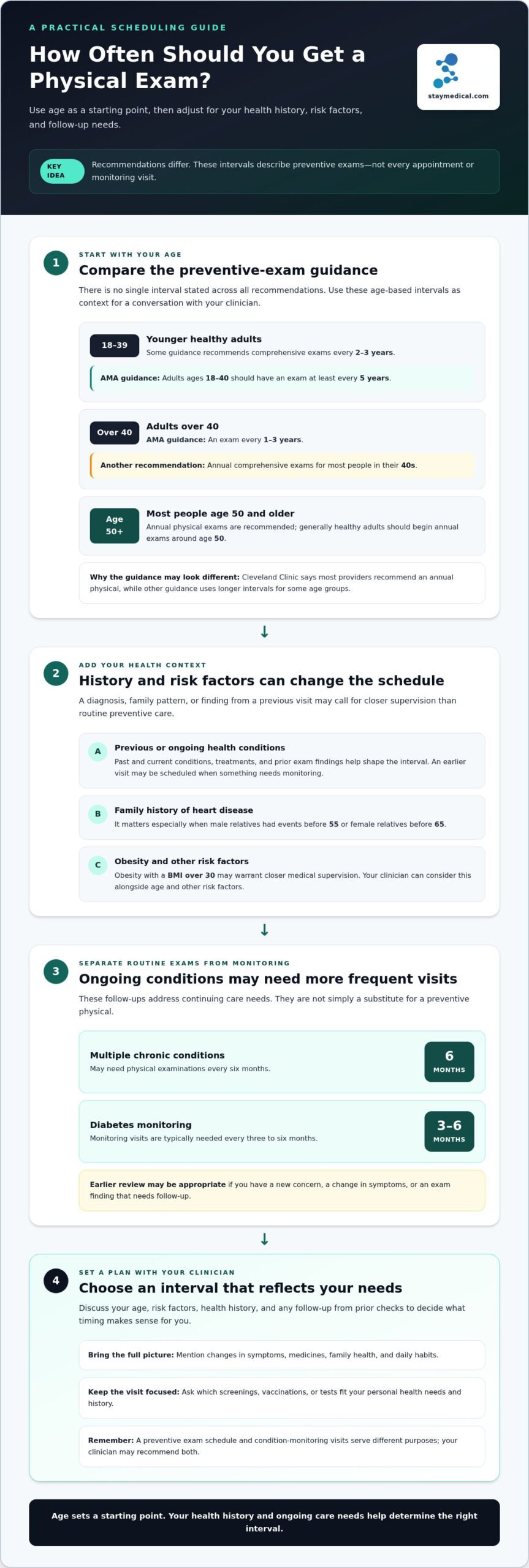
Recommendations vary for healthy adults. Cleveland Clinic says most healthcare providers recommend an annual physical, while other guidance uses longer intervals for some age groups. To decide how often you should get a physical exam, consider these differences:
- For healthy adults ages 18-39, comprehensive exams every 2-3 years are recommended in some guidance. The American Medical Association advises adults ages 18-40 to have an exam at least once every five years.
- For adults over age 40, the American Medical Association advises an exam every one to three years. Another recommendation is annual comprehensive exams for most people in their 40s.
- For most people age 50 and older, annual physical exams are recommended. Generally healthy adults should begin annual exams around age 50.
These intervals describe preventive exams, not every appointment. A clinician may schedule an earlier visit if an exam finding needs monitoring. Regular checkups also give you time to review your health and discuss steps that may help lower future illness risk.
Health History and Risk Factors
Your health history is the record of past and current conditions, treatments, and family health patterns that can shape your exam schedule. It matters because a previous diagnosis or a risk factor can call for closer supervision than routine preventive care. For example, obesity with a BMI over 30 may warrant closer medical supervision. A family history of heart disease also matters, especially when male relatives had events before age 55 or female relatives before age 65.
Older adults and people with chronic conditions may need exams more than once a year. People with multiple chronic conditions may need physical examinations every six months. For people with diabetes, monitoring visits are typically needed every 3-6 months. These follow-ups address ongoing care needs; they aren’t simply a substitute for a preventive physical.
How often should people with chronic conditions or risk factors see a doctor? Their visit schedule should reflect the condition, its monitoring needs, and findings from prior checks. Multiple chronic conditions may call for six-month physical exams, while diabetes monitoring visits are typically needed every 3-6 months.
Physical Exams and Wellness Visits
A physical exam involves assessing your health, while a preventive wellness visit focuses on prevention, risk review, and planning future care. Knowing the distinction helps you understand what an appointment includes and what your insurance benefit covers. A visit can also include discussion of a screening, such as when to schedule a Pap smear.
Does health insurance cover annual physical exams in the United States? Most insurance plans cover one preventive care visit annually without cost-sharing. Coverage depends on whether the appointment is classified as preventive care and which services are included.
Health areas assessed during a physical
A physical exam combines measurements, a discussion of your health, and an assessment of how your body is functioning. The specific checks depend on your needs, symptoms, and health history.
A nurse or medical assistant may record your height, weight, pulse, blood oxygen level, and blood pressure. These measurements give your clinician useful context for the rest of the visit. Your clinician may also assess several areas of your body:
- Heart and lungs: Listening with a stethoscope helps assess heart and breathing sounds.
- Skin, eyes, ears, nose, and mouth: Visual checks can help identify changes or areas to discuss further.
- Abdomen and feet: An exam may assess tenderness, appearance, or other concerns.
- Nervous system and mental health: Questions or simple checks can help assess function and well-being.
Clinicians may use inspection, palpation, percussion, and auscultation. These terms mean looking, feeling, tapping, and listening during an exam. The steps depend on the reason for your visit. For example, a breathing concern may lead to closer attention to lung sounds.
Health History and Risk Assessment
A health history and risk assessment review your past and current health alongside factors that may affect your future health. This context helps your clinician decide which checks and follow-up discussions are relevant. Mention changes in symptoms, medicines, family health, or daily habits. For example, a family history of heart disease may shape a conversation about cardiovascular risk.
Skipping checkups can mean missing opportunities to discuss risk factors or identify a concern before symptoms appear. Regular exams may help identify risks associated with weight and age. Blood tests can also reveal high blood sugar or cholesterol, which may have no early symptoms.
Preventive Care and Healthy Behaviors
Preventive care visits provide time to discuss screening, immunizations, and habits that support health. Depending on your needs, your clinician may offer guidance about nutrition, exercise, or supplements. You can turn broad health goals into practical topics, such as finding an activity you can maintain or discussing a vaccine that may be due.
Routine checks also create time to review changes and plan appropriate screening. Regular blood pressure checks can identify high blood pressure that might otherwise go unnoticed. If you have a new symptom or a change that concerns you, contact a healthcare provider rather than waiting for your next routine exam.
For a visit that includes time to review your health and preventive needs, explore primary care visits.
Preventive tests, screenings, and vaccinations
Preventive tests can look for disease before symptoms appear, while vaccinations help protect against illness. Age, health history, and individual risk factors determine which checks are appropriate.
Tests and Screenings During an Exam
A screening is a test used to look for a health condition in people who may not have symptoms. During an exam, your clinician may review your screening history and recommend blood tests, other tests, or vaccinations based on your age, gender, and health history. For example, blood tests can check blood sugar and cholesterol, which may be high before symptoms develop. Use the visit to discuss concerns and update your records.
Blood pressure checks are another useful part of preventive care because high blood pressure may not be apparent without measurement. How often you need a particular test depends on the screening and your risk factors, not simply on the date of your last physical.
Age-Specific Screening and Vaccination
Screening needs change with age. Adults ages 18-39 may need a lipid panel, and cholesterol screening is recommended every 2-3 years for this group, beginning at age 20 or earlier for people with risk factors. Another recommendation is a cholesterol check every four to six years for most people. Your age and risk profile help determine which interval applies.
Vaccinations can also be reviewed during a checkup. People ages 20 to 39 may need vaccines such as an annual flu shot or tetanus booster. Regular visits offer a chance to update vaccinations and discuss which ones fit your health needs.
Cancer Screening and Disease Detection
Cancer screening looks for signs of disease before symptoms develop. Women should begin Pap smears at age 21 and repeat them every 3 years; mammograms begin at age 40. Colorectal cancer screening starts at age 45. Men should begin asking about prostate cancer screening after age 50, while women should begin bone density scans at age 65 or earlier with risk factors.
These milestones help guide a discussion, rather than making every test appropriate for every person. At age 40, a provider reviews risk factors to assess heart disease and stroke risk. People ages 50 to 65 may be advised to get diabetes checks, particularly with an overweight or obese BMI.
Family History and Screening Needs
Family history is information about health conditions among relatives that can affect your screening needs. A family history of heart disease may call for enhanced monitoring when male relatives had events before age 55 or female relatives before age 65. Share which relatives were affected and the age when the event occurred, so providers can consider that context.
Keep a record of past tests and vaccinations, including dates and results you can access. Regular checkups can also help identify risk factors for age-related disease, even when you feel well. Mention a new concern or family diagnosis at your next visit rather than assuming your existing screening plan still fits.
Physical exams for people with pre-existing conditions
A preventive physical gives your clinician time to review your health, assess changes, and plan appropriate follow-up. If you have a chronic condition, your schedule may include routine physicals as well as separate appointments for ongoing monitoring. Timing depends on what needs assessment and whether earlier checks found changes that need attention.
Older adults and people with chronic health conditions may need a physical more than once a year. People with multiple chronic conditions may need physical examinations every six months. Diabetes monitoring visits are typically needed every 3-6 months. These condition-focused appointments help track health over time; they may not serve the same purpose as an annual preventive physical.
For a chronic condition, appointment timing can reflect:
- Whether the condition needs regular monitoring, as with diabetes.
- Whether a previous exam found something that needs follow-up.
- Whether several conditions need attention during the same period.
Bring up new symptoms and changes since your last visit. For example, a change in how you feel or in a condition being monitored can help shape your next assessment. Blood pressure checks are also part of routine health assessments and can identify high blood pressure that might otherwise go unnoticed.
Children have a different preventive visit pattern from adults. Children usually have frequent doctor’s visits until age 3. After age 3, they can usually start seeing a doctor once a year, and annual physical examinations are recommended for children. These visits help track a child’s health as they grow and give families time to raise concerns.
For adults, recommendations vary by age and health needs. Annual comprehensive physical examinations are recommended for most people in their 40s, and annual exams are recommended for most people age 50 and older. Adults with chronic conditions may need additional appointments between preventive exams. Keep routine care and condition-specific monitoring distinct when discussing your schedule.
Pregnancy can change the purpose and timing of healthcare appointments. Tell the clinician arranging your visit that you’re pregnant so the appointment can address your current health needs. A routine annual physical and pregnancy-related care serve different purposes. Discuss which concerns belong in each appointment rather than treating one as a substitute for the other.
Preventive exams can support your health even when you feel well. They create time to review your health history, discuss risk factors, and plan checks that fit your needs. If a previous finding requires monitoring, follow-up may be scheduled sooner than one year. Sharing changes and questions at each appointment helps your clinician decide what needs attention next.
Preparing for a physical exam
A little preparation can make your annual physical exam more focused. Before your appointment, gather your medication details, note changes in your health, and choose the concerns you want to discuss. A written list can help you remember important points during your conversation with your primary care clinician.
Bring a current list of prescriptions, over-the-counter medicines, vitamins, and supplements. Include each item’s name and how you take it. If you’re unsure of a medication’s name, bring its packaging or a clear photo. This gives your clinician a practical record to review alongside your health history.
To organize your notes, include examples such as:
- Any new symptom, when it began, and what makes it better or worse.
- Changes in sleep, appetite, mood, or your ability to manage daily activities.
- Recent changes in exercise or eating habits that you’d like to discuss.
- Questions about a past diagnosis, medication, or recommended screening.
- Relevant family health updates that may affect your personal history.
Specific examples are more useful than broad descriptions. Instead of writing “low energy,” note when you first noticed it and how it affects your work or daily routine. If a symptom comes and goes, describe the pattern. These details help keep the appointment focused on what has changed for you.
Review your previous care information before leaving home. Note past test results or screenings you want to discuss, especially if you don’t remember when they took place. You can also write down a question about vaccinations or whether a screening is due. Bring any relevant records you can access.
Consider what you’d like to get from the visit. You might want to review a health concern, discuss exercise, or understand a recommended test. Put your most important concern near the top of your notes so it gets attention. You don’t need medical terminology; describe the issue in your own words.
If you’re scheduling an annual physical exam after a gap in care, note the date of your last visit if you remember it. If not, say so and share any details you recall. A clear account of your current medications, supplements, symptoms, and questions gives your clinician useful context.
Stay Medical Clinic: Weight Loss Program
Stay Medical Clinic offers a Weight Loss Program for people seeking medical support with weight-related health goals. Weight and related risk factors can be part of a broader health conversation alongside routine preventive care. A clinician can help you discuss how these concerns fit into your health history and overall care.
For routine health needs, Stay Medical Clinic also provides Primary Care, including an Annual Physical Exam. This can be a natural next step if you’re ready to review your health, discuss concerns, and plan preventive care. Stay Medical Clinic also offers Testosterone Replacement and IV Therapy for patients seeking those services.
To discuss your care, contact Stay Medical Clinic or visit staymedical.com.
Make your next health decision with clarity
If you’re still wondering how often you should get a physical exam, use your next visit to discuss what matters most to your health now. A useful appointment gives you a chance to raise a concern, talk through a personal wellness goal, or clarify what you’d like to focus on in your ongoing care. You don’t need every answer before starting that conversation.
If your broader goals include weight management or other health needs, Stay Medical Clinic offers a Weight Loss Program, Testosterone Replacement, and IV Therapy. These services address different needs, so consider what you’d like to discuss as you plan your care.
Taking one thoughtful step toward a conversation can make your health priorities feel more manageable. Choose the question you most want answered and bring it to your next visit.
Your health journey can move forward one clear, considered conversation at a time.
Frequently Asked Questions
How often should you get a physical if you’re in general good health?
For a generally healthy adult, how often you should get a physical exam depends partly on age and which guidance is followed. Comprehensive exams every 2-3 years are recommended for healthy adults ages 18-39 in one recommendation. The American Medical Association advises adults ages 18-40 to have an exam at least once every five years. These intervals differ, so discuss a schedule that fits your age and health history.
What Happens If You Skip Regular Physical Exams?
Skipping routine exams can mean missing opportunities to review health risks, discuss preventive care, and catch some conditions before symptoms appear. For example, high blood sugar or cholesterol may not cause early symptoms, and blood pressure checks can identify high blood pressure. Missing a visit doesn’t mean you have an illness. Resuming routine care gives you a chance to discuss changes, update screening plans, and raise concerns you may have put off.
What happens during a checkup?
A checkup typically includes a conversation about your health and measurements such as blood pressure, pulse, height, and weight. Your clinician may review your health history, medicines, vaccinations, and past screenings. Make the visit more useful by naming a specific concern, such as a change in energy or a question about a previous test. Your clinician can then discuss whether additional checks or follow-up fit your needs.
Why should you get an annual exam?
An annual exam creates a regular opportunity to review health changes, discuss prevention, and maintain a relationship with a healthcare provider. It can be useful even when you feel well, since some conditions may not cause noticeable early symptoms. An annual visit also gives you a predictable time to raise questions about lifestyle, medications, or screening plans. Annual exams are recommended for most people age 50 and older, though individual needs vary.
How often should healthy adults get a routine physical exam?
There isn’t one interval shared by every recommendation for healthy adults. For ages 18-39, comprehensive exams every 2-3 years are recommended in one guideline, while the American Medical Association advises adults ages 18-40 to have an exam at least once every five years. Annual exams are recommended for most people age 50 and older. Age, personal history, and findings from previous visits help determine a suitable schedule.
How often should older adults get a physical exam?
Annual physical exams are recommended for most adults age 50 and older. Older adults with chronic health conditions may need exams more than once a year, especially when a condition or previous finding requires closer monitoring. For instance, people with multiple chronic conditions may need physical examinations every six months. Diabetes monitoring visits are typically needed every 3-6 months. These condition-focused appointments can occur between routine preventive exams.
Do annual physical exams improve health outcomes?
Regular checkups can help assess your overall health, identify risk factors, support healthy behaviors, and create opportunities to discuss screening. They may also help detect conditions without obvious symptoms, such as high blood pressure or changes in blood sugar. An exam cannot promise a particular health outcome, but it gives you and your clinician a structured opportunity to review concerns and plan appropriate preventive care.
What happens during a routine physical exam?
A routine physical may combine measurements with a hands-on assessment and a review of your health history. Clinicians may use inspection, palpation, percussion, and auscultation, which involve looking, feeling, tapping, and listening. The exam may cover areas such as the heart, lungs, abdomen, skin, and nervous system. What’s assessed depends on your health needs and the concerns you bring to the appointment.
Disclaimer
This content is for informational purposes only and does not replace evaluation, diagnosis, or treatment by a medical professional. Always consult a qualified healthcare provider for personalized care.