

Interpreting Blood Work Results: A Step-by-Step Guide to Understanding Your Health
June 18, 2026
Comprehensive Blood Panel in Miami: Your Blueprint for Proactive Wellness
June 20, 2026
What if your struggle to shed pounds isn’t a failure of willpower, but a complex biological barrier your body has built against you? It’s exhausting to follow every trending diet only to watch the scale remain stagnant or climb back up. You aren’t alone in feeling frustrated by conflicting advice and the fear that your metabolism is simply working against you. Understanding how to lose weight with medical help starts with moving past the “eat less, move more” mantra and looking at the hormonal signals driving your hunger and fat storage.
We believe that sustainable transformation requires more than a prescription; it requires a partnership. This guide reveals the clinical pathways to lasting results, from advanced diagnostics that uncover hidden metabolic issues to the latest GLP-1 therapies administered under expert supervision. We will explore how modern medicine addresses the biological root causes of weight gain to help you reclaim your health and confidence in 2026. By shifting the focus from temporary fixes to metabolic correction, you can finally achieve the professional guidance and accountability you deserve.
Key Takeaways
- Understand why medically supervised programs prioritize metabolic health and hormonal balance over simple calorie restriction for sustainable results.
- Learn how advanced laboratory testing identifies hidden biological roadblocks, such as insulin resistance, that often hinder traditional weight loss efforts.
- Discover how to lose weight with medical help through modern GLP-1 therapies like Semaglutide and Tirzepatide, which address the neurological drivers of appetite.
- Explore the five essential steps to launching a personalized clinical journey, beginning with a deep-dive medical history and diagnostic review.
- Find out how a boutique clinical environment in Brickell integrates primary care with specialized wellness for a truly comprehensive health transformation.
What is Medical Weight Loss and How Does It Differ from Dieting?
Most people view weight loss as a simple math problem: calories in versus calories out. However, a professional Weight Loss Program supervised by a physician is a sophisticated clinical framework designed to treat the underlying causes of weight retention. Learning how to lose weight with medical help means moving away from the restrictive cycle of fad diets and toward a model of metabolic health management. While traditional dieting often results in the loss of both fat and muscle, clinical oversight ensures that your body receives the necessary support to preserve lean tissue and maintain vital nutrient levels.
Your body has a “biological set point,” which is a specific weight range it works hard to defend. When you cut calories drastically on your own, your metabolism often slows down to compensate, making long-term success nearly impossible. Medical interventions are designed to reset this internal thermostat, allowing for a more natural and sustainable transition to a healthier weight. This approach prioritizes long-term vitality over the fleeting results of a crash diet.
To better understand how these clinical pathways differ from traditional methods, watch this helpful video:
The Role of Clinical Oversight
A doctor-led program provides a level of safety that over-the-counter supplements simply cannot match. We don’t just provide a prescription; we conduct regular monitoring of your vitals and blood markers to ensure your body is responding positively. This allows for personalized dosage adjustments based on your unique biology, minimizing side effects while maximizing efficacy. By utilizing various obesity management strategies, clinicians can pivot your treatment plan as your body evolves, ensuring you stay on the safest path toward your goals.
Willpower vs. Biology: The Science of Obesity
It’s time to stop blaming a lack of willpower for weight struggles. Modern science recognizes obesity as a complex, chronic metabolic disease rather than a character flaw. Your brain receives constant signals from hormones like ghrelin, which triggers hunger, and leptin, which signals fullness. In many individuals, these signals are disrupted, leading to a constant state of biological hunger that willpower alone cannot silence. Metabolic resistance is a biological barrier that medical help can overcome by recalibrating your body’s internal chemistry to work with your goals rather than against them.
The Diagnostic Phase: Identifying Your Hidden Barriers
While many people believe the first step in a clinical program is a prescription, the true starting point is always data. Comprehensive blood work serves as the blueprint for your entire journey. When you are looking for how to lose weight with medical help, you’re looking for answers to why your body hasn’t responded to traditional efforts in the past. This diagnostic deep-dive reveals the physiological hurdles that are invisible to the naked eye, allowing us to build a plan based on your unique chemistry rather than guesswork.
Insulin resistance is one of the most common barriers we identify during this phase. When your cells stop responding to insulin effectively, your body shifts into a chronic fat-storage mode, making it nearly impossible to burn energy efficiently. Similarly, thyroid dysfunction can act as a metabolic anchor, dragging down your basal metabolic rate regardless of your activity level. Understanding these factors is a core component of modern medical treatment for obesity. By utilizing Stay Medical’s lab testing services, we can pinpoint these roadblocks and design a strategy that addresses your specific internal environment.
Hormonal Balance and Weight Retention
Hormones act as the chemical messengers that tell your body whether to build muscle or store fat. For men, low testosterone levels are frequently linked to increased abdominal fat and a loss of lean muscle mass. In these cases, Testosterone Replacement Therapy (TRT) can be a transformative tool to improve body composition and energy levels. We also monitor cortisol, the hormone associated with the stress response, which can cause the body to cling to weight in the midsection when levels remain chronically elevated. Balancing these messengers is essential for anyone learning how to lose weight with medical help effectively.
Nutrient Deficiencies and Metabolic Slowdown
A lack of essential vitamins can stall even the most disciplined weight loss efforts. Deficiencies in Vitamin B12 or Vitamin D are surprisingly common and can lead to persistent fatigue and a sluggish metabolism. Our diagnostic process identifies these gaps so we can tailor supplementation through intramuscular injections. This metabolic mapping allows us to predict your weight loss velocity and ensure your body has the raw materials it needs to thrive during the process. If you’re ready to see what’s happening beneath the surface, exploring our comprehensive weight loss approach is the best next step.
Modern Medical Interventions: GLP-1s and Metabolic Catalysts
Once we have identified your biological roadblocks, we can introduce the clinical tools designed to dismantle them. The most significant breakthrough in modern obesity medicine involves GLP-1 receptor agonists. These effective but complex GLP-1 drugs do more than just suppress appetite; they fundamentally change how your brain communicates with your digestive system. For many, the greatest challenge isn’t hunger, but “food noise.” This is the constant, intrusive preoccupation with the next meal that makes traditional dieting feel like a losing battle. Medical help provides a way to quiet this noise, allowing you to make intentional choices without the weight of biological compulsion.
In a clinical setting, we primarily utilize Semaglutide and Tirzepatide. While both are highly effective, they work through slightly different pathways. Semaglutide mimics the GLP-1 hormone to regulate blood sugar and slow digestion. Tirzepatide takes this a step further by targeting both GLP-1 and GIP receptors, often leading to more pronounced metabolic shifts. Understanding how to lose weight with medical help means having an expert who can determine which of these catalysts aligns best with your specific diagnostic profile and health goals.
The Science of Semaglutide and Tirzepatide
These medications work by slowing gastric emptying, which helps you feel fuller for longer periods. They also signal the brain’s satiety centers to reduce cravings. For a deeper look at the data, you can explore our clinical guide to GLP-1 weight loss in Miami. Because these medications are powerful, proactive medical intervention is necessary to manage common side effects like nausea or digestive changes. We don’t just provide the medication; we provide the oversight to ensure your body adapts comfortably and safely.
Supportive Therapies: IVs and Injections
While medications do the heavy lifting, supportive therapies ensure your body remains energized and resilient. Rapid weight loss can sometimes lead to dehydration or fatigue if not managed correctly. This is why IV therapy in Miami is a vital component of our comprehensive programs. It delivers essential hydration and micronutrients directly into your bloodstream, bypassing the digestive tract for immediate use. We also incorporate:
- Lipotropic Injections: These “fat burner” shots use amino acids and vitamins to help the liver process fat more efficiently.
- Amino Acid Support: Targeted supplementation helps preserve lean muscle mass, ensuring that the weight you lose comes from fat stores.
- Vitamin B12 Boosts: Delivered via intramuscular injections to maintain high energy levels throughout your journey.
By combining advanced pharmacology with these supportive catalysts, we create a synergistic effect that makes how to lose weight with medical help a far more comfortable and effective experience than going it alone.
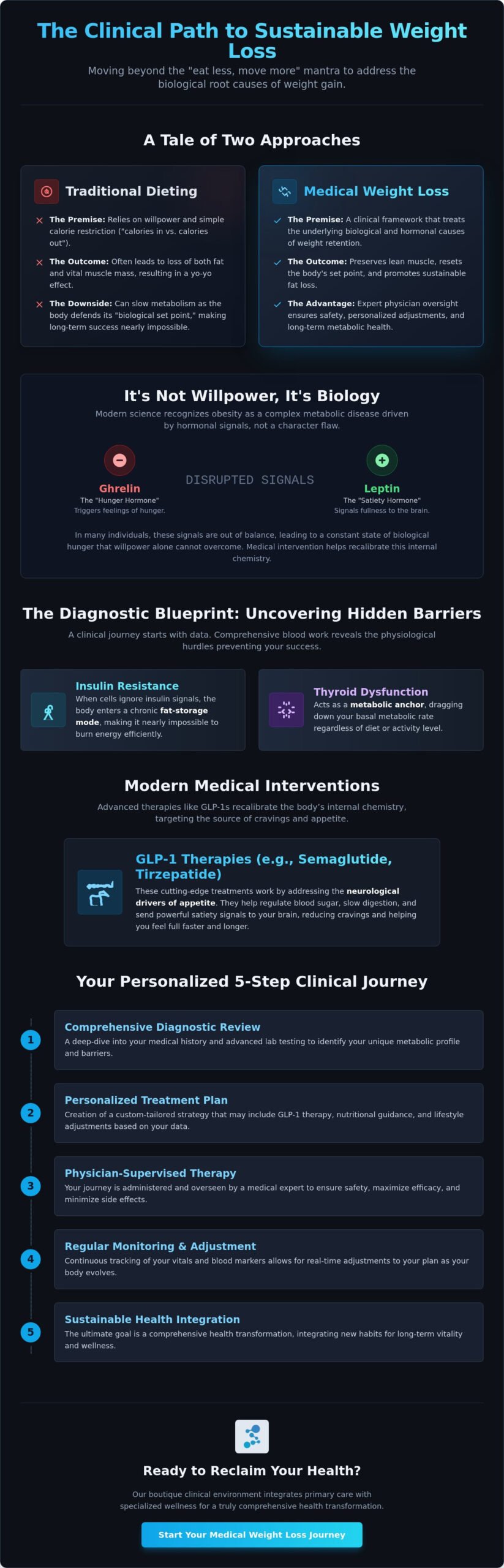
How to Start Your Medical Weight Loss Journey in 5 Steps
Transitioning from the diagnostic phase to active treatment requires a methodical, science-based approach. Understanding how to lose weight with medical help involves following a structured clinical path that ensures your safety while maximizing your results. This process is designed to be intentional, moving away from guesswork and toward a data-driven strategy tailored to your specific biology.
- Step 1: Consultation and Medical History Review. We begin by setting realistic, health-first expectations. This isn’t just a brief check-in; it’s a deep dive into your previous struggles and future goals.
- Step 2: Advanced Diagnostic Testing. Using Stay Medical’s lab testing services, we perform a comprehensive blood panel to identify insulin resistance, thyroid issues, or other metabolic roadblocks.
- Step 3: Personalized Protocol Design. Based on your labs, we choose the right combination of GLP-1s, peptides, or hormone optimization, such as Testosterone Replacement, to recalibrate your system.
- Step 4: Implementation and Education. We help you pair your medication with high-protein nutrition and lifestyle adjustments. This ensures you maintain lean muscle while losing body fat.
- Step 5: Ongoing Monitoring and Optimization. Your journey is dynamic. We adjust your dosages and re-check your blood markers every 4 to 8 weeks to ensure your body is responding perfectly.
Preparing for Your First Consultation
To make the most of your initial visit, it’s helpful to have your recent medical records and a list of any medications or supplements you currently take. You should also come prepared with questions about long-term maintenance and how the program integrates with your current lifestyle. Your first visit is centered on building a long-term clinical partnership rather than just providing a quick prescription. We want to ensure you feel seen and heard as an individual from the very beginning.
Setting Realistic Milestones
In a clinical setting, losing 1 to 2 pounds per week is considered the gold standard for healthy, sustainable fat loss. While rapid drops are exciting, a steady pace helps prevent muscle wasting and skin elasticity issues. We encourage you to focus on non-scale victories, such as improved sleep quality, higher energy levels, and how your clothes fit. Once you reach your goal weight, the “maintenance phase” becomes our priority to ensure your results last a lifetime. If you’re ready to learn how to lose weight with medical help in a way that prioritizes your long-term health, you can book your initial weight loss consultation with our team today.
Why Stay Medical Clinic is the Preferred Choice for Weight Loss in Brickell
Choosing where to begin your journey is just as vital as the treatment itself. In the heart of Miami, Stay Medical Clinic offers a boutique experience that prioritizes the person behind the patient. When you explore how to lose weight with medical help at our facility, you aren’t just receiving a clinical protocol; you’re entering a high-end partnership designed for your specific life. Our expertise in Semaglutide and Tirzepatide therapy is balanced with a compassionate, trust-based approach that ensures your long-term well-being remains the central focus. We avoid the sterile, detached atmosphere of traditional healthcare to provide a space where you feel seen, understood, and supported.
We believe that true wellness is intentional. Every facet of our clinic is organized to demystify complex medical processes, making your path to health transparent and manageable. By combining high-level medical authority with a welcoming, patient-centered atmosphere, we help you navigate the biological complexities of weight loss with confidence. Our team acts as a dedicated guide, ensuring that every step you take is backed by clinical excellence and moral integrity. For high-performing professionals seeking medically supervised weight loss in Miami that goes beyond generic protocols, our physician-led approach delivers the personalized metabolic care your body requires.
Comprehensive Care Under One Roof
Our primary care services act as the essential foundation for your weight loss plan. This integration ensures that your metabolic protocol never conflicts with your other health needs or existing conditions. We provide access to on-site laboratory testing, which allows for immediate data collection and swift adjustments to your program. This level of streamlined care is specifically designed for the Brickell professional lifestyle, where efficiency and effectiveness are paramount. You don’t have to bounce between different specialists; we manage your holistic health in one calm, well-organized environment.
Your Partner in Long-Term Vitality
We look far beyond the numbers on the scale to focus on your cardiovascular health and overall longevity. Our mission is to help you achieve a state of vitality that allows you to thrive in every area of your life. By staying active in clinical trials, our team remains at the absolute forefront of medical weight loss, bringing the most modern and ethical solutions directly to our community. We are your dedicated partners in this journey, providing the professional guidance and accountability needed for a lasting transformation. If you’re ready to discover how to lose weight with medical help in a setting that values your individual success, start your transformation at Stay Medical Clinic today.
Reclaiming Your Health with Clinical Precision
Your journey toward a healthier version of yourself doesn’t have to be defined by past frustrations or biological guesswork. By moving beyond the limitations of traditional dieting and embracing a diagnostic-first approach, you can finally address the hormonal and metabolic barriers that have held you back. We’ve explored how personalized diagnostics and modern GLP-1 or peptide therapies work in harmony to quiet intrusive hunger signals and reset your metabolic baseline for good.
Deciding how to lose weight with medical help is a commitment to your long-term vitality rather than a temporary fix. Our experienced Miami healthcare professionals utilize personalized metabolic diagnostics and modern GLP-1 and peptide therapies to build a roadmap that’s uniquely yours. This partnership ensures you have the clinical oversight and accountability necessary to achieve lasting success without the stress of going it alone. It’s time to stop fighting your biology and start working with it to achieve the results you deserve.
Join the Medically Supervised Weight Loss Program at Stay Medical Clinic and take the first step toward a sustainable transformation. Your future health is an investment worth making, and we’re here to guide you every step of the way.
Frequently Asked Questions
Is medical weight loss safe for people with high blood pressure?
Medical weight loss is generally safe and often beneficial for individuals with high blood pressure, provided it’s conducted under strict clinical supervision. Learning how to lose weight with medical help often starts with a focus on cardiovascular safety. Reducing body weight is a primary recommendation for managing hypertension, and our team monitors your vitals closely to ensure your protocol aligns with your existing health needs.
How long do I need to take weight loss medication?
The duration of treatment is highly individualized and depends on your specific metabolic goals and biological response. Some patients use medication as a temporary catalyst to reset their system, while others may benefit from long-term maintenance to prevent weight regain. We view these therapies as intentional tools to help you reach a sustainable biological set point, adjusting the timeline as your health markers improve.
Will insurance cover my medical weight loss program?
Insurance coverage for weight loss programs is inconsistent and varies significantly between providers and specific health plans. While many plans cover medications like Semaglutide for Type 2 Diabetes, coverage for obesity management is not guaranteed. We recommend contacting your insurance provider directly to verify your benefits, though many of our patients choose to pay out-of-pocket for the personalized, boutique experience we provide.
Can I lose weight with medical help if I have a thyroid condition?
You can certainly achieve results if you have a thyroid condition, as our program specifically targets these hormonal barriers. Understanding how to lose weight with medical help involves identifying thyroid dysfunction through our advanced laboratory testing. By optimizing your thyroid levels alongside metabolic treatments, we can overcome the sluggish metabolism often associated with hypothyroidism, making weight loss achievable and sustainable.
What is the difference between Semaglutide and compounded weight loss drugs?
The primary difference lies in FDA approval and manufacturing standards. Branded Semaglutide medications like Wegovy or Ozempic have undergone rigorous clinical trials for safety and efficacy. Compounded versions are often used during shortages but are not FDA-approved, which may carry risks related to dosing accuracy and ingredient purity. We prioritize transparency and safety when discussing which pharmaceutical options are right for your journey.
How much weight can I expect to lose in the first month?
Most patients can expect to lose between 4 and 8 pounds in their first month, adhering to the clinical gold standard of 1 to 2 pounds per week. While some may experience a more rapid initial drop due to reduced inflammation and water retention, a steady pace is preferred to preserve lean muscle mass. This methodical approach ensures your body adapts healthily to its new weight and metabolic state.
Do I still need to exercise while on a medical weight loss program?
Physical activity remains a vital component of any medically supervised program to ensure you maintain lean muscle mass while losing fat. While medications do the heavy lifting regarding appetite and metabolic signaling, exercise supports cardiovascular health and metabolic flexibility. We help you design a sustainable movement plan that complements your clinical protocol without leading to burnout, ensuring your results are both functional and aesthetic.
What happens if I stop taking the medication?
If you stop taking the medication without a proper maintenance plan, there is a biological risk of weight regain as hunger hormones eventually return. This is why we focus on metabolic correction and lifestyle education during your treatment phase. Our goal is to use clinical tools to reach a stable weight and then transition you into a long-term strategy that keeps the weight off permanently.
Disclaimer
This content is for informational purposes only and does not replace evaluation, diagnosis, or treatment by a medical professional. Always consult a qualified healthcare provider for personalized care.






2 Comments
[…] restriction and weight regain. For a deeper look at the clinical pathways available, our guide on how to lose weight with medical help explores the full spectrum of evidence-based options beyond GLP-1 therapy […]
[…] efficacy. If you want a deeper understanding of the biological barriers behind weight gain and how to lose weight with medical help by addressing hormonal signals and metabolic resistance, our comprehensive 2026 guide walks you […]