

Overcoming weight loss frustration with realistic changes
October 31, 2026
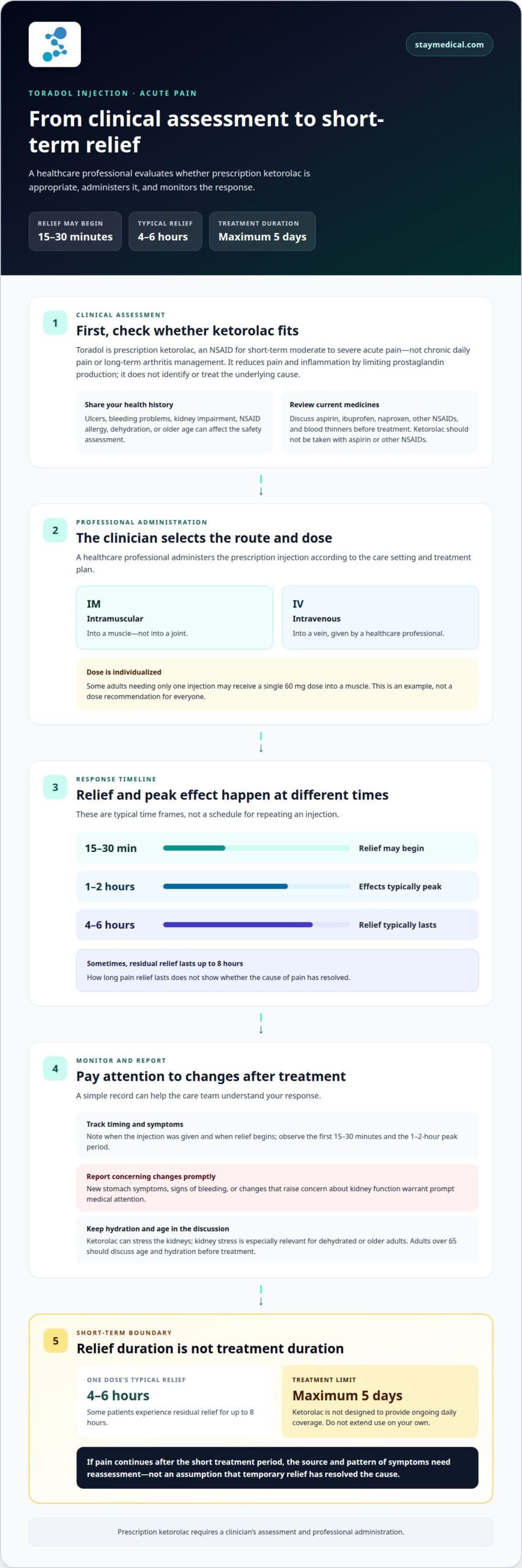
A Toradol shot is intended for short-term relief of moderate to severe acute pain, not ongoing pain management. A Toradol injection for pain near me may be an option when a clinician determines this prescription anti-inflammatory medicine is appropriate; relief typically begins within 15 to 30 minutes and lasts four to six hours. The injection is given into a muscle or vein by a healthcare professional.
It makes sense to want clear expectations when pain is interrupting your day. This guide explains what Toradol is, how it works, which kinds of pain it may help treat, and what to know about its onset, duration, and safety. You’ll also learn why an intramuscular injection may be considered for severe, sudden pain, and how a clinician evaluates whether it fits your health history and symptoms.
Key Takeaways
- Toradol is prescription ketorolac, an NSAID that reduces pain and inflammation by limiting prostaglandin production.
- It’s used for short-term moderate to severe acute pain, including some sudden back or neck flare-ups and other specific conditions.
- Because it can affect the stomach, kidneys, and bleeding risk, your health history and current medicines matter when assessing whether it’s suitable.
- Toradol isn’t intended for chronic daily pain or long-term arthritis management, and treatment is typically limited to five days.
- Learn which symptoms may respond to an intramuscular injection and what details to share with a healthcare professional before treatment.
What Is a Toradol Injection?
In the United States, ketorolac requires a doctor’s prescription, and a healthcare professional administers the injection. Insurance coverage, copays, and referral requirements depend on your plan’s benefits and billing rules.
Ketorolac and Pain Relief
Ketorolac is a prescription-strength nonsteroidal anti-inflammatory drug (NSAID) that reduces pain and inflammation. It works by inhibiting COX-1 and COX-2 enzymes, which decreases the body’s production of prostaglandins involved in pain and inflammatory responses. This matters because ketorolac is not a steroid: it acts systemically to provide pain relief rather than targeting inflammation only at one location.
For example, someone with sudden, moderate to severe pain may be assessed for ketorolac as a short-term option. The medication helps address pain and inflammation, but it does not establish or treat the underlying cause. A clinician considers symptoms and medical history when deciding whether this NSAID is appropriate.
Ketorolac is intended for acute pain, not chronic daily pain or long-term arthritis management. Some adults who need only one injection may receive a single 60 mg dose into a muscle. That example isn’t a dose recommendation for everyone; the appropriate amount depends on the individual’s circumstances and prescription.
Medication safety matters. Ketorolac shouldn’t be taken with aspirin or other NSAIDs, including ibuprofen and naproxen. A history of ulcers, bleeding problems, kidney impairment, or NSAID allergy can affect whether it’s suitable. Share your current medicines and relevant health conditions during the clinical assessment.
How the Injection Is Administered
A Toradol injection delivers ketorolac intramuscularly, into a muscle, or intravenously, into a vein. A healthcare professional administers it, choosing the route according to the care setting and treatment plan. This distinction helps you understand what the visit involves without confusing an injection with a tablet or a steroid injected at a specific site.
With an intramuscular injection, the medication enters muscle tissue rather than a joint. Ketorolac may also be given intravenously by a healthcare professional. The route and prescribed dose are clinical decisions, not choices to make by copying someone else’s treatment.
Before treatment, discuss your medical history and medicines, especially aspirin, ibuprofen, naproxen, blood thinners, or conditions affecting your stomach or kidneys. These details can influence the safety assessment. In the United States, ketorolac is prescription-only, so a healthcare professional must evaluate its use and provide a prescription before administration.
Onset and duration of pain relief
After a Toradol injection, pain relief typically begins within 15 to 30 minutes. The medicine’s peak effects are typically reached within one to two hours, so the first change and the strongest effect don’t necessarily happen together. These time points help set expectations after treatment: notice how symptoms change, rather than expecting the full effect immediately.
Relief typically lasts four to six hours. Some patients experience residual pain relief for up to eight hours. These describe different parts of the response, not a schedule for repeating an injection. How long relief lasts also doesn’t show whether the cause of pain has resolved. For example, reduced back pain may make movement easier without identifying what caused the flare.
Ketorolac is an anti-inflammatory drug intended for short-term treatment of acute pain. It is not designed to provide ongoing daily coverage. Treatment is typically limited to a maximum of five days. That limit matters because extending use can increase exposure to medication-related risks rather than turning temporary relief into a long-term pain plan.
Safety monitoring focuses on symptoms and health factors that can change the balance of benefit and risk. Ketorolac can cause gastrointestinal irritation or bleeding, increase bleeding risk, and stress the kidneys. Kidney stress is especially relevant for dehydrated or older adults. An adult over 65 should make age and hydration part of the medication discussion before treatment.
- Track timing: Note when the injection was given and when pain relief begins, particularly during the first 15 to 30 minutes.
- Observe the peak: Pay attention to the one-to-two-hour period, when effects typically reach their peak.
- Report concerning changes: New stomach symptoms, signs of bleeding, or changes that raise concern about kidney function warrant prompt medical attention.
- Respect the limit: The five-day maximum applies to treatment duration, not to a promise that relief will last for five days.
These time frames describe typical effects, not a reason to take extra ketorolac when pain returns. The injection’s duration and the overall treatment limit answer separate questions: one describes how long relief commonly lasts after a dose; the other limits how long treatment is used. If pain continues after the short treatment period, reassess the source and pattern of symptoms instead of extending ketorolac on your own.
A clear record of dose timing, symptom changes, hydration concerns, and any bleeding symptoms gives the care team useful details for monitoring. This information helps distinguish a brief pain-relief window from a changing health issue that needs attention.
What Is a Toradol Shot?
Ketorolac can affect the digestive system and kidneys, increase bleeding risk, and raise concerns during pregnancy. Knowing which changes to report helps patients discuss treatment risks with a doctor.
Common Side Effects
Ketorolac may irritate the gastrointestinal tract and increase bleeding risk. These effects matter because stomach or bleeding concerns can change whether a nonsteroidal anti-inflammatory drug is appropriate. Tell the doctor about any history of ulcers, bleeding disorders, or blood-thinner use before an injection.
Risk isn’t determined by the injection alone. Dehydration and older age increase concern about kidney stress, so share those details during the medical review. Mention aspirin, ibuprofen, or naproxen use as well, because ketorolac should not be taken with these medicines.
Serious Side Effects
Serious concerns include gastrointestinal bleeding, kidney stress, and increased bleeding risk. These are especially important for people with impaired kidney function, ulcers, bleeding disorders, or current blood-thinner use. A history of allergy to nonsteroidal anti-inflammatory drugs also matters when a doctor evaluates ketorolac.
Pregnancy requires particular attention: taking ketorolac after 20 weeks of pregnancy may cause serious birth defects. Patients who are pregnant should raise this before treatment. Anyone who has had heart bypass surgery, or CABG, within the past 2 weeks should also tell the care team before receiving ketorolac.
Ketorolac is often used for acute pain, including pain after surgery, but the treatment setting doesn’t remove its risks. A clinician needs a complete medication and health history to weigh those risks. Don’t combine it with another NSAID, even if that medicine is familiar or available without a prescription.
Injection-Site Effects
Injection-site effects refer to changes where the needle enters, rather than effects throughout the body. Safety concerns also include stomach irritation, bleeding, and kidney stress. Pay attention to the injection area when describing new symptoms, and tell the treating professional if a local change concerns you.
It’s useful to distinguish a local injection-site change from other symptoms. For example, a change at the injection area is local, while stomach or bleeding concerns involve other parts of the body. Reporting where a symptom occurs and when it began gives the care team clearer information for assessment.
Before a Toradol injection, share current medicines and relevant conditions, including kidney impairment, dehydration, ulcers, bleeding disorders, and NSAID allergy. Mention pregnancy and recent CABG surgery as well. These details help the doctor assess whether ketorolac’s short-term pain-relieving role fits your safety needs.
Conditions treated with Toradol injections
Ketorolac injections may be used for moderate to severe acute pain, including sudden back or neck flare-ups and severe kidney-stone pain, also called renal colic. The goal is short-term pain relief, not ongoing management of a chronic condition.
For muscle- and joint-related symptoms, Toradol may be considered for shoulder impingement, partial rotator cuff tear, calcific tendonitis, arthritis, bursitis, tennis or golfer’s elbow, and plantar fasciitis. Other conditions listed for possible treatment include trigger points, trigger finger, and carpal tunnel. The diagnosis and location of symptoms help determine whether an injection fits the clinical picture.
These examples don’t mean every instance of swelling or acute pain calls for ketorolac. A clinician considers the suspected cause, symptom pattern, and relevant medical history. Toradol is not intended for chronic daily pain, long-term arthritis management, or ongoing nerve-related pain. Persistent symptoms call for attention to the underlying problem rather than repeated short-term relief.
Without insurance, cost depends on the evaluation, care setting, and medication billing; pricing is provided after a quote request.
Before treatment, discuss health conditions and medicines that can raise risk. Ketorolac may increase bleeding risk and cause gastrointestinal irritation or bleeding, as well as kidney stress. Disclose ulcers, bleeding disorders, blood-thinner use, impaired kidney function, and any allergy to nonsteroidal anti-inflammatory drugs.
- Ulcers or bleeding concerns: Share a history of ulcers, a bleeding disorder, or current blood-thinner use.
- Kidney health: Mention impaired kidney function and dehydration, which can increase concern about kidney stress.
- Other pain medicines: Tell the care team if you take aspirin, ibuprofen, or naproxen. Ketorolac should not be taken with these medicines.
- Pregnancy: Taking ketorolac after 20 weeks of pregnancy may cause serious birth defects, so discuss pregnancy before treatment.
- Recent heart bypass surgery: Tell the care team about CABG within the past 2 weeks.
These details matter even when pain feels localized, such as a sore shoulder or painful foot. Ketorolac works throughout the body, so a medication or condition elsewhere can affect treatment safety. Providing a complete medication list and describing when the pain began, where it is, and how it changes helps the care team assess whether the injection is appropriate for that episode.
Intramuscular Toradol for severe pain
Intramuscular ketorolac is used for short-term management of moderate to severe acute pain. A healthcare professional injects it into a muscle, commonly a large muscle such as the gluteus. It may be considered for severe pain, including back pain, when an assessment supports using an NSAID. It is not a treatment plan for chronic daily pain.
For adults aged 16 years and older, prescribed injectable ketorolac doses may be 15 or 30 mg per dose. The listed adult schedule is four doses per day, with doses at least 6 hours apart. These figures describe a prescribed regimen, not instructions to repeat an injection yourself. The dose and schedule on a person’s prescription guide their care.
An injection may be useful when acute pain needs medical attention and a clinician selects ketorolac. For example, a sudden back-pain flare may be assessed for its cause, severity, and relevant health risks before treatment. The medicine works throughout the body, so an injection into a muscle doesn’t mean it targets only the painful area.
Ketorolac is a nonsteroidal anti-inflammatory drug, not an opioid. Unlike opioids, it doesn’t carry the risk of dependency, tolerance, or respiratory depression. That difference doesn’t make it suitable for everyone or remove its own risks. A severe pain episode still needs assessment, especially when symptoms involve kidney-stone pain or another potentially significant cause.
Before an intramuscular dose, share medicines and health conditions with the care team. Aspirin, ibuprofen, and naproxen are NSAIDs that shouldn’t be taken with ketorolac. Ulcers, bleeding disorders, blood-thinner use, impaired kidney function, dehydration, and NSAID allergy are important safety considerations. Mention pregnancy, too, because ketorolac use after 20 weeks of pregnancy may cause serious birth defects.
Use the injection only as prescribed. Don’t shorten the interval, add a dose, or combine it with another NSAID because pain remains severe. Ketorolac treatment is typically limited to a maximum of five days. This short-term limit separates acute pain relief from ongoing management. If severe pain returns or persists, report the pattern and any new symptoms rather than extending treatment on your own.
A practical takeaway: intramuscular Toradol can be part of short-term care for moderate to severe acute pain, but safe use depends on appropriate prescribing and a review of risk factors. It isn’t an opioid, a chronic pain strategy, or a substitute for understanding why the pain began.
Stay Medical Clinic: Weight Loss Program
Stay Medical Clinic offers a Weight Loss Program for people seeking support with weight management, alongside Primary Care for broader health needs. Toradol is intended for short-term acute pain, so ongoing health concerns call for a different care conversation. Primary Care offers a setting to discuss your overall health and care needs, while the Weight Loss Program is relevant if weight management is one of your goals.
If you’re looking for care beyond temporary pain relief, consider which health priorities you’d like to address. Contact Stay Medical Clinic to discuss your care needs.
Choose a thoughtful next step for your health
If you’re considering a Toradol injection for pain near you, focus your next conversation on what may be causing the pain and how it affects daily activities. Share your symptoms, medical history, and current medications so a healthcare professional can consider the full picture. Pain relief is one part of care; understanding what you need next can help guide a thoughtful plan.
For goals beyond acute pain, Stay Medical Clinic offers a Weight Loss Program, Testosterone Replacement, and IV Therapy. These services address different health needs, so the right next step depends on what support you’re seeking. A conversation can help you identify which area of care fits your priorities.
Taking a clear, informed next step can make it easier to move forward with confidence.
Frequently Asked Questions
How Long Does Toradol Relief Last?
Relief from a Toradol injection typically lasts four to six hours, with some patients experiencing residual relief for up to eight hours. This describes the expected window after an injection, not how long the underlying condition will take to improve. If pain returns, note when it changed and whether new symptoms appeared. That timeline can help the care team understand how the episode is evolving.
What does it do?
Ketorolac reduces pain and inflammation by limiting prostaglandin production. In practical terms, it may ease acute pain enough to make movement or rest more manageable while the underlying problem is assessed. For example, less back pain after treatment doesn’t identify the cause of the flare. Toradol is intended for short-term acute pain, so ongoing symptoms call for reassessing the condition rather than relying on repeated relief.
What is this medication?
Toradol is a brand name for ketorolac, a prescription nonsteroidal anti-inflammatory drug. It’s different from a steroid and an opioid, although each category works differently. In the United States, ketorolac requires a doctor’s prescription. A healthcare professional can administer the medicine by injection into a muscle or vein. Its short-term role distinguishes it from medication plans designed for ongoing pain.
What should I tell my care team before I take this medication?
Share your full medication list and medical history before ketorolac treatment. Mention aspirin, ibuprofen, naproxen, blood thinners, ulcers, bleeding disorders, kidney impairment, dehydration, or an allergy to NSAIDs. Also disclose pregnancy, especially after 20 weeks, and heart bypass surgery within the past 2 weeks. These details can affect safety. Include over-the-counter pain medicines, since familiar products can still interact with ketorolac.
What side effects may I notice from receiving this medication?
Toradol may cause gastrointestinal irritation or bleeding, kidney stress, and an increased risk of bleeding. Dehydration and older age can heighten concern about kidney stress. Pay attention to new stomach symptoms or signs of bleeding, and report them promptly to your care team. Mention any health changes after the injection, including where and when they began, so the clinician can assess them in context.
Who can it help?
A Toradol injection for pain near me may be considered for an adult experiencing moderate to severe acute pain, following clinical assessment. It isn’t intended for chronic daily pain or ongoing nerve-related symptoms. Suitability depends on factors such as kidney function, bleeding risk, ulcers, allergies, pregnancy, and other medicines. Before seeking treatment, prepare a current medication list and describe when the pain began and how it affects your daily activities.
What conditions and types of pain is a Toradol injection used to treat?
Toradol may be used for acute pain such as sudden back or neck flare-ups and severe kidney-stone pain, also called renal colic. Other listed conditions include shoulder impingement, bursitis, plantar fasciitis, tennis or golfer’s elbow, trigger finger, and carpal tunnel. The diagnosis matters because similar symptoms can have different causes. Ketorolac is not intended for long-term arthritis management or chronic daily pain.
How quickly does a Toradol injection work, and how long does pain relief last?
Pain relief typically starts within 15 to 30 minutes, and peak effects are typically reached within one to two hours. Relief usually lasts four to six hours, though some patients experience residual relief for up to eight hours. These timings describe different stages: onset, peak effect, and duration. They don’t indicate that the cause has resolved, so note symptom changes and share them with the care team.
Disclaimer
This content is for informational purposes only and does not replace evaluation, diagnosis, or treatment by a medical professional. Always consult a qualified healthcare provider for personalized care.