

Preventive Care in Miami: Your 2026 Annual Wellness Checklist
June 25, 2026
Laboratory Testing Services in Brickell, Miami
July 4, 2026
What if that persistent afternoon slump and the stubborn weight around your waist aren’t just inevitable milestones of getting older, but a clear signal your body is trying to send you? Many men struggle with a sudden loss of focus or “brain fog” during high-stakes meetings, wondering where their professional edge went. Learning to recognize the common signs low testosterone man faces can be the turning point in your health journey. It’s about moving past the idea that fatigue is a requirement of age and understanding that your vitality is something you can actively reclaim.
We believe you shouldn’t have to settle for feeling less than your best. You’ve likely noticed that sleep no longer cures your exhaustion, or that your gym efforts don’t yield the results they once did. This guide provides a clear understanding of the clinical, physical, and emotional indicators of low testosterone to help you find a path to validation. We’ll preview the essential symptoms and the modern diagnostic thresholds used in 2026, ensuring you have the knowledge to restore your energy and long-term sexual health.
Key Takeaways
- Learn how testosterone functions as a vital metabolic engine and why its decline often leads to the accumulation of stubborn visceral fat.
- Identify the specific physical and emotional signs low testosterone man faces to distinguish between natural aging and a treatable clinical deficiency.
- Understand the cognitive impact of hormonal shifts, including how “brain fog” and a loss of focus can affect your professional performance.
- Discover the critical difference between “normal” lab ranges and “optimal” levels that are tailored to your individual vitality and health.
- Explore the necessary steps for a professional clinical evaluation to ensure your path to restoration is safe, supervised, and effective.
Understanding Low Testosterone (Hypogonadism) and Male Vitality
Low testosterone, clinically known as male hypogonadism, is often misunderstood as a simple byproduct of getting older. In reality, it represents a significant clinical deficiency that can ripple through every aspect of your health, from your mood to your metabolic rate. While society often dismisses the early signs low testosterone man might experience as “just part of aging,” these indicators are frequently your body’s way of signaling a breakdown in its internal chemistry. It’s a condition that affects the total health of an individual, rather than just a single isolated function.
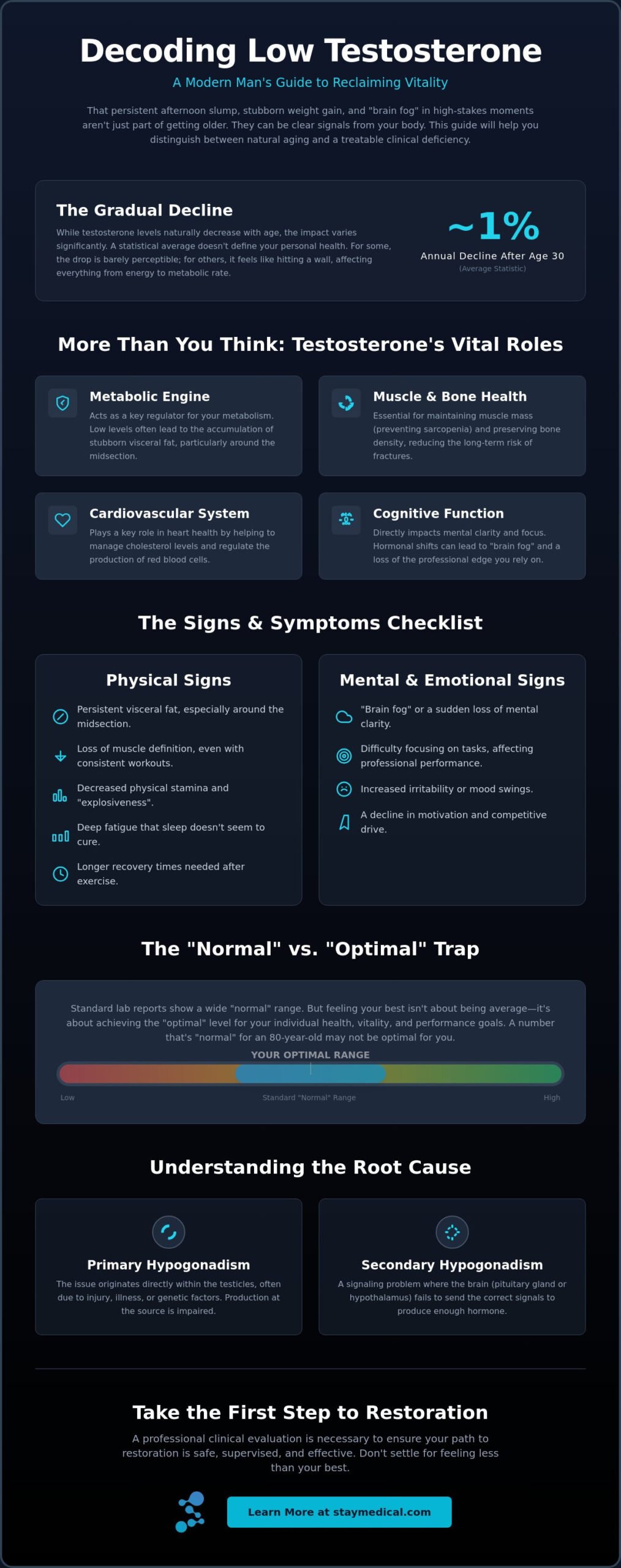
It’s true that statistical data suggests a 1% annual decline in testosterone levels for men after age 30. However, this figure is a broad average that doesn’t account for individual biology. For some, this decline is barely perceptible; for others, it feels like hitting a wall. This isn’t just about a number on a lab report. It’s about how that number translates to your ability to maintain muscle mass, preserve bone density, and keep your metabolism firing. We often see patients who believe their exhaustion is just a result of a stressful quarter at work. While temporary stress can cause hormonal dips, chronic clinical deficiency is a persistent state that requires a more intentional, medically guided approach to resolve.
The Biological Role of Testosterone
Testosterone is far more than a driver of physical strength or libido. It serves as a foundational pillar for your endocrine system and plays a vital role in maintaining cardiovascular health. Beyond developing secondary sex characteristics, this hormone influences how your body manages cholesterol and regulates red blood cell production. Testosterone is a multi-system regulatory hormone essential for metabolic stability. When levels are insufficient, the body’s ability to repair tissues and manage energy stores begins to falter, leading to the persistent fatigue that many men find so disruptive to their daily lives.
Primary vs. Secondary Hypogonadism
Understanding the root of the issue is the first step toward effective care. Hypogonadism is generally categorized into two distinct types. Primary hypogonadism occurs when the issue originates within the testicles themselves, often due to injury, illness, or genetic factors. Secondary hypogonadism is a signaling problem where the pituitary gland or hypothalamus fails to tell the body to produce enough hormone. Identifying which type you are experiencing is crucial because the treatment path for a signaling issue may differ significantly from direct replacement. Utilizing professional Laboratory Testing in Brickell allows us to look deeper into these hormonal pathways, ensuring we don’t just treat the symptoms, but address the underlying cause of your health concerns with precision and care.
The Physical Signs Checklist: Energy, Body Composition, and Performance
Identifying the physical common signs of low testosterone requires a keen eye for subtle shifts in how your body performs and looks. It isn’t just about feeling “old”; it’s about a measurable decline in your biological machinery. Recognizing the early signs low testosterone man exhibits is the first step toward reclaiming your peak performance. For the active man in Miami, this might manifest as a sudden plateau in the gym or a recovery period that stretches from one day to three.
These physical changes are often accompanied by more subtle shifts that aren’t immediately visible. Bone density loss, for instance, can occur silently, increasing your long-term risk for fractures. Similarly, changes in breast tissue, known as gynecomastia, or thinning hair can be distressing indicators of hormonal shifts; for specialized hair and scalp concerns, terramedical.sg offers expert medical insights. Use the following checklist to evaluate your current physical state:
- Persistent accumulation of visceral fat around the midsection.
- Visible loss of muscle definition (sarcopenia) even with consistent training.
- Development of sensitive or enlarged breast tissue.
- A noticeable decrease in overall physical stamina and “explosiveness.”
- Increased risk of bone fractures due to silent bone density loss.
Fatigue and Sleep Quality
Many men mistake low-T induced lethargy for the byproduct of a busy career. However, this is more than just “busy day” tiredness. It’s a deep-seated exhaustion that persists even after eight hours of rest. Research indicates a strong link between testosterone levels and the quality of your REM cycles. When these levels are low, you’re more likely to experience fragmented sleep or even obstructive sleep apnea. While you work toward a clinical diagnosis, utilizing IV Therapy in Miami can provide the immediate micronutrient support needed to bridge the energy gap.
Body Composition and Weight Gain
The relationship between body fat and hormones is a complex, two-way street. Low testosterone levels often lead to muscle atrophy, which slows your basal metabolic rate and makes weight gain almost inevitable. This creates a challenging cycle because fat cells contain an enzyme called aromatase, which converts your remaining testosterone into estrogen. This hormonal shift further encourages fat storage, particularly in the abdomen. Integrating a professional Weight Loss Program in Brickell can help break this cycle by addressing both the metabolic and hormonal barriers to your success.
Sexual Health and Function
While often a difficult topic to discuss, changes in sexual health are among the most reliable signs low testosterone man will experience. Libido is often the first physiological indicator to decline when testosterone drops below 300 ng/dL. While erectile dysfunction is a common concern, it’s often the loss of spontaneous desire that signals a systemic hormonal imbalance. Discovering a personalized path at Stay Medical Clinic ensures you aren’t just treating a symptom, but revitalizing your entire life.
The Mental and Emotional Signs of Hormonal Imbalance
While the physical shifts discussed previously are significant, the psychological and cognitive changes can be even more disruptive to your quality of life. These internal signs low testosterone man faces are frequently dismissed as professional burnout or the inevitable stress of a demanding career. However, your brain is highly sensitive to androgen levels. The “androgen-brain connection” is a fundamental aspect of daily decision-making and cognitive processing. When these levels falter, the result isn’t just a change in mood; it’s a measurable shift in how you process information and interact with your environment.
Many men describe a feeling of losing their “edge” or an uncharacteristic struggle to maintain their usual confidence. These emotional shifts are often misdiagnosed as a mid-life crisis or simple irritability. In reality, testosterone plays a vital role in modulating neurotransmitters that govern mood and resilience. Without adequate levels, your ability to bounce back from daily stressors diminishes, leading to a state of chronic frustration that affects both professional relationships and personal connections. For those managing the emotional signs low testosterone man exhibits, Hope Therapy Center offers specialized support to help navigate these psychological shifts and restore overall well-being.
Cognitive Decline and Focus
The sensation of “brain fog” is more than just a vague feeling of tiredness. It’s a tangible loss of verbal fluency and spatial memory that can sabotage performance in high-stakes professional environments. Testosterone receptors are densely packed in the hippocampus, an area responsible for memory. If you find yourself searching for words or losing track of complex data during meetings, it may be a hormonal issue rather than a lack of sleep. While you wait for a clinical evaluation for low testosterone, targeted Vitamin Injections in Miami can help provide short-term cognitive support and neurological clarity.
Mood Stability and Resilience
Emotional resilience often takes a hit when androgens decline. You might notice a reduced tolerance for stress or an uncharacteristic sense of anxiety. The “grumpy old man” syndrome is frequently a legitimate symptom of hormonal deficiency rather than a personality trait. This loss of drive can lead to mild depression or a sense of apathy toward hobbies you once enjoyed. Restoring this emotional stability is one of the core benefits of TRT for men, as it helps re-establish the neurochemical balance necessary for a confident and focused life.
Why “Normal” Lab Results Can Be Misleading
One of the most frequent challenges we hear is the frustration of a patient who feels every symptom on the checklist but is told their lab results are “normal.” In the high-performance environment of Brickell, where professional and personal demands are relentless, simply being average isn’t the goal. The clinical reference ranges used by most labs are statistical averages that include a broad population, often spanning men from age 18 to 90. This means a 35-year-old man might be told he’s healthy because his levels match the average of an 80-year-old. We focus on optimal levels that maximize health and vitality, rather than just meeting a minimum threshold. If you’re experiencing the signs low testosterone man exhibits, your symptoms deserve clinical attention regardless of where you fall on a generic bell curve.
Treating a number on a lab report instead of the person sitting in front of us is a common pitfall in traditional medicine. A man with a total testosterone level of 310 ng/dL may feel significantly more symptomatic than someone at 290 ng/dL, yet only the latter would typically qualify for treatment under rigid, outdated protocols. We believe in clinical validation that prioritizes how you feel and perform in your daily life. Your vitality shouldn’t be dictated by a statistical range that doesn’t account for your specific lifestyle, stress levels, or health goals.
Total vs. Free Testosterone
Understanding your results requires looking beyond the “Total Testosterone” number. Your body produces Sex Hormone Binding Globulin (SHBG), a protein that acts like a lock, binding to testosterone and making it unavailable for use. Free testosterone is the only metric that truly reflects what your body can use for muscle repair, cognitive focus, and energy. A high Total Testosterone score is irrelevant if SHBG levels prevent the hormone from reaching cellular receptors. This distinction is critical for identifying the true signs low testosterone man faces.
The Pitfalls of Reference Ranges
Reference ranges are often based on a declining average of the general population, which includes individuals with chronic illnesses and sedentary lifestyles. Comparing a motivated, active man to this broad average doesn’t provide an accurate picture of health. It’s essential to understand that what’s “normal” for the masses isn’t necessarily what’s “optimal” for you. For a deeper look at the long-term implications of managing these levels, you can explore whether is TRT safe long term through our science-backed analysis.
Don’t let a generic lab report define your potential for vitality. Schedule a personalized consultation with Stay Medical Clinic to move beyond “normal” and discover your optimal health profile.
Taking Action: Clinical Evaluation and TRT in Miami
Once you’ve recognized the signs low testosterone man faces, the next step is moving from self-assessment to professional validation. In a world full of “quick fixes” and unregulated supplements, choosing a path rooted in clinical integrity is paramount. Medically supervised care isn’t just about safety; it’s about precision. DIY boosters or black-market alternatives often fail to address the root cause and can lead to significant health complications, including cardiovascular strain or the total suppression of your natural hormone production. We provide a structured, safe environment where your restoration is handled with the highest ethical standards.
Taking action means moving beyond the guesswork of online forums and into a space where data meets personalized care. For the high-performing individual in Miami, health is an investment that requires expert management. Understanding how to evaluate your options is essential; our guide to choosing the best testosterone therapy clinic provides a professional framework for identifying providers who prioritize specialized, individualized care over high-volume, generic protocols. We focus on a boutique experience that prioritizes your individual story, ensuring you feel seen and understood rather than treated as a clinical case. This transition from identifying symptoms to implementing a solution is the most critical phase of your journey back to vitality.
The Diagnostic Process
A truly effective evaluation goes beyond a single blood draw. We utilize a comprehensive blood panel that examines total and free testosterone, SHBG, estradiol, and various metabolic markers to build a complete hormonal profile. This data is paired with a thorough physical exam and a detailed review of your lifestyle and symptom history. This methodical approach ensures we aren’t just looking at a number, but understanding how your biology interacts with your daily demands. For those seeking specialized care, our Low T Clinic in Brickell offers a sophisticated environment where your health is treated with the nuance it deserves.
Your Personalized TRT Roadmap
If a clinical deficiency is confirmed, we transition into a tailored strategy for Testosterone Replacement in Brickell. This isn’t a one-size-fits-all prescription; it’s a dynamic roadmap designed for your specific physiology. We prioritize ongoing monitoring to ensure your levels stay within the optimal range, balancing peak performance with long-term safety. This proactive oversight allows us to adjust dosages as your body responds, ensuring the restoration of your energy and focus is both steady and sustainable. You don’t have to navigate these changes alone. If you’re ready to reclaim your vitality and move past the symptoms that have been holding you back, we invite you to Contact Stay Medical for a private, intentional consultation.
Reclaiming Your Path to Peak Performance
Reclaiming your health begins with the understanding that you don’t have to accept a decline in energy or focus as your new normal. We’ve explored how the common signs low testosterone man faces are often systemic, affecting everything from your metabolic rate to your emotional resilience. By looking beyond generic lab ranges and focusing on your optimal health, you can move from merely managing symptoms to achieving a state of true vitality. Clinical validation is the bridge between feeling stuck and finding your edge again.
At Stay Medical Clinic, our approach is built on precision and personal connection. Our services are medically supervised by experienced Miami healthcare professionals and supported by on-site comprehensive laboratory testing. We specialize in creating personalized wellness plans tailored to high-performance lifestyles, ensuring your treatment aligns with your professional and personal goals. It’s time to stop wondering and start acting with confidence.
Reclaim your vitality; schedule your TRT consultation at Stay Medical Clinic in Brickell today.
You deserve a partner who is as invested in your success as you are. We’re here to guide you through every step of this transformation, helping you return to the version of yourself that feels most capable, driven, and alive.
Frequently Asked Questions
Is low testosterone just a natural part of getting older?
While it’s true that testosterone levels typically decline by 1% to 2% every year after age 30, a clinical deficiency is not an inevitable requirement of aging. Many men maintain healthy, vibrant levels well into their later years. When the decline causes disruptive symptoms, it is considered a medical condition rather than a simple birthday milestone.
Can stress and lack of sleep cause low testosterone levels?
Yes, chronic stress and poor sleep hygiene can significantly lower your levels by increasing cortisol and disrupting the body’s natural production cycles. Most testosterone is produced during deep REM sleep. Addressing these lifestyle factors is a critical part of a holistic wellness plan, though it may not be enough to resolve a deep clinical deficiency.
How is low testosterone officially diagnosed in a clinic?
A formal diagnosis requires a combination of laboratory testing and the presence of clinical signs low testosterone man exhibits. Per 2026 medical standards, this typically involves two separate early morning blood tests showing total testosterone below 300 ng/dL. These results must be paired with a physical examination and a review of your specific symptoms to ensure an accurate diagnosis.
What happens if low testosterone is left untreated?
Leaving a deficiency untreated can lead to long-term health complications, including decreased bone density and a higher risk for cardiovascular issues. It also contributes to metabolic challenges like Type 2 diabetes and persistent emotional shifts. Over time, the loss of muscle mass and physical stamina can significantly impact your overall quality of life and independence.
Are there natural ways to boost testosterone before starting TRT?
Improving sleep quality, engaging in regular resistance training, and maintaining a healthy weight can provide a modest boost to your natural production. These habits are essential for long-term health, but they often aren’t sufficient to correct a clinical case of hypogonadism. We recommend these lifestyle changes as a foundation to be used alongside medically supervised care for the most effective results. Additionally, you can explore Direct-to-Consumer E-commerce Sales to find high-quality supplements from My Wellness that help support a clean and active lifestyle.
How much does a testosterone blood test cost in Miami?
The cost of a testosterone blood test in Miami varies depending on the depth of the panel and whether it includes metrics like free testosterone and SHBG. While prices fluctuate across different facilities in the city, investing in a comprehensive panel is essential for a precise clinical picture. You should consult with your healthcare provider to understand the specific laboratory fees for your evaluation.
Can low testosterone cause weight gain or prevent weight loss?
Low testosterone directly contributes to weight gain by slowing your basal metabolic rate and encouraging the storage of visceral fat around the midsection. It also makes it much harder to build or maintain muscle mass. This creates a challenging cycle where fat cells convert your existing testosterone into estrogen, making weight loss nearly impossible without first correcting the hormonal imbalance.
How quickly will I see results after starting TRT?
Most men begin to notice improvements in their mood, focus, and energy levels within 3 to 6 weeks of starting supervised therapy. Changes in body composition, such as increased muscle definition and fat loss, typically take longer to manifest. You can generally expect to see these physical transformations become more apparent between 3 and 6 months of consistent treatment.
Disclaimer
This content is for informational purposes only and does not replace evaluation, diagnosis, or treatment by a medical professional. Always consult a qualified healthcare provider for personalized care.






3 Comments
[…] The standard “normal” range on a lab report is often based on a statistical average of the general population, which includes men of all ages and health statuses. It doesn’t necessarily represent what is optimal for a high-performing individual. Timing also matters. We prioritize morning blood draws because testosterone levels naturally peak early in the day, providing the most accurate reflection of your body’s peak production. If you’re wondering if your current symptoms align with these clinical markers, you can review our guide on Identifying Common Signs of Low Testosterone in Men. […]
[…] you are experiencing these symptoms, reviewing a detailed checklist of signs low testosterone men commonly experience can help you determine whether a clinical evaluation is warranted. Starting with a comprehensive […]
[…] recognize that these changes are not just a byproduct of hard work. Understanding the full range of signs low testosterone man experiences — from persistent fatigue to cognitive decline — can be the turning point in recognizing when […]