

IV Vitamin Drips for Energy in Aventura (2026)
August 19, 2026
Managing Side Effects of Tirzepatide: A Clinical Guide to Comfort and Success
August 21, 2026
What if the reason your progress has stalled isn’t a lack of willpower, but your body’s sophisticated way of protecting you? It’s incredibly frustrating to step on the scale morning after morning only to see the same number staring back, especially when you’re following your protocol to the letter. If you’re looking for weight loss plateau on semaglutide help, you aren’t alone in feeling like you’ve hit a biological wall. Many patients worry they’ve reached their “set point” too early or fear the medication has lost its magic, but these stalls are actually a normal part of physiological adaptation.
We understand how heavy this silence from the scale can feel. That’s why we’ve developed a clinical roadmap for 2026 to help you navigate this transition with confidence and clarity. In this guide, you’ll discover the medical reasons behind metabolic slowing and learn a step-by-step protocol to restart your progress safely. We’ll examine the latest options for dose optimization, including the recently released 7.2mg weekly injection and 25mg oral tablets. You’ll gain a clear understanding of when to adjust your treatment and how to support your body’s vitality through this next phase of your journey.
Key Takeaways
- Distinguish between temporary scale fluctuations and a true clinical plateau, which is defined as four to six consecutive weeks without changes in weight or body measurements.
- Understand how metabolic adaptation and the loss of lean muscle mass can lower your basal metabolic rate, requiring a shift from simply eating less to optimizing metabolic efficiency.
- Learn why professional weight loss plateau on semaglutide help requires a diagnostic deep dive into metabolic markers and thyroid function to identify hidden biological barriers.
- Implement a structured protocol that prioritizes high protein intake and progressive resistance training to protect your muscle tissue and restart fat loss safely.
- Discover how personalized medical oversight and on-site laboratory testing at our Brickell clinic provide the real-time data needed to adjust your plan for long-term success.
Understanding the Semaglutide Stall: Is It a Real Plateau?
A clinical weight loss plateau is generally defined as four to six consecutive weeks where neither your body weight nor your physical measurements show any measurable change. Many patients feel a sense of panic when the scale stops moving, but finding weight loss plateau on semaglutide help starts with a clear clinical definition. It is vital to distinguish between a temporary stall and a true biological plateau. While Semaglutide is a powerful tool for metabolic health, it doesn’t override the body’s complex systems of checks and balances. A weight loss plateau is a natural biological defense mechanism against rapid energy deficit.
Daily scale fluctuations are often misleading and rarely reflect actual fat gain or loss. You might experience the “whoosh effect,” a phenomenon where fat cells fill with water as they lose lipids, temporarily masking your progress on the scale. Eventually, the body releases this water, leading to a sudden drop in weight. This is why tracking body composition is far more accurate than focusing on a single number. Losing fat is the goal, but the scale cannot always distinguish between fat, water retention, or muscle mass.
Stall vs. Plateau: When to Worry
Minor fluctuations of one or two pounds are not a sign that your medication is failing. These shifts are usually driven by inflammation, glycogen storage, or simple water retention. If you’ve recently increased your exercise intensity, your muscles may hold onto fluid to repair microscopic tears. Instead of focusing on the scale, look for visual cues. If your clothes are fitting better or you’re noticing more muscle definition in the mirror, you’re likely still losing fat even if the scale is stuck. We recommend patience during these short windows of stability.
The 6-Month Mark: The Common ‘Set Point’ Struggle
Clinical data consistently shows that weight loss often slows significantly around the six-month or one-year mark. During this period, your body begins to adjust its “set point,” which is the weight range it strives to maintain for survival. As you lose weight, your body becomes more efficient and tries to conserve energy by slowing your metabolism. This biological resistance is a signal that your initial strategy may need a professional adjustment. This is the critical moment to seek medical weight loss help in Brickell. At Stay Medical Clinic, we use this data to pivot your protocol, ensuring your metabolism remains active and your progress continues safely.
The Biological ‘Why’: Why Your Body Resists Loss After 6 Months
Your body is a masterpiece of survival. After six months of consistent progress, it often begins to fight back against what it perceives as a prolonged energy deficit. This biological resistance isn’t a failure of the medication, but rather a sophisticated recalibration of your internal systems. Seeking weight loss plateau on semaglutide help requires understanding that your body has become incredibly efficient at doing more with less. A 2026 meta-analysis in Obesity Reviews confirms that these stalls are the result of gradual physiological adaptation rather than the drug losing its primary efficacy.
Metabolic Adaptation and BMR
When you began your journey, your body required a specific amount of energy to maintain its higher weight. As you shed pounds, your Basal Metabolic Rate (BMR) naturally decreases because a smaller frame simply requires less fuel to function. It’s a common trap to assume the calorie deficit that worked in your first month will continue to produce results indefinitely. By month six, that same caloric intake might actually be your new maintenance level. Recalculating your Total Daily Energy Expenditure (TDEE) is a vital step in ensuring your targets align with your current physical profile.
Sarcopenia and Weight Loss Drugs
One of the most significant hurdles to long-term success is sarcopenia, which is the clinical term for muscle loss. During periods of rapid weight reduction, the body often pays a “Muscle Tax” by breaking down lean tissue for energy alongside fat stores. Since muscle is significantly more metabolically active than fat, losing it directly lowers your BMR. This creates a cycle where your metabolism slows further, making it harder to break through a stall. Prioritizing high-quality protein and incorporating progressive resistance training are the best ways to signal your body to keep its muscle and burn fat instead.
Hormonal shifts also play a quiet but powerful role in this resistance. As fat cells shrink, they produce less leptin, the hormone that signals satiety to your brain. At the same time, your body may increase ghrelin levels to stimulate hunger and protect its energy stores. Chronic stress further complicates this by elevating cortisol, which can lead to water retention and metabolic interference. If you find yourself struggling with these invisible barriers, a medically supervised weight loss program can provide the clinical oversight needed to balance your hormones and reignite your progress.
Diagnostic Deep Dive: Identifying ‘Hidden’ Causes of Your Stall
When the scale stops moving despite your best efforts, looking under the hood is the only way to find definitive answers. Guessing whether you need a higher dose or a different diet often leads to more frustration and wasted time. Seeking professional weight loss plateau on semaglutide help requires moving beyond the scale and analyzing your internal chemistry. At Stay Medical Clinic, we prioritize comprehensive lab testing in Brickell to identify the silent biological barriers that often emerge after months of treatment.
Thyroid function is frequently the first culprit in a persistent stall. Even if your results fall within the “normal” range, subclinical hypothyroidism can significantly slow your metabolic rate and halt the progress initiated by GLP-1 medications. Similarly, we look closely at fasting insulin levels. If your insulin remains high, your body stays in a “storage mode” that makes accessing fat stores difficult. Identifying these markers allows us to move from a generalized protocol to a precision medical plan tailored to your unique physiology.
The Role of Hormonal Optimization
Hormonal balance is the foundation upon which metabolic health is built. For many individuals, Testosterone Replacement Therapy (TRT) can synergize with Semaglutide to break through even the most stubborn plateaus. Low testosterone makes it nearly impossible to maintain the lean muscle mass discussed in previous sections, which in turn keeps your metabolism suppressed. We also evaluate micronutrient levels, specifically Vitamin D and B12. Deficiencies in these areas are common during rapid weight loss and can lead to fatigue and a sluggish metabolism. A one-size-fits-all dose rarely accounts for these individual hormonal nuances.
Body Composition Analysis
Standard BMI measurements are often too blunt a tool for tracking clinical progress. We utilize advanced data to distinguish between losing visceral fat, the dangerous fat around your organs, and subcutaneous fat. If your weight is stable but your visceral fat is decreasing, you aren’t actually in a plateau. You’re undergoing body recomposition. Using bioimpedance or detailed imaging helps us adjust your medical weight loss protocol based on what your body is actually doing. This data-driven approach ensures we are protecting your vitality while continuing to drive fat loss in a sustainable, healthy way.
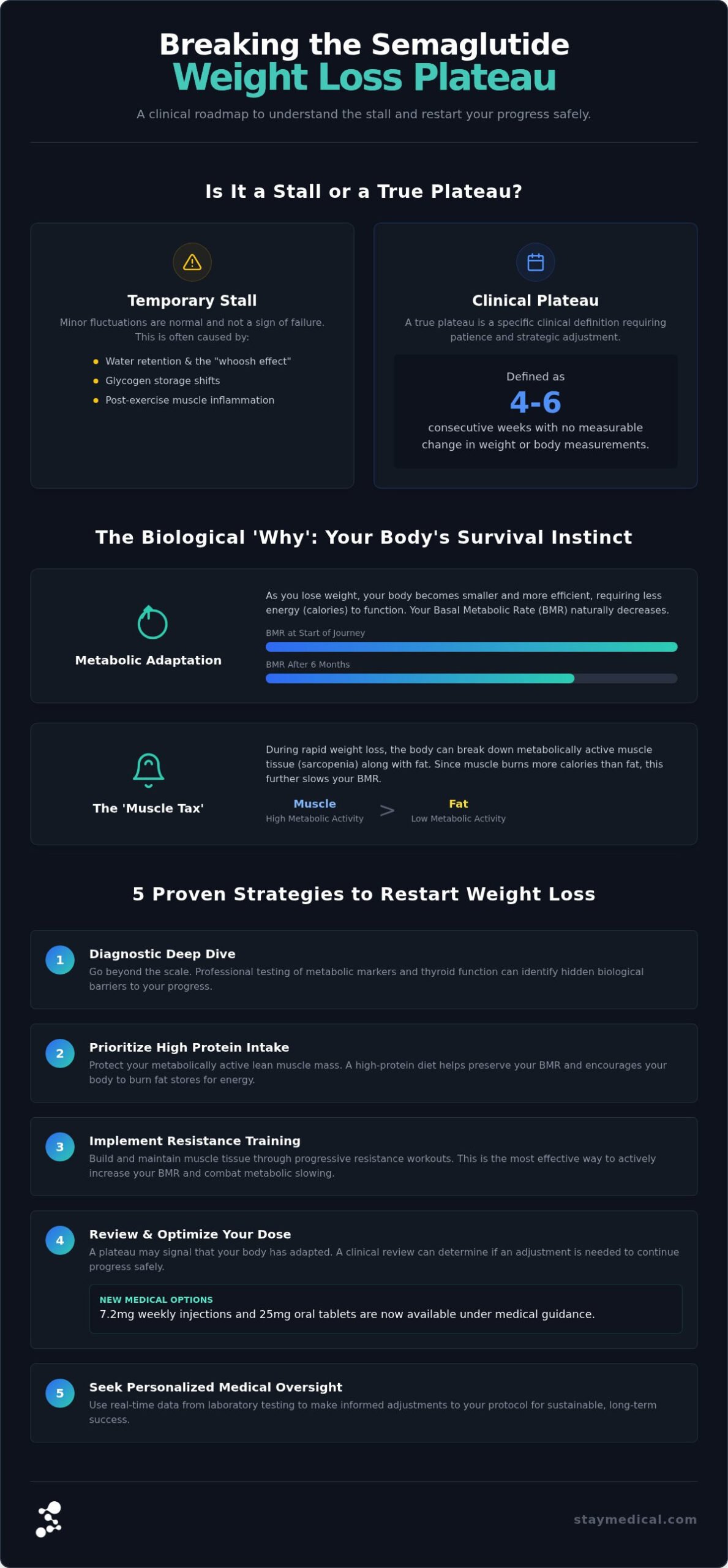
5 Proven Strategies to Restart Weight Loss on Semaglutide
Once we’ve identified the underlying biological cause of your stall, we move into the corrective phase. Breaking a plateau isn’t about working harder. It’s about working more precisely with your body’s current needs. If you’re seeking weight loss plateau on semaglutide help, these five evidence-based strategies form the backbone of our 2026 medical protocol.
- Step 1: Prioritize Protein. Aim for 1.2g to 1.5g of protein per kilogram of body weight. This protects the lean muscle mass we discussed earlier and keeps your metabolism firing.
- Step 2: Implement Progressive Resistance Training. Lifting weights or using resistance bands sends a clear signal to your body to preserve muscle and incinerate fat stores.
- Step 3: Clinical Dose Titration. Under strict medical supervision, we may adjust your dosage. With the 2026 availability of the 7.2mg weekly injection and 25mg oral tablets, we have more tools than ever to optimize your response.
- Step 4: Metabolic Boosting. We often utilize IV Therapy or IM Injections to deliver essential nutrients directly into your system, bypassing digestive hurdles and providing a metabolic spark.
- Step 5: Stress and Sleep Management. High stress and poor sleep elevate cortisol. This can halt progress. Managing your circadian rhythm is just as important as your injection schedule.
Schedule a consultation to customize your weight loss protocol
Nutritional Pivots for GLP-1 Users
In Miami, the heat is a hidden factor that many overlook. Dehydration can mimic a plateau by causing the body to hold onto every drop of water it has. It’s essential to hit your hydration targets while also closing the “Fiber Gap.” Since Semaglutide slows digestion, adequate fiber ensures your system remains efficient. We also evaluate if strategic carb cycling is right for your specific metabolic profile to keep your body guessing and responding.
Medical Adjustments: Dose and Frequency
At Stay Medical Clinic, we believe that effective weight loss plateau on semaglutide help requires more than just a prescription adjustment. It demands a partnership. Our approach in Brickell centers on the understanding that you are an individual with a unique metabolic fingerprint. By combining the rigorous standards of primary care with the latest advancements in weight loss technology, we offer a level of oversight that goes far beyond traditional clinical models. We don’t just treat the stall; we treat the person experiencing it. This intentional focus on the individual ensures that your health journey is both sustainable and deeply personal.
One of the most significant advantages of our clinic is our on-site lab testing. This allows us to gather and analyze metabolic data in real-time, providing immediate insights into why your progress might have slowed. Instead of waiting weeks for external results, we can pivot your protocol during your visit. This agility is essential for maintaining momentum and ensuring that every adjustment we make is rooted in hard data rather than guesswork. Our goal is to foster a trust-based relationship where you feel seen, heard, and supported at every milestone.
Integrated Wellness: Beyond the Injection
True vitality is a multi-dimensional pursuit that extends well beyond a weekly medication. While GLP-1 medications are a cornerstone of our program, we often incorporate Vitamin B12 and Lipotropic injections to support your energy levels and liver function during a stall. Our primary care foundation means we look at the whole patient. We address the quality of your sleep, your mental well-being, and your underlying inflammatory markers. For busy professionals in Miami, our Suite 502 location in the heart of Brickell provides a serene, efficient environment where your health is the absolute priority.
Next Steps: Booking Your Plateau Consultation
If you’re ready to move past the frustration of a stagnant scale, the next step is a dedicated troubleshooting visit. We recommend bringing a record of your current dosage history, any recent lab results from other providers, and a brief log of your nutritional habits. During this session, we’ll develop your 2026 Plateau-Buster roadmap, a personalized clinical plan designed to restart your journey safely and effectively. We’re here to provide the skill, the data, and the dedication needed to reach your goals and maintain your long-term vitality.
Contact Stay Medical Clinic today to schedule your personalized weight loss consultation and restart your journey.
Reclaiming Your Metabolic Momentum
Hitting a wall in your progress is often just a signal that your body has adapted to its new weight and is trying to protect its energy stores. By addressing the biological reasons behind the stall, you can shift from frustration to a targeted medical response that respects your unique physiology. Seeking professional weight loss plateau on semaglutide help means moving beyond the scale and using real-time data to guide your next steps. Whether it’s through dose titration, nutritional pivots, or metabolic support, your journey doesn’t have to stop here.
Our team of experienced healthcare professionals in Miami is dedicated to providing compassionate, trust-based medical care that treats you as an individual rather than a clinical case. We use on-site metabolic blood panels to find the exact reason for your stall and build a roadmap that prioritizes your long-term vitality and health. This clinical oversight ensures that every adjustment is safe and effective.
Break your plateau with a medically supervised Weight Loss Program at Stay Medical Brickell.
You’ve already come so far; now let’s work together to finish the journey with clarity and confidence.
Frequently Asked Questions
How long does a typical weight loss plateau last on Semaglutide?
A clinical weight loss plateau on semaglutide help typically lasts between four and six weeks. Short stalls of seven to fourteen days are often just the body regulating water levels or recovering from inflammation. If the scale hasn’t moved for over a month, we consider it a true plateau. This duration allows us to distinguish between normal biological fluctuations and a genuine need for a protocol adjustment. Patience during these shorter windows is essential for health.
Should I increase my dose if I haven’t lost weight in two weeks?
You shouldn’t increase your dose based on only two weeks of stable weight. Clinical protocols generally require at least four consecutive weeks of no progress before a titration adjustment is considered. Moving up too quickly can increase the risk of gastrointestinal side effects without providing additional weight loss benefits. We prefer to analyze your nutritional intake and activity levels first to ensure your current dose has reached its maximum physiological potential.
Can drinking alcohol cause a weight loss plateau on Ozempic or Wegovy?
Alcohol can definitely contribute to a weight loss stall on GLP-1 medications. Beyond the liquid calories, your liver prioritizes processing alcohol over fat metabolism. This pause in fat oxidation can last for several hours or even days depending on the amount consumed. Additionally, alcohol can lead to inflammation and water retention, which masks fat loss on the scale. Limiting intake is often a necessary step for those seeking weight loss plateau on semaglutide help.
Is it possible to become ‘immune’ to Semaglutide after long-term use?
It isn’t possible to become immune to the medication, but your body does adapt to its effects over time. This is known as metabolic adaptation. As you lose weight, your body becomes more efficient and requires fewer calories to function. The medication is still active in your system, but the biological landscape has shifted. This transition is why recalculating your energy needs and optimizing your dose under medical supervision is so important after six months.
How much protein do I actually need to prevent muscle loss while on GLP-1s?
To prevent muscle loss, most clinical guidelines for 2026 recommend consuming 1.2g to 1.5g of protein per kilogram of your current body weight. For a person weighing 80kg, this equates to approximately 96g to 120g of protein daily. Meeting this target is the most effective way to protect your basal metabolic rate. High protein intake also enhances the satiety effects of the medication, making it easier to maintain the necessary energy deficit.
What happens if I switch from Semaglutide to Tirzepatide during a plateau?
Switching from a single-agonist like Semaglutide to a dual-agonist like Tirzepatide can often break a stubborn plateau. Tirzepatide targets both GLP-1 and GIP receptors, which provides an additional pathway for metabolic regulation. This change can improve insulin sensitivity and further reduce appetite. However, this transition must be handled carefully by a medical professional to manage the cross-titration process and ensure your body adjusts to the new hormonal signals safely and effectively.
Can stress in my professional life actually stop my weight loss progress?
Can stress in my professional life actually stop my weight loss progress?
Chronic stress in your professional life can absolutely halt your progress by elevating cortisol levels. Cortisol is a hormone that encourages fat storage, particularly in the abdominal area, and can cause significant water retention. When your body is in a state of fight or flight, it prioritizes energy conservation over fat loss. Managing stress through improved sleep and recovery is a clinical necessity for anyone looking to optimize their results on a medically supervised weight loss program; for high-performers in the Denver area, specialized restorative care from 5280restorativemed.com can help manage these physiological stressors.
While some patients report better results in the stomach versus the thigh, clinical data shows that bioavailability remains consistent across all FDA-approved injection sites. The speed of weight loss is generally determined by your metabolic rate and adherence to the protocol rather than the specific location of the needle. We recommend rotating sites to prevent skin irritation. If you feel one site works better for you, it’s perfectly safe to prioritize that area during your weekly routine.
Disclaimer
This content is for informational purposes only and does not replace evaluation, diagnosis, or treatment by a medical professional. Always consult a qualified healthcare provider for personalized care.