

Medical Weight Loss: A Scientific Guide to Success
September 2, 2026
Semaglutide vs. Tirzepatide for Weight Loss in Miami: A 2026 Clinical Comparison
September 4, 2026
What if your lab report was more than just a list of cryptic abbreviations, but a detailed roadmap to your most vibrant self? For many, the process of interpreting blood work results feels like trying to solve a puzzle without the box lid. You might see a marker flagged in red and feel a sudden surge of anxiety, or perhaps your doctor simply told you that everything is “normal” even though you don’t feel your best.
We understand that looking at your health on paper can be overwhelming when you lack the context to make sense of the data. This guide is designed to demystify the complex world of clinical testing by breaking down the core components of your CBC, CMP, and lipid panels. You’ll learn the crucial distinction between “normal” reference ranges and the “optimal” levels required for true vitality. By the end, you’ll have the clarity and confidence needed to have a deeper, more intentional conversation with your primary care provider about your long-term wellness.
Key Takeaways
- Gain a clear understanding of the abbreviations and reference ranges that often make lab reports feel inaccessible.
- Discover why “normal” results might not be enough and how to identify the “optimal” ranges that support your long-term vitality.
- Learn the specific roles of CBC, CMP, and lipid panels in monitoring your immunity, organ function, and cardiovascular health.
- Master the nuances of interpreting blood work results so you can advocate for your health during your next consultation.
- Understand the critical preparation steps, including fasting and hydration, required to capture the most accurate data from your testing.
Decoding the Language: How to Read a Blood Test Report
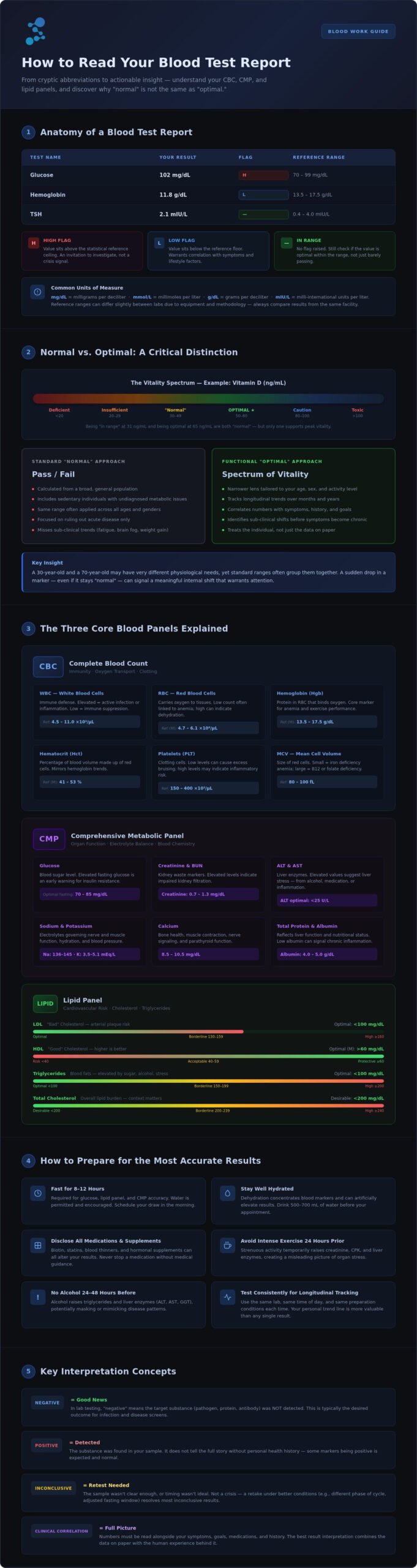
When you first receive your report, the rows of data can feel like a foreign language. However, once you understand the architecture of the document, interpreting blood work results becomes a much more intuitive process. Most reports are organized into a clean grid featuring the test name, your specific result, a “flag” column, and the reference range. This structure is designed to provide a snapshot of your current physiological state, but it requires a bit of context to read correctly.
The “Flag” column is often where anxiety begins, as it highlights results with an “H” for high or an “L” for low. It’s helpful to remember that these markers are automated alerts. They don’t necessarily indicate a medical crisis; they simply notify your clinician that a value sits outside the statistical middle. Technicians and sophisticated software generate these ranges by looking at a broad spectrum of data from thousands of individuals to find a mathematical average. At Stay Medical, we view these flags as invitations to look deeper into your lifestyle and overall well-being.
Understanding Reference Ranges and Units of Measure
A reference range represents the values found in 95% of a healthy population. Because different facilities use varying equipment and testing methodologies, you might notice that “normal” values shift slightly between one clinic and another. You will also encounter units like mg/dL (milligrams per deciliter) or mmol/L (millimoles per liter), which describe the concentration of a substance in your blood. A reference range is a dynamic benchmark rather than a fixed truth. It provides a starting point for a professional conversation rather than a final diagnosis.
What “Negative” and “Positive” Really Mean
In the context of laboratory testing, “negative” is typically the goal. It indicates that the specific substance, such as a virus or a specific protein, was not detected in your sample. Conversely, a “positive” result means the substance was found. Neither result tells the whole story without looking at your personal health history.
Sometimes, you might see an “inconclusive” result. This doesn’t mean something is wrong; it often suggests that the sample wasn’t clear enough or the timing of the test wasn’t ideal to provide a definitive answer. We focus on clinical correlation, which means we look at your numbers alongside your symptoms and goals. We believe in treating the individual, not just the paper. Mastering the basics of interpreting blood work results allows you to move past the initial confusion and focus on what the data says about your unique journey toward vitality.
Normal vs. Optimal: Why Your Lab Results Need Context
There is a profound difference between being “not sick” and truly thriving. Most traditional healthcare models focus on the former, using laboratory data simply to rule out acute disease. When you are interpreting blood work results, it’s easy to assume that as long as your numbers fall within the white space on the page, you are in peak health. However, these standard reference ranges are often broad catch-alls that don’t account for the high-performance demands of an active Miami lifestyle.
For the professionals and athletes in Brickell, “normal” isn’t the goal; “optimal” is. Functional blood chemistry analysis looks at your markers through a narrower lens, identifying sub-clinical trends before they manifest as chronic fatigue, brain fog, or weight gain. If your Vitamin D or iron levels are technically within range but hugging the bottom limit, you may still experience significant symptoms that hinder your daily vitality. We believe your results should be viewed as a spectrum of potential, not just a binary pass-fail grade. For individuals seeking this level of specialized care through a convenient telehealth model, Pura Wellness RX provides nationwide access to licensed clinicians focused on hormone optimization and comprehensive wellness testing.
The Problem with “Standard” Normal Ranges
Standard reference ranges are calculated using a statistical average of the general population, which unfortunately includes many individuals who are sedentary or dealing with undiagnosed metabolic issues. This means your “normal” might be compared to a group that isn’t representative of your health goals. For instance, a 30-year-old man should not necessarily have the same hormonal profile as a 70-year-old, yet standard ranges often group them together. This is particularly relevant when discussing Testosterone Replacement in Brickell, where achieving a physiological optimum can be the key to restoring energy and mental clarity.
Defining Your Personal Baseline
The most important data point on any lab report isn’t the reference range; it’s your own history. Longitudinal testing, or tracking your results over several years, allows us to see how your unique chemistry evolves. A sudden drop in a specific marker might remain within the “normal” range but could indicate a significant shift in your internal health that warrants attention. We encourage our patients to maintain a digital health folder to track these trends over time. This proactive approach ensures that we are treating you based on your personal baseline rather than a generic population average. If you are ready to move beyond basic checklists, a comprehensive laboratory testing session can provide the clarity you need to optimize your health journey.
Analyzing Your Vital Markers: CBC, CMP, and Lipid Profiles
To move from a general understanding to actionable insight, we must look at the specific panels that form the foundation of most lab reports. Interpreting blood work results effectively requires an integrated view of how your blood cells, metabolic enzymes, and fats interact. These markers don’t exist in isolation; they tell a story of how your body manages energy, defends against pathogens, and maintains its structural integrity.
The CBC: Your Body’s Internal Defense and Delivery
The Complete Blood Count (CBC) acts as a high-level audit of your body’s internal defense and delivery systems. Red blood cells (RBCs) carry oxygen to your tissues, while white blood cells (WBCs) serve as your primary immune responders. Platelets ensure your blood clots correctly after an injury. We pay close attention to Hemoglobin and Hematocrit, as these often dictate your daily energy levels and athletic performance. It’s vital to stay hydrated before your draw, especially in the humid Florida heat. Dehydration can cause these markers to appear artificially elevated, potentially masking underlying issues or leading to false alarms.
The CMP: Liver, Kidney, and Metabolic Balance
While the CBC looks at the cells themselves, the Comprehensive Metabolic Panel (CMP) examines the chemistry of your blood. This panel assesses kidney and liver function while providing a snapshot of your blood sugar levels. Markers like Glucose and Hemoglobin A1c are essential for our Weight Loss Program in Brickell, as they reveal how efficiently your body processes fuel. We also monitor electrolytes like Sodium and Potassium. These minerals are critical for nerve function and muscle recovery, making them central to our IV therapy protocols for patients seeking rapid rehydration and nutrient replenishment.
The Lipid Panel: A Modern View of Heart Health
A modern approach to heart health looks beyond simple “good” or “bad” cholesterol labels. The lipid panel measures LDL, HDL, and Triglycerides to evaluate cardiovascular risk. However, we often look deeper at the Triglyceride-to-HDL ratio, which is a powerful indicator of metabolic flexibility and insulin sensitivity. It’s also worth noting that cholesterol isn’t the enemy. It’s a vital building block for your body’s steroid hormones, including testosterone. When interpreting blood work results, we ensure your lipid levels are balanced enough to support both a healthy heart and robust hormonal production.
Preparing for Success: How to Get the Most Accurate Results
Accuracy in your health data begins long before you arrive at the clinic. While the technical process of interpreting blood work results happens in the lab, the quality of the sample depends entirely on your preparation. For metabolic markers like glucose and lipids, a strict fasting window of 8 to 12 hours is essential. Consuming food or even certain beverages can cause temporary spikes that lead to misleading data. Hydration is equally critical; drinking plenty of water ensures your veins are accessible and prevents the artificial concentration of red blood cells we discussed earlier.
You should also consider your supplement regimen. Biotin, a common ingredient in hair and nail vitamins, is known to interfere with many laboratory assays, potentially skewing results for thyroid and hormonal tests. Supplements like Biotin can create a false picture of your thyroid health, so it’s best to pause them for a few days before your test. If you are tracking hormones for testosterone replacement, timing is everything. Natural hormone levels peak in the early morning, so we recommend scheduling your draw as early as possible to capture your true physiological state.
The Impact of Lifestyle on Your Lab Day
Your physical activity in the 24 hours leading up to your appointment can leave a temporary footprint on your blood chemistry. Intense weightlifting or endurance training can cause a significant rise in Creatine Kinase (CK) levels, which a clinician might misinterpret as muscle damage or stress. Similarly, alcohol and caffeine can dehydrate the body and alter liver enzyme readings. Remember that preparation is fifty percent of the accuracy in diagnostics. By arriving in a steady, rested state, you ensure your results reflect your baseline health rather than a temporary lifestyle spike.
Schedule your professional laboratory testing in Brickell
Questions to Ask Your Doctor During Interpretation
When you sit down to review your report, don’t be a passive recipient of the data. Interpreting blood work results should be a collaborative dialogue between you and your provider. Consider asking these specific questions to gain a deeper understanding of your vitality:
- “Are these markers optimal for my age and fitness goals, or are they just within the standard normal range?”
- “How do these specific numbers compare to my previous panels from last year?”
- “Which lifestyle or dietary changes will have the most immediate impact on improving these markers?”
This proactive approach transforms a static report into a living plan for your well-being. By engaging with the data, you move from simply managing a condition to actively designing a lifestyle that supports long-term health and performance.
Personalized Diagnostic Interpretation at Stay Medical Brickell
Interpreting blood work results shouldn’t happen in a vacuum. While the data provides the “what,” a dedicated clinical partner provides the “why” and the “how.” At Stay Medical, we believe that your lab report is the beginning of a conversation rather than the conclusion of a visit. By offering on-site laboratory testing, we eliminate the friction often found in traditional healthcare, allowing Brickell professionals to integrate high-level diagnostics into their busy schedules without the need for multiple appointments at disparate facilities.
Our approach is rooted in the philosophy that every marker tells a story about your lifestyle. When we analyze your results, we don’t just look for pathology; we look for opportunities to enhance your vitality. This is especially critical for patients enrolled in our Weight Loss Program in Brickell or those undergoing Testosterone Replacement. In these specialized programs, precise interpretation allows us to fine-tune dosages and nutritional strategies with surgical accuracy, ensuring that your body is responding optimally to the treatment plan. We move beyond the numbers to create a customized wellness roadmap that aligns with your specific physiological needs and long-term health goals.
A Boutique Experience in the Heart of Miami
Our clinic, located at 33 SW 2nd Ave, Suite 502, is designed to feel intentional and deeply personal. We avoid the sterile, detached atmosphere of large medical groups, opting instead for a boutique environment where you see the same provider who understands your full medical history. This continuity of care is essential for interpreting blood work results over time, as it allows us to spot subtle shifts in your baseline before they become significant issues. You can learn more about our dedicated team and our commitment to moral integrity by visiting our About Us page.
Next Steps: Booking Your Comprehensive Blood Panel
The foundation of long-term health is a consistent, proactive assessment of your internal landscape. We recommend an Annual Physical Exam as the cornerstone of this process, providing the necessary data to track your progress year over year. Scheduling your labs at Stay Medical is a stress-free experience designed to respect your time and provide immediate clarity. Our team acts as a dedicated partner in your journey, ensuring that you leave every consultation with a clear understanding of your health and the confidence to take the next step toward your best self.
Schedule your primary care visit and lab work at Stay Medical today.
Empowering Your Health Through Data-Driven Clarity
You’ve learned that your lab report is far more than a collection of flags and figures; it’s a dynamic narrative of your current well-being. By moving beyond standard “normal” ranges and focusing on your personal optimal baseline, you gain the power to address health concerns before they become obstacles. Proper preparation and a clear understanding of your metabolic markers ensure that interpreting blood work results leads to meaningful lifestyle changes rather than confusion.
At Stay Medical, we provide the expertise and on-site laboratory testing necessary to transform these numbers into a personalized wellness roadmap. Our expert clinical team is dedicated to your optimization, ensuring every result is viewed through the lens of your unique lifestyle and goals. You deserve a healthcare partner who sees you as an individual, not just a clinical case.
Take the first step toward a more vibrant and intentional version of yourself. We’re here to guide you through every marker and every milestone on your journey to peak health.
Frequently Asked Questions
Why are my blood test results different from one lab to another?
Variations occur because different laboratories utilize unique equipment, chemical reagents, and statistical methodologies to establish their reference ranges. One facility in Brickell might use a slightly different calibration than another clinic in Miami. These differences are usually minor but emphasize why it’s beneficial to stick with one provider for longitudinal tracking. We focus on these nuances to ensure your results are viewed as part of a consistent and reliable health narrative.
What should I do if my blood work results are outside the reference range?
Don’t panic, as a single marker flagged as “out of range” doesn’t always indicate a medical condition. Results can be influenced by recent intense exercise, temporary dehydration, or even a recent meal. The most effective step is to discuss these findings with your provider at our Miami clinic. We prioritize clinical correlation, looking at your symptoms and lifestyle to determine if a result requires action or simply continued monitoring.
Do I always need to fast before a blood test?
Not every test requires fasting, but it’s essential for metabolic panels and lipid profiles to ensure the highest level of accuracy. Fasting for 8 to 12 hours prevents recent nutrient intake from causing temporary spikes in glucose or triglycerides. If you aren’t sure about your specific requirements, our team in Brickell will provide clear instructions. We want to ensure your sample captures a clean baseline of your metabolic health without any dietary interference.
How long does it take to get blood work results back at Stay Medical?
Most routine lab results are available within 24 to 48 hours, though some specialized panels may take slightly longer. Because we offer on-site laboratory testing in Brickell, we can streamline the processing and review of your data. Once your results are ready, we’ll notify you promptly to discuss the findings. Our goal is to move quickly from data collection to the creation of your personalized and actionable wellness roadmap.
Can my supplements affect my blood work results?
Yes, certain vitamins and minerals can significantly interfere with laboratory assays. Biotin is a well-known example that can skew thyroid and hormone markers, potentially leading to an incorrect interpretation of your health. We recommend disclosing all supplements during your consultation in Miami. Our clinicians will advise you on which ones to pause before your draw to ensure we are accurately interpreting blood work results for your specific treatment plan.
What is the most important blood test for overall wellness?
While there isn’t a single most important test, the Comprehensive Metabolic Panel (CMP) and Complete Blood Count (CBC) are fundamental for a broad view of your health. These tests assess organ function, immunity, and blood sugar levels. For those in our specialized programs, we also prioritize hormonal panels and lipid profiles. Together, these markers provide the data necessary to monitor your progress in a weight loss program or testosterone replacement therapy.
Why does my doctor order a CBC and CMP every year?
These annual tests allow us to establish your personal baseline and detect subtle shifts in your health before symptoms appear. By reviewing these markers during your annual physical exam in Brickell, we can track long-term trends in your liver function, kidney health, and immune system. This proactive approach is the cornerstone of modern family medicine, helping us maintain your vitality through every stage of life in the South Florida area.
Can I interpret my own blood work using online tools?
Online tools can provide general definitions, but they lack the clinical context of your unique medical history and symptoms. Interpreting blood work results requires a professional understanding of how different markers interact. A number that looks low on an app might be perfectly optimal for your specific goals or age. We recommend reviewing your report with an expert clinician—such as the team at Hatmed Medical Centre—who can translate raw data into a safe and effective action plan.
Disclaimer
This content is for informational purposes only and does not replace evaluation, diagnosis, or treatment by a medical professional. Always consult a qualified healthcare provider for personalized care.