
Testosterone Therapy for Mood Improvement: Effects and Risks
November 7, 2026
TRT for mental clarity: How treatment may affect focus and brain health
November 9, 2026
Yes, GLP-1 medicines such as semaglutide and tirzepatide can be part of a medically guided weight-loss program. For men considering a weight loss clinic for men in Coral Gables, potential candidates include adults with a BMI of 30 or higher, or a BMI of 27 or higher with a weight-related health condition. Medication is one option, not a substitute for a plan shaped around individual health needs and sustainable habits.
It’s reasonable to want clear answers before starting treatment: whether you may qualify, what medication involves, and how nutrition and exercise fit in. This guide explains how a weight loss clinic for men in Coral Gables may evaluate eligibility, what to expect from GLP-1 treatment, and why ongoing lifestyle support matters. You’ll also learn what to consider when choosing a weight loss clinic for men in Coral Gables, so you can approach your next steps with a clearer understanding of the process.
Key Takeaways
- Learn how nutrition and exercise can support a medically guided weight-loss plan.
- See how lab work, health history, and personal goals inform GLP-1 treatment decisions.
- Understand why BMI is one part of an eligibility evaluation, not the whole picture.
- Compare what to consider when discussing semaglutide or tirzepatide with a clinician.
- Know what topics to discuss when planning an appointment and considering ongoing support.
Metabolism, diet, nutrition, and exercise
A weight loss clinic for men in Coral Gables can offer medical oversight and practical support for building sustainable habits. A program may begin with a review of health history, eating routines, sleep, and activity, then identify realistic changes. For example, a clinician can discuss how frequent restaurant meals or long periods of sitting affect daily habits before setting nutrition and movement goals.
Metabolism describes how the body uses energy, but a weight-management plan should not rely on a single calorie target. A clinician can consider daily routines, health needs, food preferences, and progress over time. Before an appointment, note what a typical day of meals and activity looks like, including a quick breakfast, a desk-based workday, or evening exercise. Those details can make nutrition guidance more relevant than a generic meal plan.
Very-low-calorie diets require particular care. According to the American College of Cardiology and American Heart Association, a very-low-calorie diet (<800 kcal/day) should be prescribed only in limited circumstances by trained clinicians in a medical care setting under medical supervision. This approach isn’t a do-it-yourself shortcut. A medical team can determine whether it fits the person’s circumstances and provide appropriate oversight.
Nutrition education can turn broad advice into choices that work at home, at work, and when dining out. A clinician may help plan balanced meals, identify sources of protein and fiber, or build a grocery list around foods you enjoy. If you often skip lunch, for example, discuss convenient options to keep on hand instead of trying to follow an unrealistic schedule. Ongoing support can help identify obstacles and adjust the plan as routines change.
Exercise planning should reflect your starting fitness, preferences, and physical limitations. If you are returning to activity after a long break, you might begin with walking and gradually add strength exercises. If you enjoy cycling, that can become a consistent part of your routine. The goal is a manageable plan you can maintain, not an abrupt, demanding schedule. Medical guidance can help account for individual health considerations.
- Bring a typical day of meals and movement into the nutrition discussion.
- Ask how the plan will adapt to restaurant meals, work schedules, and changing routines.
- Discuss exercise options that fit current fitness and physical comfort.
- Treat very-low-calorie diets as a supervised clinical approach, not a self-directed plan.
Nutrition guidance and ongoing support help men review what is working and make thoughtful adjustments. In Coral Gables, a structured wellness plan can connect medical oversight with practical choices, such as preparing a simple lunch or scheduling a walk. Consistency matters more than a perfect day, and education can make healthier decisions easier to repeat.
Do you offer GLP-1 medicines for weight loss?
Yes, GLP-1 medicines such as semaglutide and tirzepatide are options in medical weight-loss treatment. A personalized plan considers eligibility, health information, treatment goals, and support beyond medication.
When comparing clinics in Coral Gables and nearby Miami, consider whether the team communicates clearly, explains treatment, and responds to concerns. Look at the medical evaluation, nutrition guidance, and follow-up approach rather than relying on location or a star rating alone.
Personalized GLP-1 Treatment
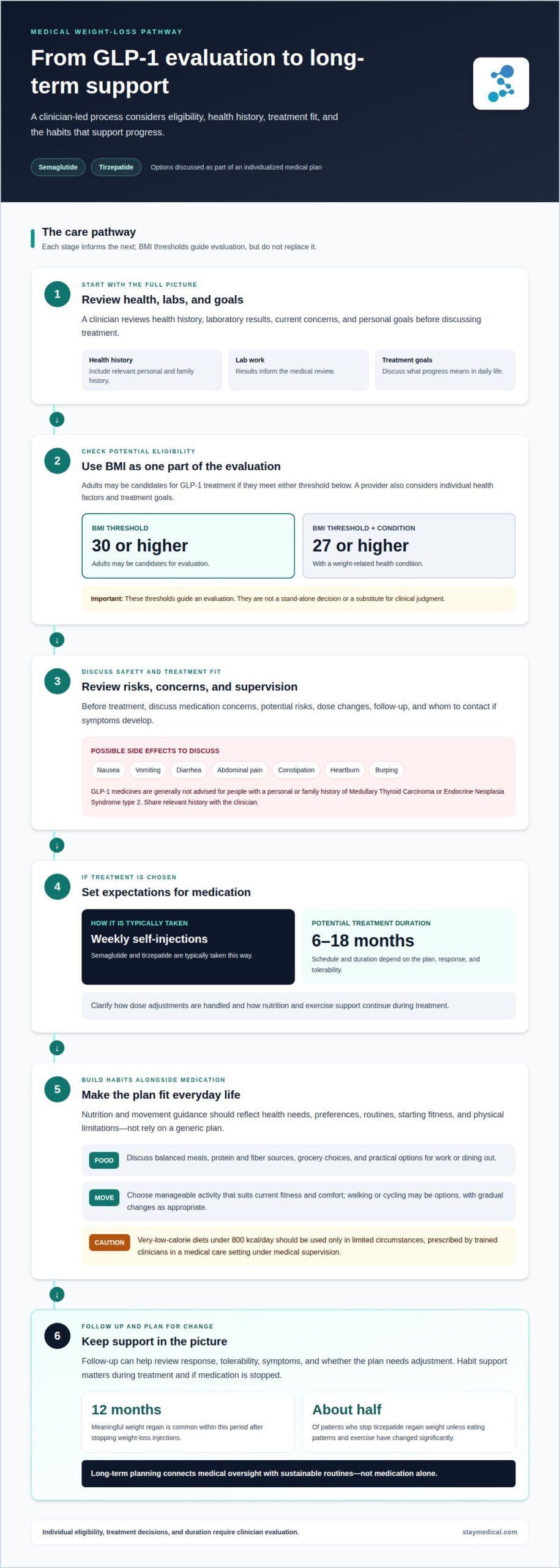
Personalization starts with a review of health history, lab work, and the person’s goals. Adults with a BMI of 30 or higher, or a BMI of 27 or higher with a weight-related condition, may be candidates for GLP-1 treatment. These thresholds guide an evaluation; they don’t replace consideration of individual health factors.
Before treatment, discuss what progress would mean in everyday life, such as improved mobility or more consistent eating habits. If body contouring is also a goal, discuss how it relates to weight management. A treatment plan should distinguish overall weight goals from appearance goals and set realistic expectations for each.
Treatment Duration and Injection Schedule
Semaglutide and tirzepatide are typically taken as weekly self-injections, and treatment may continue for 6-18 months. The schedule and duration depend on the treatment plan, response, and tolerability. Clarify how dose adjustments are handled and how nutrition and exercise support will continue during treatment.
Plan for the long term, not only the weeks when medication is being used. Meaningful weight regain is common within 12 months after stopping weight-loss injections. About half of patients who stop tirzepatide regain weight unless eating patterns and exercise have changed significantly. Ongoing habit support matters as treatment changes.
Credentials, Supervision, and Side Effects
Look for medical oversight from a clinician who reviews your health history, laboratory results, eligibility, and medication concerns. Discuss how follow-up works and whom to contact if symptoms develop. A clear plan should cover potential risks, dose changes, and decisions about continuing or stopping treatment.
GLP-1 medicines may cause nausea, vomiting, diarrhea, abdominal pain, constipation, heartburn, or burping. They’re generally not advised for people with a personal or family history of Medullary Thyroid Carcinoma or Endocrine Neoplasia Syndrome type 2. Share relevant history before treatment begins.
For men considering care in Coral Gables, personalized medical weight-loss care can be a starting point for discussing treatment goals, lab work, and ongoing support.
Eligibility evaluation and BMI measurement
GLP-1 eligibility is assessed through more than a number on a scale. Adults with a BMI of 30 or higher, or a BMI of 27 or higher with a weight-related condition, may be candidates. A provider uses those thresholds as part of an individual evaluation, alongside health history, current concerns, and treatment goals.
BMI compares weight with height and can provide a starting point for discussing weight-related care. It does not capture every aspect of health or explain body composition. A muscular man, for example, may have a body composition that BMI alone does not reflect. The clinician should consider the measurement in context, rather than treating it as a complete health assessment.
An evaluation begins with a review of medical history and current health concerns. Share previous weight-management approaches, medications, and changes in energy or daily activity. Mention fatigue, especially if it affects work, exercise, or routine tasks. Thyroid history is also relevant context for discussing a treatment plan.
Laboratory testing can add information to an evaluation when it is part of the care plan. The clinician interprets results alongside your history and goals, rather than relying on a single result. For example, when discussing low energy, explain when it began, whether it has changed, and how it affects everyday routines. This helps place test results in the broader clinical picture.
Set goals that are specific enough to guide decisions. You might want to improve mobility, reduce weight-related strain during activity, or establish sustainable routines. The clinician can use these priorities to discuss whether medication fits the overall plan and what progress to monitor. Clear goals also help distinguish a medical need from an expectation focused only on appearance.
- Measurement: Review height and weight as part of the BMI discussion.
- Health context: Discuss conditions, medications, thyroid history, and fatigue.
- Goals: Describe the practical changes you want treatment to support.
- Follow-up: Understand how the provider will review progress and adjust the care plan.
Eligibility does not guarantee that a particular treatment is appropriate. Even if you meet a BMI threshold, your health history, potential risks, and goals need evaluation. BMI alone cannot explain symptoms or identify every factor affecting weight. A thoughtful discussion considers the measurement alongside your individual circumstances.
Before deciding on treatment, ask why particular tests are recommended, how the results will inform care, and which goals matter most to you. Sharing this context gives the clinician a clearer picture and helps make the treatment discussion specific, whether the next step involves medication or another approach to weight management.
Semaglutide and tirzepatide programs
Semaglutide and tirzepatide are GLP-1 medicines used in medical weight-management programs. Both were initially developed to treat Type 2 Diabetes, and their weight-loss effects have also been studied. For men considering therapy in Florida, understanding trial averages, potential side effects, and follow-up helps set practical expectations.
Clinical trial averages offer context, not a forecast for an individual. Semaglutide trials reported approximately 15% body-weight loss over 68 weeks. Tirzepatide trials reported approximately 20-22% body-weight loss over 72 weeks. These results describe study averages, not a guaranteed outcome or a direct comparison for every patient. Personal response, treatment tolerance, and the care plan all matter.
Some patients see minimal results. Estimates place the share of non-responders to semaglutide or tirzepatide at 5-15%. That possibility makes follow-up important: a clinician can review progress, tolerability, and whether the treatment approach still aligns with a patient’s goals. A useful check-in focuses on measurable changes and concerns, rather than judging success by one weigh-in.
Side effects can affect daily routines. GLP-1 treatment may cause nausea, vomiting, diarrhea, abdominal pain, constipation, heartburn, or burping. Temporary side effects typically resolve within the first month, while nausea during dose increases often improves within 4-8 weeks. Report symptoms that interfere with eating, hydration, work, or ordinary activities so the care team can assess them.
Before starting, discuss the treatment plan step by step. Clarify how progress will be reviewed, which symptoms should prompt a call to the clinic, and how nutrition and activity support fit alongside medication. For example, if nausea affects meals, bring it up during treatment follow-up. Personal goals also help define progress beyond the number on the scale.
- Semaglutide: Trial average of approximately 15% body-weight loss over 68 weeks.
- Tirzepatide: Trial average of approximately 20-22% body-weight loss over 72 weeks.
- Side effects: Discuss gastrointestinal symptoms and their effect on daily routines.
- Follow-up: Review treatment response, tolerability, and goals with a clinician.
A well-structured program keeps the conversation open as treatment progresses. Since 5-15% of patients may have minimal response, regular review can help identify whether the plan is meeting its intended goals. Men should also raise concerns about side effects early, rather than silently changing or stopping medication. The purpose of therapy is to support a medically guided approach, with decisions informed by the individual’s response.
Appointment availability
The length and focus of an appointment depend on its purpose, the clinician’s schedule, and the information needed for care. An initial weight-management discussion may cover health history and goals, while a follow-up may focus on progress or treatment concerns. Prepare by identifying the main topic you want to address, such as medication questions, nutrition habits, or changes in daily activity.
Before booking, decide what you need from the visit. For example, a man considering GLP-1 treatment may want to discuss eligibility, lab work, and how follow-up works. Someone already receiving care may need to review symptoms or progress. A clear purpose helps the clinic direct the appointment appropriately and gives the clinician a useful starting point.
Appointments are more focused when you have relevant details ready to discuss. Share current medications, notable health conditions, previous weight-management approaches, and lifestyle habits that affect your goals. If fatigue or a medication side effect concerns you, describe when it happens and how it affects work, meals, or exercise. This context helps guide the conversation without turning the visit into a rushed checklist.
Ask how follow-up fits into the care plan before treatment begins. Clarify how progress is reviewed, which concerns should prompt an earlier discussion, and how treatment changes are addressed. A program involving medication and nutrition support may require different check-ins than a visit focused on setting initial goals. The schedule should support the clinical plan.
- Clarify the purpose: Identify whether you’re discussing initial goals, medication, or follow-up concerns.
- Share context: Summarize relevant health history, medicines, and lifestyle habits.
- Discuss continuity: Ask how progress and treatment questions are handled between visits.
- Plan around your routine: Consider work, meals, and exercise when choosing an appointment time.
For men balancing work and personal responsibilities, it helps to choose appointment times that fit a realistic routine. A morning visit may work before the workday, while another patient may prefer to avoid a recurring meeting or training session. These examples can help you express your preferences, while actual appointment times depend on the clinic schedule and visit needs. Keeping follow-up in mind can also support consistent care.
At the appointment, start with the questions that matter most. If you have several concerns, begin with the one affecting your health or daily habits most. Then discuss how the plan addresses it, what information guides decisions, and what the next step involves. This focused approach makes each visit purposeful, whether you are starting a weight-management discussion or continuing care.
Stay Medical Clinic: Weight Loss Program
Stay Medical Clinic offers a Weight Loss Program for men seeking structured, medically guided support with weight management. It can be a practical next step if you want to discuss treatment options, nutrition, and goals as part of one care plan.
During a conversation about weight management, you can raise questions about GLP-1 medicines and share relevant health history, lab work, and priorities. If concerns such as fatigue or other health changes affect your goals, Primary Care can also provide a setting to discuss them. The appropriate approach depends on your individual needs and evaluation.
If you’re ready to discuss your weight-management goals and possible next steps, contact Stay Medical Clinic.
Make Your Next Step a Thoughtful One
Choosing a weight loss clinic for men in Coral Gables is an opportunity to have a more deliberate conversation about your health. Before your appointment, consider what you want to change in daily life, what made previous efforts difficult, and which questions would help you make an informed decision. Clear priorities can make treatment discussions more personal and productive.
Medication may be part of care, but first understand how a treatment plan fits your health, routines, and longer-term goals. Raise your concerns and discuss what ongoing support could involve. A steady, collaborative approach can help turn health intentions into practical decisions.
Take the next step at your own pace, with a clearer sense of what matters to you.
Frequently Asked Questions
Do you accept insurance?
Insurance coverage depends on your plan and the services involved. Before scheduling weight-loss care, review your benefits for medical visits, laboratory testing, and prescription medications, since coverage may differ for each. Contact your insurer to ask which services are covered and whether plan requirements apply. This can help you understand potential out-of-pocket responsibilities before deciding how to proceed, without assuming every part of a treatment program is covered.
How can I get started losing weight?
Start by scheduling a visit to discuss your health goals and the barriers affecting your routine. Beforehand, make a brief list of current medications, relevant health conditions, and approaches you have tried. Include practical details, such as frequent work meals or limited time for exercise. This context helps make the conversation specific and gives the clinician useful information for discussing a plan that fits your life.
How much weight will I lose on semaglutide or tirzepatide?
Clinical trial averages were approximately 15% of body weight with semaglutide over 68 weeks and approximately 20-22% with tirzepatide over 72 weeks. These figures describe trial results, not an individual treatment target. Your response and the plan used may differ. A useful discussion with your clinician should cover how progress will be assessed and what adjustments may be considered if treatment isn’t meeting your goals.
What weight loss clinics in Coral Gables offer programs specifically for men?
A weight loss clinic for men in Coral Gables should be able to discuss men’s health concerns as part of an individualized weight-management conversation. Stay Medical Clinic offers a Weight Loss Program and Testosterone Replacement. Testosterone Replacement is intended for men over 35 who experience symptoms such as tiredness, weight gain, decreased sexual desire, lack of concentration, or low mood. Its care also serves patients from Brickell, Miami, and nearby communities.
Do Coral Gables clinics prescribe weight loss medications such as GLP-1s, and who qualifies?
GLP-1 medicines, including semaglutide and tirzepatide, are options offered for medical weight management. Adults with a BMI of 30 or higher, or a BMI of 27 or higher with a weight-related condition, may qualify for evaluation. A clinician also considers health history and treatment goals. For instance, discuss previous diagnoses and relevant family history before deciding whether medication is appropriate for your situation.
Do Coral Gables weight loss clinics accept insurance or offer financing?
Insurance coverage and financing are separate questions, and terms vary by clinic and plan. Eight of the 17 clinics listed in the market research say they offer financing or payment plans. That figure doesn’t establish the terms available at any specific clinic. Before choosing a payment method, review what it covers, the repayment conditions, and whether medication, visits, or testing are handled separately.
How can men book a consultation at a Coral Gables weight loss clinic, and what should they bring?
Request an appointment through the clinic and prepare a concise overview of your health and goals. Bring a current medication list, relevant medical records or laboratory results, and notes about previous weight-loss treatments. Write down your main questions, such as whether medication may suit your situation or how follow-up works. Include any work or meal schedules that affect your habits.
How do weight loss clinics in Coral Gables compare with nearby Miami clinics?
When comparing clinics in Coral Gables and nearby Miami, focus on the medical evaluation, nutrition guidance, and follow-up approach rather than relying only on location or star ratings.
Disclaimer
This content is for informational purposes only and does not replace evaluation, diagnosis, or treatment by a medical professional. Always consult a qualified healthcare provider for personalized care.