

GLP-1 Agonists for Stubborn Fat: What Weight Loss Can Change
November 10, 2026
What to Do After an IV Drip: Aftercare and Recovery
November 12, 2026
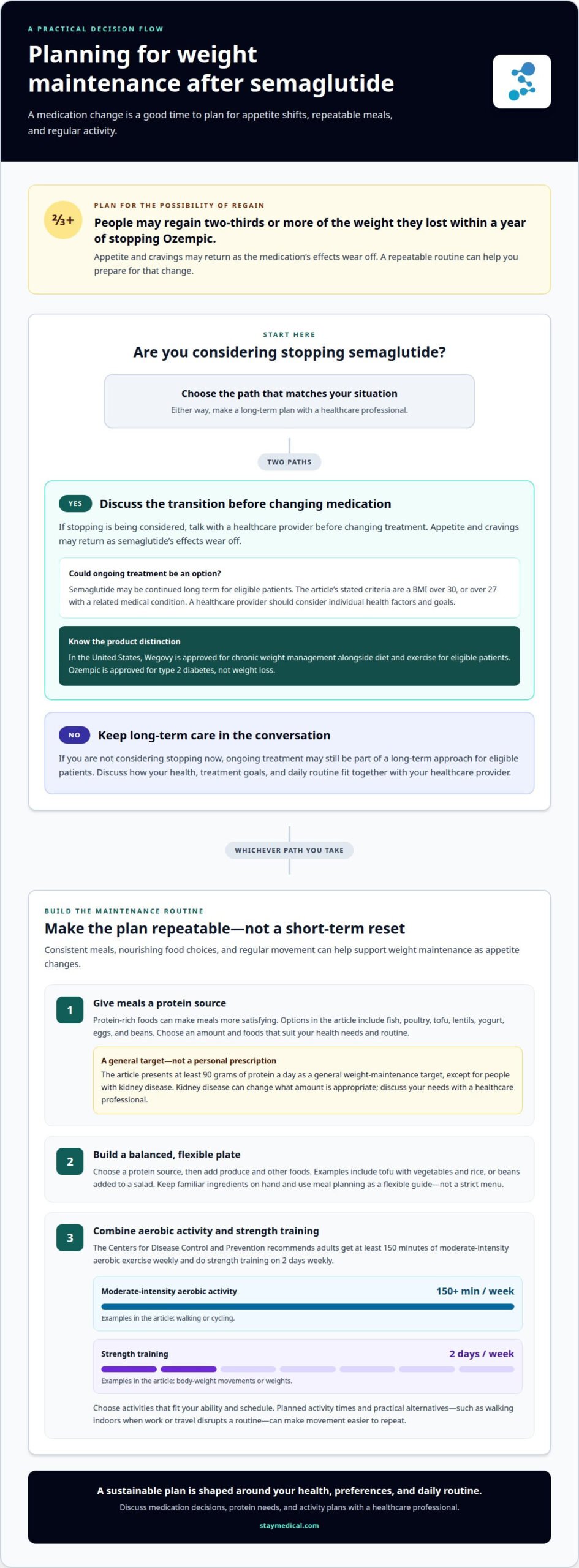
Many people regain two-thirds or more of the weight they lost within a year of stopping Ozempic. Keeping weight off after semaglutide is possible, but it takes a plan for the return of hunger and the changes in appetite the medication helped manage. Understanding how to avoid gaining weight back after semaglutide starts with building habits that can continue beyond treatment.
If you’re concerned about weight regain after semaglutide, that concern is understandable. Stopping medication can feel like a major shift, especially if it helped make eating habits easier to manage. The transition doesn’t have to mean starting from scratch: consistent meals, adequate protein, and regular movement can help support weight maintenance.
This article explains what may happen after stopping semaglutide and how food choices, activity, and tracking can help you prepare. You’ll also learn why follow-up with a healthcare professional can be useful when choosing a long-term approach that fits your health and daily routine.
Key Takeaways
- Plan for appetite changes after stopping semaglutide by building repeatable meal and activity habits before treatment ends.
- Include protein-rich foods in your meals to support fullness and help preserve muscle as you work toward weight maintenance.
- Track food, activity, and weight trends to notice changes early and adjust your routine thoughtfully.
- Pair aerobic movement with strength training; the Centers for Disease Control and Prevention recommends at least 150 minutes of moderate-intensity aerobic exercise weekly for adults.
- Ongoing medical support can help tailor a weight-management plan to your health needs and changing goals.
Will you regain weight after stopping Ozempic?
Weight regain can happen after stopping Ozempic: people may regain two-thirds or more of lost weight within a year. Semaglutide can be continued long term for eligible patients; the stated criteria are a BMI over 30, or over 27 with a related medical condition.
Nutrition and Exercise Counseling
Nutrition and exercise counseling can turn weight-maintenance goals into practical food and movement habits. Appetite and cravings may return after treatment, while a structured routine gives you strategies for responding. A physician can help tailor a plan to your health, preferences, and schedule. For example, counseling can help identify meal patterns and activity choices you can sustain.
Build your plan around repeatable choices, not a short-term reset. Whole foods, protein at meals, and regular movement can work together as part of ongoing care. A long-term weight-management approach also makes it easier to revisit routines when hunger or circumstances change. The aim is lasting progress, not relying on medication alone.
Exercise for Weight Maintenance
Regular exercise supports weight maintenance by making movement part of your routine. After stopping medication, staying active may help reduce the chance of regaining weight. Choose options that fit your ability and schedule, such as brisk walking or cycling. A repeatable activity is more useful than an ambitious plan that quickly becomes difficult to maintain.
Set planned activity times, then adjust the type or duration to suit your needs. Notice whether work, travel, or appetite changes disrupt your routine, and plan alternatives, such as walking indoors. This practical approach can help you maintain activity while your body adjusts after treatment.
Combining Aerobic and Strength Exercise
Aerobic activity and strength training serve different roles, so combining them creates a more balanced routine. The Centers for Disease Control and Prevention recommends adults get at least 150 minutes of moderate-intensity aerobic exercise weekly and do strength training on 2 days weekly. Walking can provide aerobic activity; resistance exercises can support muscle maintenance.
Start with activities suited to your current fitness, then build a routine you can repeat. Strength training can include body-weight movements or weights, while aerobic exercise can include walking or cycling. Regular strength work helps maintain muscle as part of weight management after treatment. Gradually adjusting your activity can make the routine easier to sustain.
Long-Term Semaglutide for Weight Maintenance
Long-term semaglutide may be considered as part of ongoing treatment for eligible patients, rather than assuming every person must stop after reaching a goal. In the United States, Wegovy is the semaglutide product approved for chronic weight management alongside diet and exercise for eligible patients. Ozempic is approved for type 2 diabetes, not weight loss.
Eligibility depends on individual health factors and should be discussed with a healthcare provider. A physician can consider these criteria alongside your health and treatment goals. If stopping is being considered, discuss the transition before changing medication; appetite and cravings may return as its effects wear off.
Protein intake
Protein can make meals more satisfying and support weight maintenance after semaglutide treatment. Include a protein source regularly, choosing an amount suited to your health needs. Knowing how to avoid gaining weight back after semaglutide can start with meal choices you can sustain.
Protein and Fullness
Protein-rich foods can help you feel full after stopping a weight-loss medication. That can make returning hunger easier to manage as your appetite changes. For example, eggs at breakfast or beans at lunch can make a meal more satisfying than foods without a clear protein source.
A general target presented for weight maintenance is at least 90 grams of protein a day, except for people with kidney disease. This is not a universal prescription: kidney disease can change what amount is appropriate. Protein needs also depend on health and overall eating patterns, so focus on a balanced approach rather than treating one number as a personal requirement.
Protein sources include fish, poultry, tofu, lentils, and yogurt. Choose options that fit your preferences and routine. Meals that pair protein with other nourishing foods may make hunger easier to manage without restrictive rules.
Planning Meals Around Protein
To plan meals around protein, choose a protein source for each meal, then add produce and other foods for a balanced plate. This structure can help you make consistent choices when appetite returns or schedules get busy. For example, pair tofu with vegetables and rice, or add beans to a salad.
Keep the plan workable. Have ingredients for familiar meals on hand, such as eggs and vegetables for breakfast or canned beans for lunch. Preparing a protein option ahead of time can help prevent a rushed meal from leaving you unsatisfied. Pairing protein with fruit or vegetables adds variety and texture.
Use meal planning as a flexible guide, not a strict menu. Appetite may shift as activity changes or after treatment. Note which combinations keep you satisfied and which leave you looking for snacks soon afterward. Those observations can help you refine portions and food choices without calculating every meal. This is one way to avoid gaining weight back after semaglutide while building routines that last beyond treatment.
For people with kidney disease, the general 90-gram target may not apply. Avoid automatically increasing protein or using supplements to reach a number; food choices and appropriate intake should account for kidney health. A personalized weight-management plan can help connect nutrition choices with your broader treatment goals.
Is it possible to keep weight off after stopping semaglutide?
Keeping weight off after stopping semaglutide is possible, but some weight regain is common. A plan should account for returning hunger, changing routines, and whether treatment continues.
For long-term treatment costs in the United States, the amount depends on insurance benefits, prescribed medication, and treatment plan; pricing is provided after a quote request. Long-term semaglutide use also carries potential side effects and risks, so an individualized clinical assessment should consider personal health and treatment history.
Patterns of Regain After Stopping Medication
Weight regain after stopping semaglutide or another GLP-1 medication can follow the return of appetite and food cravings. The medicine’s effects can wear off over several weeks, so eating patterns that felt manageable during treatment may become harder to maintain.
This pattern isn’t unique to one medication. People who stop weight-loss medications may experience renewed hunger, making a previous calorie routine feel less satisfying. Online discussions may compare semaglutide with Mounjaro, but treatment decisions should focus on the medication prescribed and the person’s health needs.
Prepare for a change before stopping: discuss the plan with a physician, identify meals that may become difficult when hunger rises, and choose routines to support those moments. Regular meals and ongoing activity can provide structure as appetite shifts. Weight loss during treatment doesn’t automatically establish a lasting maintenance routine, so preparation matters.
Options When Weight Regain Occurs
If your weight begins to return, treat the change as a reason to review your plan, not as proof that prior weight loss was unsuccessful. A physician can discuss whether to continue, adjust, or restart medication, taking into account your treatment history, health conditions, and appetite changes.
Restarting semaglutide isn’t an automatic response to regain. The right next step depends on why treatment stopped, your current health, and your previous medication plan. Don’t restart leftover medication or change a dose on your own. Medication decisions require clinical review, including how treatment should be resumed.
Other options include reviewing meal patterns, strengthening activity routines, and finding ways to notice changes early. For example, if evening hunger is disrupting your routine, review dinner timing and meal composition rather than making a sudden, restrictive change. A physician can help distinguish a temporary fluctuation from a pattern that may need a broader adjustment.
Weight-management medications, including semaglutide and tirzepatide, are often intended for long-term use. If stopping is difficult or weight regain continues, discuss treatment and lifestyle options with a physician. Regularly reviewing symptoms, appetite, and daily habits can guide decisions more effectively than restarting medication without a plan.
Tracking food and activity after stopping treatment
Plan with a doctor before stopping Ozempic, because appetite and blood sugar can change as its effects wear off. Tracking food, activity, and weight can help you notice those changes.
Appetite and Fullness Changes
After Ozempic’s effects fade, natural hunger cues and food cravings can return, and blood sugar can increase. These changes can affect how full you feel and when you want to eat. The medication’s effects may wear off over several weeks after stopping, so prepare for shifts rather than expecting appetite to remain unchanged.
Keep brief notes on meal timing, hunger, and fullness. For example, record whether afternoon cravings follow a skipped lunch or a change in activity. This can help identify patterns without treating every appetite change as a failure. If side effects affected your eating during treatment, mention how they changed your meals when discussing the transition with your doctor.
Tracking Food and Activity
Tracking food and activity means recording useful patterns, not judging every meal. Note meals, snacks, movement, and situations that affect your routine. A short daily record may reveal that late work meetings disrupt dinner or that you walk less during a busy week.
Use those observations to make specific adjustments. If skipped meals precede evening cravings, plan a reliable lunch; if activity drops during bad weather, choose an indoor alternative. Repeatable routines matter because weight regain may be less likely when treatment is paired with diet and lifestyle changes. Avoid strict tracking that creates pressure or distracts from useful patterns.
Before stopping, discuss the plan with your doctor, including appetite changes, blood sugar concerns, and any side effects you experienced during treatment. Review how you’ll respond if cravings increase or daily activity falls. A clear plan connects each change you notice to a practical next step, rather than relying on sudden restrictions after your weight starts to rise.
Monitoring Weight and Health
Weigh yourself weekly to notice a trend and respond if the scale moves in the wrong direction. A single reading can vary, so compare measurements over time rather than making restrictive changes in response. Pair your weekly check with notes about meals and activity to understand what may be influencing the trend.
For health monitoring, Henry Ford Health’s physician recommends follow-up with a primary care doctor every three months to check weight and blood work. These visits can put weight changes in context alongside other health measures, rather than treating the scale as the only signal. Bring notes about appetite, activity, and medication effects to make each review more useful.
Use monitoring as information, not pressure. If your weekly measurements rise consistently, review your food and activity record and discuss the pattern at follow-up. A doctor can help assess whether changes relate to appetite, routines, or treatment decisions and outline a suitable next step.
Aerobic activity and strength training recommendations
A sustainable movement routine can support weight maintenance after semaglutide alongside balanced eating habits. Aerobic exercise builds regular activity into your week, while strength training supports muscle maintenance. Combining them gives you practical options as appetite and daily routines change after treatment.
The Centers for Disease Control and Prevention recommends adults get at least 150 minutes of moderate-intensity aerobic exercise weekly. Brisk walking, cycling, and dancing are examples of moderate-intensity activity. Choose movement you can fit into your schedule, then spread it across the week in sessions that feel manageable.
For weight-loss maintenance, an obesity medicine specialist recommends working toward at least 250 minutes of moderate-intensity physical activity weekly. This is a maintenance-oriented target, not a reason to jump suddenly into a demanding routine. Start with activity you can sustain, then build gradually as your fitness and schedule allow.
Strength work complements aerobic activity by helping build or maintain muscle. The Centers for Disease Control and Prevention recommends adults do strength training on 2 days weekly. Body-weight movements or resistance exercises can be options. If you’re new to strength training, begin with movements suited to your ability and focus on consistent practice, or seek guidance from personal training studios like TrYumph Fitness to develop confidence and form.
A practical schedule might pair brisk walks with strength exercises on separate days. You could also add a short walk after a planned strength session. Choose a structure you can repeat. Regular activity after stopping a weight-loss medication has been associated with less weight regain, making consistency valuable beyond treatment.
Appetite changes after stopping semaglutide can make movement harder to prioritize. Attach activity to an existing routine, such as walking after lunch or taking a familiar route after work. If weather or a busy day interrupts outdoor exercise, an indoor walk or brief body-weight session can help you maintain the habit.
For people managing diabetes, changes in medication and activity may affect blood sugar. Keep your doctor informed about a new exercise routine, especially during a treatment transition. Notice how eating, energy, and activity fit together in your day, and discuss concerning patterns rather than making abrupt changes to medication or meals.
Exercise supports health, but it isn’t a substitute for an individualized treatment plan. Whether your history includes semaglutide or Zepbound, combine aerobic movement and strength work with food habits you can maintain. A gradual plan can support weight loss and help preserve progress without making exercise feel like punishment.
Stay Medical Clinic: Weight Loss Program
Stay Medical Clinic’s Weight Loss Program can support people seeking guidance with weight management during or after semaglutide treatment. If appetite changes, weight regain, or uncertainty about continuing treatment make it difficult to maintain progress, a personalized medical discussion can help clarify next steps. The focus is on your health needs and goals within a longer-term plan, rather than treating medication as the only factor.
Whether you’re exploring weight-loss care or reviewing what comes after treatment, bring your questions about medication, eating habits, and activity to the conversation. The right approach depends on your individual circumstances.
Contact Stay Medical Clinic to discuss your weight-management goals.
Make Your Next Step a Sustainable One
A thoughtful plan for how to avoid gaining weight back after semaglutide should fit your current life, not an idealized routine. Start small: choose one change you’re ready to maintain, then give yourself time to learn from it. Progress doesn’t require perfect days; it benefits from decisions you can return to when schedules, appetite, or motivation shift.
It can also help to bring your concerns and priorities to a medical appointment. You deserve to discuss treatment choices without pressure and make decisions with your health and long-term goals in view. Your plan can evolve as your needs do.
Keep moving forward with patience and self-respect. Your next chapter can be built one considered choice at a time.
Frequently Asked Questions
How common is weight regain after stopping semaglutide, and how much weight do people regain?
Weight regain is common after stopping semaglutide: many people regain two-thirds or more of the weight they lost within a year. The amount and pace vary from person to person. Rather than judging progress by one weigh-in, consider the broader pattern alongside changes in eating, activity, and appetite. This gives you more useful context for discussing weight changes with a healthcare professional.
Why does weight often return after stopping semaglutide?
Semaglutide mimics GLP-1, a hormone released when a person eats. After stopping treatment, the medication’s effects can wear off over several weeks, and hunger or food cravings may return. That shift can make previous portions or meal routines feel less satisfying. Notice which situations bring back stronger hunger, such as long gaps between meals, so you can discuss practical adjustments instead of responding with restrictive eating.
How can diet and meal planning help maintain weight loss after semaglutide?
Meal planning can make eating patterns easier to sustain as appetite changes. A useful starting point for how to avoid gaining weight back after semaglutide is to pair a protein source with produce and other foods you enjoy. For example, prepare lentils and vegetables ahead of a busy workday. Keep reliable options available and adapt your choices to your health needs, especially if a medical condition affects your diet.
What exercise and strength-training routine helps prevent weight regain after semaglutide?
Combine aerobic activities, such as walking or cycling, with regular strength exercises. Advice on how to avoid gaining weight back after semaglutide can include choosing a routine that fits your ability and schedule, such as walking after work and doing resistance movements on separate days. Build consistency before increasing demands. If bad weather interrupts outdoor exercise, an indoor walk or body-weight session can help maintain the habit without special equipment.
Should semaglutide be tapered or stopped gradually to reduce weight regain?
A physician may recommend gradually tapering semaglutide so your body can adjust, but discuss stopping plans before changing your dose. Tapering isn’t a substitute for a maintenance plan: decide how you’ll respond if hunger or cravings return, and arrange follow-up to review changes. Don’t use leftover medication or adjust the schedule on your own; the approach should reflect your treatment history and health.
What other weight-management medicines can help maintain weight loss after semaglutide?
Tirzepatide is another injectable medication used in weight management, but switching from semaglutide isn’t an automatic next step. A clinician considers your health, treatment history, goals, and response to previous medication before discussing options. For example, if you’re in Brickell or Coral Gables, bring questions about appetite changes and prior treatment to a medical appointment. Don’t combine or switch medicines without a clinician’s direction.
Disclaimer
This content is for informational purposes only and does not replace evaluation, diagnosis, or treatment by a medical professional. Always consult a qualified healthcare provider for personalized care.