

Causes of High Blood Pressure: What Can Raise Your Readings?
October 8, 2026
Causes of High Blood Pressure: What Can Raise Your BP?
October 10, 2026
What if a helpful diet plan is less about following a strict list of foods and more about choosing what you can comfortably eat? If you’re looking for a diet plan for tirzepatide users, conflicting advice can make it hard to know what to eat, especially when your appetite changes or nausea and fullness affect meals. It’s understandable to worry that eating less could make it harder to get the nourishment you need.
A flexible routine can help you make balanced choices without expecting every meal to look the same. This guide explains how to build meals around protein, fruits and vegetables, and other nourishing foods; adjust portions and timing when your appetite shifts; and keep hydration in mind. You’ll also find practical ideas for foods that may feel more comfortable and questions to raise with your prescribing clinician about symptoms, nutrition, or changing needs. Tirzepatide is one part of a medically supervised weight management plan, and your nutrition approach should fit your health and circumstances. The goal is steady, realistic support, not another rigid set of rules.
Key Takeaways
- A diet plan for tirzepatide users can be flexible, with meal choices shaped by personal health needs and changing appetite rather than strict food rules.
- Build balanced meals from a mix of protein foods, produce, fiber-rich carbohydrates, and unsaturated fats.
- Let your schedule and comfort guide meal timing and portions, and keep fluids in mind throughout the day.
- Notice which foods feel manageable and adjust your choices as your appetite or digestive tolerance changes.
- Discuss ongoing symptoms or difficulty maintaining adequate intake with your prescribing clinician, and don’t change your medication based on general diet advice.
Why a Diet Plan for Tirzepatide Users Should Be Flexible
A diet plan for tirzepatide users is a balanced, adaptable way of eating that accounts for your health needs, appetite, food preferences, and how you feel while taking the medication. It isn’t a prescribed menu or a test of willpower. Appetite and digestive comfort can shift, so a useful approach leaves room to adjust meal size, timing, and ingredients instead of requiring the same routine every day.
Tirzepatide works through GIP and GLP-1 pathways, and people may notice changes in hunger or fullness. Experiences vary from person to person. The overview of tirzepatide on Wikipedia describes its mechanism and reported effects. Nutrition can support overall weight management, but it doesn’t replace prescribed medication or individualized clinical guidance. Stay Medical Clinic’s medical weight loss program in Brickell provides a clinically supervised approach to weight management.
For a visual overview of meal planning alongside tirzepatide, watch this video:
What changes in eating habits might users notice?
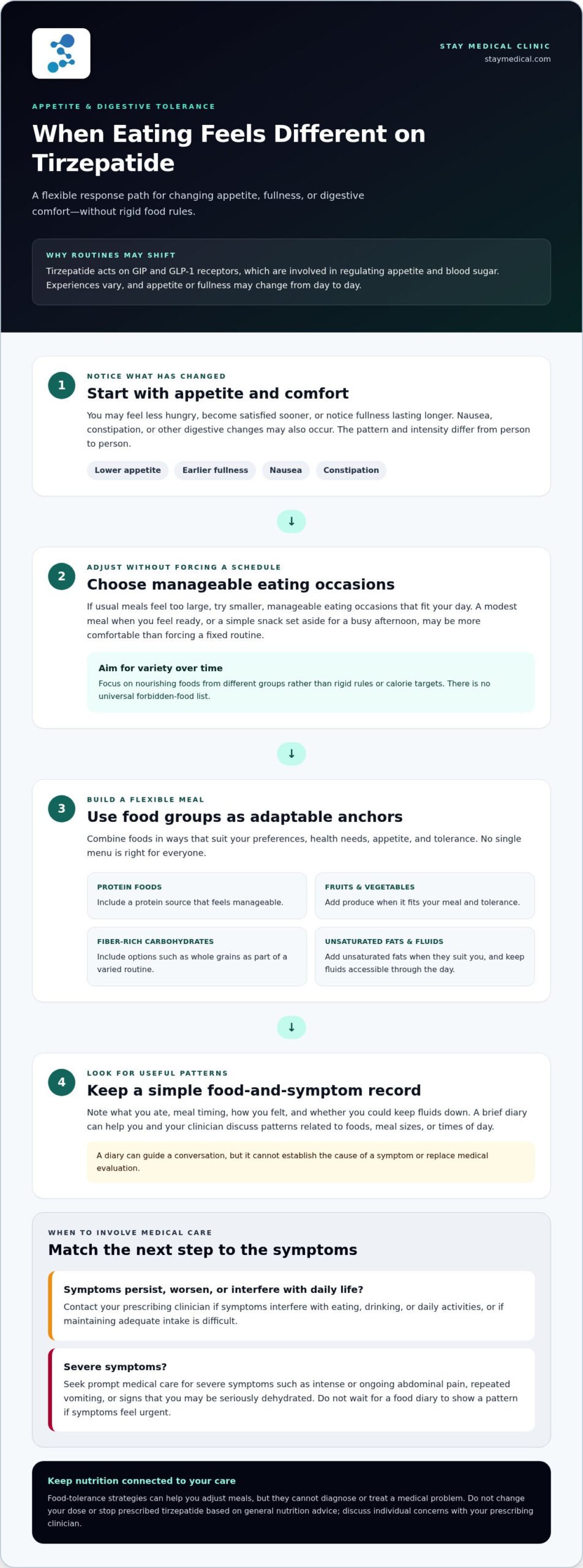
Some people feel less hungry, become satisfied sooner, or notice fullness that lasts longer than expected. Others may experience nausea, constipation, or other digestive changes. The intensity and pattern can vary, and appetite may differ from day to day. A smaller appetite can make it harder to remember meals or include a range of nourishing foods, even when eating well remains a priority.
Rather than judging a meal by how much you finish, notice what feels manageable and whether you’re regularly able to eat and drink. A simple record of appetite, meal timing, symptoms, and comfortable foods can help you spot patterns. Share persistent symptoms or difficulty maintaining intake with your prescribing clinician for personalized guidance.
Does tirzepatide require a strict diet?
No single rigid meal plan is right for everyone taking tirzepatide, and the medication doesn’t establish a universal list of forbidden foods. Balanced-eating principles are a useful starting point, but individual needs can differ based on health conditions, medications, preferences, and tolerance. Your clinician can help you account for those needs instead of relying on a one-size-fits-all online food list.
No particular food guarantees weight loss or makes the medication work on its own. A meal that suits one person may be uncomfortable or impractical for another. Treat food choices as one part of your broader care, and discuss individualized nutrition questions with your prescribing clinician rather than changing or stopping prescribed treatment based on a general diet plan.
How Tirzepatide, Appetite, and Digestive Tolerance Shape Meal Choices
Tirzepatide activates receptors for two hormones, GIP and GLP-1, involved in regulating appetite and blood sugar. As appetite and fullness shift, meal routines may need to shift, too. Food choices don’t control how the medication works, but noticing how you feel after meals can help you make practical adjustments and share useful details with your prescribing clinician.
Digestive effects can include nausea, constipation, and prolonged fullness, though experiences vary. There isn’t one menu that prevents symptoms for everyone. Consider food tolerance one part of your personal care plan, and seek medical guidance for symptoms that persist or feel concerning.
Responding to lower appetite without rigid rules
If your usual meals feel too large, try smaller, manageable eating occasions that fit your day rather than forcing a fixed schedule. You might set aside a simple snack for a busy afternoon or choose a modest meal when you feel ready to eat. Aim for variety over time, including nourishing foods from different groups, rather than relying on calorie targets or restrictive rules. The Ohio State University GLP-1 food recommendations offer examples such as lean proteins, fruits, vegetables, and whole grains. Tell your prescribing clinician if eating or drinking remains difficult.
When digestive symptoms need clinical attention
Food tolerance is individual. A brief diary can help you and your clinician see whether symptoms tend to follow particular foods, meal sizes, or times of day. Note what you ate, how you felt, and whether you could keep fluids down. These patterns can guide a conversation, but they can’t establish the cause of a symptom or replace medical evaluation.
Contact your prescribing clinician about symptoms that persist, worsen, or interfere with eating, drinking, or daily activities. Seek prompt medical care for severe symptoms, such as intense or ongoing abdominal pain, repeated vomiting, or signs that you may be seriously dehydrated. Don’t wait for a food diary to reveal a pattern if symptoms feel urgent.
Food-tolerance strategies can help you adjust meals; they can’t diagnose or treat a medical problem. Keep your clinician informed, and don’t change your dose or stop prescribed tirzepatide based on general nutrition advice. A clinically supervised weight management approach can keep nutrition concerns connected to your broader care.
Which Foods Fit a Balanced Diet Plan for Tirzepatide Users?
A useful diet plan for tirzepatide users is built from flexible food groups, not a rigid menu. Combining a source of protein with produce and a carbohydrate can make meals varied and nourishing. Add unsaturated fats when they suit your preferences and tolerance, and keep fluids accessible throughout the day. There’s no need to label foods as inherently good or bad.
| Food group | Flexible examples | Role in a meal |
|---|---|---|
| Protein foods | Eggs, fish, poultry, tofu, beans, lentils, yogurt | Adds a filling, nourishing component |
| Vegetables and fruit | Leafy greens, cooked vegetables, berries, citrus, bananas | Brings color, variety, and different nutrients |
| Fiber-rich carbohydrates | Oats, brown rice, whole-grain bread, potatoes, beans | Complements meals with a source of energy and fiber |
| Unsaturated fats | Avocado, olive oil, nuts, seeds | Adds flavor and texture to meals |
| Fluids | Water, or other suitable drinks | Supports everyday hydration |
Build a meal from several nourishing food groups
Think in combinations, then adapt them to your appetite, culture, and what you have on hand. Pair grilled fish with rice and cooked vegetables, or serve beans with corn tortillas and sautéed greens. For a plant-based meal, try tofu with noodles and vegetables, or lentils with whole-grain bread and salad. Eggs with potatoes and fruit offer another combination. These are starting points, not required meals or portion prescriptions.
Foods to adjust based on personal tolerance
Fried, greasy, very rich, or spicy foods may feel uncomfortable for some people, while others tolerate them without difficulty. Instead of eliminating a whole category preemptively, notice whether a particular food, preparation, or meal size seems connected to discomfort. You might try a less greasy cooking method or a milder version, then observe how it feels. These are practical adjustments, not guarantees against symptoms.
Hydration deserves attention, too. Miami’s heat makes it practical to keep a drink nearby and sip regularly, adjusting to your circumstances rather than following a universal fluid target. If nausea or reflux persists, or food restrictions make balanced eating difficult, bring those concerns to your prescribing clinician. Personalized guidance can help you make choices that fit your health needs and daily life.
How to Create a Tirzepatide Meal Plan for a Typical Day
A practical diet plan for tirzepatide users starts with your actual routine, not a prescribed schedule. Use this planning method as a framework, then adjust it to your appetite, preferences, and clinical needs.
- Review your day. Note work hours, travel, medication-related appetite changes, and when meals are usually manageable.
- Choose meal components. Pair a protein food with produce and a carbohydrate when it suits your appetite. Add a source of unsaturated fat if desired.
- Plan fluids. Keep a suitable drink within reach during work, errands, or time outdoors, and sip according to your needs.
- Adjust to tolerance. If a meal feels too large or uncomfortable, consider a smaller option or a different food next time. Keep the plan flexible rather than forcing a meal.
A flexible sample day, not a prescription
This example is educational, not individualized. Timing, portions, and whether you include a snack can all vary. For breakfast, you might choose oatmeal with yogurt and fruit, or eggs with toast if that feels more appealing. Lunch could be a chicken or chickpea salad with bread, while dinner might be baked fish or tofu with potatoes and vegetables. If a snack fits your appetite, consider fruit with nut butter, yogurt, or crackers with hummus. Swap ingredients to reflect allergies, cultural food traditions, and what feels comfortable. The sample doesn’t guarantee weight loss or prevent side effects.
Adjust the plan to routine, preferences, and care needs
Busy days call for convenient choices. Keep easy-to-assemble ingredients on hand, such as canned beans, prewashed greens, eggs, or frozen vegetables, and have options that work when appetite is low. For individuals balancing an unpredictable schedule, resources like ResetKit.health provide practical digital reset guides designed to simplify wellness routines. You don’t need to eat every listed item or follow the same pattern daily. For diabetes, food allergies, or other medical needs, ask your prescribing clinician whether a registered dietitian’s input would be appropriate before making substantial changes.
Stay Medical Clinic’s medical weight loss program in Brickell provides clinically supervised care. A meal plan should complement your care, not replace prescribed treatment or your clinician’s guidance.
To make your next clinical conversation more useful, keep brief notes on meal timing, appetite, fluids, and symptoms or foods that seem connected. Bring questions such as whether a recurring issue needs evaluation or whether a change to your eating routine is appropriate. A short record can focus the discussion without turning meals into a source of pressure.
Stay Medical Clinic is based in Brickell, Miami, and serves a local community that includes Aventura, Bal Harbour, Bay Harbor Islands, Biscayne Park, Coral Gables, Cutler Bay, Doral, El Portal, Florida City, Golden Beach, Hialeah, Hialeah Gardens, Miami, Brickell, and Key Biscaya.
Learn more about medical weight loss support in Brickell as part of a conversation about your care.
When to Discuss Your Tirzepatide Diet Plan With a Clinician
A meal plan should support your care, not create pressure to manage every concern on your own. Bring nutrition questions to your prescribing clinician if appetite changes make it hard to eat or drink consistently, symptoms persist or worsen, or food restrictions are narrowing your choices. Ongoing guidance can help put your experience in context and tailor weight management to your health needs. It can’t guarantee a particular result, but it can help you make informed decisions with your care team.
Don’t change your dose or stop prescribed tirzepatide because of a general diet plan or advice you’ve read online. If you’re unsure whether a symptom, medication, or change in eating needs attention, ask your prescribing clinician for direction. Seek prompt medical care for severe or urgent symptoms rather than waiting for a routine nutrition discussion.
What to bring to a nutrition follow-up
A few clear notes can make a follow-up more useful. Share your typical meal pattern, appetite changes, symptoms and when they occur, medications you take, and relevant health history. You don’t need a perfect food log. A brief record of what feels manageable, what seems to cause discomfort, and whether you’re having trouble with fluids can help guide the conversation.
Consider asking: “How should I approach hydration?” “Could a medication or health condition affect my meal choices?” or “Would nutrition support be helpful for me?” Stay Medical Clinic’s weight loss care in Brickell includes ongoing clinical oversight, offering a setting to discuss weight management concerns as part of your broader care.
Explore medically supervised weight management in Brickell
Stay Medical Clinic is a primary care and medical weight loss clinic in Brickell, Miami. Its patient-centered approach recognizes that weight management is personal, and clinical oversight helps keep decisions connected to your individual health needs. Nutrition is one part of that conversation. Discuss treatment and eating guidance in the context of your care rather than assuming a general meal plan will fit everyone.
If you’re considering a more individualized approach to weight management, explore the Stay Medical Clinic weight loss program in Brickell. It offers medically supervised care as part of your health journey.
Take Your Next Step With Thoughtful Support
A practical diet plan for tirzepatide users doesn’t have to be perfect to be useful. Choose one manageable next step, such as noting a nutrition concern or preparing a question for your next appointment. Your experience is valuable information, and sharing it can help your prescribing clinician consider guidance that fits your health needs rather than relying on a generic plan.
Appetite, comfort, and medical needs can change over time, so it’s reasonable to revisit your approach. Stay Medical Clinic provides medical weight loss care in Brickell, Miami, with ongoing clinical oversight and personalized patient care. A conversation about your goals and concerns can help you understand possible next steps as part of your broader care, without promising a particular outcome.
You don’t need to figure out every detail at once. With informed support and a flexible approach, you can move forward at a pace that feels manageable.
Frequently Asked Questions
What foods should you eat while taking tirzepatide?
Choose a variety of nourishing foods that suit your preferences and health needs. Options might include eggs, edamame, cottage cheese, barley, berries, or cooked greens, depending on what you enjoy and tolerate. If your appetite is lower, selecting foods that offer nourishment in a manageable serving may be useful. A clinician can help adapt food choices to conditions such as diabetes or allergies.
Do you need to follow a strict diet while taking tirzepatide?
No, there isn’t one strict diet that everyone taking tirzepatide must follow. A highly restrictive plan may be difficult to sustain and may not fit your medical needs or food preferences. If you’ve been advised to limit a food for a specific health reason, follow that individualized guidance. Otherwise, use balanced-eating principles as a flexible guide, not a list of universal rules.
Can you eat normally while taking tirzepatide?
Usually, you can continue eating familiar foods, but your usual portions or meal routine may feel different as appetite changes. At restaurants, you might order a familiar dish and pause as you eat to notice fullness, saving the rest if you’re satisfied. There’s no single way to eat that suits everyone. Follow personal medical guidance and pay attention to how meals feel.
What should you eat if tirzepatide makes you feel nauseated?
If you feel nauseated, try a small amount of a simple food that you generally tolerate, such as plain toast, crackers, rice, applesauce, or broth. Take fluids in small sips if drinking a larger amount feels uncomfortable. These options may be easier for some people, but they won’t reliably prevent or treat nausea. Contact your prescribing clinician if nausea persists, worsens, or makes it hard to eat or drink.
How much water should you drink on tirzepatide?
There isn’t one water target that’s right for every person taking tirzepatide. Fluid needs can vary with activity, heat, health conditions, and other medications. Keep a drink available and sip regularly, especially when outdoors in Miami’s warm weather. If you have a condition that requires fluid limits, such as certain heart or kidney problems, ask your clinician what amount is appropriate for you.
Can you drink alcohol while taking tirzepatide?
Ask your prescribing clinician whether alcohol is appropriate for you, particularly if you take insulin or a sulfonylurea for diabetes, since alcohol and these medicines can affect blood sugar. Alcohol may also aggravate nausea or reflux for some people, and sweet drinks can add substantial sugar. If you choose to drink, discuss your personal risks and medication plan with your clinician rather than assuming alcohol affects everyone the same way.
Should you change your tirzepatide dose if your diet changes?
No, don’t adjust or stop your tirzepatide dose because your eating routine changes unless your prescriber directs you to do so. If illness, nausea, or reduced intake is making it difficult to eat or drink, contact your clinician for advice about your specific situation. For people receiving medical weight loss care in Brickell, Miami, sharing these changes with the clinical team helps keep decisions connected to their individual care.
Disclaimer
This content is for informational purposes only and does not replace evaluation, diagnosis, or treatment by a medical professional. Always consult a qualified healthcare provider for personalized care.