

How to Administer TRT Injections at Home: Safety Guide
October 4, 2026
How to Prepare for IV Therapy: A Patient-Friendly Guide
October 6, 2026
What if the best age to start TRT isn’t an age at all? It’s understandable to look for a clear number, especially when fatigue, changes in libido, or reduced strength leave you wondering whether testosterone is the cause. But TRT isn’t reserved for older men, and it isn’t a general vitality treatment for anyone hoping to feel more energetic.
A medically appropriate evaluation looks at the whole picture: persistent symptoms, testosterone results, health history, and personal goals. Clinicians may use two separate early-morning blood tests to assess testosterone levels. Age can provide context, but it can’t diagnose testosterone deficiency on its own or determine whether treatment is right for you.
This article explains what clinicians consider before recommending TRT, why lab results need to be interpreted alongside symptoms, and how fertility plans, long-term treatment considerations, and individual health factors can shape the decision. If you’re considering an evaluation in Miami, Stay Medical Clinic’s Brickell team provides testosterone replacement and laboratory testing as part of personalized clinical care. Start with a conversation about what you’re experiencing, your health history, and what matters to you.
Key Takeaways
- There is no universal best age to start TRT; a clinician considers symptoms, repeated test results, health history, and individual circumstances.
- Symptoms such as fatigue or changes in libido can have multiple causes, so they shouldn’t be treated as proof of low testosterone.
- Before considering treatment, be prepared to discuss your health history, testing, personal goals, and how progress would be monitored.
- Fertility plans matter: raise questions about future family planning and possible effects on sperm production before making a treatment decision.
- A personalized evaluation at Stay Medical Clinic in Brickell can bring symptoms, laboratory testing, and health goals into one informed discussion.
Is There a Best Age to Start TRT? The Answer Depends on More Than Age
There is no single age that makes testosterone replacement therapy (TRT) appropriate for everyone. The best age to start TRT depends on whether a person has symptoms consistent with testosterone deficiency, repeated test results that support the diagnosis, relevant health factors, and a clinician’s assessment. A birthday alone can’t establish a need for treatment.
Age-related testosterone changes may prompt questions, but they don’t prove that symptoms are caused by low testosterone or that treatment is suitable. A clinician considers the whole picture, including other possible explanations for symptoms and whether test results are consistently low. This keeps a medical decision grounded in individual health rather than assumptions about aging.
For broader context on how motivation and focus involve more than one factor, watch this video:
TRT is medical treatment for testosterone deficiency established through symptoms and clinical findings; it isn’t a general anti-aging or wellness treatment intended to boost vitality based on age alone. The overview of androgen replacement therapy describes its medical use for hypogonadism and different ways it may be administered. Whether it’s appropriate for an individual requires clinical evaluation.
Can younger adults be evaluated for TRT?
Yes. A younger adult can be evaluated when symptoms and clinical findings warrant investigation. Fatigue, gym goals, or a desire for greater energy, on their own, don’t establish testosterone deficiency. Because symptoms can have other causes, assessment may include a health history and appropriately timed blood tests, often repeated to confirm a finding. Hormone treatment should be considered only with a clinician’s guidance.
Can older adults be too old to start TRT?
Chronological age alone doesn’t settle suitability, and there isn’t a universal age cutoff. A clinician can weigh confirmed deficiency and symptoms alongside overall health, potential benefits and risks, and the person’s preferences. Focus the discussion on what matters to your health, what treatment may realistically address, and what ongoing follow-up could involve. Neither age nor symptoms alone guarantee that TRT is appropriate.
At Stay Medical Clinic in Brickell, Miami, testosterone replacement and laboratory testing support an individualized medical evaluation. Learn more about testosterone replacement in Brickell and discuss your symptoms, test findings, health history, and personal goals with a clinician.
How Clinicians Assess Low Testosterone Before Considering TRT
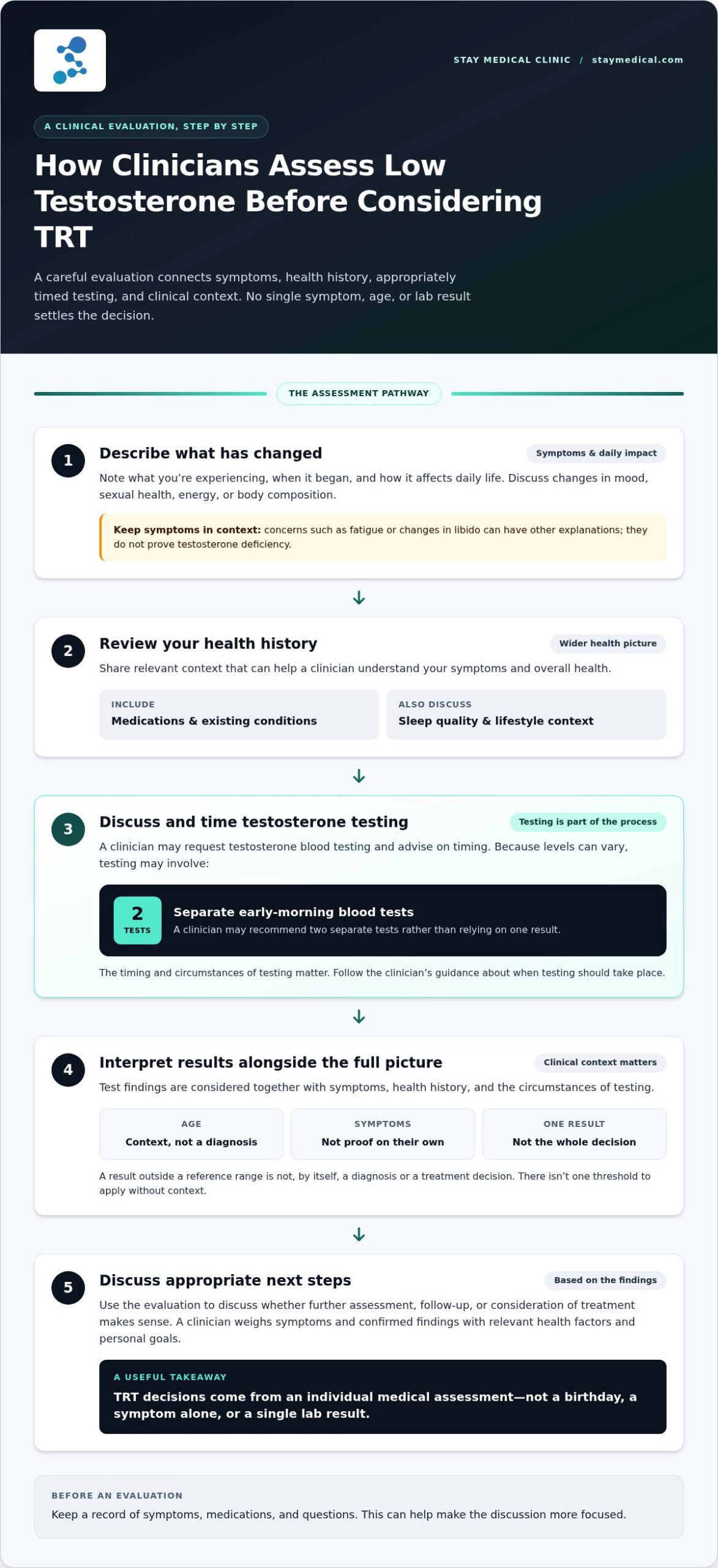
A careful evaluation is a process, not a single lab result or symptom checklist. Clinicians consider what you’re experiencing, your health history, appropriately timed testing, and how those findings fit together. This helps distinguish possible testosterone deficiency from other health or lifestyle factors that may cause similar concerns.
- Describe your symptoms: Note what has changed, when it began, and how it affects daily life.
- Review your health history: Include medications, existing conditions, sleep, and relevant lifestyle context.
- Discuss testing: A clinician may request testosterone blood testing and advise on timing.
- Interpret findings: Results are considered alongside symptoms and the circumstances of testing.
- Plan next steps: Discuss whether further evaluation, follow-up, or treatment consideration makes sense.
Which symptoms and health factors should be discussed?
Bring up changes in mood, sexual health, energy, or body composition, but don’t assume they prove low testosterone. Similar concerns can have other explanations. Tell the clinician about medications, sleep quality, existing health conditions, and recent changes in your routine. This context supports a fuller assessment and a conversation about the potential benefits and risks of TRT.
Why may a clinician repeat or contextualize testosterone testing?
Testosterone levels can vary, so a clinician may recommend two separate early-morning blood tests rather than relying on one result. The timing and conditions of testing matter, too. A number outside a reference range isn’t, by itself, a diagnosis or a treatment decision.
A lab result needs clinical interpretation alongside symptoms, health history, and the circumstances of testing. There isn’t one threshold that should be applied without context. This is why searching for the best age to start TRT can’t replace an individual assessment.
Stay Medical Clinic provides blood testing in Brickell as part of its laboratory services. To prepare for an evaluation, keep a record of symptoms, medications, and questions. This can make the discussion more focused. You can also learn more about Stay Medical Clinic and its patient-centered clinical care.
Starting TRT at Different Ages: Benefits, Trade-Offs, and Fertility
Age can shape the questions a person brings to a TRT discussion, but it doesn’t decide the answer. At any life stage, the key considerations are whether testosterone deficiency is confirmed, whether symptoms fit, how treatment relates to overall health, and what the person wants for the future. This is a more useful way to think about the best age to start TRT than relying on a birthday or a broad promise of increased vitality.
| Factor to discuss | Why it matters at any life stage |
|---|---|
| Confirmed deficiency | Test results need to be interpreted with symptoms and clinical context, not treated as a stand-alone reason to start therapy. |
| Symptoms and goals | Clarify what has changed and what you hope treatment might address. TRT isn’t a shortcut for gym performance or a general anti-aging approach. |
| Health context | Existing conditions, medications, and other individual factors can shape the discussion of suitability and potential risks. |
| Fertility plans | Current or future plans for children matter because testosterone therapy may affect sperm production. |
| Monitoring | Discuss what follow-up involves and how the clinician would review your response and ongoing health. |
How can future fertility affect the decision?
If you may want children, raise that goal before making a treatment decision, even if parenthood isn’t an immediate plan. Externally administered testosterone can suppress the body’s hormonal signals that support sperm production, which may reduce sperm count and affect fertility. The extent and course of these effects vary. A clinician can discuss how fertility goals influence the options and considerations in your case. Don’t assume that stopping treatment will restore fertility on a predictable timeline.
What should readers know about potential benefits and risks?
For someone with diagnosed testosterone deficiency, treatment may help address certain related symptoms, but benefits aren’t guaranteed and vary from person to person. TRT also involves risks and ongoing monitoring, with the relevant considerations depending on health history and the treatment plan. Ask what changes are realistic to track, what potential concerns apply to you, and how follow-up would be handled.
TRT isn’t a general anti-aging therapy or a reliable route to greater strength, energy, or athletic performance when deficiency hasn’t been established. For a broader discussion of treatment considerations, explore testosterone replacement care in Brickell and discuss your personal goals with a clinician before deciding whether to proceed.
Questions to Ask Before Deciding Whether TRT Is Right for You
A consultation is a chance to understand the reasoning behind a treatment recommendation, consider alternatives, and make sure the plan fits your priorities. Bring a written list, especially if fertility, long-term care, or changes in your health are part of the decision. The best age to start TRT matters less than making an informed choice with a licensed clinician.
- Diagnosis: What findings support testosterone deficiency, and do my symptoms and test results fit together?
- Other explanations: Could another health factor, medication, or sleep-related issue contribute to what I’m experiencing?
- Goals: Which symptoms might treatment reasonably address, and how would we assess whether it’s helping?
- Alternatives: What options can I consider if TRT isn’t appropriate for me or I decide not to start?
- Fertility and risks: How could treatment relate to my current or future fertility goals, and what risks apply to my health history?
- Monitoring: What follow-up and health measures would be part of my care, and what changes should prompt me to get in touch?
What should you ask about diagnosis and alternatives?
Ask the clinician to explain how your symptoms, test findings, and health history support the diagnosis. If the picture is unclear, ask what else may need evaluation before deciding. A thoughtful discussion should include the possibility that TRT isn’t the right next step, along with any appropriate alternatives. The goal is shared decision-making, not a predetermined treatment outcome.
What should you ask about monitoring and follow-up?
Ask how your response, side effects, and relevant health measures will be reviewed. Monitoring needs and timing are individual, so ask what schedule makes sense for your treatment plan rather than relying on a universal timeline. Also clarify what changes in your symptoms or health should lead you to raise a concern with your clinician.
Your needs may change as your health, goals, or test results evolve. A decision that makes sense at one point can be revisited with your clinician as new information becomes available. Review Stay Medical Clinic’s testosterone replacement care in Brickell as a starting point for a focused discussion about your questions and evaluation.
Considering TRT in Brickell, Miami? Start With an Individual Medical Evaluation
Age can provide context, but it doesn’t determine whether testosterone replacement therapy is appropriate. The best age to start TRT is not a fixed point on the calendar. Diagnosis, health history, symptoms, test results, and personal priorities help a clinician assess whether treatment may be suitable for an individual.
Stay Medical Clinic in Brickell, Miami, provides testosterone replacement and laboratory testing as part of personalized clinical care. An evaluation isn’t a promise that you’ll be prescribed TRT. It’s an opportunity to understand what your symptoms and findings may mean, then discuss a thoughtful next step based on your health.
What an individualized TRT conversation can cover
A clinician can review the changes you’ve noticed alongside your test results, medical history, and treatment goals. Be open about what you hope to address, such as changes in energy or sexual health, and mention relevant conditions or medications. The discussion can also cover potential benefits and risks, fertility considerations, and what follow-up may involve. These details keep the decision collaborative and grounded in your circumstances, rather than age-based expectations.
How to take the next step in Brickell
Before a consultation, write down your symptoms and when they began, relevant health history, medications, fertility goals, and questions you want answered. Bring any available test results so they can be considered in context. You might also ask how the clinician would assess whether treatment is appropriate and what other explanations or options deserve consideration. Clear questions make it easier to understand the reasoning behind a recommendation, including the possibility that TRT isn’t the right choice for you.
Stay Medical Clinic’s Brickell location serves people seeking care in Miami and nearby communities, including Aventura, Bal Harbour, Bay Harbor Islands, Biscayne Park, Coral Gables, Cutler Bay, Doral, El Portal, Florida City, Golden Beach, Hialeah, Hialeah Gardens, and Key Biscaya. Review the clinic’s testosterone replacement service in Brickell to learn more about its care. An individual medical evaluation can help clarify how your symptoms, health history, laboratory findings, and goals fit together.
Make Your Next Step an Informed One
There’s no universal best age to start TRT. Age provides context, but a thoughtful decision depends on clinical findings, symptoms, health history, and personal priorities. A single symptom or lab result isn’t enough to determine whether treatment is right for you.
Before considering TRT, discuss how your test results fit with what you’re experiencing, what other factors might contribute, and what follow-up could involve. If you may want children, bring up fertility goals before making a treatment decision. These conversations help make the next step personal and informed, rather than based on assumptions about aging or vitality.
Stay Medical Clinic provides testosterone replacement therapy and laboratory testing alongside personalized primary care in Brickell, Miami. A clinician can help you understand your individual health picture without assuming treatment is the answer.
Start with your questions and what matters most to your health. Request an individual evaluation at Stay Medical Clinic in Brickell to discuss your symptoms, testing, and goals.
Frequently Asked Questions
Is there a best age to start TRT?
No, there is no universal best age to start TRT. A clinician considers whether symptoms and appropriate testing support testosterone deficiency, then weighs health history, goals, possible risks, and monitoring needs. Age can add context, but it doesn’t diagnose low testosterone or automatically rule treatment in or out. If you’re concerned about symptoms, seek an individual medical evaluation rather than relying on an age-based rule.
Can a man in his 30s start TRT?
A man in his 30s may be evaluated if symptoms or health circumstances raise concern, but age, gym goals, or fatigue alone don’t establish a need for TRT. A clinician can review symptoms, medical history, and relevant laboratory findings while considering other possible causes. Discuss future fertility before making a treatment decision, since testosterone therapy can affect sperm production. Don’t self-diagnose or use testosterone without medical supervision.
Can you be too old to start TRT?
There isn’t one age that automatically makes TRT appropriate or inappropriate. For an older adult, a clinician considers whether deficiency is supported by the evaluation, how symptoms affect the person, overall health, goals, and potential risks. The discussion should also cover follow-up and any uncertainties that apply. TRT shouldn’t be started simply because testosterone can change with age; suitability depends on the individual clinical picture.
How is low testosterone diagnosed before TRT?
Diagnosis involves more than matching symptoms to an online checklist or relying on one result without context. A clinician reviews symptoms and health history, arranges appropriate testing, and interprets the findings together. Testing methods and thresholds should be applied by a qualified professional, since circumstances can matter. If symptoms and results don’t align, the clinician may discuss further assessment or other explanations before considering treatment.
Does TRT affect fertility if you start young?
It can affect sperm production, so discuss current or future plans to have children before starting TRT, whatever your age. Don’t assume treatment is fertility-neutral or that stopping it will lead to a predictable outcome. A clinician can explain how fertility considerations relate to your health history and goals, and discuss appropriate next steps. If preserving fertility matters to you, raise it before making a treatment decision.
Is TRT only for men over 40?
No, there is no age cutoff that alone determines who should be evaluated. Younger and older adults may warrant assessment when symptoms and clinical circumstances raise concern. TRT isn’t a general treatment for aging, low energy, or athletic performance. A clinician considers whether the evidence supports testosterone deficiency and whether potential benefits and risks fit the person’s health history, goals, and ability to follow a monitoring plan.
Should you start TRT based on symptoms alone?
No, symptoms alone aren’t enough to establish testosterone deficiency. Low energy or changes in sexual health can have several possible causes, so treat them as a reason to seek medical advice, not as a diagnosis. A clinician can review your health history, consider other explanations, and arrange appropriate testing. Treatment decisions should reflect the full clinical picture, your personal goals, and a plan for follow-up.
Disclaimer
This content is for informational purposes only and does not replace evaluation, diagnosis, or treatment by a medical professional. Always consult a qualified healthcare provider for personalized care.