

Cost of GLP-1 Medications in Florida: Prices and Coverage
November 15, 2026
TRT and cardiovascular health risks for people with heart disease
November 17, 2026
IV vitamin therapy may address specific nutritional or hydration needs, but it is not a proven all-purpose fix for fatigue or other wellness concerns. What you notice with IV therapy before and after treatment depends on why it is given, which fluids or nutrients are used, and your health needs.
It is reasonable to want clear guidance before an infusion and realistic expectations about what follows. Preparation may include limiting alcohol and caffeine, drinking water, and having a light meal. Your medications, supplements, and medical conditions also matter. During treatment, a clinician delivers fluids or nutrients through a vein and monitors how you are doing.
This article explains what to avoid beforehand, what an appointment involves, and which changes some people report afterward. It also reviews what studies of nutritional IV therapy have found, where the evidence is limited, and why IV therapy may serve a different role when a medical condition affects nutrition or absorption. The goal is a practical overview of potential benefits and risks, so you can understand how treatment may fit into care without expecting the same result for everyone.
Key Takeaways
- Prepare for an infusion by considering hydration, food, alcohol, caffeine, and a restful night beforehand.
- Share your medications, supplements, and health conditions with the clinician so they can consider them in your care.
- What you feel afterward can vary; understand which changes may be temporary and what to do if you feel lightheaded.
- Nutritional IV studies report different outcomes, so the reason for treatment and the strength of the evidence matter.
- When a medical condition affects nutrition or absorption, IV therapy may have a different role than general wellness treatment.
Activities and substances to avoid before treatment
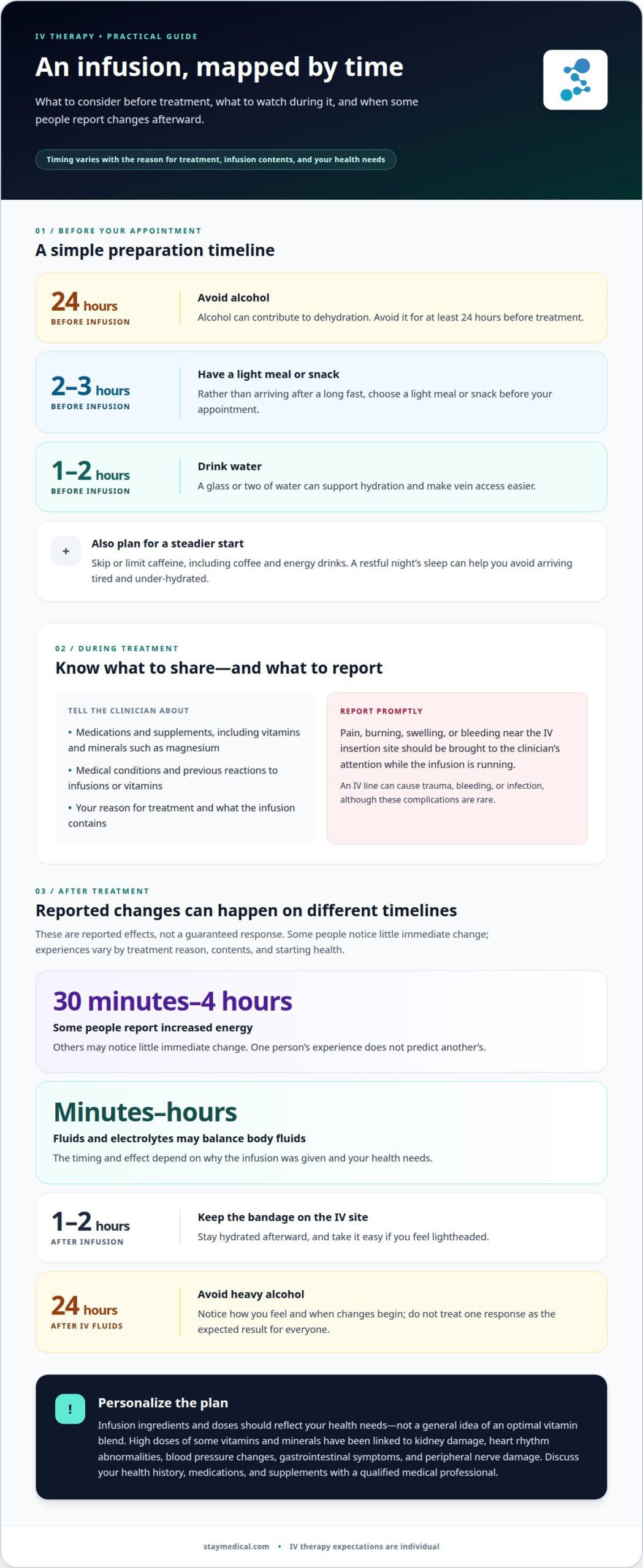
Preparation can make an infusion more comfortable and help the clinician assess your needs. A practical plan for IV therapy before and after treatment includes considering alcohol, caffeine, food, and hydration. Avoid alcohol for at least 24 hours beforehand, since it can contribute to dehydration. Experts advise patients to avoid caffeine and alcohol before IV therapy because they can dehydrate the body and make vein access more challenging. A restful night’s sleep supports a steadier start than arriving tired and under-hydrated.
Food and water matter, too. Have a light meal or snack about 2-3 hours before treatment rather than arriving after a long fast. Drink a glass or two of water in the hour or two before your appointment. These steps support hydration and can make it easier for a clinician to access a vein. They don’t replace an individualized plan for a chronic condition or a prescribed treatment.
- Limit alcohol: Avoid it for at least 24 hours before the infusion.
- Reduce caffeine: Skip or limit coffee and energy drinks before treatment.
- Plan food and water: Choose a light snack and drink water before the appointment.
Tell your clinician about your medications, supplements, and medical conditions before an IV infusion. Include vitamins and minerals such as magnesium, even if you take them regularly. Infusion ingredients and doses should reflect your health needs, not a general idea of an optimal vitamin blend. High doses of some vitamins and minerals have been linked to kidney damage, heart rhythm abnormalities, blood pressure changes, gastrointestinal symptoms, and peripheral nerve damage.
During treatment, promptly report unexpected pain, burning, swelling, or bleeding near the insertion site. An IV line can cause trauma, bleeding, or infection, although these complications are rare. The clinician can assess the site and respond to discomfort while the infusion is running. Reporting a change early gives the care team an opportunity to address it before the session ends.
Afterward, keep the bandage on the IV site for 1-2 hours and avoid heavy alcohol for 24 hours after receiving IV fluids. Stay hydrated, and take it easy if you feel lightheaded. Some people report increased energy within 30 minutes to 4 hours after treatment, while fluids and electrolytes can balance the body’s fluids within minutes to hours. The practical details of IV therapy before and after an appointment include noticing how you feel and when changes begin, rather than treating one response as the expected result.
What changes can I expect after my first IV therapy session?
After a first infusion, some patients report increased energy, while others notice little immediate change. Reported effects such as increased energy may appear within 30 minutes to 4 hours after treatment. IV fluids and electrolytes may help balance the body’s fluids within minutes to hours. The response depends on why the infusion was given, its contents, and your starting health, so one person’s experience doesn’t predict another’s. For individuals who combine internal wellness with aesthetic rejuvenation, providers like Vie Aesthetics offer specialized regenerative treatments designed to support tissue vitality and skin renewal.
A consultation before your first session should cover your reason for treatment, medical conditions, medications, and supplements. These details help the clinician assess whether the planned ingredients and dose suit your needs and identify possible risks. Mention chronic conditions and any previous reactions to infusions or vitamins. You should also understand what the infusion contains and which symptoms to report during the session.
To place the IV, a clinician inserts a line into a vein and checks that it is working before starting the infusion. The site and your comfort should be monitored while fluid enters the bloodstream. Tell the clinician if you notice pain, burning, swelling, or unusual discomfort. Monitoring allows the care team to assess the site or address the infusion promptly if needed.
For patients receiving nutritional support around surgery, a described pre- and postoperative plan generally includes one IV before surgery and one after surgery. This is not a universal schedule for every procedure or patient. Surgical nutrition needs depend on the person’s condition and care plan. Do not assume a wellness infusion can replace nutrition support provided as part of surgical care.
Does insurance cover IV therapy? Coverage depends on your plan and the reason for treatment. Review the benefits that apply to the specific service and medical indication.
What qualifications and safety standards should an IV therapy provider have? Choose care from a qualified medical professional who reviews your health history, explains the infusion, and monitors you during treatment. The clinician should be able to address concerns about the IV site and ingredients.
How much does IV therapy cost in the United States? The price depends on the case and is provided after a quote request. Factors include the treatment plan, ingredients, and clinical needs.
Who should avoid IV therapy or get medical advice first? If you have a chronic condition, take medications or supplements, or have had a previous reaction, discuss risks and alternatives with your healthcare team before treatment. This review helps weigh potential effects in light of your health circumstances.
For a personalized discussion of treatment considerations, explore medical care options that account for your health history and goals.
Reported outcomes from nutritional IV studies
Studies of nutritional IV therapy examine specific clinical situations, not a universal wellness effect. One in four Americans is described as being at risk for poor nutrient absorption in the gut. For people with digestive or absorption problems, the route of nutrient delivery can matter. Outcomes depend on the nutritional need being addressed and the care context.
Surgical nutrition is one area of study. A described pre- and postoperative plan generally includes one IV before surgery and one after surgery. This approach is considered in light of nutritional status, not as a standard schedule for every surgical patient. Malnourished patients are reported to be two to three times more likely to experience minor and major surgical complications. Their hospitalization can be 90 percent longer than for well-nourished patients.
One cited study compared 30 surgical patients receiving nutritional support with 30 patients given a placebo. The study reported an 85 percent reduction in infections among patients who received nutritional support. Another reported finding was better wound healing among nutritionally deficient patients given nutritional IVs than among healthy surgical patients who did not receive IVs. These findings describe specific study groups, not a guaranteed outcome for every patient.
A Yale-led pilot trial reported significant within-group improvements after 8 weeks of weekly Myers’ Cocktail infusions. A within-group change describes how participants’ outcomes shifted during the trial; it does not, by itself, establish that the infusion caused the change. Study design and the comparison group matter when interpreting reported benefits. Increased improvement in a study should not be treated as proof that every person will experience the same effect.
How does IV therapy compare with oral supplements or hydration? Oral supplements pass through the digestive tract, while an IV delivers nutrients into the bloodstream. IV therapy is used medically when a person cannot get adequate nutrition because they cannot eat or have another serious medical condition. Ordinary hydration and oral supplements serve different needs.
For nutrient replenishment related to malabsorption, sessions may be scheduled weekly or biweekly. The frequency depends on the person’s nutritional needs and clinical circumstances. IV supplementation may also be given to people with chronic alcohol use disorder or those who are intoxicated. In these situations, the aim is medical support, not a general promise of more energy or better wellness.
Before choosing nutritional IV therapy, discuss potential risks, benefits, and alternatives with your healthcare team. This is especially relevant when surgery, digestive absorption issues, or inadequate nutrition inform the decision. To assess the evidence, consider whether each study’s participants and treatment match the clinical question at hand.
IV therapy as part of care for medical conditions
IV nutritional therapy has a clearer medical role when illness prevents adequate food or nutrient intake. A person who cannot eat, or who has another serious medical condition, may receive IV supplementation as part of care. This differs from using an infusion simply to pursue a general sense of wellness. The clinical question is specific: which nutritional need is being addressed, and why can’t food or oral intake meet it?
For chronic malabsorption, replenishment sessions may be scheduled weekly or biweekly. Poor absorption can make it difficult to get enough nutrients through the digestive tract, even when a person eats regularly. A clinician considers the underlying condition, nutritional needs, and proposed ingredients. Vitamins and minerals are not interchangeable, and high doses of some nutrients have been linked to kidney damage, heart rhythm abnormalities, blood pressure changes, gastrointestinal symptoms, and peripheral nerve damage.
Fibromyalgia illustrates why study results need careful interpretation. According to the National Library of Medicine, a 2009 study of IV vitamin therapy for fibromyalgia included 34 adults. Participants receiving IV therapy reported improvements after eight weeks, but the placebo group also reported improvements. That comparison matters: a change during treatment doesn’t establish that the infusion caused it. The study followed participants over several weeks, offering a limited view of one condition rather than evidence for every illness.
IV supplementation may also be given to people with chronic alcohol use disorder or those who are intoxicated. These are medical circumstances, not evidence that a wellness infusion treats alcohol use disorder. The reason for treatment, the person’s ability to eat, and any other serious health conditions help determine whether intravenous nutrition is appropriate. A clinical assessment should connect the proposed infusion to a defined need, not a broad promise to restore energy or make someone feel normal.
Before treatment, discuss potential risks, benefits, and alternatives with your healthcare team. Share your diagnosis, medications, supplements, and any previous reactions to vitamins or infusions. This conversation helps weigh the expected nutritional benefit against possible complications and your existing care. For example, someone with poor absorption may need a different plan from someone who eats adequately but seeks extra nutrients for lifestyle reasons. Medical IV therapy is most meaningful when it addresses a specific need and works alongside care for the underlying condition.
What happens during and after IV therapy?
A wellness infusion often takes 30-60 minutes. The prescribed solution determines what enters the bloodstream. Before starting, the clinician reviews the treatment plan and checks the selected IV site. After preparing the skin, they place a small catheter in a vein and connect the fluid. The patient remains seated or reclined while the infusion runs.
During the session, the clinician monitors the IV site and the patient’s comfort. Report pain, swelling, or a change near the insertion point promptly. A hospital study that monitored nearly 500 peripheral IV sites found over 97% showed no phlebitis. The same study found over 99% had no infiltration or extravasation. These findings describe observed IV sites, not a guarantee about an individual infusion.
Phlebitis is inflammation of a vein. Infiltration or extravasation occurs when fluid moves from the vein into surrounding tissue. An IV line can also cause trauma, bleeding, or infection, although these complications are rare. Monitoring helps the clinician notice changes at the site and respond during treatment. Clear communication matters, especially if sensations at the IV site change.
When the infusion is complete, the clinician removes the line and covers the site. Follow the care instructions provided for your infusion. If you feel lightheaded, take it easy instead of rushing into strenuous activity. Stay hydrated after treatment. Give yourself time to notice how you feel before returning to exercise, work, or driving.
Aftercare also means observing how long any perceived benefit lasts. IV therapy benefits typically last 1-3 days, depending on the formula and a person’s starting condition. That timeframe is not the same for every formula or patient. Note whether the change relates to hydration, energy, or another symptom, and when it begins to fade. A short-lived effect may call for a different discussion than a continuing symptom.
Seek medical attention for concerning symptoms after an infusion, such as increasing redness, swelling, pain, or drainage around the IV site. These may signal a problem that needs assessment. Do not dismiss worsening symptoms as routine recovery. The infusion record, including its ingredients and when symptoms began, can help the healthcare team understand what happened and decide on appropriate care.
For care tailored to your treatment needs, explore IV therapy options.
Stay Medical Clinic: IV Therapy
Stay Medical Clinic offers IV Therapy for people considering an infusion as part of their wellness or medical care. If your symptoms relate to a health concern, Primary Care can help put the decision in context rather than treating an infusion as a substitute for broader care. The right next step depends on why you are considering treatment, your health history, and the questions you want answered.
Explore IV therapy at Stay Medical Clinic to learn more about this service. If you’d like to discuss whether IV therapy fits your needs, contact Stay Medical Clinic.
Make your next health decision with confidence
Understanding IV therapy before and after treatment can help set realistic expectations, but the most useful next step is to consider your goals alongside your overall health. An infusion may be part of that conversation, not a substitute for care addressing ongoing symptoms or underlying concerns. Think about what you want support with and share that context during a medical discussion.
Stay Medical Clinic offers IV Therapy alongside a Weight Loss Program and Testosterone Replacement. These services address different needs, so the right conversation starts with your personal health goals rather than the assumption that one treatment fits everyone. A clinician can help you consider how your concerns relate to your overall care.
Thoughtful care starts with clear questions and a plan that respects your individual needs. When you are ready, take the next step and discuss what feels right for you. For those also exploring non-surgical cosmetic treatments as part of their personal care routine, practices like Monday Aesthetics & Consulting, PLLC similarly prioritize thorough consultations to tailor care to individual aesthetic goals.
Frequently Asked Questions
Does IV vitamin therapy actually work?
IV vitamin therapy can serve a medical purpose when a person can’t get adequate nutrition by eating or has a serious condition affecting nutrient intake. Evidence for broader wellness claims is less clear. The National Cancer Institute notes that IV vitamin C can reach much higher blood levels than the same amount taken by mouth, but higher blood levels alone don’t establish a health benefit. The reason for treatment matters.
How quickly do results from IV therapy become noticeable?
Some people report changes within hours, while others notice little after an infusion. Reported effects such as increased energy may begin within 30 minutes to 4 hours. Fluids and electrolytes may affect the body’s fluid balance within minutes to hours. The timing depends on the reason for treatment, the infusion’s contents, and a person’s starting condition. A change in symptoms is not, by itself, proof of a lasting benefit.
How often should I receive IV therapy to see lasting results?
There is no single schedule for every treatment goal. Preventative sessions may range from weekly to monthly, depending on individual needs, while nutrient replenishment for malabsorption may involve weekly or biweekly sessions. These are different clinical contexts, not interchangeable maintenance plans. Before establishing a routine, discuss the reason for repeat treatment, the nutrients involved, and how progress will be assessed.
What are the most common benefits reported after IV therapy?
People commonly report increased energy or improved hydration after an infusion, though responses vary. IV fluids and electrolytes may help balance body fluids, while nutritional infusions deliver selected nutrients into the bloodstream. The relevance of these effects depends on the reason for treatment. Addressing a clinical need, for example, differs from seeking a general wellness boost. A reported change does not mean everyone will experience the same benefit.
What should you do before IV therapy?
Before an appointment, tell the clinician about your medications, supplements, and medical conditions, including vitamins or minerals you take regularly. Eat a light meal or snack about 2-3 hours beforehand, drink water, and avoid alcohol for at least 24 hours. Limiting caffeine can also help reduce dehydration. These details let the clinician consider your health context and the planned infusion before treatment begins.
How long does IV therapy take, and when do effects begin?
Most wellness IV infusions take 30-60 minutes, although the treatment plan shapes the appointment. Some people report increased energy within 30 minutes to 4 hours afterward. Fluids and electrolytes may affect fluid balance within minutes to hours. The infusion’s contents and a person’s starting condition influence what they notice and when. A quicker change doesn’t necessarily mean the effect will last longer.
What are the common side effects and risks of IV therapy?
Possible complications at the IV site include trauma, bleeding, or infection, although these are rare. High doses of some vitamins and minerals have been linked to kidney damage, heart rhythm abnormalities, blood pressure changes, gastrointestinal symptoms, and peripheral nerve damage. Risk depends in part on the nutrients and doses used and the person’s health. Share relevant conditions and supplements before treatment, and report new discomfort at the site during an infusion.
What aftercare is recommended following IV therapy?
Keep the bandage on the IV site for 1-2 hours after treatment, stay hydrated, and take it easy if you feel lightheaded. Avoid heavy alcohol for 24 hours after receiving IV fluids. Pay attention to how you feel as you resume normal activities, and seek medical attention for concerning symptoms such as increasing pain, swelling, redness, or drainage near the insertion site.
Disclaimer
This content is for informational purposes only and does not replace evaluation, diagnosis, or treatment by a medical professional. Always consult a qualified healthcare provider for personalized care.