
How to Avoid Weight Gain After Semaglutide
November 11, 2026
TRT protocol for beginners: what starting treatment involves
November 13, 2026
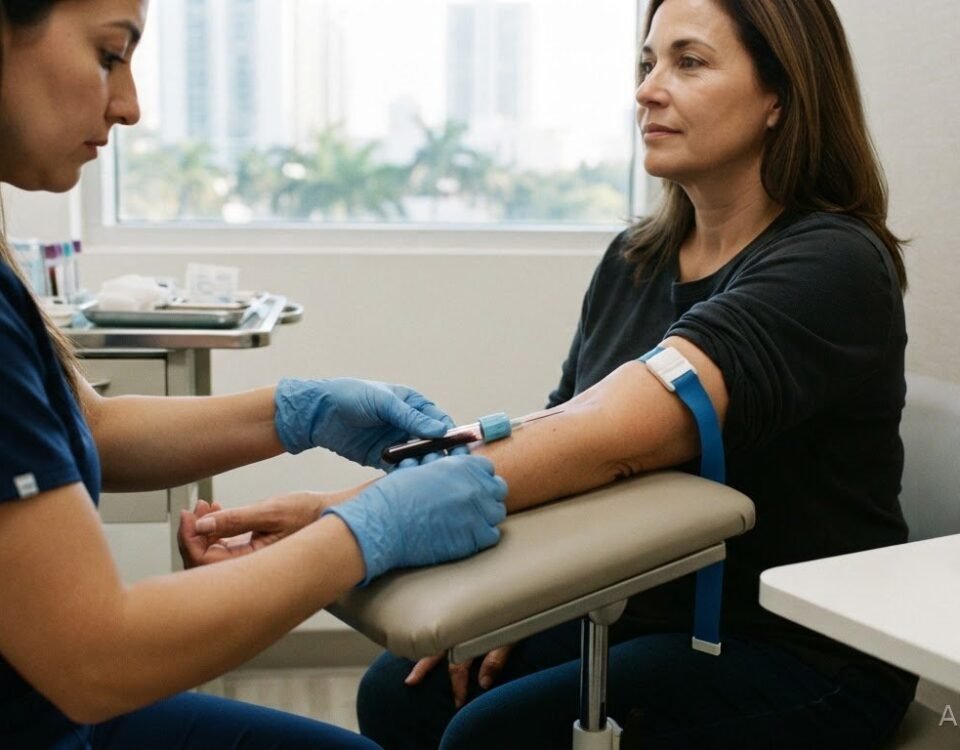
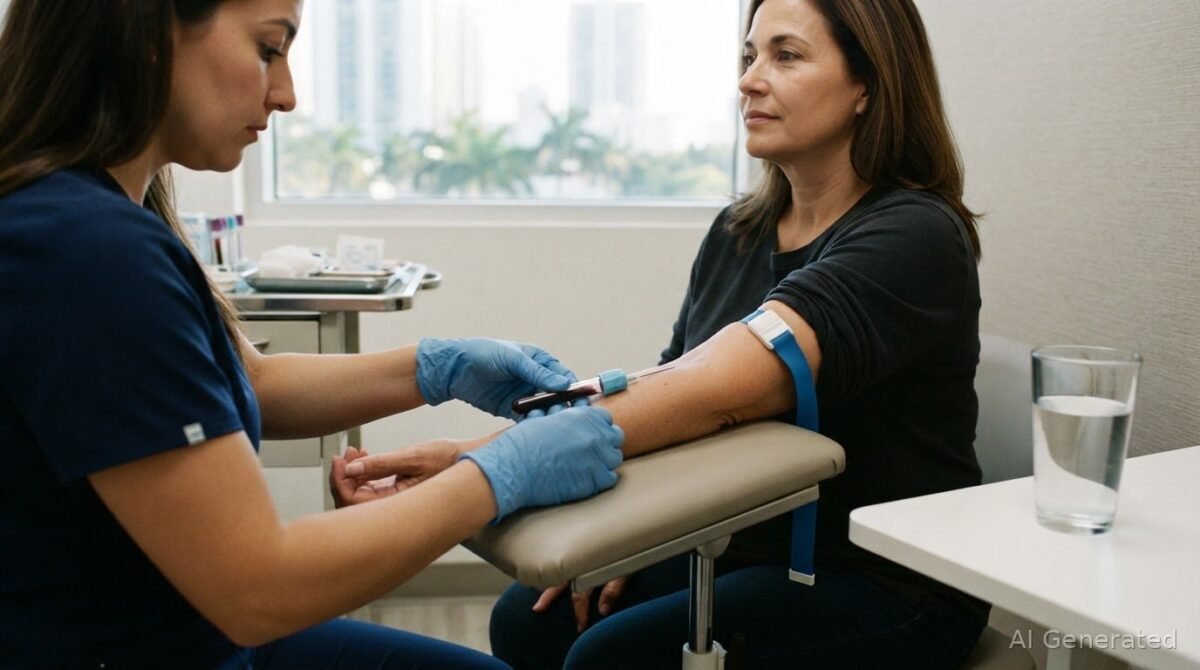
An IV drip may be over once the line is removed, but thoughtful aftercare still matters. Knowing what to do after an IV drip session means keeping the insertion site clean and dry, following the bandage instructions you received, drinking water, and paying attention to how you feel. Many people can return to daily activities after treatment, but follow your provider’s advice about strenuous exercise and consider how you’re feeling.
It’s natural to wonder whether a small bruise or a change in energy is expected, and when you can return to your usual routine. This guide covers what you may notice after an infusion, how to care for the IV site, when to resume activity, and which symptoms need prompt medical attention. Your provider’s instructions are the best guide to recovery because they reflect the treatment you received and your individual needs.
Key Takeaways
- Keep drinking water after your infusion; receiving fluids through an IV doesn’t replace ongoing hydration.
- Ease back into strenuous exercise and other demanding activities rather than rushing straight into your usual routine.
- Care for the insertion site as instructed and keep an eye on changes in pain, redness, or swelling.
- Know which symptoms call for prompt medical attention, and follow your provider’s aftercare instructions.
- Use your provider’s guidance to make recovery decisions that fit the treatment you received and how you feel.
1. What Happens to Your Body After an IV Drip?
During IV therapy, fluids and nutrients enter the bloodstream through a vein, rather than first passing through the digestive system. Hydration infusions may contain saline, electrolytes, minerals, and vitamins such as Vitamin C or B12. The exact contents depend on the infusion, so the experience and effects can differ from one session to another.
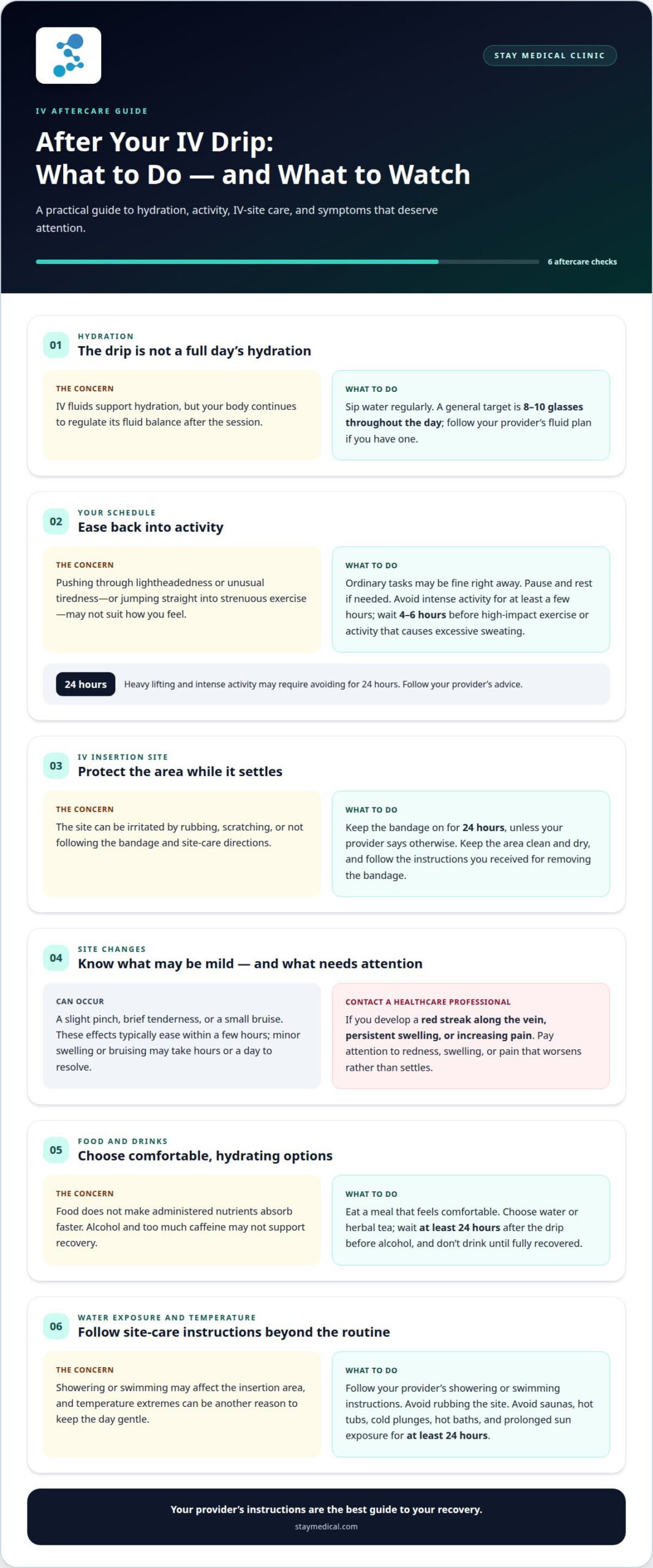
After the drip, your body continues to regulate its fluid balance. IV fluids may remain in the body for several hours to a few days, depending on the fluid type and your metabolism. An infusion can support hydration, but it doesn’t replace drinking water afterward. When considering what to do after an IV drip session, keep water nearby and sip regularly throughout the day.
A practical target after an infusion is 8-10 glasses of water throughout the day. That’s a general hydration guideline, not a reason to ignore a fluid plan given by your healthcare provider. If you have specific instructions about fluids, follow those instructions. A glass of water with a meal, then regular sips between meals, can make hydration easier to maintain.
Some people begin to feel better within a few hours after IV hydration, while others notice little immediate change. The response depends on why the infusion was given, the fluids and nutrients used, and individual factors such as metabolism. An IV drip isn’t a substitute for ongoing wellness habits, and you shouldn’t assume it will provide an immediate energy boost.
Hydration starts before the appointment, too. Drinking water in the hours before an infusion helps you arrive with fluids already part of your routine. Afterward, keep drinking water rather than treating the drip as a full day’s hydration. Regular meals, sleep, and appropriate activity also support everyday wellness beyond the session.
Notice how you feel as the hours pass. A cool sensation or slight heaviness in the arm can occur while fluids enter the vein, and mild bruising may appear around the insertion site afterward. These sensations are separate from the infusion’s intended effects. Follow any specific aftercare directions from your provider, especially if they differ from general hydration suggestions.
2. Resuming daily activities after treatment
Many people can return to ordinary daily activities immediately after an IV hydration session, with no downtime required. That can include routine tasks such as reading, desk work, or preparing a meal. Still, how you feel matters: if you’re lightheaded or unusually tired, pause and rest rather than pushing through your usual schedule.
You can eat after an infusion. Choose a meal that feels comfortable, such as lean protein, vegetables, and whole grains. Food doesn’t make administered nutrients absorb faster. While you recover, choose water or herbal tea instead of alcohol or caffeinated beverages.
Give strenuous exercise more time. Avoid intense physical activity for at least a few hours after IV therapy, and wait 4-6 hours before high-impact exercise or activity that causes excessive sweating. Light walking or gentle stretching may be suitable during that interval. Heavy lifting and intense activity may require avoiding for 24 hours.
Plan showering and swimming separately from routine activity. Follow your provider’s aftercare instructions about showering or swimming. Afterward, avoid rubbing the insertion area and follow the site-care instructions you received. Check the area for irritation rather than assuming it was undisturbed under water.
Check the IV site during the day, especially when removing or adjusting clothing. A small bruise can occur, but increasing redness, swelling, or pain deserves attention. Keep the area clean and dry as instructed. If discomfort gets worse instead of settling, contact a healthcare professional for guidance.
For alcohol, wait at least 24 hours after an IV drip, and don’t drink until you feel fully recovered. Caffeine also deserves restraint: too much can contribute to dehydration and disrupt recovery. If you want a warm drink, herbal tea is an alternative; choose water when thirst returns.
Temperature extremes are another reason to plan a gentler day. Avoid saunas, hot tubs, cold plunges, and sudden exposure to extreme heat or cold after treatment. Also avoid hot baths and prolonged sun exposure for at least 24 hours. An indoor, comfortable setting is a practical choice while that period passes.
For the day’s schedule, keep ordinary tasks flexible, skip intense exercise, and follow the aftercare instructions provided for your infusion. If you’re planning future treatment, personalized care for IV therapy can help you understand how session guidance fits your routine.
3. Managing bruising, pain, and swelling at the IV site
After the IV line is removed, a small bandage covers the insertion point. Mild discomfort, a slight pinch, or bruising can occur around the site. These effects typically ease within a few hours, though minor swelling or bruising may take hours or a day to resolve. Keep an eye on the area as you go about your day.
Mild bruising or brief tenderness can occur after an IV infusion. Redness, swelling, or pain may signal irritation, so notice whether these changes improve or worsen. Contact the clinic or a healthcare provider if you develop a red streak along the vein, persistent swelling, or increasing pain.
Keep the bandage on for 24 hours unless your healthcare provider gives different instructions. Afterward, follow the directions you were given for removing it. Keep the insertion area clean and dry, and avoid rubbing or scratching the skin. If the bandage becomes wet or loose before removal, follow your provider’s instructions for what to do next.
For a simple site check, compare the skin around the IV point with the surrounding area. Look for spreading redness, increased swelling, or pain that is getting stronger rather than settling. Check again later in the day and note when a change began. This can help you describe the symptom clearly if you contact a healthcare professional.
Vitamins and minerals administered into the bloodstream don’t change the basic care of the puncture site. Treat the area gently, especially while dressing or washing. Don’t press repeatedly to test for tenderness; instead, notice whether ordinary movements make discomfort worse. If pain increases or a red streak appears, seek medical guidance rather than relying on routine site care.
Pay attention to symptoms beyond your arm, too. Dizziness or nausea after an infusion deserves attention, particularly if it persists or feels unusual. Fatigue can affect how you feel during recovery, but don’t assume it explains worsening pain, redness, or swelling at the insertion point. Don’t let concerns about dehydration distract you from changes in the skin.
When deciding what to do after an IV drip session, follow the bandage instructions you received and monitor changes without repeatedly disturbing the site. Mild bruising often settles within hours, while minor swelling or bruising may take up to a day. If the area worsens, persists, or develops a red streak, contact a healthcare provider for guidance.
4. Avoiding strenuous activity
Give your body a quieter transition after IV therapy. Avoid intense physical activity for at least a few hours, and wait 4-6 hours before high-impact exercise or activity that causes excessive sweating. Those intervals create room to notice how you feel before adding exertion. A demanding workout is different from walking across the room or completing light household tasks.
Choose comfortable movement while you recover. A gentle walk or easy stretching can keep you moving without the demands of sprinting, heavy lifting, or a high-intensity class. Keep the pace light enough to speak comfortably. If you feel dizzy, nauseated, unusually tired, or in pain, stop and rest instead of trying to finish the activity.
Heavy lifting and intense physical activity should be avoided for at least 24 hours after an IV drip. That includes a strenuous gym session, moving heavy boxes, or a hard training workout. If your job involves physical effort, plan a lighter schedule where possible. The timing matters because strenuous movement can make it harder to notice changes in how you feel or at the IV site.
Return to exercise in stages. After an initial rest period, start with low-intensity movement, such as a relaxed walk. If you feel comfortable and have no concerning symptoms, build gradually toward your usual routine rather than jumping straight into vigorous exercise. Make your first session shorter and easier than a typical workout, and avoid high-impact moves until the recommended waiting period has passed.
Rest is a useful part of recovery, not a sign that the infusion has failed. People may respond differently to IV therapy, so listen to your body instead of using a workout plan as a test. A quiet break, regular water, and an early night may be more appropriate than pushing through fatigue. An infusion’s possible wellness or immune-support purpose doesn’t mean intense exercise is necessary afterward. For those balancing athletic recovery or dealing with physical strain, resources from Level Up Acupuncture & Wellness Center show how therapies like sports medicine acupuncture can work alongside rest to address pain and muscle tension.
Use practical cues to decide whether to continue an activity: pay attention to your breathing, balance, energy, and the arm where the IV was placed. Stop if dizziness, nausea, or site pain develops. Don’t resume intense exercise while those symptoms are present. If they persist or worsen, contact a healthcare professional rather than treating exercise as a way to recover faster.
For a simple plan, keep the first few hours light, avoid high-impact or sweat-heavy activity for 4-6 hours, and skip heavy lifting and intense exercise for 24 hours. Then restart with gentle movement and increase effort gradually. Follow any different instructions given for your infusion, since those directions take priority over a general activity plan.
5. Following provider instructions and care plans
Immediately after an infusion, let the healthcare provider remove the needle and apply a bandage. Follow the instructions you receive about pressure, bandage care, fluids, and follow-up. The infusion’s contents, such as fluids or an electrolyte solution, don’t replace your specific aftercare plan.
Medical IV treatment and wellness IV therapy can involve different aftercare instructions. The infusion’s purpose, what was administered, and your individual care plan can all affect the guidance. Follow the instructions for your treatment rather than assuming every IV session has the same next steps.
Keep the IV-site bandage on for 24 hours unless your healthcare provider gives different instructions. If you’re told to apply pressure after removal, follow that direction and keep the area clean and dry. Avoid changing the dressing earlier than instructed, and contact your provider if you’re unsure how to care for the site.
Treat follow-up instructions as part of your care, not an optional extra. Follow your provider’s guidance about drinking fluids, activity, or symptoms to monitor. Keep the instructions accessible after you leave, and note any questions or changes in how you feel. If you’re uncertain about what to do next, consult the healthcare provider who directed your care.
Some symptoms need immediate medical attention after an infusion. Seek medical care immediately for difficulty breathing, severe chest pain, prolonged dizziness, or swelling of the face or throat. These symptoms are different from mild tenderness at the insertion site and should not be managed by waiting for a routine follow-up.
Other changes call for prompt contact with a healthcare provider. Fever, body aches, or chills after an IV infusion can be signs of infection. Increasing pain, persistent swelling, or a red streak along the vein also deserves attention. Describe when the symptom began and whether it is getting worse. These details help explain what has changed since treatment.
For a clear aftercare routine, keep your provider’s instructions handy, observe the IV site, and respond to symptoms according to their urgency. Don’t substitute general advice for directions tailored to your infusion. A planned follow-up can address questions about fluids, the bandage, or recovery, while urgent symptoms require immediate care rather than waiting for an appointment.
Stay Medical Clinic
Stay Medical Clinic offers IV Therapy in Brickell, Miami, and can help you understand aftercare and how treatment fits into your broader health needs. If you have questions about an infusion, lingering symptoms, or whether IV Therapy suits your wellness goals, speak with the care team about your next steps. The clinic also offers Primary Care for ongoing health concerns, along with a Weight Loss Program and Testosterone Replacement for other specific care goals.
For severe symptoms such as difficulty breathing, severe chest pain, or facial or throat swelling, seek immediate medical care rather than waiting for a routine appointment. For questions about your care or next steps, contact Stay Medical Clinic.
Make Your Next Health Decision With Clarity
Knowing what to do after an IV drip session can also prompt a broader conversation about your health priorities. Rather than treating one infusion as a complete wellness plan, consider how your goals, medical history, and day-to-day needs fit together. A thoughtful next step starts with care that considers the whole person.
Stay Medical Clinic offers IV Therapy alongside Primary Care, a Weight Loss Program, and Testosterone Replacement. These services address different health needs, so a conversation with the care team can help you focus on care that aligns with your goals. If you’re considering another infusion or addressing a separate concern, bring your questions to the team and discuss your options.
Take the next step at a pace that feels right for you. Contact Stay Medical Clinic today
Your health journey is personal, and informed decisions can help you move forward with confidence.
Frequently Asked Questions
What Happens to Your Body After an IV Drip?
An IV drip delivers fluids and nutrients directly into your bloodstream, and your body then manages them as part of its fluid balance. What you notice depends on the infusion’s contents and your individual response. You might feel more hydrated, notice no immediate change, or have mild tenderness where the needle was placed. Follow your aftercare directions and pay attention to any new or worsening symptoms.
How long does it take to feel better after IV hydration?
Some people begin to feel better within a few hours, while others may not notice an immediate difference. The timing can depend on why you received hydration, what the infusion contained, and your individual response. A change in how you feel doesn’t replace ongoing care for the underlying concern. If symptoms persist, worsen, or feel unusual, contact your healthcare provider for advice tailored to your situation.
How to Ensure Optimal Results After IV Drips?
Follow the aftercare plan provided for your infusion rather than treating the drip as a substitute for everyday wellness habits. For example, drink water as directed, choose a comfortable meal, and return to demanding exercise gradually. Keep follow-up instructions accessible in case questions arise. If you’re considering repeated sessions, discuss your goals and health history with a healthcare professional first.
How much water should you drink after an IV infusion?
A general recommendation is 8-10 glasses of water throughout the day after an IV drip. This is a broad guideline, not an instruction to override a fluid plan you’ve received from a healthcare professional. For instance, if your provider gave you different directions about fluid intake, follow those. Sip regularly rather than relying on the infusion alone to meet your hydration needs.
What symptoms after an IV drip require urgent medical care?
Seek medical care immediately for difficulty breathing, severe chest pain, prolonged dizziness, or swelling of your face or throat after an infusion. These symptoms need urgent attention, not routine monitoring at home. Don’t wait for a scheduled follow-up if you’re experiencing one of them. For less urgent but concerning changes, such as increasing IV-site pain or redness, contact your healthcare provider promptly.
How should you care for the IV injection site after the drip?
Keep the insertion area clean and dry, and follow the instructions you were given for its bandage. The bandage is usually kept on for 24 hours unless your healthcare provider advises otherwise. Avoid scratching or repeatedly pressing the site to test it. If the area becomes increasingly painful, swollen, or red, or a red streak appears, contact a healthcare provider for guidance.
How long do the effects of vitamin or hydration IV therapy last?
IV fluids may remain in the body for several hours to a few days, depending on the fluid type and individual metabolism. That timeframe describes the fluids, not how long you are guaranteed to feel energized or notice other effects. Your experience can vary with the infusion’s ingredients and the reason for treatment. Continue your usual hydration and wellness habits rather than relying on one session for ongoing support.
When should you contact the IV clinic or your healthcare provider after treatment?
Contact a healthcare provider about persistent or worsening IV-site swelling, increasing pain, redness, or a red streak along the vein. Fever, body aches, or chills after an infusion also warrant contacting a provider. For difficulty breathing, severe chest pain, prolonged dizziness, or swelling of the face or throat, seek medical care immediately rather than waiting to speak with the clinic during routine follow-up.
Disclaimer
This content is for informational purposes only and does not replace evaluation, diagnosis, or treatment by a medical professional. Always consult a qualified healthcare provider for personalized care.