

How Often Should You Get a Physical Exam? What to Expect
October 23, 2026
You can get testosterone replacement therapy online in the United States with a prescription from a site that follows DEA guidelines, but convenience doesn’t remove the risks of buying testosterone online. According to the Drug Enforcement Administration, from May 12, 2023, through December 31, 2026, a DEA-registered practitioner may prescribe Schedule II-V controlled substances by telemedicine without first conducting an in-person medical evaluation if the required conditions are met. Online access can be appropriate, but it still needs clinical oversight.
It’s understandable to want a clear way to address symptoms such as low energy or changes in sex drive. But symptoms alone don’t establish a need for testosterone treatment, and products from unregulated sellers may be counterfeit or substandard. Testosterone therapy can suppress the body’s own production and affect fertility. It can also change red blood cell counts and other health markers, making medical monitoring important.
This article explains how legitimate online TRT works, what can go wrong with unregulated products, and why stopping treatment or skipping follow-up can carry consequences. It also explains how blood tests and ongoing monitoring inform treatment decisions, so you can assess the options with a clearer understanding of their benefits and risks.
Key Takeaways
- Online TRT can be prescribed through telemedicine under applicable federal conditions, but a prescription and clinical oversight matter.
- Products from unregulated sellers may be counterfeit or substandard, making product authenticity a central safety concern.
- Testosterone treatment can suppress natural production and affect sperm counts, so fertility goals belong in treatment discussions.
- Blood tests help clinicians track red blood cell counts and other health markers during treatment.
- Learn what ongoing monitoring can reveal and why symptoms alone may not establish a need for TRT.
What are the risks of buying testosterone from unregulated sources?
Online clinics can assess symptoms remotely, while local doctors can add in-person examination; both should support medical assessment, blood testing, and follow-up. To assess an online pharmacy, confirm its identity and licensing, require a prescription, and check that a pharmacist is reachable. Legitimate treatment costs depend on medication, laboratory testing, consultations, and follow-up; fees are provided after a quote request.
In the United States, the Drug Enforcement Administration authorizes registered practitioners to prescribe Schedule II-V controlled substances by telemedicine through December 31, 2026, if the required conditions are met. That access doesn’t make every seller legitimate or remove the need for clinical oversight.
Medical Assessment and Safety Oversight
Medical assessment means reviewing symptoms, test results, and health risks before deciding whether testosterone therapy is appropriate. This matters because fatigue can have many causes. Without assessment, treatment may expose you to risks without addressing what is causing your symptoms.
A clinician should review your health history, including diagnosed heart disease, a previous heart attack, or multiple heart-risk factors. Testosterone therapy can cause acne, worsen sleep apnea, and lead to breast tenderness or ankle swelling. Screening before treatment helps establish whether these risks are relevant, rather than waiting for symptoms to appear.
Blood testing helps establish whether testosterone is low and provides a reference for later monitoring. Harvard Health advises measuring testosterone between 7 am and 10 am, when levels are typically at their peak. A result below the normal range should be repeated once more before treatment begins.
Clinic and Pharmacy Legitimacy
An online clinic provides remote medical consultations, while a local doctor can also assess you in person. Either approach requires appropriate testing and follow-up. A pharmacy dispenses prescribed medication; it does not replace a clinician’s assessment. This distinction helps separate medical care from a seller offering products without clinical review.
Before using an online pharmacy, look for its full business identity, a stated pharmacy licence, and access to a pharmacist. Legitimate treatment requires a prescription, not the sale of testosterone as an ordinary supplement. Be cautious if a site offers treatment without reviewing symptoms or test results, or claims that a prescription isn’t needed.
The risks of buying testosterone online include receiving counterfeit or substandard medication from an unregulated seller. A product label or listing alone cannot establish authenticity. Compounded hormones are not FDA approved, so their safety and effectiveness are not guaranteed. There is also no evidence that compounded bioidentical hormones are safer or more effective than FDA-approved hormones.
Testosterone gels present a specific household concern: medication can transfer through contact with treated skin. For example, a partner or child could come into contact with the application site. Follow the product’s instructions for application and preventing contact, and discuss any concerns during medical follow-up.
Suppression of the body’s natural testosterone production
Testosterone replacement therapy can suppress the body’s own hormone production while supplying testosterone from outside the body. If you stop before natural production recovers, you may notice a change in how you feel. Don’t treat online therapy as a short-term experiment; discuss follow-up and a plan for stopping with a clinician.
The reproductive effects need attention, too. Testosterone therapy can lower sperm counts, cause infertility, and contribute to testicular shrinkage. The sperm cycle lasts 72 days, and sperm counts may take many months to return to normal after treatment. If having children matters to you, raise that goal before administration begins, not after fertility changes appear.
Side effects and longer-term concerns include acne, worsened sleep apnea, breast swelling or tenderness, and ankle swelling. The potential cardiovascular effects of testosterone therapy are a reason to discuss your heart health with a clinician. Track symptom changes and attend health monitoring throughout treatment, not just when you start.
Anabolic steroids carry separate risks, including kidney damage, liver damage, and heart trouble. Oral testosterone may also harm the liver. A seller’s product description cannot replace an assessment of your health, the hormone being supplied, and the planned dose or administration method.
Unregulated online products create uncertainty about what you will receive. Counterfeit medication may not contain the stated substance or strength, and unclear sourcing makes purity and contamination harder to assess. A listing for testosterone cypionate, for example, does not prove that a vial contains authentic medication.
Warning signs of an unsafe seller include offering testosterone without a prescription, skipping medical assessment, or promising treatment without reviewing blood tests. An offer that seems too good to be true may be fraudulent or dangerous. A low price is not evidence of a safe product.
Before treatment, discuss symptoms, fertility plans, health history, and blood-test results with a qualified medical professional. Ask how treatment changes will be measured and how concerns will be handled if you stop. For care grounded in medical assessment and follow-up, explore testosterone treatment options.
Because treatment supplies testosterone from outside the body, stopping can feel significant while natural production recovers. Plan for that transition with a clinician before treatment begins, rather than improvising later.
Blood clot concerns from high red blood cell counts
Testosterone treatment can raise red blood cell counts, which may increase clotting risk. That is one reason hormone replacement requires blood tests, not just a review of symptoms. An initial result provides a reference point, while later tests show whether treatment is changing blood counts or other health markers.
Before starting, blood testing helps establish a baseline and assess whether treatment is appropriate. Testosterone levels are generally measured in the morning because they vary during the day. Harvard Health advises measuring testosterone between 7 am and 10 am, when levels are at their peak. If a result is below the normal range, it should be repeated once more before therapy begins.
Repeat testing matters because a single low result may not show a consistent pattern. Morning testing makes results easier to interpret alongside symptoms and medical history. A clinician can compare a repeat result with the first measurement before deciding whether testosterone replacement is suitable.
During treatment, doctors monitor red blood cell counts because a high count can contribute to clotting risk. Potential effects on heart health are worth discussing with a clinician before treatment. Men with diagnosed heart disease, a previous heart attack, or multiple heart-risk factors should approach treatment with caution. Discuss these factors before considering injections or another form of testosterone.
Monitoring helps determine whether treatment is having the intended effect and whether adverse changes are appearing. Regular blood tests assess testosterone levels and help identify concerns such as polycythaemia, a condition involving an increased concentration of red blood cells. Prostate complications are another reason regular monitoring matters. Test results help a clinician weigh treatment effects against the goal of maintaining a safe balance.
Monitoring schedules can change as treatment progresses. Testosterone levels may be assessed every 3-6 months initially, while blood-test monitoring may occur every 6-12 months once levels are stable. The timing depends on treatment stage and results, so stable levels don’t mean testing should stop.
Keep a record of each test date and result, and bring it to follow-up appointments at Stay Medical Clinic. If your treatment involves injections, note when they were administered alongside the testing dates. This context can help explain results and guide adjustments. Blood testing is not a formality; it connects your treatment plan with measurable changes in testosterone, red blood cell counts, and overall health.
Doctors monitor high red blood cell counts during testosterone therapy because these could increase clotting risk. Morning testing is typically recommended for the most accurate baseline readings. Consider testosterone replacement carefully and discuss its potential risks with a healthcare professional at Stay Medical Clinic.
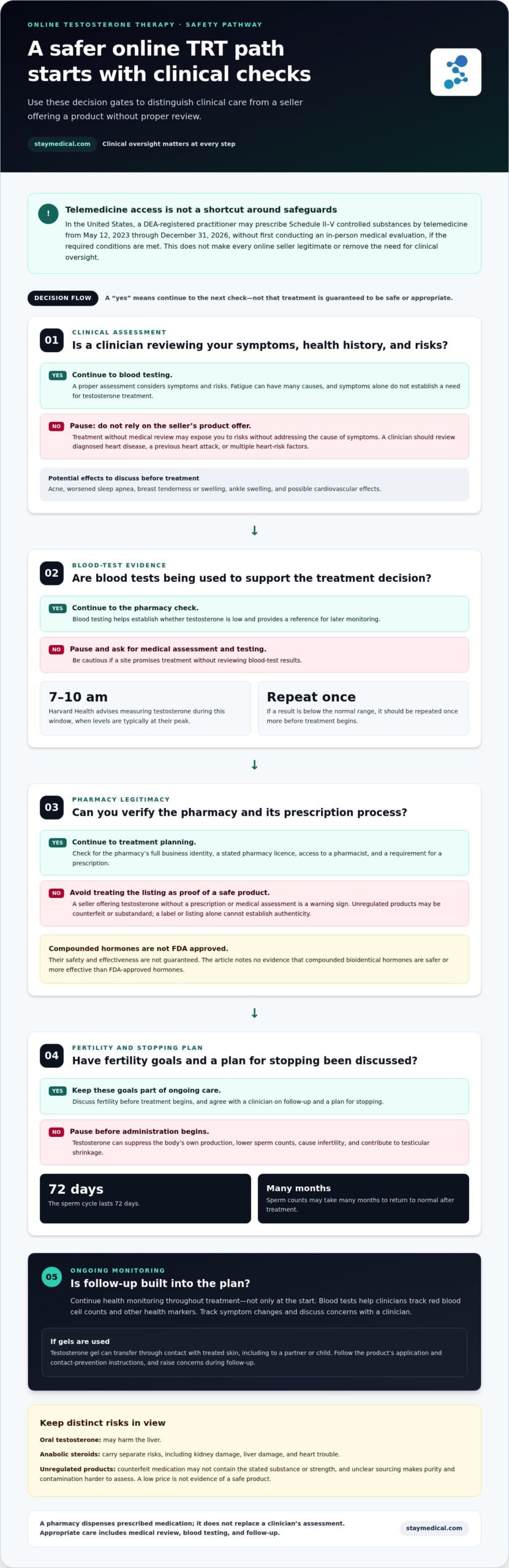
Monitoring testosterone and overall health
Clinical monitoring considers testosterone levels, symptoms, and health markers together. A lab result alone cannot show whether treatment is helping or causing side effects. For example, a clinician considers changes in energy or sexual function alongside blood results, sleep concerns, and cardiovascular history. This broader view keeps decisions focused on overall health, not just a target hormone level.
Timing affects how a testosterone result is interpreted. Harvard Health advises measuring levels between 7 am and 10 am, when they are typically at their peak. If a result is below the normal range, it should be repeated once more before treatment starts. Comparing morning samples gives clinicians a more consistent basis for evaluating whether low levels are present.
During treatment, testosterone hormone levels are typically assessed every 3-6 months initially. Once levels are stable, blood-test monitoring may occur every 6-12 months. These intervals serve different stages of care: early tests help track the response, while later tests continue watching for changes. A stable result is a reason to maintain follow-up, not to stop monitoring altogether.
Blood counts and prostate health matter too. Regular blood monitoring helps assess treatment effectiveness and identify adverse effects, including polycythaemia and prostate complications. Discuss any urinary changes with your clinician as part of follow-up. Tracking these markers alongside hormone levels gives the treatment plan a broader safety context.
Sleep is another health marker to discuss. Testosterone therapy can worsen sleep apnea, so tell your clinician about known sleep apnea or changes in your sleep. Acne, breast tenderness, and ankle swelling are also reported side effects. Note when symptoms begin and whether they change after treatment adjustments; that timeline can help connect effects with treatment.
Cardiovascular history shapes the monitoring conversation. Men with diagnosed heart disease, a previous heart attack, or multiple heart-risk factors should approach treatment with caution. Recent clinical trials found no apparent increased risk of heart attack or stroke among men with clear testosterone deficiency. That finding does not remove the value of tracking cardiovascular health and discussing your relevant history.
Benefits and changes can unfold over different timelines. Some initial changes may be noticed within 1-3 months under professional supervision, while significant changes may occur over 1-2 years. At each review, compare symptoms, laboratory results, and side effects rather than judging progress from one measure alone. This steady clinical approach helps keep treatment aligned with the person’s health and response.
Risks of buying testosterone online
The main risk of buying online is losing control over what you receive and who oversees your treatment. A prescription does not make every website or product trustworthy. In the United States, buying testosterone online is legal with a prescription when the site follows DEA guidelines. Other risks include counterfeit medication, unsafe products, and missed health monitoring.
A study cited in the research reports that up to 50% of medicines purchased from illegal online pharmacies may be counterfeit or substandard. That figure concerns illegal online pharmacies generally, not testosterone alone. A product labelled as testosterone may contain a different substance, an inconsistent strength, or ingredients that aren’t disclosed. A polished website cannot establish what is inside a package.
Look closely at how the seller handles the medical process. A site that offers testosterone without a prescription, skips clinical assessment, or promises treatment without reviewing symptoms removes important safeguards. Fatigue alone doesn’t establish a need for replacement therapy because it can have many causes. Testosterone levels and symptoms need to be considered together; an online questionnaire is not a diagnosis.
Controlled-substance rules also matter after purchase. The Drug Enforcement Administration permits a registered practitioner to prescribe Schedule II-V controlled substances by telemedicine through December 31, 2026, without an in-person evaluation if the required conditions are met. Laws governing the mailing of controlled substances may differ by state. A seller’s broad shipping promise doesn’t explain whether the relevant rules have been followed.
Be cautious of deals that seem too good to be true; they may be fraudulent or dangerous. A low price, rapid approval, or claim of guaranteed results does not prove a product is authentic. Anabolic steroids can cause kidney damage, liver damage, and heart trouble. Oral testosterone may harm the liver, another reason to avoid products with unclear contents or administration instructions.
Before starting, follow a clear safety sequence: confirm that you have a prescription, complete medical assessment and blood testing, and understand how follow-up will work. Keep the medication packaging and written instructions, and report unexpected effects during clinical review. If you’re already receiving testosterone therapy, don’t change the dose based on an online seller’s advice. Treatment decisions should account for testosterone levels, symptoms, health history, and monitoring results.
The practical takeaway is simple: online access can make treatment more convenient, but it cannot replace verified medication and medical oversight. A legitimate prescription process, transparent pharmacy details, and ongoing monitoring distinguish medical care from a transaction.
Stay Medical Clinic: Weight Loss Program
Stay Medical Clinic offers a Weight Loss Program for people seeking support with weight management. If you’re considering testosterone treatment, Testosterone Replacement and Laboratory Testing connect that decision with medical assessment rather than online claims alone. Primary Care can also help put symptoms and health history into a broader context, since fatigue can have causes beyond low testosterone. These services offer a considered next step when you want to discuss treatment choices and the health factors that influence them. For an invitation to continue the conversation, contact Stay Medical Clinic.
Make your next step intentional
The risks of buying testosterone online are a reason to make your next step deliberate, not rushed. Before choosing a path, consider what you hope to improve and what questions would help you feel informed. A useful conversation can start with your priorities, daily routines, and desired outcomes, rather than a product claim or a single symptom.
Stay Medical Clinic offers Testosterone Replacement, IV Therapy, and a Weight Loss Program. These services address different health goals, so the right starting point depends on what you want to discuss. Bring your questions to a medical consultation to connect your priorities with a thoughtful care plan.
You don’t need to have every decision settled before taking that step. A clear conversation can help you move forward with greater confidence and care that reflects your goals.
Your health decisions deserve careful attention and a considered next step.
Frequently Asked Questions
Can you get TRT online?
Yes, TRT can be obtained through telemedicine when a practitioner determines treatment is appropriate and issues a prescription. According to the Drug Enforcement Administration, a DEA-registered practitioner may prescribe Schedule II-V controlled substances by telemedicine through December 31, 2026, without first conducting an in-person evaluation, if applicable conditions are met. An online appointment alone doesn’t guarantee a prescription; symptoms, test results, and medical history inform the decision.
Is testosterone a controlled substance in the United States, and what prescription is required?
Yes. Testosterone is a controlled prescription medication in the United States, so it requires a prescription from an authorized practitioner. The Drug Enforcement Administration’s telemedicine rule covers Schedule II-V controlled substances, subject to its conditions. A legitimate prescription follows medical assessment; a website checkout form or an online seller’s recommendation is not a substitute. Prescription requirements apply even when treatment and follow-up happen remotely.
What are the legal risks of buying testosterone online without a prescription?
Buying testosterone without a prescription can expose you to legal consequences because it bypasses the required medical authorization for a controlled medication. The risks can also involve receiving or mailing a product under rules that vary by state. A seller’s willingness to ship across state lines, for example, does not prove the transaction complies with applicable requirements. Avoid sites that offer testosterone without a prescription.
What health risks come from using counterfeit, contaminated, or incorrectly dosed testosterone?
Counterfeit or contaminated testosterone can expose you to an unknown substance or strength, making its effects difficult to predict. Incorrect dosing can disrupt treatment and complicate the interpretation of later blood tests. Testosterone therapy may cause acne, worsen sleep apnea, or lead to breast tenderness and ankle swelling. If you’ve used a product with uncertain contents, keep its packaging and tell a medical professional what you took and when.
How can I safely obtain testosterone online through a licensed U.S. provider?
Use a U.S. provider that conducts a medical assessment, requires a prescription, and connects treatment with blood testing and follow-up. Before ordering, confirm the provider’s and pharmacy’s identity and licensing, and make sure the prescription names the medication you’re receiving. Keep your test results, prescription, and product details together. This record helps your clinician interpret treatment changes and review the exact product if questions arise.
Disclaimer
This content is for informational purposes only and does not replace evaluation, diagnosis, or treatment by a medical professional. Always consult a qualified healthcare provider for personalized care.