

Managing Side Effects of Tirzepatide: A Clinical Guide to Comfort and Success
August 21, 2026
Is TRT for Life? Understanding the Long-Term Commitment to Vitality
August 23, 2026
What if the persistent fatigue you feel after a standard workday isn’t just a byproduct of your professional drive, but a signal that your biology is out of sync? It’s frustrating to put in the work at the gym and the office only to feel like you’re running on empty. If you’ve noticed a sudden dip in your motivation or unexplained changes in your physical composition, you aren’t alone. Recognizing the signs of low T in men under 30 is the first step toward reclaiming the vitality that should define your 20s.
You deserve to have your concerns taken seriously rather than being told you’re simply stressed or overworked. This guide provides a clear look at how hormonal imbalances manifest in younger men and what you can do about it. We’ll explore the subtle symptoms affecting your career and relationships, the essential role of precise laboratory testing, and how to distinguish between simple lifestyle adjustments and the need for professional medical intervention. By the end, you’ll have a roadmap for navigating your health with confidence and clarity here in Miami.
Key Takeaways
- Understand why standard lab ranges for older men don’t reflect the physiological needs of a man in his 20s.
- Learn to identify the physical and cognitive signs of low T in men under 30, such as brain fog and muscle loss that resists fitness efforts.
- Discover why precise timing and specific markers like free testosterone are essential for an accurate hormonal diagnosis.
- Explore how modern environmental stressors and lifestyle factors in Miami contribute to early hormonal decline.
- Gain clarity on the path toward medically supervised treatment and how personalized care can restore your baseline vitality.
What Is Considered Low Testosterone for Men Under 30?
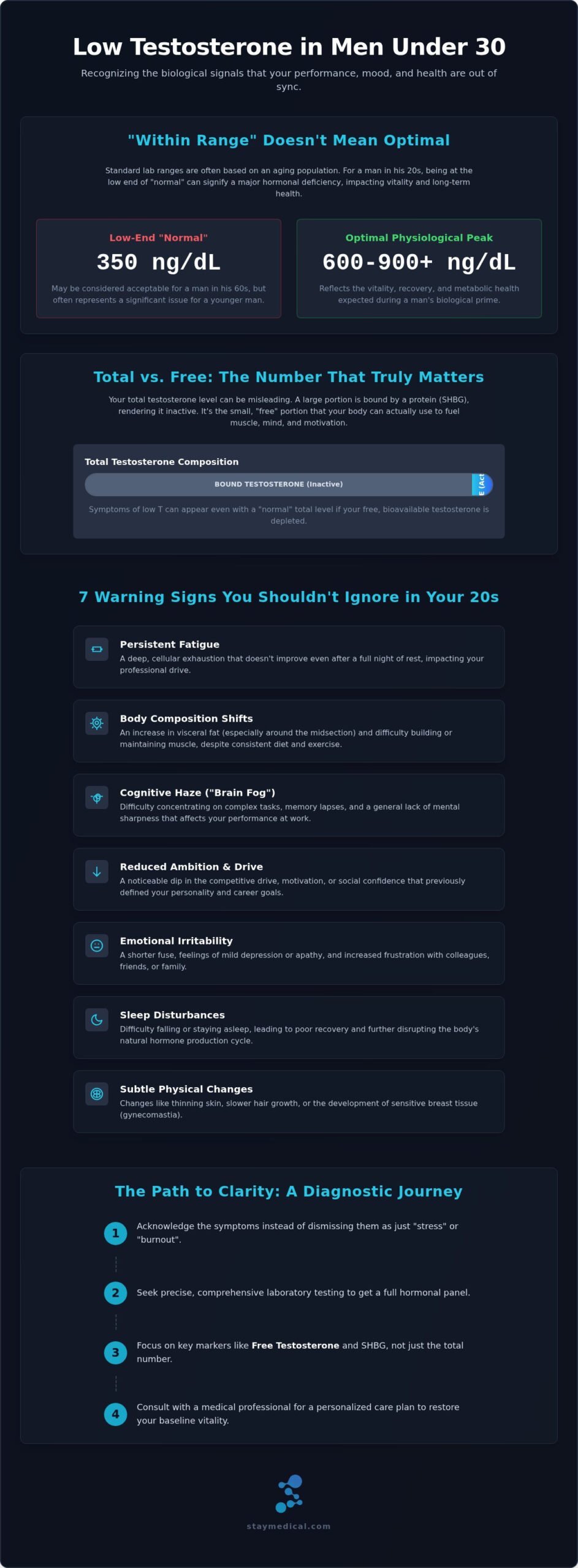
Defining low testosterone in your 20s requires a departure from the generic reference ranges found on standard lab reports. While a reading of 350 ng/dL might be considered “normal” for a man in his 60s, it often represents a significant deficiency for a young professional in his prime. True hormonal health is about optimal function, not just the absence of a clinical disease state. When we discuss hypogonadism in early adulthood, we’re looking at a mismatch between your body’s physiological needs and its current production. For many, the first step is realizing that being “within range” doesn’t necessarily mean you’re healthy. If you’re searching for the signs of low T in men under 30, it’s likely because your body is already signaling that something is off, regardless of what a generic chart says.
The Biological Peak: What Your Body Expects
Your 20s are meant to be a period of high vitality and rapid recovery. During this time, the pituitary gland and testes work in a tight feedback loop to maintain peak hormonal output. This isn’t just about fitness; it’s about long-term metabolic health. Early detection of a decline is critical because testosterone influences how your body processes glucose and maintains lean tissue. A drop in these levels isn’t just a phase; it’s a biological shift that requires intentional diagnostic attention. If your body isn’t meeting its peak potential, it’s worth investigating why the system is underperforming before it impacts your long-term wellness.
Total vs. Free Testosterone: Which Number Matters?
A common pitfall in modern medicine is relying solely on Total Testosterone. This number includes hormone that is “locked away” by Sex Hormone Binding Globulin (SHBG), a protein that renders it inactive. You might have a respectable total number but still experience the signs of low T in men under 30 because your bioavailable levels are depleted. Free Testosterone is the active fuel for your body. At Stay Medical, we believe in looking at the full picture, ensuring that any Testosterone Replacement or optimization plan is based on what your body can actually use. We utilize precise laboratory testing to uncover these nuances, giving you a clear understanding of your internal environment and a path toward feeling like yourself again.
7 Warning Signs of Low T You Shouldn’t Ignore in Your 20s
Identifying the signs of low T in men under 30 is often challenging because these symptoms frequently mimic the effects of a high-pressure career or a demanding social life. However, when multiple signals converge, it’s rarely just a matter of needing more coffee or a vacation. Your body uses these symptoms as an early warning system. Recognizing them early allows you to address the root cause before it impacts your long-term health or professional trajectory. If you feel like you’ve lost your “edge,” it is likely your biology, not your willpower, that needs attention.
- Persistent Fatigue: This is a profound, cellular exhaustion that remains even after a full night of rest.
- Body Composition Shifts: You may notice an increase in visceral fat around the midsection or a sudden difficulty maintaining muscle mass despite consistent training.
- Cognitive Haze: Often described as “brain fog,” this manifests as difficulty concentrating on complex tasks or a lack of mental sharpness during the workday.
- Reduced Ambition: A noticeable dip in the competitive drive or social confidence that previously defined your personality.
- Emotional Irritability: Feelings of “mild” depression, low motivation, or a shorter fuse with colleagues and loved ones.
- Sleep Disturbances: Difficulty falling asleep or staying asleep, which further depletes your natural hormone production.
- Physical Changes: Subtle shifts such as thinning skin, slower hair growth, or the development of sensitive breast tissue (gynecomastia).
Physical Symptoms: Beyond the Gym
Many young men first notice something is wrong when they “hit a wall” in their fitness routine. You might be following a strict diet and a rigorous lifting program, yet your strength plateaus or your body fat percentage creeps upward. This metabolic slowdown is a hallmark of hormonal decline. Beyond the mirror, low testosterone can lead to more sensitive physical changes like gynecomastia or even changes in skin elasticity. If these symptoms resonate, a comprehensive laboratory testing panel can provide the objective data needed to confirm your status and guide your next steps.
The Silent Signs: Mood and Mental Clarity
The psychological impact of low testosterone is often more debilitating than the physical ones. In your 20s, you’re expected to be at your cognitive peak. When brain fog sets in, it doesn’t just affect your mood; it threatens your career performance and social confidence. It’s easy to dismiss irritability as “work stress,” but a persistent lack of motivation is a classic indicator that your testosterone levels aren’t supporting your brain’s neurochemistry. This creates a frustrating cycle where poor sleep and high stress further suppress hormone production, making it nearly impossible to “snap out of it” without professional medical guidance. In addition to medical care, engaging with services like LEAPS Inc. can provide the coaching and emotional support necessary to navigate these personal and professional challenges during your recovery.
Why Young Men in Miami Experience Hormonal Declines
Living in a high-performance hub like Brickell often comes with a hidden biological cost. While we’ve already identified the physical signs of low T in men under 30, understanding the underlying “why” is essential for long-term correction. In Miami, the intersection of professional ambition, environmental toxins, and a demanding social scene creates a perfect storm for endocrine disruption. It isn’t just about aging. It’s about how your modern environment interacts with your ancient biology. Identifying these triggers early allows for a more intentional approach to your health journey.
Lifestyle Factors and the Cortisol Connection
Miami’s “hustle culture” is a primary driver of hormonal decline in younger men. When you’re constantly chasing the next deal or pushing through 80-hour work weeks, your body stays in a state of chronic stress. This keeps cortisol levels high. High cortisol acts like a biological brake on your endocrine system, directly suppressing the production of testosterone. This is often compounded by the “Brickell Lifestyle” trap: excessive caffeine to stay alert, alcohol to unwind, and chronic sleep deprivation. These habits don’t just make you tired; they actively signal your testes to slow down production. Establishing a relationship with a trusted Primary Care provider is vital for identifying these lifestyle triggers before they cause lasting metabolic damage.
Clinical Causes: When It’s Not Your Fault
Sometimes, the signs of low T in men under 30 have nothing to do with how hard you work or what you eat. Clinical issues can be the silent culprit. For example, a varicocele, which is an enlargement of the veins within the scrotum, can raise testicular temperature and hinder hormone production. Pituitary gland issues can also disrupt the signaling process that tells your body to create testosterone. It’s a complex system that requires a sophisticated diagnostic eye.
- Genetic Conditions: Klinefelter syndrome involves an extra X chromosome that can affect hormonal development from a young age.
- Physical Trauma: Past injuries to the groin or certain infections can lead to primary testicular failure.
- Medications: Long-term use of opioids or the previous use of anabolic steroids can shut down your natural production entirely.
Our team at Stay Medical takes a diagnostic-first approach to distinguish between environmental factors and these deeper clinical concerns. We believe every man deserves a clear, evidence-based explanation for his symptoms. This ensures that your treatment plan is as intentional and precise as the life you lead.
The Diagnostic Journey: How to Verify Your Levels
Moving from observing the signs of low T in men under 30 to obtaining a clinical diagnosis requires precision. It isn’t enough to simply walk into a lab and request a general panel. To get a clear picture of your hormonal health, the timing and the specific biomarkers measured are non-negotiable. Many general practitioners might look at a single number and dismiss your concerns if you’re “in range,” but a specialist understands that your 20s require a different standard of care. We focus on how you feel, not just what the paper says.
Accuracy starts with the clock. Testosterone levels fluctuate throughout the day, peaking in the early morning hours. For men under 30, a blood draw taken after 10:00 AM is often clinically useless for diagnosing a deficiency. We require morning draws to ensure we’re seeing your body at its peak potential. Before your appointment, ensure you’re well-hydrated and have had a typical night of rest, as extreme sleep deprivation can artificially tank your numbers for a single day. This preparation ensures the data we collect is a true reflection of your baseline.
Comprehensive Lab Testing in Brickell
When you visit us for Laboratory Testing in Brickell, we look far beyond a single data point. A comprehensive panel must include Total Testosterone, Free Testosterone, Estradiol, Luteinizing Hormone (LH), and Follicle-Stimulating Hormone (FSH). These markers tell us not just if your levels are low, but why they are low. Is it a signaling issue from the brain or a production issue in the testes? We often require confirmatory draws to rule out temporary dips caused by acute stress or illness. A single low reading doesn’t always equal a lifelong condition.
Schedule your comprehensive hormonal panel today
Questions to Ask Your Healthcare Provider
Advocacy is a key part of the diagnostic journey. When reviewing your results, don’t settle for being told you are “fine” if you still feel the signs of low T in men under 30. Ask about the difference between a “normal” lab range and an “optimal” level for someone in their mid-20s. If treatment like TRT is discussed, it’s vital to inquire about fertility preservation, as certain interventions can impact sperm production. Your provider should be a partner who looks for the underlying cause of your symptoms, ensuring your long-term vitality remains the priority. We believe in transparency, ensuring you understand every metric on your report.
Reclaiming Your Edge: Personalized Solutions at Stay Medical
Reclaiming your health is an intentional process that goes far beyond simply reading a lab report. At Stay Medical, we recognize that the signs of low T in men under 30 are deeply personal and impact every facet of your life, from your professional performance to your private relationships. Our approach is rooted in the belief that you are an individual with a unique biological blueprint, not just another clinical case. We don’t just treat numbers; we treat the man. By combining high-level medical authority with a welcoming, patient-centered environment, we help you navigate the complexities of hormonal health with transparency and confidence.
For many young professionals, Testosterone Replacement Therapy in Miami is a cornerstone of this journey, but it’s rarely the only tool we utilize. We often integrate a comprehensive Weight Loss Program to optimize metabolic function, as reducing visceral fat naturally supports your body’s ability to maintain healthy hormone levels. Additionally, our IV Therapy protocols provide the essential micronutrients and hydration needed to support endocrine recovery and overall vitality. This multi-faceted strategy ensures your health journey is sustainable, ethically sound, and focused on long-term outcomes.
Is TRT Right for a Man Under 30?
Deciding to begin medical intervention before age 30 is a significant choice that requires a careful evaluation of both risks and benefits. While the rewards can include restored focus and physical strength, it’s a commitment that demands consistent medical supervision and a dedicated partnership with your healthcare team. We often explore natural alternatives and lifestyle optimizations as a first line of defense, ensuring that medical intervention is only used when truly necessary. For a deeper look at the physiological advantages of this path, you can explore The Core Benefits of TRT for Men.
Next Steps: Consultation and Personalized Care
Taking control of your hormonal health starts with a professional conversation. Booking a consultation at our Brickell clinic allows us to dive deep into your history and current symptoms. This isn’t a “one and done” process; it involves rigorous clinical oversight and regular monitoring to ensure your levels remain optimal and your health is protected. You don’t have to accept a diminished version of yourself. By addressing the signs of low T in men under 30 today, you’re investing in a future defined by clarity, strength, and a renewed sense of purpose. We are here to guide you every step of the way.
Take the First Step Toward Hormonal Optimization
Your 20s should be defined by peak physical performance and mental sharpness. If you’ve recognized the signs of low T in men under 30 within your own daily experience, it’s a clear signal that your biology requires more than just willpower. We’ve explored the importance of moving beyond “normal” lab ranges to find what is optimal for your age. By understanding the diagnostic markers essential for your health, you can stop guessing and start making intentional decisions about your well-being.
At Stay Medical Clinic, we provide the clinical authority and personal attention necessary for this journey. Our medically supervised programs and on-site laboratory for fast results ensure your care is both efficient and precise. As Brickell’s trusted wellness experts, we are committed to helping you navigate these complex processes with transparency. You deserve to feel like the best version of yourself, backed by professional guidance.
Investing in your hormonal health today creates a ripple effect that touches every aspect of your future. Reclaiming your edge is possible, and it begins with the decision to prioritize your vitality. We look forward to being your partner in this pursuit.
Frequently Asked Questions
Can a 25-year-old really have low testosterone?
Yes, it’s absolutely possible. While biological peaks occur in your 20s, modern lifestyle stressors and environmental toxins can suppress natural production. We see many young professionals in Miami who struggle with these hormonal shifts. Recognizing the signs of low T in men under 30 early allows for proactive management rather than waiting for metabolic health to decline further. It’s a medical reality that deserves a sophisticated, diagnostic-first approach.
What is the most common cause of low T in men under 30?
There isn’t one single cause, but chronic stress is a major factor. In a high-performance environment like Brickell, elevated cortisol levels often act as a biological brake on testosterone production. Other common drivers include poor sleep hygiene, obesity, and exposure to endocrine-disrupting chemicals found in modern plastics and diets. Clinical issues like varicoceles or pituitary signaling problems also account for a significant number of cases in younger populations.
Will low testosterone affect my ability to have children?
Low testosterone can impact your reproductive health, but the treatment path requires careful planning. Standard testosterone replacement can suppress your body’s natural signaling for sperm production. If fatherhood is part of your future plans, it’s vital to discuss fertility preservation options with your provider. You may also want to discover Ombright Wellness Fertility Acupuncture for holistic ways to support your reproductive balance. We often utilize specific protocols to maintain testicular function while optimizing your hormonal levels, ensuring your long-term family goals remain protected.
Fatigue from work stress typically resolves after a weekend of rest or a vacation. In contrast, hormonal fatigue is a persistent, cellular exhaustion that doesn’t improve with sleep. If your lack of energy is paired with other signs of low T in men under 30, such as unexplained irritability or a loss of morning erections, it’s likely a biological issue. Objective laboratory testing is the only way to gain true clarity.
Are there natural ways to increase testosterone before starting TRT?
We always advocate for lifestyle optimization as a foundation for health. Improving your sleep quality, engaging in consistent resistance training, and optimizing your intake of Vitamin D and Zinc can provide a natural boost. Reducing alcohol consumption and managing body fat are also highly effective strategies. For many men, these intentional changes can restore levels to an optimal range without the immediate need for clinical medical intervention.
What are the long-term risks of starting TRT at a young age?
Starting treatment at a young age involves a long-term commitment to medical oversight. Potential risks include the suppression of natural fertility and an increase in red blood cell count, which requires regular monitoring. Because you may be on therapy for several decades, working with an expert team is essential to protect your cardiovascular and prostate health. We prioritize a safe, methodical approach that focuses on your well-being over the long term.
How often should I get my testosterone levels checked?
For men in their 20s without symptoms, including a testosterone check in your annual physical exam is a proactive way to establish a baseline. If you’re currently experiencing symptoms or are undergoing treatment, we typically recommend blood work every three to six months. This frequency allows us to make precise adjustments to your protocol and ensures that your markers remain within an optimal, safe range for your specific age group.
Does insurance cover testosterone testing for younger men?
Coverage depends entirely on your specific insurance provider and the details of your plan. Many carriers require at least two separate morning blood draws showing levels below a certain threshold before they consider treatment medically necessary. It’s best to contact your insurance company directly to verify their requirements for diagnostic laboratory testing. We provide transparent documentation to help you understand the clinical necessity of any tests we perform.
Disclaimer
This content is for informational purposes only and does not replace evaluation, diagnosis, or treatment by a medical professional. Always consult a qualified healthcare provider for personalized care.