

The Emotional Benefits of Balanced Hormones: What the Evidence Can, and Cannot, Tell You
October 15, 2026
Myers’ Cocktail IV Therapy in Doral: What to Know Before You Choose
October 17, 2026
Could a weekly vitamin injection be appropriate for one person and unnecessary for another? If you’re asking, “how often should I get vitamin injections,” the answer depends on the nutrient, why it’s being considered, your health history, and relevant clinical findings.
There isn’t one schedule that applies to every injection. B12 guidance, for example, is often discussed in the context of a specific deficiency or absorption concern. A clinician may consider symptoms, relevant test results, underlying conditions, and how you respond before recommending a frequency. Some plans may be reviewed over time, while others may not call for injections.
This guide explains what can shape injection frequency and how to prepare for a discussion about B12, B-Complex, or vitamin D. For Miami-area readers, Stay Medical Clinic’s IM Medication service includes B-Complex and vitamin D injections. At its Brickell location, the clinic’s approach is intentional, personalized, and built on trust, with clarity, integrity, and attention to what truly matters.
Key Takeaways
- To answer “how often should I get vitamin injections,” start with the specific nutrient and reason treatment is being considered, not a routine schedule.
- Share relevant health history, medications, and supplements. Symptoms alone don’t establish a deficiency or determine injection frequency.
- B12, B-Complex, and vitamin D have different clinical contexts. Ask what each option is intended to address before comparing them.
- Ask how the clinician will assess whether an injection remains appropriate and whether the plan may need to be revisited.
- Stay Medical’s IM Medication service includes B-Complex and vitamin D injections. A clinician-led discussion can help you understand what may be appropriate for your circumstances.
How often should I get vitamin injections? Why there is no one-size-fits-all schedule
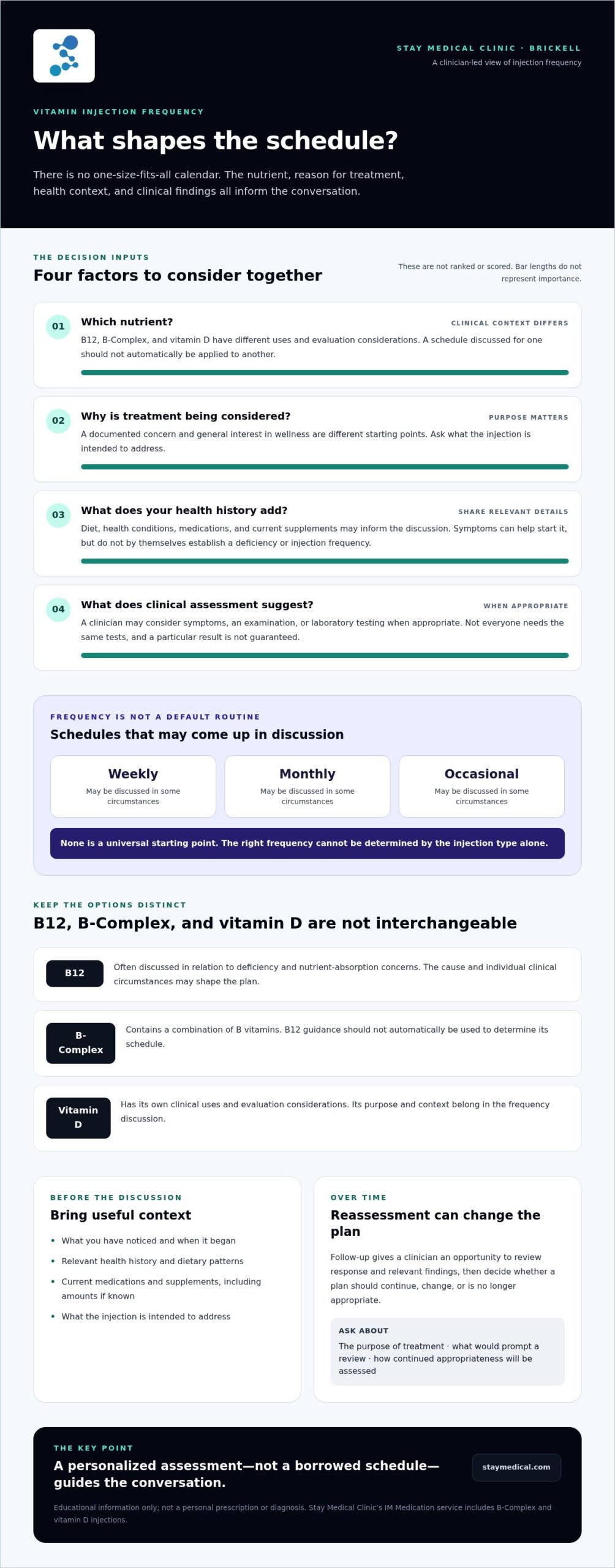
Frequency depends on the vitamin, the reason treatment is being considered, relevant clinical findings, and how a person responds. A clinician should guide the schedule based on the individual situation, rather than applying a default wellness routine to everyone. Weekly, monthly, or occasional injections may be discussed in different circumstances, but none is a universal starting point.
In short: The type of injection alone can’t determine the right frequency. A clinician’s assessment and your health context matter.
For background on a nutrient often discussed in this context, explore Vitamin B12. A video can also provide general information about B12 injections, but it can’t establish a schedule for your circumstances.
To add another perspective, watch this overview of B12 injections:
Why B12 advice does not automatically apply to every vitamin injection
B12 is often discussed in relation to deficiency and issues with nutrient absorption. That context matters. B-Complex contains a combination of B vitamins, while vitamin D has its own clinical uses and evaluation considerations. A schedule discussed for B12 shouldn’t automatically be applied to either one. Both the nutrient and the reason for considering treatment shape the conversation.
Even for B12, there isn’t one schedule for everyone. A clinician may consider why it’s being discussed, relevant health history, test results when appropriate, and response to treatment. A plan for a documented concern may differ from an approach considered for general wellness. The same principle applies to other injections: sharing a delivery method doesn’t make the nutrients, purposes, or treatment plans interchangeable.
When a recurring schedule may be discussed
A recurring schedule may be considered when there’s a specific clinical reason, with the plan shaped by individual findings and reviewed over time. Interest in wellness injections alone doesn’t establish that an injection is needed or indicate how often it should be given. Ask what the treatment is intended to address and what factors will guide its frequency.
If you’re asking how often should I get vitamin injections, bring the question to a clinician rather than adopting a schedule from general B12 advice. Stay Medical’s IM Medication service includes B-Complex and vitamin D injection options. A discussion can help clarify the purpose and whether an option may be appropriate for you. This article is educational, not a personal prescription or diagnosis.
What determines vitamin injection frequency? The clinical factors behind a schedule
Vitamin injection frequency is a clinical decision, not a fixed calendar rule. A clinician may consider the nutrient, why an injection is being discussed, your health history, and relevant clinical findings. The aim is to understand the situation before discussing a schedule, rather than choosing weekly or monthly injections by default.
Symptoms can help start the conversation, but they don’t confirm a deficiency or establish how often an injection is appropriate. Tiredness, for example, can have many possible explanations. The nutrient, broader health context, and clinical assessment all matter.
- Nutrient: B12, B-Complex, and vitamin D have different clinical uses and evaluation considerations.
- Reason for treatment: A documented concern and general interest in wellness are different starting points.
- Relevant history: Diet, health conditions, medications, and current supplements may inform the discussion.
- Clinical assessment: Symptoms, an examination, or laboratory testing may be considered when appropriate.
How a clinician may assess whether an injection is appropriate
Describe what you’ve noticed, when it began, and whether anything seems to affect it. Share relevant health history, dietary patterns, and current supplements, including amounts if you know them. These details can help the clinician understand why you’re asking about injections and decide whether further assessment may be useful.
An examination or laboratory testing may be considered when clinically appropriate. Not everyone needs the same tests, and a particular result is not guaranteed. For B12, the NHS guidance on B12 injection frequency illustrates why treatment can depend on the cause of deficiency and individual clinical circumstances. It isn’t a schedule for other vitamins or a personal recommendation.
Why the plan may change over time
An initial plan and ongoing maintenance are different stages of care. Follow-up gives the clinician an opportunity to review your response, consider relevant findings, and decide whether the original reason for treatment still applies. Depending on that assessment, the plan may continue, change, or no longer be appropriate.
There isn’t one follow-up interval or expected response for every injection and patient. The timing and need for reassessment depend on the clinical context. Ask what the plan is intended to address, what would prompt a review, and how the clinician will assess whether it remains appropriate.
If you’re wondering how often should I get vitamin injections, a conversation grounded in your history is more useful than borrowing a frequency from general advice. Miami readers can explore care through Stay Medical, where care is intentional, personalized, and built on trust.
B12, B-Complex, and Vitamin D injections: how to compare the options
B12, B-Complex, and vitamin D injections aren’t interchangeable. Each involves a different nutrient or combination of nutrients, so start by asking what concern the injection is being considered for, rather than which one is “best.” A clinician can connect that concern with relevant health history and findings before discussing whether an option or schedule makes sense.
Use this comparison to prepare for a conversation, not to choose a treatment on your own. The questions in the final column can help you explain what you want to understand.
| Injection | Purpose and clinical context | Questions to discuss |
|---|---|---|
| B12 | May be discussed in relation to a B12 concern, including a documented deficiency or circumstances affecting absorption. | What is prompting the B12 question? What information would help assess whether it’s relevant for me? |
| B-Complex | Contains a combination of B vitamins, so the discussion concerns a different formulation than B12 alone. | Which concern is this option intended to address? How does my history inform whether it’s appropriate? |
| Vitamin D | May be discussed in the context of vitamin D status and a clinician’s assessment of the individual’s needs. | What findings or history matter in my case? How would the clinician review whether this remains appropriate? |
How to discuss B12, B-Complex, and Vitamin D
Start with the specific nutrient you’re asking about and what prompted the question. Share relevant symptoms, medical history, diet, and supplements, then ask what the injection is intended to address. Stay Medical’s IM Medication options include B-Complex and vitamin D injections. Their availability as services doesn’t mean either is suitable for every person.
If you’re comparing options, ask how the clinician distinguishes their purposes and what findings may inform the discussion. Don’t use a schedule you’ve heard about for B12 as a template for B-Complex or vitamin D. The question how often should I get vitamin injections can’t be answered responsibly without first identifying the injection and the clinical question involved.
When an injection and an IV infusion are different conversations
An intramuscular, or IM, injection is administered into a muscle. IV Therapy uses a different route, delivering treatment into a vein. These terms describe how treatment is administered, not whether it’s appropriate or how often it should be given. If you’re unsure which route you mean, describe what you’ve heard or read so the clinician can clarify the difference.
Stay Medical provides IM Medication as part of its personalized approach to care. Use the discussion to identify the specific option under consideration and the reason for considering it.
How to prepare for a vitamin injection appointment and discuss frequency
A little preparation can make a clinical conversation more useful. You don’t need to arrive with a treatment plan already chosen. Bring a clear question, relevant background, and an accurate list of what you take so the clinician can discuss whether an injection and a particular frequency make sense for your situation.
If you’re wondering, “how often should I get vitamin injections,” use the appointment to understand the reason behind any proposed schedule. Don’t copy a weekly or monthly routine from an online post. Follow your clinician’s instructions, and ask for clarification if anything about the plan is unclear.
- Clarify your question. Note which vitamin or injection you’re asking about and what prompted your interest. If you have symptoms, write down when they began and how they affect you.
- Gather relevant history. Be ready to discuss health conditions, past treatments, and relevant dietary patterns. Bring recent records or test results you already have, if available.
- List medications and supplements. Include prescriptions, over-the-counter products, and vitamins. Note names and amounts where you can, and don’t stop or add anything unless your clinician advises you to.
Questions to bring to a clinician
Ask about the purpose and review process, rather than seeking a schedule that applies to everyone. You might ask:
- Which nutrient is being considered, and what clinical reason supports discussing it in my case?
- Would an examination or relevant testing help inform this decision?
- What follow-up, if any, would help assess whether the plan remains appropriate?
- What changes or symptoms should prompt me to arrange another conversation?
These questions can clarify what an injection is intended to address and how the clinician plans to assess its ongoing relevance. A recurring schedule should have a clear purpose, not simply continue by habit.
What to share before treatment
Share relevant medical history, medications, supplements, and any prior reactions to injections or treatments. Mention pregnancy or breastfeeding when relevant, since this information may affect clinical decision-making. Be candid even if a detail seems unrelated; the clinician can determine what matters.
Keep the conversation collaborative. If you’re concerned about a proposed frequency, explain why and ask how it was determined. If instructions change, confirm what to follow next. Don’t begin injections or adjust a schedule based only on advice you found online. A clinician can consider your circumstances and explain the reasoning behind the plan, including whether follow-up is appropriate.
Stay Medical’s Brickell clinic offers Miami-area patients a place to discuss IM Medication options as part of care centered on intentional, personalized service, clarity, and trust.
Discuss a personalized vitamin injection plan with Stay Medical in Brickell
A useful next step is a clinician-led conversation about the specific injection you’re considering and why it matters to you. Stay Medical’s IM Medication service includes B-Complex and vitamin D injection options. Discussing an option doesn’t establish that it’s right for you or how frequently it should be given. The conversation can help clarify what may be appropriate in light of your circumstances.
Bring your questions and relevant health information, such as medications, supplements, symptoms, or prior test results. You can also share what you hope to address. A clear starting point keeps the discussion focused on the nutrient, your goals, and the clinical context, rather than a schedule borrowed from someone else.
What a personalized discussion can help clarify
A clinician can help you understand what an injection is intended to address and what information may guide a decision. You might discuss:
- Which injection you’re considering and what led you to ask about it.
- Whether your history or available clinical findings help inform the conversation.
- How the clinician would review whether a plan remains appropriate over time.
- What follow-up questions to raise if your circumstances or concerns change.
This is a way to make an informed decision, not a promise of a particular treatment or result. The answer to “how often should I get vitamin injections” depends on the individual clinical context. Discuss a personalized schedule with a clinician instead of assuming one from general wellness advice.
Stay Medical describes its care as intentional, personalized, and built on trust. That means approaching the conversation with clarity, integrity, and attention to what truly matters: understanding the purpose of the injection, considering your circumstances, and discussing a next step without presuming that one frequency fits everyone.
A local next step in Brickell
Stay Medical is located at 33 SW 2nd Ave Suite 502, Miami, FL 33130. For readers in Miami and nearby communities, including Aventura, Bal Harbour, Bay Harbor Islands, Biscayne Park, Coral Gables, Cutler Bay, Doral, El Portal, Florida City, Golden Beach, Hialeah, Hialeah Gardens, Brickell, and Key Biscaya, the Brickell clinic offers a local setting to discuss IM Medication options, including B-Complex and vitamin D injections.
Stay Medical had 65 Google reviews as of early 2026. To discuss vitamin injection care with the team, explore the clinic’s IM Medication service.
Explore IM Medication care in Brickell
Take the next step with a clearer question
You don’t need to arrive with a schedule in mind. Start by naming what you’re hoping to address and what you want to understand before considering an injection. That leaves room to discuss the decision without feeling pressure to choose a weekly, monthly, or occasional routine in advance.
If you’re still asking, “how often should I get vitamin injections,” let the question open a conversation rather than lead you to adopt a schedule from someone else’s experience. A thoughtful discussion can consider your circumstances and whether an injection plan makes sense for you.
Approaching your health with curiosity and good questions is a meaningful start. Take the next step by discussing your questions with Stay Medical in Brickell.
Frequently Asked Questions
How often should I get B12 injections?
There isn’t one B12 schedule that fits everyone. Frequency depends on the reason for treatment, the cause of a deficiency if one is identified, and a clinician’s assessment. If you already have a prescription, follow its instructions rather than changing the timing based on general online advice. If you’re asking “how often should I get vitamin injections,” bring your specific B12 questions to a clinician for guidance tailored to you.
Can I get vitamin injections every week?
Weekly injections may be part of a clinician-directed plan in some circumstances, but that doesn’t make weekly treatment appropriate for everyone. The nutrient, reason for treatment, and your health context all matter. Don’t begin a weekly routine because you’ve seen it recommended online or because you feel tired. Before another dose, clarify what the schedule is intended to address and what instructions apply to you.
Do I need a blood test before getting a vitamin injection?
Not necessarily in every situation. A clinician can decide whether testing is useful based on the nutrient being considered, your history, symptoms, and other available information. If you’ve had recent blood work, bring the results or tell the clinician when it was done and what was measured. Don’t assume a test proves you need an injection, or that symptoms alone identify a specific deficiency.
Can I take vitamin injections with prescription medications?
Tell the clinician about every prescription medication you take before discussing an injection, including medicines you use only occasionally. Whether a particular injection is suitable alongside your medications depends on your circumstances and the specific treatment being considered. Don’t stop, skip, or change prescribed medication to make room for an injection. If you’re unsure what you take, bring a medication list or the containers so the details can be reviewed accurately.
What should I do if I miss a scheduled vitamin injection?
Follow the instructions from the clinician who set your schedule. If those instructions don’t explain what to do after a missed appointment, contact the clinic for guidance. Don’t double a dose or shorten the gap before your next injection unless your clinician directs you to. When you check in, share which injection was scheduled and when the missed dose was due so the next step can be considered in context.
Are vitamin injections appropriate during pregnancy or breastfeeding?
Discuss pregnancy or breastfeeding with a clinician before receiving a vitamin injection, and share which product or nutrient you’re considering. Don’t assume an injection is automatically appropriate because it contains a vitamin, or that general advice applies during this period. Your clinician can consider the specific treatment and your circumstances. If you’re already following a prescribed plan, ask the clinician managing it before changing, delaying, or adding doses.
Disclaimer
This content is for informational purposes only and does not replace evaluation, diagnosis, or treatment by a medical professional. Always consult a qualified healthcare provider for personalized care.