

GLP-1 Weight Loss in Miami: A Medical Guide to Modern Results in 2026
August 13, 2026
7 Science-Backed Benefits of IV Vitamin Therapy: A Guide to Modern Wellness in 2026
August 15, 2026
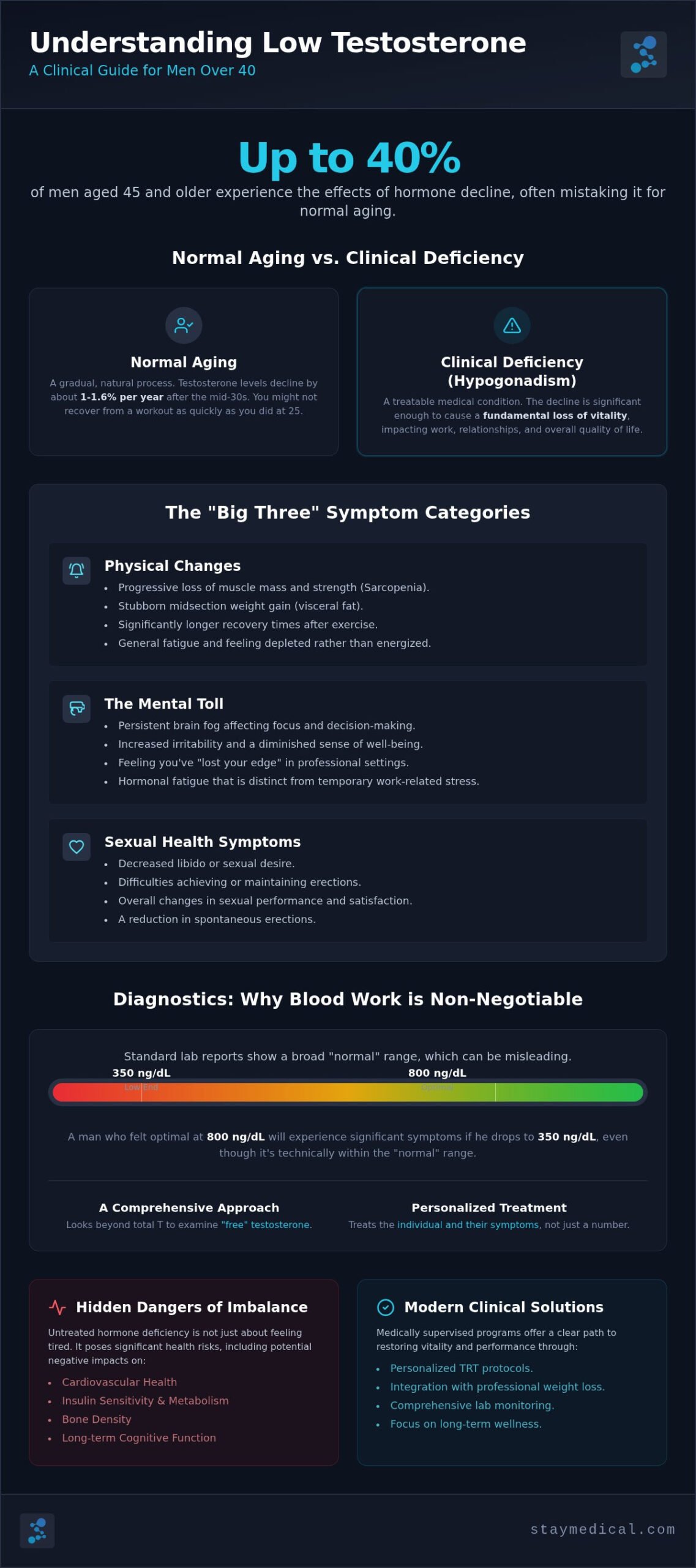
What if the “slowing down” you’ve attributed to a demanding career and a busy home life isn’t actually an inevitable part of the aging process? Clinical data shows that up to 40% of men aged 45 and older experience the effects of hormone decline, yet many dismiss their fatigue as a simple byproduct of time. Identifying low testosterone symptoms men over 40 is the first step toward reclaiming a version of yourself that feels both familiar and revitalized. It’s common to assume that waking up tired or losing muscle definition is just what happens after four decades. You’ve likely tried more sleep or a stricter gym routine, only to find the results don’t match your effort.
This guide will help you distinguish between normal biological aging and a treatable medical deficiency, offering a clear path to restoring your vitality through modern medical intervention in Brickell. We will explore the subtle signs of hormone decline, from persistent brain fog to metabolic changes, and explain how a medically supervised diagnosis can return you to peak performance. Your health deserves an intentional, clinical approach that looks beyond the surface of “getting older” to find real solutions.
Key Takeaways
- Distinguish between the natural 1% annual hormonal decline and clinical hypogonadism to better understand your body’s unique requirements.
- Recognize the specific low testosterone symptoms men over 40 frequently experience, ranging from unexplained fatigue and muscle loss to persistent brain fog.
- Learn about the significant health risks associated with untreated hormone deficiency, including potential impacts on cardiovascular health and insulin sensitivity.
- Understand why comprehensive laboratory testing is essential for an accurate diagnosis and why medical supervision outperforms over-the-counter supplements.
- See how personalized testosterone replacement therapy can be integrated with professional weight loss programs to optimize your vitality and long-term wellness.
Is It Just Aging? Defining Low Testosterone After 40
Entering your 40s often brings a subtle shift in how you experience daily life. While society tells us that losing a step is just part of the process, there’s a distinct line between biological maturity and a clinical deficiency. Research indicates that testosterone levels naturally decline by about 1.6% per year after a man’s mid-30s. For many, this isn’t just a slow fade; it is a drop that leads to a clinical definition of hypogonadism. This condition occurs when the body’s ability to produce sufficient hormones falls below what’s necessary for optimal physical and mental function.
The “tipping point” occurs when this gradual decline manifests as recognizable low testosterone symptoms men over 40. Healthy aging might mean you don’t recover from a high-intensity workout as fast as you did at 25. Clinical deficiency, however, means you struggle to find the motivation to even begin that workout. It’s the difference between a slight change in pace and a fundamental loss of vitality that impacts your professional performance and personal relationships.
The Threshold of Deficiency: What Numbers Actually Mean
Most lab reports provide a “normal range” that is incredibly broad, often spanning from 300 to 1,000 ng/dL. This range doesn’t account for individual baselines or lifestyle demands. A high-performing professional who functioned at 800 ng/dL in his 30s will feel the devastating effects of a drop to 350 ng/dL, even if a standard lab report marks that result as acceptable. At Stay Medical Clinic, we look beyond total testosterone to examine “free” testosterone, which is the bioavailable portion that actually performs the work in your cells. We prioritize treating the individual and their symptoms rather than just chasing a number on a page.
Why Men in Their 40s Are Most Vulnerable
Life in Brickell is fast-paced and demanding. High levels of career stress trigger cortisol, a hormone that can actively suppress your natural testosterone production. When you combine this with common middle-age sleep disruptions, like sleep apnea or chronic stress-induced insomnia, your body loses its primary window for hormone synthesis. Lifestyle factors unique to the Miami environment can further accelerate this decline. Recognizing testosterone replacement as a tool for health maintenance is essential for men who refuse to let their quality of life diminish. Understanding these low testosterone symptoms men over 40 allows you to take an intentional approach to your long-term wellness.
Recognizing the Big Three: Physical, Mental, and Sexual Symptoms
Identifying Low testosterone symptoms requires looking past the surface. While some changes are visible in the mirror, others, like bone density loss and shifting insulin sensitivity, occur deep within the body’s systems. These “hidden” symptoms create a synergy between physical decline and mental health, where one inevitably impacts the other. Recognizing these patterns is the first step toward reclaiming your quality of life. It isn’t just about one isolated issue; it’s about how these symptoms cluster together to change your daily experience.
Physical Changes: Muscle Loss and Stubborn Weight Gain
Many men in our community notice the emergence of the “Brickell belly,” a specific type of midsection weight gain that often resists traditional dieting. This isn’t always a matter of calories; it’s frequently a hormonal shift where low androgens signal the body to store visceral fat. Sarcopenia is the progressive loss of skeletal muscle mass and strength that becomes significantly more pronounced when testosterone isn’t available to support protein synthesis. You might also notice that your recovery time after a workout has doubled, leaving you feeling depleted rather than energized by exercise.
The Mental Toll: Brain Fog, Irritability, and Fatigue
Distinguishing between professional burnout and hormonal fatigue is critical for high-performing men. While a stressful week at the office is temporary, the brain fog associated with low testosterone is persistent, affecting your cognitive focus and ability to make sharp decisions. The common “grumpy old man” trope is often just a misunderstood symptom of low androgen levels, which can lead to increased irritability and a diminished sense of well-being. If you feel like you’ve lost your “edge,” it might be your biology, not your workload. For those who also experience significant mood changes, Norton Wellness provides psychiatric services that can complement your physical recovery. This mental exhaustion often persists even after a full night of rest.
Sexual Health: Libido and Performance Concerns
Conversations about sexual wellness should be normalized as part of a standard health routine. It’s important to understand the difference between erectile dysfunction, which is often a vascular issue, and a genuine loss of libido, which is a primary indicator of hormonal decline. Interestingly, sexual symptoms are often the last to manifest. By the time performance concerns arise, other low testosterone symptoms men over 40 have likely been present for some time. If you recognize these signs, exploring testosterone replacement in Brickell can provide the clarity you need.
Pre-Consultation Checklist
Before your first appointment, consider if you’ve experienced the following:
- Unexplained fatigue that persists despite adequate sleep
- A noticeable decrease in muscle tone or physical strength
- Difficulty maintaining focus during complex professional tasks
- Increased irritability or a general lack of motivation
- New or stubborn weight gain specifically around the midsection
The Hidden Dangers of Ignoring Hormonal Imbalance
Ignoring hormonal decline is often framed as a personal choice about performance or aesthetics. However, the reality is far more serious. When low testosterone symptoms men over 40 are left unaddressed, the impact ripples through every major system in the body. It isn’t just about feeling tired; it’s about the increased risk of chronic diseases that can shorten your lifespan and diminish your quality of life. Understanding the systemic nature of androgens is vital for diagnosing and treating low testosterone effectively.
Beyond the immediate shift in energy, chronic deficiency can lead to significant structural changes in the body. Men with long-term low levels are at a higher risk for osteoporosis, as testosterone is a key driver for maintaining bone mineral density. Additionally, your cognitive health and mood stability rely on a steady hormonal environment. Leaving these imbalances unchecked doesn’t just affect your present. It creates a vulnerable foundation for your future health.
While local expertise is vital, those interested in how these functional medicine principles are applied globally can find more information at emagene.life, which offers a precision guide on managing hormone imbalance.
Metabolic Syndrome and Testosterone
Testosterone plays a central role in how your body manages fuel. When levels drop, many men find themselves caught in a frustrating feedback loop. Low testosterone encourages the accumulation of visceral body fat, particularly around the organs. This fat, in turn, produces an enzyme called aromatase that converts remaining testosterone into estrogen, further depleting your levels. This cycle contributes to insulin resistance and a higher risk for Type 2 Diabetes. Integrating hormone optimization with a professional Stay Medical weight loss program can break this cycle and restore metabolic health.
Cardiovascular Health: A Critical Connection
The heart is a muscle, and like all muscles, it relies on hormonal support to function at its peak. Research has consistently shown a correlation between optimal testosterone levels and cardiovascular resilience. Maintaining these levels isn’t just about vitality; it’s a form of preventive Primary Care in Brickell that helps manage cholesterol and blood pressure. By addressing hormonal imbalances early, you’re investing in the long-term health of your heart. It’s a proactive step that ensures your internal systems are as strong as your professional drive.
Diagnostics and Beyond: Why Blood Work is Non-Negotiable
Identifying the various low testosterone symptoms men over 40 experience is a vital first step, but a clinical diagnosis cannot be based on intuition alone. Many men, feeling the weight of fatigue or a loss of focus, often reach for “natural boosters” found in retail stores. These over the counter supplements frequently rely on unverified claims and lack the rigorous scientific backing required to address a true medical deficiency. Relying on these products doesn’t just delay effective treatment; it overlooks the complex biological systems that regulate your hormones.
Accurate diagnostics require a precise, clinical approach. Because testosterone levels follow a diurnal rhythm, peaking in the early morning hours, we insist on morning blood draws to capture your highest natural baseline. A test taken in the late afternoon will often show an artificially low level, leading to potential misdiagnosis. Professional interpretation is essential here, as your provider must determine if your symptoms stem from primary hypogonadism or secondary factors like pituitary health or chronic stress.
What to Expect During Your Miami Lab Visit
At Stay Medical, we’ve designed our process to fit the schedules of high-performing professionals. The convenience of on-site laboratory testing at Stay Medical ensures that your diagnostics are handled with both speed and clinical precision right here in Brickell. A comprehensive hormone panel goes far beyond just checking your “T” levels. We monitor critical safety markers such as PSA for prostate health and Hematocrit to track blood viscosity, alongside LH and FSH to understand the origin of the decline. Because testosterone levels are sensitive to daily variables like sleep quality and acute stress, a single lab result is rarely sufficient to establish a definitive clinical diagnosis.
The Difference Between DIY and Clinical Oversight
Choosing a medically supervised path over DIY alternatives is a choice for long-term safety and efficacy. Unregulated retail boosters often contain fillers or ingredients that can interfere with other medications or provide no measurable benefit at all. Clinical oversight ensures that your therapy is balanced, ethical, and tailored to your specific physiology. This intentional partnership allows for ongoing adjustments based on real-time data, ensuring you achieve peak vitality without compromising your health. For those interested in the deeper mechanisms of how these treatments work, exploring The Science of Hormonal Balance can provide further clarity on the clinical process.
Book your professional hormone diagnostic today
Modern TRT Solutions at Stay Medical Clinic in Brickell
At Stay Medical Clinic, we believe that restoring your hormonal balance is an act of intentional self-care rather than a mere clinical transaction. For the high-performing individual, managing low testosterone symptoms men over 40 requires a partner who understands the nuances of a demanding career and an active personal life. Our clinic offers a boutique environment where medical authority meets a welcoming, patient-centered atmosphere. We don’t just prescribe; we collaborate with you to ensure your treatment aligns with your long-term wellness goals and personal values.
We provide several administration routes to suit your specific lifestyle and clinical requirements. These options include precise weekly injections, convenient topical gels, and long-acting pellets that provide consistent hormone release over several months. Each method has its unique benefits, and our team helps you select the one that offers the best balance of efficacy and convenience. This personalized selection is a cornerstone of our commitment to transparency and professional excellence, ensuring that your therapy never feels like a one-size-fits-all solution.
Personalized Treatment Plans for Busy Professionals
Living in Brickell means your time is your most valuable asset. Our approach is designed to fit seamlessly into a high-performance lifestyle, offering efficient diagnostics and streamlined follow-up care. We prioritize ongoing monitoring to optimize your levels and minimize potential side effects, ensuring your therapy remains both safe and effective over the long term. This trust-based relationship allows us to act as a dedicated guide on your journey back to peak vitality. You aren’t just a clinical case to us; you’re a partner in a sophisticated health journey.
A Holistic Path to Vitality
True wellness often requires more than a single intervention. By combining testosterone replacement with IM vitamin injections, we help you address immediate energy needs while your hormones stabilize. This holistic strategy is particularly effective for those facing weight loss resistance, a common hurdle when low testosterone symptoms men over 40 are present. When your hormones are balanced, your body finally responds to diet and exercise, making sustainable results achievable. We address the root cause of metabolic slowdown, turning a frustrating struggle into a successful transformation of your physical health.
Reclaiming Your Edge and Vitality
Recognizing that your current symptoms are often a treatable medical condition rather than an inevitable part of aging is a powerful realization. We’ve explored how a clinical deficiency impacts everything from your cardiovascular resilience to your daily cognitive focus. By identifying the specific low testosterone symptoms men over 40 face, you move from a state of frustration to a structured, medical solution. At Stay Medical Clinic, our experienced healthcare professionals in Brickell prioritize your personal success through comprehensive on-site laboratory testing and personalized treatment plans.
We offer a sophisticated integration of TRT and weight loss programs designed specifically for the high-performing individual. You don’t have to settle for a diminished version of yourself. Restoring your hormonal balance is an investment in your future longevity and your daily quality of life. Our team is ready to partner with you to ensure your health journey is transparent, safe, and deeply intentional.
It’s time to move toward a future where you feel as capable and energized as you did a decade ago. We look forward to being your dedicated partner in this journey.
Frequently Asked Questions
How do I know if my fatigue is Low T or just stress?
Fatigue from stress is usually tied to specific events or workloads, but hormonal fatigue is a persistent physical state. Even with eight hours of sleep, you might still feel drained. This exhaustion often coincides with other low testosterone symptoms men over 40, such as a lack of motivation or decreased physical stamina. A clinical evaluation helps distinguish if your exhaustion is a lifestyle issue or a biological deficiency.
Is testosterone replacement therapy safe for men over 40?
TRT is safe for men over 40 when administered under strict medical supervision. Recent 2026 clinical guidelines have broadened the accessibility of therapy, acknowledging its efficacy for age-related decline. Safety is maintained through regular blood work that monitors prostate health and red blood cell counts. This proactive approach ensures that the benefits of therapy, such as improved bone density and mood, are achieved without compromising your long-term health.
How long does it take to see results from TRT?
Most men notice improvements in mood, mental clarity, and libido within the first three to six weeks of treatment. Physical changes, such as increased muscle mass and a reduction in body fat, typically become more apparent between the three and six month marks. It’s important to remember that hormone optimization is a gradual process. Your body needs time to adjust and rebuild its metabolic systems for sustainable, long-term vitality.
Will insurance cover my testosterone blood work in Miami?
Many insurance providers in Miami cover laboratory testing if a medical necessity is established. This usually requires two separate morning blood tests showing total testosterone levels below 300 ng/dL along with documented clinical symptoms. While coverage for the actual therapy depends on your specific plan, diagnostic blood work is often a standard covered benefit. We recommend verifying your specific outpatient benefits with your insurance provider before your visit.
Can low testosterone cause weight gain around the midsection?
Low testosterone is a primary driver of visceral fat accumulation, specifically around the midsection. When androgen levels drop, your body’s ability to metabolize fat decreases, leading to what many call the “Brickell belly.” This weight gain is often resistant to diet and exercise alone because the hormonal signal to burn fat is missing. This metabolic shift is a hallmark of low testosterone symptoms men over 40, where restoring balance helps shift your system back toward building muscle.
What is the best way to test for low testosterone in Brickell?
The most reliable method is a comprehensive blood panel conducted during a morning visit to a clinical facility. Testing between 7:00 AM and 10:00 AM is essential because that’s when your natural levels peak. At Stay Medical, we provide on-site laboratory testing for rapid and accurate results. This professional environment ensures your samples are handled correctly and interpreted by experts who understand the nuances of male hormonal health and performance.
Are there natural ways to increase testosterone before trying TRT?
Optimizing your lifestyle can provide a modest boost to your natural hormone production. Prioritizing seven to nine hours of quality sleep, engaging in consistent resistance training, and reducing processed sugar intake are all beneficial steps. However, for men with a clinical deficiency, these adjustments often aren’t enough to reach optimal levels. In these cases, medical intervention is the most effective path to fully resolving persistent symptoms and restoring your body’s natural function.
Disclaimer
This content is for informational purposes only and does not replace evaluation, diagnosis, or treatment by a medical professional. Always consult a qualified healthcare provider for personalized care.