

Medical Weight Loss: A Comprehensive 2026 Guide
July 30, 2026
Choosing a Primary Care Doctor in Miami: A Comprehensive 2026 Guide
August 1, 2026
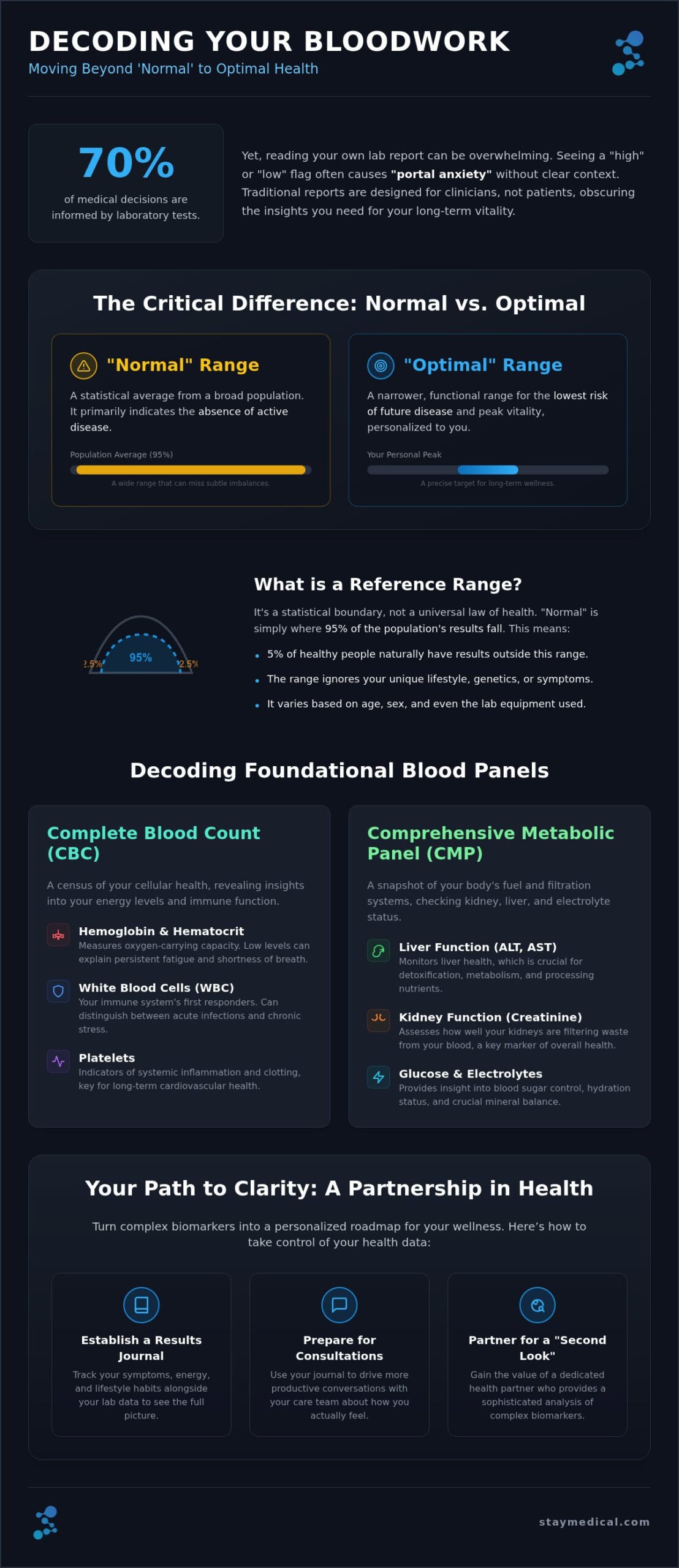
What if the “normal” reference range on your lab report is actually the reason you still feel sluggish despite a clean bill of health? It’s a common experience to open a digital patient portal, see a flagged result, and feel a wave of anxiety. Most patients find that interpreting blood work results feels like reading a foreign language while their health hangs in the balance. You’re not alone in feeling that medical jargon often obscures the very health insights you’re seeking. Statistics show that laboratory tests inform an estimated 70% of medical decisions, yet the reports themselves are rarely designed for the person they matter to most: you.
We believe you deserve a more intentional, sophisticated partnership with your health data. At Stay Medical Clinic, we turn complex biomarkers into a personalized roadmap for your wellness. This guide simplifies your laboratory experience by explaining why a “normal” clinical value isn’t always “optimal” for your specific lifestyle. We will walk through the foundational panels, help you prepare for your next consultation, and show you how to use your 2026 reports to drive more productive, confident conversations with your care team. We’re moving beyond the clinical surface to help you understand exactly what your body is communicating about your long-term vitality.
Key Takeaways
- Discover why reference ranges are based on broad population averages and how to look past them to find your personal baseline.
- Gain clarity on common panels like the CBC and CMP to understand how your immune system, liver, and kidneys are functioning at a cellular level.
- Learn the critical distinction between “normal” and “optimal” ranges when interpreting blood work results to move from the absence of disease to peak vitality.
- Establish a Results Journal to track your symptoms alongside your data, ensuring your next consultation is focused on how you actually feel.
- Understand the value of a dedicated health partner who provides on-site testing and a sophisticated “second look” at complex biomarkers.
Understanding the Basics of Laboratory Testing and Results
Think of your blood as a dynamic, living data stream that carries vital information to every corner of your body. When we perform laboratory testing, we are taking a high-resolution snapshot of this stream to measure specific concentrations of cells, chemicals, and proteins. This comprehensive overview of blood tests illustrates how these markers serve as the foundation for modern diagnostics. However, a single data point rarely tells the whole story. To be truly effective, interpreting blood work results requires looking at these numbers through the lens of your unique medical history, current symptoms, and a physical examination. At Stay Medical Clinic, we view these reports as the beginning of a conversation rather than a final verdict.
It is common to experience “portal anxiety” when you receive a notification that your results are ready. Seeing a value flagged as “high” or “low” in your digital chart can feel alarming. It is helpful to remember that these flags are automated triggers designed to catch the attention of a clinician; they don’t necessarily indicate a medical emergency. Many factors, including your hydration levels or even the time of day the sample was taken, can cause a result to sit slightly outside the expected window. Our goal is to provide the reassurance and clarity you need to understand which flags require action and which are simply part of your body’s natural fluctuations.
What is a Reference Range?
A reference range is not a universal law of health, but rather a statistical boundary. Labs determine these “normal” values by testing a large group of people who are presumed to be healthy and plotting their results on a distribution curve. Technically, a reference range is defined as the interval into which 95% of a healthy population’s test results fall based on a statistical bell curve. This means that 5% of perfectly healthy individuals will naturally fall outside the range. These boundaries also shift depending on your age, sex, and even the specific equipment used by the facility. This is why we prioritize high-quality laboratory testing in Miami at Stay Medical Clinic to ensure the most consistent and reliable data for our patients.
Common Flags: High, Low, and Inconclusive
When you see a flag on your report, it’s essential to distinguish between a “critical value” and a mild elevation. A critical value suggests a situation that needs immediate medical attention, while a mild elevation often requires monitoring or lifestyle adjustments. Some markers only gain significance when they are viewed in relation to others. For example, a single mineral or enzyme level might be interpreted differently depending on your other metabolic markers. Lifestyle factors also play a massive role; a vigorous workout the evening before your blood draw can temporarily spike enzymes or kidney markers. We help you filter out this “noise” to focus on the trends that actually impact your long-term vitality.
Decoding Common Blood Panels: CBC, CMP, and Lipids
When you visit us for a primary care visit in Brickell, we typically begin with three foundational panels. These tests serve as the cornerstone of interpreting blood work results because they provide a panoramic view of your internal environment. While a single marker might offer a hint, these three panels together speak with clarity about your systemic health. For additional context on specific terminology, this guide on How to Understand Your Lab Results from MedlinePlus is an excellent resource for deeper study.
The CBC: Your Immune and Energy Baseline
The Complete Blood Count (CBC) is essentially a census of your cellular health. We look closely at Hemoglobin and Hematocrit to understand your oxygen-carrying capacity. Low levels in these markers often explain that persistent midday fatigue or shortness of breath. White Blood Cell (WBC) differentials go deeper, helping us distinguish between acute infections and the chronic stress that many high-performing professionals face in their daily lives. We also monitor platelets; these are silent indicators of systemic inflammation or clotting efficiency that can impact your long-term cardiovascular resilience.
The CMP: Fuel and Filtration
The Comprehensive Metabolic Panel (CMP) focuses on how your body processes fuel and filters waste. Glucose and A1c are the primary markers we use to define your metabolic health and identify early signs of insulin resistance. For our patients on high-protein diets or intense supplement regimens, we pay close attention to Creatinine and Glomerular Filtration Rate (GFR). These markers ensure your kidney function is resilient enough to handle your lifestyle demands. Liver enzymes like ALT and AST provide a clear window into how your lifestyle, or even your daily medications, are impacting your organ health over time.
The final piece of this foundational trio is the lipid panel. We move beyond the “total cholesterol” number to analyze the nuances of your lipids. By looking at the balance between HDL, LDL, and triglycerides, we can assess cardiovascular risk with much higher precision than a basic screening allows. Understanding these ratios helps us move away from generic advice and toward a strategy that fits your unique biology. If you’re looking for a partner to help you make sense of these numbers, our team is ready to provide a comprehensive laboratory testing experience that prioritizes your peace of mind.
Why ‘Normal’ Isn’t Always Optimal: The Science of Wellness
Most traditional healthcare models are designed to identify active disease, not necessarily to foster peak performance. When you receive your lab report, the “normal” range you see is often a broad statistical average that includes individuals of varying health statuses. For Miami’s active population, simply being “within range” is rarely the end goal. True wellness requires a more nuanced approach to interpreting blood work results, one that focuses on narrow “optimal” windows where your body functions at its absolute best. At Stay Medical Clinic, we look for the subtle shifts that occur before a value becomes a clinical diagnosis, allowing us to intervene early and preserve your vitality.
Consider the difference between survival and thriving. While the foundational tests like the Complete Blood Count (CBC) might show that you aren’t anemic, they don’t necessarily tell us if your iron stores are high enough to support the cognitive demands of a high-stakes career in Brickell. By shifting our perspective from the absence of illness to the presence of health, we can turn your data into a proactive strategy for longevity. This philosophy is especially critical when we examine the delicate balance of your endocrine and nutritional systems, where “low-normal” often feels like total exhaustion.
Hormonal Health and Vitality
Hormonal balance is a primary driver of how you feel, think, and perform every day. A common frustration for men occurs when their Total Testosterone comes back at the low end of the normal range, perhaps around 300 ng/dL. While a lab might not flag this, a man at this level may experience significant fatigue, low libido, and loss of muscle mass. We prioritize Free Testosterone levels, which represent the actual hormone available for your tissues to use. Similarly, your Thyroid Stimulating Hormone (TSH) might sit at 4.0, which is technically normal, yet it can leave you feeling perpetually sluggish. At Stay Medical Clinic, we analyze these markers to determine if testosterone replacement or other hormonal optimizations are necessary to restore your edge.
Nutrient Levels for Peak Performance
Nutritional deficiencies are often the hidden culprits behind brain fog and diminished physical stamina. Vitamins like B12 and D3 have massive reference ranges; however, research suggests that the lower end of these ranges is often insufficient for maintaining high energy levels and robust immune function. We also look closely at Ferritin, your body’s iron storage. Even if your hemoglobin is fine, low ferritin can cause profound lethargy. When these gaps are identified, targeted interventions like IV Therapy can quickly correct deficiencies and bypass the digestive limitations of oral supplements. This precision ensures you aren’t just avoiding deficiency, but are actively fueled for excellence.
Next Steps: How to Prepare for Your Lab Review Consultation
Receiving your report is only the first half of the journey. The true value of interpreting blood work results lies in the clinical conversation that follows. We view our patients as active partners in their own wellness, which is why we encourage you to arrive at your consultation prepared to dig deeper into the data. Instead of simply accepting a summary, always request a copy of your full laboratory report. Having the raw numbers allows you to see exactly where you sit within a range and facilitates a more transparent, sophisticated discussion about your health trajectory at our blood work clinic in Brickell.
One of the most effective tools you can bring to your appointment is a “Results Journal.” In this journal, you should document how you’ve been feeling physically and mentally over the last month. When we correlate your subjective experience with your objective biomarkers, we can identify patterns that a computer-generated flag might miss. We also prioritize “Trend Analysis,” which involves comparing your current labs to your results from previous years. Seeing a marker move from the top of a range to the bottom over 24 months tells us much more about your vitality than a single snapshot ever could.
5 Questions to Ask Your Doctor
To ensure your consultation is productive and outcome-focused, consider asking these five targeted questions:
- Are my levels optimal for my age and lifestyle, or are they just within the clinical range?
- How do these specific results explain the symptoms, such as fatigue or brain fog, that I’ve been feeling?
- What specific lifestyle or dietary changes can I implement to move these markers in the next 90 days?
- Do we need to run more specific follow-up tests based on the flags we’re seeing today?
- Are there any supplements I’m currently taking that might be masking a deeper issue or skewing these results?
Organizing Your Medical History
Accuracy in testing starts long before the needle reaches your arm. When preparing for your review, create a comprehensive list of all supplements and medications you currently take, as certain vitamins like Biotin can interfere with thyroid and hormone markers. It’s also helpful to note if you’ve had a recent illness or a period of high stress, as these events can temporarily skew inflammatory markers like CRP. Fasting is critical for lipid and glucose accuracy because it ensures your body is in a steady state, preventing temporary spikes from your last meal from skewing the data. By providing this context, you help us filter out the “noise” and focus on your true biological baseline.
Schedule your comprehensive lab review today
Personalized Diagnostic Care at Stay Medical in Brickell
At Stay Medical, we recognize that your health is far more than a collection of data points on a screen. While many national labs offer automated results without clinician interaction, our approach to interpreting blood work results is deeply personal and clinician-led. We believe that a laboratory report should be the catalyst for a transformation, not just a document for your records. By providing laboratory testing in Miami directly within our Brickell clinic, we remove the friction between discovery and action, ensuring you receive the high-end, boutique experience you deserve.
Our philosophy is built on the understanding that every patient’s biology is unique. We don’t just treat numbers; we treat the person in front of us. This means your lab review isn’t a rushed formality, but a sophisticated deep dive into your metabolic, hormonal, and nutritional health. We help you connect the dots between a slightly elevated marker and that persistent feeling of fatigue or brain fog you’ve been experiencing. This level of intentionality is why we are the preferred partner for those who refuse to settle for “average” health.
Why Brickell Professionals Choose Stay Medical
Life in Brickell moves at a rapid pace, and your healthcare should be efficient enough to match it without sacrificing quality. Our clinic is designed for the modern professional who values both their time and their long-term vitality. We’ve created a streamlined environment where you can complete your blood draw and your clinical consultation in one convenient location. Beyond simple diagnostics, you gain direct access to a suite of follow-up treatments, including testosterone replacement, IV therapy, and peptides. This integrated model ensures that once we identify an opportunity for optimization, your path to improvement begins immediately.
The Stay Medical Difference
The true Stay Medical difference lies in our commitment to transparency and trust-based relationships. We offer comprehensive panels that go significantly deeper than the standard annual physicals provided by traditional primary care offices. For patients looking to transform their body composition, we seamlessly integrate these detailed labs into our Medically Supervised Weight Loss Program. This ensures that your weight loss journey is supported by real-time data on your metabolic health and insulin sensitivity, leading to more sustainable and ethical outcomes.
Your journey toward peak performance starts with a clear understanding of your current baseline. We invite you to experience a more sophisticated, human-centric approach to diagnostics. You can book your comprehensive blood panel and expert consultation today through our patient portal or by contacting our Brickell office directly. Let’s turn your laboratory data into the roadmap for your most vibrant year yet.
Your Roadmap to Lasting Vitality
Your laboratory report is a powerful tool, but it only becomes actionable when you look beyond the surface. We’ve seen how the distinction between being clinically “normal” and biologically “optimal” can change the way you approach your daily energy and long-term health. By focusing on trend analysis and correlating your data with how you actually feel, you turn the complex process of interpreting blood work results into a clear, personalized roadmap for success.
At Stay Medical, we’re dedicated to providing the clarity you deserve through a 5-star patient experience. Our medical team specializes in optimization, offering on-site lab testing in the heart of Brickell to ensure your journey is as efficient as it is insightful. We don’t just hand you a report; we partner with you to build a strategy rooted in moral integrity and clinical excellence.
You have the power to move from uncertainty to total confidence in your health. We look forward to helping you unlock the full potential of your unique biology and helping you feel seen as an individual rather than just a clinical case.
Frequently Asked Questions
How long does it typically take to get blood work results back?
Standard panels like the CBC or CMP typically return within 24 to 72 hours. More specialized tests, such as those for hormone optimization or complex biomarkers, may require up to a week for full analysis. We prioritize timely communication at our clinic so you can begin your wellness plan without unnecessary delays.
Can exercise or stress affect my blood test results?
Yes, physical exertion and emotional stress can significantly alter your data. Intense exercise within 24 hours of a draw often elevates liver enzymes or muscle breakdown markers like creatinine. Stress triggers a release of cortisol and can temporarily raise blood glucose, which is why we recommend a calm, rested state for the most accurate snapshot of your health.
What should I do if my results are ‘high’ but I feel perfectly fine?
A “high” result doesn’t always indicate a medical crisis, especially if you’re asymptomatic. It often means your value sits outside the statistical average, which we discussed earlier as the 95% confidence interval. When interpreting blood work results, we look for clinical significance; a mild elevation might simply be your personal baseline or a signal that we need to move from “normal” to “optimal” levels.
Is it necessary to fast before every type of blood work?
Fasting isn’t required for every test, but it’s vital for metabolic and lipid panels. To ensure accurate readings of your blood sugar and cholesterol, you should avoid food and drinks other than water for 8 to 12 hours. If you’re only checking hormone levels or your blood count, fasting is usually unnecessary, though we’ll always provide specific instructions before your visit.
What is the difference between a BMP and a CMP?
A Basic Metabolic Panel (BMP) focuses on your electrolytes, blood sugar, and kidney function. A Comprehensive Metabolic Panel (CMP) includes all of those markers plus several liver function tests. We typically prefer the CMP for our Brickell patients because it provides a more holistic view of your body’s filtration and metabolic efficiency.
How often should I have a comprehensive blood panel done?
Most healthy adults should have a comprehensive panel at least once a year during an annual physical. However, if you’re participating in a weight loss program or receiving testosterone replacement, we may recommend testing every three to six months. This frequency allows us to monitor your progress and make precise adjustments to your treatment plan.
Can I interpret my own blood work using online tools?
While online tools can define technical terms, they lack the personal context necessary for safely interpreting blood work results. AI and search engines don’t know your medical history, your current symptoms, or your specific lifestyle goals. A clinical partner ensures that your data is viewed as a piece of a larger puzzle rather than an isolated number; for instance, those seeking specialist diagnostic care in Germany can check out Privatpraxis München.
Similarly, for those traveling in Southeast Asia who require help with hospital diagnostics and medical coordination, check out X–med service for professional accompaniment in Phuket.
Why did my lab results come back flagged as ‘inconclusive’?
An inconclusive result often means the lab couldn’t clearly categorize the sample, which can happen for several technical reasons. It might be due to a specimen that was too small, a slight degradation during transport, or a value that sits exactly on a borderline. In these cases, we typically recommend a retest to ensure we’re making decisions based on the most reliable data possible.
Disclaimer
This content is for informational purposes only and does not replace evaluation, diagnosis, or treatment by a medical professional. Always consult a qualified healthcare provider for personalized care.