
Tirzepatide vs. Semaglutide for PCOS Weight Loss: A Clinical Comparison for 2026
August 25, 2026
Is It Cheaper to Get Semaglutide From a Local Clinic? A 2026 Price & Value Guide
August 27, 2026
What if the most effective way to maximize your results wasn’t simply eating less, but eating with a new, intentional precision? As we move through 2026, medications like semaglutide and the latest oral GLP-1 arrivals have changed the landscape of weight management, yet they often leave patients wondering exactly what to eat while on GLP-1 medication to avoid digestive discomfort. You might feel the frustration of a suppressed appetite clashing with the fear of muscle wasting or the physical toll of persistent nausea. It’s a delicate balance to maintain, and you shouldn’t have to navigate these clinical shifts without a dedicated partner.
We believe that your nutritional strategy should be as sophisticated as the medication itself. You deserve a path that prioritizes your long-term vitality, ensuring that every meal supports lean muscle mass and metabolic integrity. In this guide, we’ll share our protein-first framework and a curated list of side-effect-soothing foods designed to keep you feeling nourished and energized. We’ll also provide professional guidance on meal timing and nutrient density, giving you the clarity needed to achieve sustainable weight loss without the shadow of fatigue.
Key Takeaways
- Understand the clinical science behind delayed gastric emptying and how GLP-1 medications effectively silence food noise to reset your relationship with eating.
- Learn the essential “Protein First” strategy designed to protect your lean muscle mass and prevent metabolic slowing during periods of rapid weight loss.
- Discover exactly what to eat while on GLP-1 medication to soothe nausea and identify the specific culinary triggers that often lead to digestive discomfort.
- Master the 30-minute rule for hydration and the benefits of a grazing schedule to better manage a suppressed appetite and maintain steady energy levels.
- Explore why professional metabolic monitoring and regular laboratory testing are vital for personalizing your nutritional plan and ensuring long-term success.
How GLP-1 Medications Change Your Relationship with Food
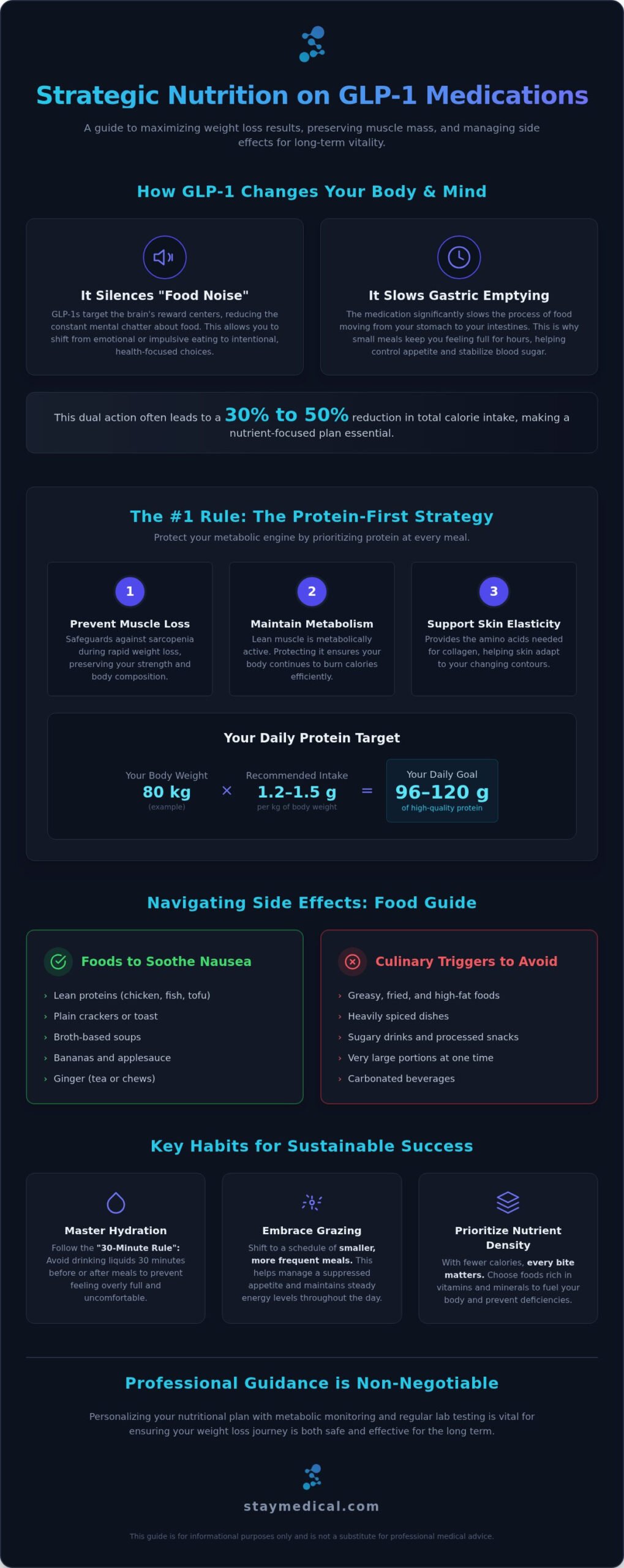
GLP-1 medications like semaglutide and tirzepatide don’t just change your weight; they transform your internal dialogue. Many patients describe the sudden absence of “food noise,” that constant mental chatter about the next meal or the urge to snack. By targeting the brain’s reward centers, GLP-1 receptor agonists allow you to make choices based on health rather than impulse. It’s a profound psychological shift that turns eating from an emotional response into an intentional act of self-care.
When your total caloric intake drops by 30% to 50%, the margin for error disappears. You’re no longer just dieting in the traditional sense; you’re retraining your metabolism. This significant reduction makes knowing what to eat while on GLP-1 medication the most critical factor in your long-term success. Without a structured plan, you risk a phenomenon known as “malnutrition of the obese,” where the scale moves down but your body lacks the vital vitamins and minerals it needs to function at its peak.
To better understand this concept, watch this helpful video:
Understanding Gastric Emptying
Gastric emptying is the physiological process of moving food from your stomach into the small intestine for absorption. GLP-1 medications significantly slow this process, which is why a small meal can leave you feeling satisfied for hours. While this helps with weight loss, it means your digestive system can no longer comfortably process large, heavy portions without causing discomfort. This slower pace also leads to remarkable blood sugar stability, as glucose enters your bloodstream in a steady, controlled stream rather than a sudden surge after eating.
The Clinical Importance of Nutrient Density
Choosing what to eat while on GLP-1 medication becomes a strategic exercise in quality over quantity. Nutrient density refers to the concentration of essential vitamins, minerals, and phytonutrients relative to the calorie count of a food. On a standard diet, “empty calories” from processed snacks are a setback; on a GLP-1 regimen, they’re a metabolic liability. We use Stay Medical’s lab testing to monitor your micronutrient levels in real time. This allows us to identify early gaps before they manifest as hair thinning, brittle nails, or profound fatigue, ensuring your journey is as healthy as it is effective.
The Protein-First Strategy: Protecting Lean Muscle Mass
Rapid weight loss is a significant achievement, but it often carries a hidden biological cost. Sarcopenia, or the involuntary loss of lean muscle mass, occurs when the body begins consuming its own tissue for energy during a deep calorie deficit. This is perhaps the most critical risk for those deciding what to eat while on GLP-1 medication. Preserving your muscle isn’t merely a matter of aesthetics. It’s about safeguarding your metabolic engine and ensuring your body remains resilient as you transform.
To counter this risk, we advocate for the “Protein First” rule. This framework requires you to structure your plate so that lean protein is the first thing you consume at every sitting. Because GLP-1 medications trigger satiety signals quickly, eating your protein before fiber or complex carbohydrates ensures you hit your targets before you feel too full to continue. Current clinical recommendations for 2026 suggest a target of 1.2 to 1.5 grams of protein per kilogram of body weight to maintain muscle integrity. For an individual weighing 80 kilograms, this means prioritizing roughly 96 to 120 grams of protein throughout the day.
This strategy also serves as a proactive defense against the “Ozempic face” phenomenon. Skin elasticity depends heavily on the presence of collagen and elastin, both of which are built from amino acids. When you prioritize high-quality protein, you’re providing your skin with the structural resources it needs to adapt to your changing facial contours. If you’re feeling overwhelmed by these calculations, our weight loss program offers the precision and support needed to take the guesswork out of your journey.
Top Lean Protein Sources for GLP-1 Users
Digestibility is paramount when your gastric emptying is slowed. We recommend prioritizing “soft” proteins that are gentle on the digestive tract, such as white fish, silken tofu, and low-sugar Greek yogurt. Living in Miami offers a unique advantage: access to fresh, local seafood like snapper or grouper, which provides lean, omega-rich nutrients without the heaviness of red meat. On days when your appetite is particularly suppressed, high-quality whey or plant-based protein shakes can bridge the gap without making you feel overly burdened.
Supplementing with Amino Acids
In some cases, whole foods alone aren’t enough to meet the body’s demands during rapid weight loss. Branched-chain amino acids (BCAAs), specifically leucine, play a vital role in signaling muscle protein synthesis. We often integrate IM injections into our patients’ routines to support energy levels and metabolic health during these low-calorie phases. Additionally, supplementing with collagen peptides can further support connective tissue health, helping to maintain skin firmness and joint integrity as your body composition shifts.
Navigating Side Effects: What to Eat and What to Avoid
While the metabolic benefits of GLP-1 therapy are profound, the transition period can be physically demanding if your diet remains unchanged. Many patients encounter gastrointestinal hurdles that can overshadow their progress. Understanding exactly what to eat while on GLP-1 medication is the most effective way to mitigate these symptoms and maintain your quality of life. Nausea, bloating, and indigestion are rarely random; they are typically the body’s response to foods that clash with your new digestive pace.
Fried, spicy, and ultra-processed foods are the primary triggers for discomfort. Because your stomach now empties at a much slower rate, heavy fats and complex oils linger far longer than they used to, often leading to acid reflux or a persistent feeling of heaviness. Fiber also requires a nuanced approach. While essential for regularity, an abrupt increase in high-fiber cruciferous vegetables like cauliflower or cabbage can lead to intense bloating and gas. The key is a gradual introduction of soluble fiber, which is gentler on a system that is moving more deliberately.
One specific side effect many patients find distressing is the “sulfur burp” phenomenon. This occurs when food remains in the stomach long enough to begin a fermentation process. Reducing your intake of high-sulfur foods, such as heavy red meats or excessive garlic, can provide immediate relief. To soothe an active upset stomach, we recommend small-volume eating and natural aromatics like ginger or peppermint tea. If you find that nausea is hindering your ability to stay hydrated, our IV therapy options in Brickell provide a direct route to replenishment without taxing your digestive tract.
The ‘Avoid’ List: Foods that Trigger Nausea
Certain items should be temporarily sidelined to ensure your comfort. Heavy fats, including butter and lard, are difficult for a slowed digestive system to break down efficiently. Carbonated beverages are another common culprit. The gas from these drinks expands in a stomach that already feels full, leading to pressure and early satiety. Additionally, refined sugars can cause rapid fluid shifts in the gut. This sometimes results in “dumping-like” symptoms, such as sudden dizziness, sweating, or heart palpitations shortly after consumption.
Smart Swaps for Miami Dining
Navigating the vibrant culinary scene in Brickell requires a strategic eye. When dining out, prioritize lean, fresh preparations that celebrate quality over quantity. Choosing a fresh snapper ceviche or a tuna tartare is a far better choice than fried appetizers or heavy empanadas. Opt for grilled proteins paired with steamed greens rather than dishes swimming in cream-based sauces. Be particularly mindful of alcohol. GLP-1 medications can change how your body processes spirits, often making a single drink feel significantly more potent and potentially increasing the risk of next-day nausea.
Meal Planning and Hydration Habits for GLP-1 Success
Adapting your daily routine is just as important as selecting the right ingredients. When your digestion slows down, the traditional concept of three square meals often becomes a source of physical stress. Instead, we recommend transitioning to a grazing model, where you consume five to six small, nutrient-dense snacks throughout the day. This approach prevents the overwhelming fullness that can lead to nausea while ensuring you maintain a steady supply of fuel. Knowing what to eat while on GLP-1 medication is only half the battle; how you time those nutrients determines how you feel between meals.
A critical habit to adopt is the 30-minute rule. This involves separating your liquid intake from your solid food meals by at least half an hour. When you drink water or other beverages during a meal, you’re competing for very limited real estate in your stomach. This can lead to premature satiety, preventing you from finishing your essential protein, or it can cause painful pressure as the stomach struggles to accommodate both. By drinking between meals, you ensure your body has the space it needs for solid nutrition.
Dehydration is a subtle but significant risk on GLP-1 therapy. These medications can occasionally suppress your thirst cues, and when combined with a lower overall food intake, you lose the hydration typically found in fruits and vegetables. Chronic dehydration puts unnecessary strain on your kidneys and can exacerbate feelings of fatigue. Strategic fiber intake is also vital. You want enough to support digestion, but not so much that it sits heavily in the gut; we suggest focusing on cooked vegetables which are easier to break down than raw roughage.
A Sample Daily Meal Structure
Your morning should begin with a protein-focused start to set the metabolic tone; think of a small bowl of Greek yogurt or a single soft-boiled egg. For your mid-day fuel, choose light, nutrient-dense salads topped with a lean protein like grilled shrimp or tofu. In the evening, prioritize small, easily digestible portions, such as poached white fish with steamed zucchini, to prevent nighttime reflux and ensure a restful sleep.
Hydration and Electrolytes in the Miami Heat
In the intense Miami climate, water alone often isn’t enough to maintain balance when your calorie intake is restricted. You need electrolytes like magnesium, potassium, and sodium to keep your cellular functions running smoothly. It is essential to track your daily fluid intake with a target of 80 to 100 ounces to protect your metabolic health. For those struggling to meet these goals orally, IV therapy in Brickell offers a highly effective way to correct chronic dehydration and replenish vital vitamins directly into your system.
Replenish your hydration and electrolytes in Brickell
Integrating Nutrition with Medical Supervision at Stay Medical
Many individuals attempt a “do-it-yourself” approach to weight loss, but this often leads to frustrating plateaus and significant muscle loss. Without clinical oversight, it’s difficult to know if your body is receiving the fuel it needs or if it’s simply starving. At Stay Medical, we view nutrition as a core pillar of health, not just a side effect of a smaller appetite. Our approach combines the power of semaglutide and tirzepatide with continuous metabolic monitoring. This ensures your weight loss is safe, intentional, and focused on long-term well-being rather than just a number on a scale.
Deciding what to eat while on GLP-1 medication shouldn’t be a guessing game. When you partner with us in Brickell, we act as your dedicated guides, adjusting your plan as your body evolves. We focus on protecting your metabolic health so that your results are sustainable. This clinical partnership is what prevents the common pitfalls of rapid weight loss, such as chronic fatigue or a stalled metabolism. By monitoring your vitals and labs, we help you maintain the vitality needed to enjoy your new lifestyle.
The Role of Personalized Lab Work
Active weight loss changes your body’s chemistry in real time. We use regular on-site blood work to monitor levels of B12, Vitamin D, and Iron, catching potential deficiencies before they impact your energy or immune health. These clinical insights allow us to adjust your medication dosage and dietary recommendations with surgical precision. If your labs show a dip in certain micronutrients, we can proactively recommend specific food shifts or IV therapy to bridge the gap. For a comprehensive review of your health markers, you can join Stay Medical’s weight loss program for a personal consultation.
Beyond the Medication: Comprehensive Wellness
True wellness extends beyond a single prescription. By integrating Primary Care into our weight management framework, we manage your overall health markers, from blood pressure to cardiovascular health. This trust-based healthcare model ensures you’re seen as an individual with unique needs rather than just a clinical case. Our goal is to build a long-term exit strategy that empowers you to maintain your weight with confidence. Getting started with a medically supervised plan in Brickell is the first step toward a more vibrant, healthy future where your nutrition and medical care work in perfect harmony.
Your Path to Sustainable Vitality
Your journey with GLP-1 therapy is about more than just a number on a scale; it’s an opportunity to rebuild your relationship with nutrition from the ground up. By prioritizing high-quality protein and adopting a grazing model, you protect your lean muscle while keeping side effects at bay. Mastering what to eat while on GLP-1 medication is the foundation of a successful transformation, but you don’t have to navigate these choices alone.
Our Brickell clinic offers the expert medical oversight in Miami you need to succeed safely. We provide comprehensive lab testing to monitor your micronutrient levels and IV support to ensure you stay hydrated in the Florida heat. With personalized nutrition planning, we help you build a lifestyle that supports long-term weight maintenance and vibrant health. Every step of our process is designed to make you feel empowered and informed.
You have the tools and the technology to reach your goals. We’re here to ensure you feel seen and supported as you step into this next chapter of your wellness journey.
Frequently Asked Questions
Can I drink alcohol while taking GLP-1 medications like Semaglutide?
You can consume alcohol, but you should expect your tolerance and physical response to change significantly. GLP-1 medications can intensify the effects of spirits, and the delayed digestion means alcohol stays in your system longer. This often leads to increased nausea or a more severe hangover feeling the next day. We recommend limiting intake to a single serving and always pairing it with plenty of water to avoid dehydration.
What should I do if I have absolutely no appetite on my medication?
When your appetite is severely suppressed, you must shift your focus toward liquid nutrition and high-density snacks. Sipping on a high-quality protein shake or bone broth ensures you receive essential amino acids without feeling uncomfortably full. It’s vital to prioritize protein first at every sitting. Even a few bites of Greek yogurt can help maintain your metabolic health when you’re unsure what to eat while on GLP-1 medication.
Are there specific vitamins I should take while on a GLP-1 diet?
There isn’t a one-size-fits-all supplement list, but many patients benefit from B12, Vitamin D, and Iron. Because your overall food intake is lower, you’re at a higher risk for micronutrient gaps. We recommend regular Laboratory Testing to identify your specific needs rather than guessing. This data-driven approach allows us to personalize your regimen, ensuring you maintain your energy and immune function during your weight loss journey.
How much protein do I actually need to prevent muscle loss?
How much protein do I actually need to prevent muscle loss?
To effectively prevent muscle loss, current 2026 clinical guidelines suggest aiming for 1.2 to 1.5 grams of protein per kilogram of body weight. If you weigh 80 kilograms, your daily target should be between 96 and 120 grams. This high intake is the most critical factor in deciding what to eat while on GLP-1 medication. Consuming protein consistently throughout the day helps protect your lean tissue and keeps your metabolism running efficiently. For those looking to explore specialized men’s health and cosmetic options that complement a fitness-focused lifestyle, you can discover Dr. Sankeerth Reddy’s Clinic.
Spicy foods often cause nausea because the capsaicin remains in your stomach much longer due to delayed gastric emptying. In a typical digestive cycle, irritants move quickly into the small intestine, but on Tirzepatide, they linger and irritate the gastric lining. This can lead to intense heartburn or a burning sensation that lasts for hours. Opting for mild, aromatically seasoned dishes is a safer way to enjoy flavor without the physical toll.
Is ‘Ozempic face’ caused by the medication or my diet?
The phenomenon known as “Ozempic face” is caused by the rapid loss of subcutaneous fat in the facial area, not the medication itself. When you lose weight quickly, your skin may not have enough time to retract, leading to a hollowed appearance. You can mitigate this through your diet by prioritizing collagen-supporting proteins and staying hydrated. To complement these internal efforts, experts like Couture Dermatology & Laser Beverly Hills provide medical-grade aesthetic treatments to restore volume and skin health. Proper nutrition provides the structural building blocks needed to maintain as much skin elasticity as possible.
Can I still drink coffee while on a GLP-1 medication?
You can still enjoy coffee, but you might need to adjust when and how you drink it. Because caffeine can stimulate acid production, drinking it on an empty stomach with a slowed digestive system may trigger reflux or jitteriness. Many patients find that adding a splash of protein milk or having coffee after a small snack makes it much more tolerable. Monitoring your body’s response is the best way to find your new balance.
What is the best time of day to eat my largest meal?
The best time to eat your largest meal is typically during the mid-day hours. Consuming a significant portion in the evening can be problematic because the medication slows digestion, meaning that food will still be in your stomach when you lie down to sleep. This often results in nighttime acid reflux or morning nausea. A nutrient-dense lunch gives your body ample time to process the meal before you head to bed.
Disclaimer
This content is for informational purposes only and does not replace evaluation, diagnosis, or treatment by a medical professional. Always consult a qualified healthcare provider for personalized care.