

Tirzepatide Doctor in Doral: A Guide to Medically Supervised Weight Loss
October 13, 2026
The Emotional Benefits of Balanced Hormones: What the Evidence Can, and Cannot, Tell You
October 15, 2026
If you’re asking “how to know if I need TRT,” the answer usually isn’t found in a symptom checklist or a single testosterone result. Low energy, reduced sex drive, and other changes can be frustrating, but they may have several possible causes. Online symptom lists and treatment advertising can make it harder to know what deserves attention.
The clearest way to assess whether TRT could be appropriate is to look at the whole picture, not self-diagnose from one sign or lab result. This article explains which symptoms may merit a medical discussion, what testosterone testing can and can’t establish, and why clinicians consider repeat results alongside how you feel.
You’ll also learn how a clinician evaluates possible causes and what a practical next step can look like. One low result doesn’t automatically mean you need treatment, and symptoms alone don’t establish a diagnosis. The goal is an individualized assessment that helps you understand your options without pressure.
Key Takeaways
- Changes in sexual function, energy, or mood may merit a medical conversation, but they don’t establish a diagnosis on their own.
- To understand how to know if I need TRT, consider symptoms alongside repeat testosterone results and your overall health history.
- A single low result, fatigue, or aging alone doesn’t automatically mean TRT is appropriate. A clinician can help assess possible causes and options.
- Prepare for an evaluation by noting your symptoms, when they began, how often they occur, relevant medications, and questions.
- Stay Medical Clinic in Brickell offers primary care, laboratory testing, TRT, and clinical oversight as part of an individualized evaluation.
How to know if you need TRT: start with symptoms that affect daily life
A change in your health doesn’t necessarily mean you have low testosterone or need testosterone replacement therapy (TRT). Symptoms are a reason to pay attention and, if they persist or concern you, consider a medical conversation. Rather than matching one symptom to an online list, notice whether a pattern of changes is affecting your daily life.
If you’re asking “how to know if I need TRT,” start by describing what has changed instead of deciding what caused it. Reduced sexual desire or changes in sexual function may be relevant, as can lower energy, shifts in mood, reduced muscle strength, or changes in body composition. None of these experiences alone confirms low testosterone.
For a general overview of treatment and its uses, see Testosterone Replacement Therapy (TRT). A clinician’s assessment is needed to understand how your symptoms and health history fit together.
This video explores why symptoms can be more nuanced than a checklist suggests:
Which changes may justify a conversation about low testosterone?
Consider whether a change is new, recurring, or affecting relationships, work, exercise, or your usual routines. A brief symptom record can make a medical conversation more specific. Note:
- What you’ve noticed, such as reduced desire, lower energy, or changes in mood or strength.
- When each change began and how often it occurs.
- How it affects your daily activities and overall well-being.
This record isn’t a scoring tool or a way to diagnose yourself. It gives you a clear account to share with a clinician.
Why symptoms alone cannot tell you whether you need TRT
Fatigue, low mood, and changes in sexual function can have many possible explanations. Sleep difficulties, medication effects, other health conditions, stress, and life circumstances may contribute, sometimes at the same time. A clinician considers that context rather than assuming testosterone is the cause.
People with low measured testosterone may not experience the same symptoms, and similar symptoms can occur when testosterone isn’t low. Symptoms can prompt an evaluation, but they cannot diagnose low testosterone by themselves. A clinician can discuss whether laboratory testing is appropriate and interpret results in context. Stay Medical Clinic offers laboratory testing in Brickell as part of its medical care. The aim is to understand what may be contributing to your experience, not to promise that TRT will resolve it.
How clinicians assess TRT candidacy with repeat testing and medical context
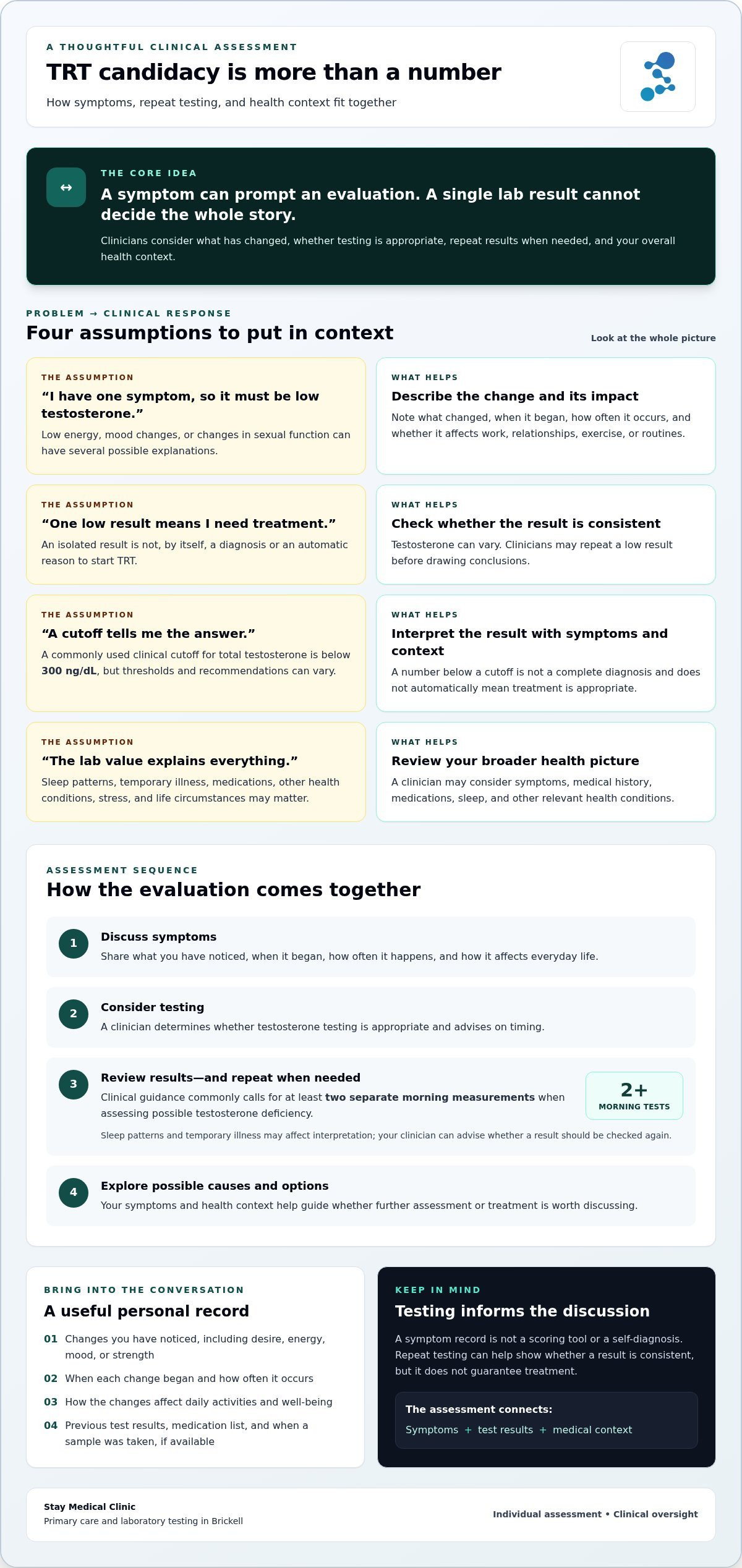
Assessment is a process, not a decision based on a symptom list or an isolated lab value. A clinician first discusses what has changed and how it affects you, then considers whether testing is appropriate. If results suggest low testosterone, they’re interpreted alongside your symptoms and health history before possible causes and next steps are discussed.
The process is straightforward, even though the details are personal:
- Discuss symptoms. Describe what you’ve noticed, when it began, and how it affects everyday life.
- Consider testing. A clinician determines whether testosterone testing is appropriate and when it should be done.
- Review the results. Results are considered alongside symptoms and, when needed, repeat testing.
- Explore causes and options. Your health context helps guide whether further assessment or treatment is worth discussing.
This approach helps answer “how to know if I need TRT” without treating a number as the whole story. A commonly used clinical cutoff for total testosterone is below 300 ng/dL, but thresholds and diagnostic recommendations can vary by guideline and testing context. A result below a cutoff isn’t, by itself, a diagnosis or an automatic reason to start treatment.
Why repeat testosterone testing may matter
Testosterone can vary, so clinicians may repeat a result that appears low before drawing conclusions. Current clinical guidance commonly calls for at least two separate morning measurements when assessing possible testosterone deficiency. Test timing and circumstances matter: sleep patterns and temporary illness, for example, may affect interpretation. Your clinician can advise on appropriate timing and whether a result needs to be checked again.
Repeat testing helps show whether a result is consistent. It isn’t a guarantee of treatment, and no single measurement or cutoff provides a complete diagnosis for everyone.
What else a clinician considers beyond the lab result
A useful assessment connects the lab report to the person. A clinician may review your symptoms, medical history, medications, sleep, and relevant health conditions, then consider whether other factors could help explain the changes. The next step may involve exploring a possible cause, not simply responding to a low number. If testing is appropriate, Stay Medical Clinic provides blood work in Brickell as part of its laboratory testing.
Bring previous test results and a medication list if you have them. Sharing when the sample was taken and whether anything unusual was happening around that time can also help put the result in context. Ask how the findings relate to your symptoms, whether repeat testing is needed, and what other explanations may be considered.
A TRT evaluation is a considered medical conversation, not a promise of a prescription. Stay Medical Clinic provides primary care in Brickell where you can discuss your concerns and understand the next step.
Does a low result mean you need TRT? Common misconceptions explained
A low testosterone result can be a reason to investigate, but it isn’t a treatment plan. Candidacy depends on whether test findings fit the clinical picture, what may be contributing to symptoms, and whether potential benefits and risks make sense for the individual. A number alone can’t answer all of that.
Use this comparison to distinguish common assumptions from a more grounded way to approach the decision:
Common assumption
Clinical perspective
“One low test means I need TRT.”
A clinician considers the result alongside symptoms and may recommend repeat testing before drawing conclusions.
“Feeling tired means my testosterone is low.”
Fatigue can have different causes. The symptom alone doesn’t establish testosterone deficiency.
“Getting older means TRT will restore my energy.”
Age-related changes don’t automatically indicate a treatable deficiency, and TRT isn’t a universal anti-aging treatment.
“If my result is low, the cause doesn’t matter.”
Health history and possible contributing factors can shape what a clinician recommends.
TRT is not a shortcut for every age-related change
Testosterone levels and health can change with age, but aging itself doesn’t prove that a person has clinically diagnosed testosterone deficiency. Feeling less energetic or noticing changes in strength may deserve attention, yet these experiences can have explanations beyond testosterone. For age-related decline without an established clinical indication, expected benefits are uncertain. TRT shouldn’t be presented as a way to restore youth, guarantee vitality, or suit everyone.
TRT is considered for an appropriate clinical indication, not as a universal anti-aging treatment. This keeps the focus on an individual health concern rather than an age-based promise. If you’re trying to understand how to know if I need TRT, the key question is whether the evidence and your circumstances support discussing treatment with a clinician.
A lab result is not a treatment plan
Even when results and symptoms point toward possible testosterone deficiency, the next step may be to explore what’s contributing before considering TRT. A clinician can review your health history, medications, goals, and relevant medical circumstances. They may discuss other explanations or options, then weigh potential benefits against risks in your specific situation. That conversation should be individualized, not based on an online checklist or a single result.
Be open about what you hope treatment might address and what concerns you have. Ask how the findings support a diagnosis, what uncertainties remain, and what follow-up or monitoring might involve if treatment is considered. These questions help make the decision shared and informed, without assuming TRT is the only path forward. Stay Medical Clinic provides testosterone replacement care in Brickell with clinical oversight, where an evaluation can help clarify whether treatment is appropriate for your circumstances.
What to do if you suspect low testosterone
If changes in your health concern you, prepare for a medical conversation rather than trying to diagnose or treat yourself. A clinician can review your history, discuss whether an examination or laboratory testing is appropriate, and interpret results in context. Starting hormones without clinical guidance can bypass that assessment and leave potential causes or personal risks unaddressed.
How to prepare for a medical appointment
A little preparation can help you explain what’s happening clearly. Keep a concise record of symptoms, including when each began, how often it occurs, and how it affects your daily life. Add notes about sleep and other recent health changes, along with your current medications and supplements. Bring previous test results if you have them.
Use your notes to guide, not script, the conversation. Your goals matter too: describe what you hope to understand or improve without assuming testosterone is the cause. Consider asking:
- What do my test results mean alongside my symptoms and health history?
- Could another health condition, medication, sleep issue, or life circumstance help explain these changes?
- Is further evaluation or repeat testing appropriate?
- If TRT is considered, what potential benefits, risks, and follow-up would apply to me?
Questions to ask before considering treatment
Ask how the clinician reached their interpretation and what uncertainties remain. A careful evaluation may include a medical history, examination, and appropriately timed and interpreted laboratory testing. Blood work is one part of the process, not a stand-alone answer. Stay Medical Clinic provides laboratory testing in Brickell as part of its medical care.
Also ask whether there are possible contributing causes to explore before deciding on treatment. If TRT is a reasonable option, discuss how its potential benefits relate to your goals, what risks apply given your medical circumstances, and how follow-up would be handled. You should have room to weigh the information and ask questions before making a decision.
There’s no need to arrive with a conclusion. If you’re working out how to know if I need TRT, a clear timeline, relevant health details, and open questions can turn uncertainty into a more useful discussion with a clinician. The outcome may be further evaluation, discussion of other explanations, or consideration of treatment. It depends on your individual assessment.
Considering a TRT evaluation in Brickell, Miami: your next steps
If you’re considering TRT, an evaluation is a conversation and medical assessment, not a promise of treatment or an automatic prescription. Its purpose is to connect your concerns with relevant clinical information, clarify what the evidence does and doesn’t show, and help you understand possible next steps. You can arrive with questions, not a decision.
Stay Medical Clinic is a primary care clinic in Brickell, Miami, offering testosterone replacement therapy, laboratory testing, and clinical oversight. A clinician’s assessment can help determine whether TRT may be appropriate for your circumstances or whether another explanation or approach deserves consideration.
What a medically supervised discussion can clarify
An individualized evaluation brings together the changes you’ve noticed, relevant test results, your health history, and what you hope to address. Rather than treating a lab value in isolation, a clinician can discuss how those details relate and whether further assessment may be useful. The conversation can also help distinguish a possible clinical indication from symptoms that may have another explanation.
If TRT is being considered, the discussion should include how potential benefits relate to your goals and what risks may matter in light of your health. It’s also reasonable to ask what follow-up and clinical oversight would involve. No single result or expectation guarantees that treatment is the right choice; the decision depends on your individual evaluation.
Take the next step with a local care team
A local primary care setting can bring your concerns, testing questions, and broader health context into one conversation. At Stay Medical Clinic in Brickell, Miami, laboratory testing and clinical oversight are available alongside TRT. The evaluation is intended to help you understand your options, whether that means discussing treatment or considering another path.
Stay Medical Clinic serves people across the Miami area, including Brickell, Miami, Aventura, Bal Harbour, Bay Harbor Islands, Biscayne Park, Coral Gables, Cutler Bay, Doral, El Portal, Florida City, Golden Beach, Hialeah, Hialeah Gardens, and Key Biscaya. Before your visit, bring a concise symptom timeline, a list of medications and supplements, and any relevant test results you already have. You can also write down what you most want clarified, such as how your results relate to your symptoms, what other causes could be considered, and what the next step would be if TRT isn’t appropriate.
You don’t need to decide on treatment before speaking with a clinician. An evaluation can help you understand your options without assuming the outcome in advance.
Move forward with a clearer question
You don’t have to decide whether TRT is right for you before speaking with a clinician. A useful next step is to bring your concerns and ask what would help clarify them. If you’re still wondering how to know if I need TRT, focus on getting an individualized assessment rather than reaching a verdict from symptoms or online advice.
Stay Medical Clinic offers testosterone replacement therapy and laboratory testing with clinical oversight, so your questions can be considered in the context of your health and goals. An evaluation may clarify whether TRT is appropriate to discuss or whether another direction makes more sense. Seeking a conversation is a constructive step, not a commitment to treatment.
Give yourself permission to ask questions and take the process one step at a time. Clarity is a meaningful place to begin.
Frequently Asked Questions
Can TRT affect fertility?
Yes. Testosterone taken as treatment can reduce the body’s own signals to the testes and lower sperm production, which may affect fertility. The degree and duration of the effect can vary, and recovery after stopping isn’t guaranteed to follow the same timeline for everyone. If you may want children now or in the future, raise that before starting treatment so a clinician can discuss your goals and appropriate options.
Is TRT usually a lifelong treatment?
Not necessarily, but treatment may continue long term if the underlying condition persists and the benefits remain worthwhile. Duration depends on the reason for low testosterone, your response, health changes, and personal preferences. Ask how treatment goals will be reviewed over time and what circumstances might lead to adjusting or reconsidering the plan. Starting TRT doesn’t mean you can never revisit the decision with your clinician.
How long does TRT take to improve symptoms?
There isn’t one timeline for everyone, and some symptoms may respond differently from others. Changes depend on the symptom being tracked, the treatment plan, and individual health factors. Before treatment, identify a practical measure to discuss with your clinician, such as whether sexual desire or energy changes are affecting daily routines. Review progress and concerns during clinical follow-up rather than changing treatment based on day-to-day fluctuations.
What happens if I stop TRT?
After stopping, testosterone levels may fall and symptoms related to low levels may return. The effect can depend on your original diagnosis, treatment duration, and individual health. If you’re considering stopping because of side effects, cost, fertility plans, or changing priorities, discuss it with your clinician first. They can explain what to expect in your situation and whether follow-up or reassessment is appropriate, rather than leaving you to interpret changes alone.
Can low testosterone be temporary?
Yes, a low reading may be temporary in some circumstances, including during or after an illness or a period of disrupted sleep. Certain medications and other health factors can also affect testosterone or how results are interpreted. If a result was taken when you were unwell or your routine had changed substantially, tell your clinician. They can decide whether the timing affects interpretation and whether testing should be repeated later.
Is TRT appropriate for older men?
It can be considered for an older man when a clinician finds an appropriate medical indication, but age alone doesn’t establish that TRT is needed. The decision should account for symptoms, test results, overall health, treatment goals, and individual risks. An older adult with fatigue, for example, may need assessment for causes beyond testosterone. A clinician can help weigh the evidence and discuss whether treatment or another approach better fits the person’s circumstances.
Can I decide I need TRT based on an online symptom checklist?
No. A checklist may help you identify concerns to discuss, but it can’t establish a diagnosis or determine treatment. If you’re wondering how to know if I need TRT, bring a record of changes and questions to a clinician instead of relying on a score. Stay Medical Clinic is in Brickell, Miami, and serves people in nearby areas including Coral Gables, Doral, Aventura, Hialeah, and other Miami communities.
Disclaimer
This content is for informational purposes only and does not replace evaluation, diagnosis, or treatment by a medical professional. Always consult a qualified healthcare provider for personalized care.