

Cost of a Medical Weight Loss Program: What to Expect in 2026
September 29, 2026
Is Low Testosterone Causing My Fatigue? How to Find Out
October 1, 2026
What if an IV therapy visit takes less time than you expect, but its effects follow a different timeline? If you’re planning around work, travel, or other commitments, asking “how long does IV therapy last” can mean two things: how long you’ll be at the clinic and how long you may notice effects afterward. They aren’t the same, and neither has a guaranteed timetable.
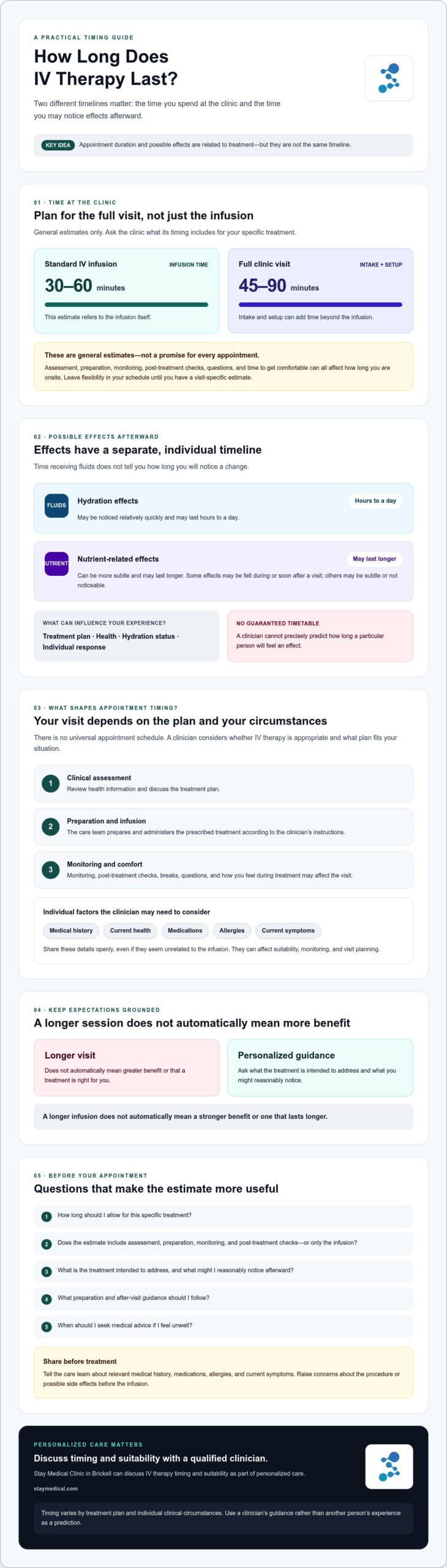
It’s reasonable to want an estimate before booking. A standard IV infusion may take about 30 to 60 minutes, while intake and setup can bring the full clinic visit to roughly 45 to 90 minutes. These are general estimates, not a promise for every appointment. How long you notice effects may vary with the treatment, your health, and how your body responds. Hydration effects may be noticed relatively quickly and last hours to a day; nutrient-related effects can be more subtle and may last longer.
This guide explains both timelines, what can influence them, and how to plan for an appointment and afterward. You’ll also find questions to ask a qualified healthcare professional about treatment, expected timing, and suitability, so you can make an informed decision rather than rely on a one-size-fits-all estimate.
Key Takeaways
- “How long does IV therapy last” can refer to the appointment or possible effects afterward. Each depends on the treatment plan and individual circumstances.
- Ask what the clinic’s time estimate includes, such as assessment, preparation, monitoring, and time to get comfortable.
- A longer appointment doesn’t automatically mean greater benefit or that a treatment is right for you. Discuss expected outcomes with a clinician.
- Before your visit, share relevant medical history, medications, allergies, and current symptoms. Confirm preparation and after-visit guidance.
- A clinician at Stay Medical Clinic in Brickell can discuss IV therapy timing and suitability as part of personalized care.
How Long Does IV Therapy Last? Understand the Two Timelines
The answer depends on the treatment plan and individual clinical circumstances. The question “how long does IV therapy last” has two parts: how long the infusion and clinic visit take, and how long someone may notice effects afterward. The timelines relate to the treatment, but they aren’t interchangeable.
Intravenous therapy delivers fluids or other prescribed substances through a vein. The infusion is only one part of the visit. Assessment, preparation, monitoring, and any post-treatment checks can also affect how much time to set aside.
How long does an IV therapy appointment take?
Ask the clinic how long to allow for the specific treatment being considered and what its estimate includes. An infusion-only estimate may not cover the full time onsite. If you’re arranging work, travel, or another appointment, leave some flexibility until you have a visit-specific estimate.
The clinician’s assessment, preparation of the infusion, prescribed treatment plan, and monitoring can all shape the visit. Your comfort matters, too. If you need a break or have questions during the appointment, the actual time may differ from the initial estimate.
How long can IV therapy effects last?
The time spent receiving fluids doesn’t tell you how long you’ll notice a change afterward. Some effects may be felt during or soon after a visit, while others may be subtle or not noticeable. Your experience can depend on the treatment, your health and hydration status, and other individual factors.
No clinician can guarantee or precisely predict how long a particular person will feel an effect. A longer infusion doesn’t automatically mean a stronger benefit or one that lasts longer. Ask what the treatment is intended to address, what you might reasonably notice, and when to seek medical advice if you feel unwell.
No single duration applies to every IV therapy visit because both the treatment plan and each person’s clinical circumstances can change the timeline.
For a useful estimate, ask about the appointment and possible effects separately. Stay Medical Clinic offers IV therapy in Brickell, Miami. A conversation with its care team can help clarify the planned visit and treatment-specific instructions. Learn more about IV therapy in Brickell.
What Determines How Long IV Therapy Takes?
The planned visit depends on the prescribed treatment and the clinician’s protocol, not on a universal appointment schedule. Different care plans may involve different administration approaches, and the steps before and after the infusion add time onsite. A clinician first considers whether IV therapy is appropriate for you and what plan fits your circumstances.
How treatment plans and clinical assessment affect timing
Before an infusion, the care team may review your health information, discuss the treatment plan, and prepare for the visit. The infusion follows the clinician’s instructions, and monitoring or post-treatment checks may be included. Ask what the time estimate covers so you know whether it refers only to the infusion or the full appointment.
For an individual estimate, ask the clinic what to expect for the specific plan being considered. The answer to “how long does IV therapy last” is most useful when it accounts for the treatment and the steps involved in your visit.
Why one person’s experience may differ from another’s
People may need different levels of assessment or monitoring based on their medical history and current health. Medications, allergies, existing conditions, and symptoms can affect whether treatment is suitable and what the clinician needs to consider. These details may also shape how the visit is planned. Share them openly, even if they seem unrelated to the infusion.
Comfort is part of the visit, too. You may need time to ask questions, settle in, or let the care team know how you’re feeling during treatment. If you have concerns about the procedure or possible side effects, raise them before the infusion. The potential risks of IV therapy are another reason to discuss your health and treatment plan with a qualified clinician rather than assume the same approach suits everyone.
Appointment timing can change with the treatment plan, clinical assessment, preparation, monitoring needs, and your comfort during the visit. That’s why another person’s experience may not predict yours. Personal accounts can offer perspective, but they aren’t a reliable estimate of your appointment.
For questions about IV therapy in Brickell, Miami, you can learn more about Stay Medical Clinic and discuss what the planned visit may involve with its care team.
Does a Longer IV Therapy Session Mean Better or Longer-Lasting Effects?
No. A longer appointment doesn’t, by itself, show that IV therapy is safer, more suitable, or more beneficial. The planned duration reflects how a treatment is administered and what the visit involves. Whether it’s appropriate, and what outcomes to expect, should be discussed with a clinician rather than judged by the time spent receiving an infusion.
It’s natural to look for clues when comparing treatment options, but a quick visit isn’t automatically better, and a longer one isn’t automatically more effective. If you’re asking how long IV therapy lasts, separate the practical appointment estimate from questions about health outcomes. One describes time; the other requires individual clinical context.
What session length can and cannot tell you
A planned duration can help you organize your schedule and understand the steps involved in a visit. It can’t guarantee how you’ll feel afterward or establish that a treatment is right for you. The clinician’s assessment and the prescribed plan should guide care, not a preference for a shorter or longer session.
Session time can help you understand:
- How much time to set aside for the planned visit, based on the clinic’s estimate.
- Whether the estimate includes preparation, infusion, monitoring, and post-treatment checks.
Session time can’t tell you:
- Whether IV therapy is appropriate for your health circumstances.
- Whether you’ll notice a particular effect, or how long it may last.
- Whether a faster or slower visit means higher quality or greater effectiveness.
What to know about possible effects and side effects
People may respond differently to treatment, and some may not notice the same changes as others. What you feel during a visit is not necessarily evidence of a lasting outcome. A clinician can explain what’s known about the treatment being considered, its limitations, and potential risks in light of your health history.
Ask what symptoms might be expected and what should prompt you to contact the care team. Don’t try to diagnose a reaction based on someone else’s experience. If you develop concerning symptoms during or after treatment, seek medical guidance. Severe or sudden symptoms warrant urgent medical attention. The goal is a plan that’s appropriate for you, not the longest session or the most dramatic promise.
How to Plan Your IV Therapy Visit and Ask the Right Questions
A little preparation can make it easier to fit an IV therapy visit into your day and understand what to expect. Before setting work or travel plans, ask the clinic for an estimate specific to the treatment being considered. “How long does IV therapy last” is best answered with details about both the visit and the treatment plan, rather than a general promise.
Questions to ask before booking IV therapy
Use this checklist when speaking with the clinic. Clear answers can help you plan and understand the care process.
- Confirm the time: How long is this specific appointment expected to take? Does the estimate include assessment, preparation, infusion, monitoring, and post-treatment checks?
- Understand the clinical process: Who will assess whether treatment is suitable, supervise it, and explain possible risks?
- Check preparation: Are there instructions to follow before the visit? Ask the care team directly rather than assuming you need to fast or make another change.
- Clarify follow-up: What should you expect afterward, and who should you contact with questions or concerning symptoms?
Planning around work, travel, and your health
Leave flexibility in your schedule until the clinic confirms the expected visit duration. If you have a flight, meeting, or another time-sensitive commitment, mention it when asking for an estimate. The clinic can explain what timing to plan around, but avoid assuming you’ll be ready to resume every activity immediately afterward.
Tell the care team about relevant medical conditions, medications, allergies, and current symptoms. Let them know if your health changes before the appointment, and ask whether that affects suitability, preparation, or scheduling. These details help the clinician consider your circumstances and provide instructions for the planned treatment.
Stay Medical Clinic offers IV therapy in Brickell, Miami. Whether you’re coming from Brickell or nearby Aventura, Bal Harbour, Bay Harbor Islands, Biscayne Park, Coral Gables, Cutler Bay, Doral, El Portal, Florida City, Golden Beach, Hialeah, Hialeah Gardens, or Key Biscaya, review the Brickell IV therapy service and ask the care team about the appointment estimate and any treatment-specific instructions.
Confirming timing, preparation, monitoring, and after-visit guidance can help you plan more confidently. For questions about IV therapy or care at Stay Medical Clinic, contact the clinic.
Discuss IV Therapy Timing With a Brickell, Miami Clinician
The clearest answer to “how long does IV therapy last” comes from separating two questions: how much time to reserve for the appointment, and what effects, if any, you may notice afterward. A clinician can discuss the plan being considered, provide an appointment estimate, and explain why individual responses can differ. An estimate is a planning aid, not a promise about results.
Stay Medical Clinic offers IV therapy in Brickell, Miami. A treatment-specific conversation can help you understand what the visit may involve without assuming that one timeline or outcome applies to everyone.
What to expect from a treatment-specific conversation
Ask the clinician to walk you through the proposed plan and what contributes to the expected time onsite. Clarify whether the estimate includes assessment, preparation, infusion, and monitoring. You can also ask what potential risks have been considered, what the team will monitor, and which instructions apply after the visit.
For a broader introduction to the topic, Stay Medical Clinic’s guide, The Ultimate Guide to IV Therapy in Miami, may provide helpful context. Use it as background, then raise personal questions with a clinician who can consider your circumstances.
When to contact a clinician before scheduling
Share relevant medical conditions, medications, allergies, and current symptoms before treatment is planned. Mention recent health changes as well. This information can help the clinician assess whether IV therapy is appropriate and explain any considerations that may affect the visit. If you’re uncertain about suitability, seek professional guidance before scheduling rather than relying on another person’s experience.
IV therapy should not be treated as emergency care or as a replacement for urgent medical evaluation. If you have urgent or severe symptoms, seek appropriate urgent care instead of waiting for a scheduled appointment.
A conversation can help set realistic expectations. Confirm the appointment estimate, then discuss possible effects separately, along with monitoring and after-visit instructions. Bring your questions and relevant health information so the clinician can address what matters to you.
Ask Stay Medical Clinic about IV therapy suitability and expected appointment timing.
Plan Your IV Therapy Visit With Confidence
The answer to “how long does IV therapy last” depends on which timeline you mean: the time set aside for the appointment or how long you may notice effects afterward. Treatment plans and individual circumstances can affect both, so confirm the expected visit duration with the clinic and discuss possible effects separately with a clinician.
A longer session doesn’t automatically mean better or longer-lasting results. Before scheduling, ask what the appointment estimate includes, what preparation or monitoring may be involved, and what guidance applies afterward. Sharing your medical history, medications, allergies, and current symptoms helps the care team consider your individual needs.
Stay Medical Clinic offers IV therapy at its Brickell, Miami clinic, with an approach centered on personalized care and experienced healthcare professionals. A conversation with the clinic can help you understand the planned visit and raise questions about suitability, timing, and treatment-specific instructions.
With clear information and a clinician’s guidance, you can make a thoughtful plan that fits your health needs and schedule.
Frequently Asked Questions
How long does an IV therapy session usually take?
A standard IV hydration or vitamin infusion typically takes about 30 to 60 minutes to administer, while the full clinic visit may take roughly 45 to 90 minutes when intake and setup are included. These are general estimates, not a guaranteed appointment duration. The treatment plan, assessment, preparation, monitoring, and individual circumstances can change how long you’ll be onsite, so confirm your estimate with the clinic.
How long do the effects of IV therapy last?
There’s no single duration that applies to everyone. Hydration effects may be noticed relatively quickly and last for several hours or up to a day, while effects associated with nutrient infusions may be more subtle and last for several days or longer as the body uses nutrients. These outcomes aren’t guaranteed or precisely predictable. Ask a clinician what’s reasonable to expect from the specific treatment and how your health may affect your response.
Can IV therapy effects last for several days?
They may, depending on the treatment and the individual, but an effect lasting several days isn’t assured. Some nutrient-related effects may be subtle and continue as the body uses nutrients, while hydration-related changes may follow a different timeline. What you notice also depends on your health and other circumstances. Ask the clinician what the treatment is intended to address and what evidence supports the expected effects.
Does a longer IV therapy appointment mean it works better?
No. The length of an appointment describes the time involved in delivering care, not whether the treatment is suitable or how much benefit you’ll receive. A longer visit doesn’t guarantee stronger or longer-lasting effects, and a shorter one doesn’t automatically indicate better care. Treatment choices should be guided by clinical assessment and an individualized plan. Ask the clinician to explain the purpose of the treatment and its potential limitations.
What can affect how long an IV therapy appointment takes?
The prescribed plan and clinical protocol help determine timing. Assessment, preparation, infusion, monitoring, and any post-treatment checks can add to the time onsite. Your medical history and current health may also affect the assessment or monitoring needed. For example, a visit estimate may differ depending on whether it includes only the infusion or the broader appointment. Ask the clinic what its estimate covers before arranging work or travel.
Should I plan to rest after IV therapy?
Follow the after-visit guidance provided for your specific treatment. There isn’t one rule that determines whether everyone should rest or can immediately return to all usual activities. Ask the care team what to expect afterward and whether any activity guidance applies to you. If you feel unwell or notice concerning symptoms after treatment, contact a healthcare professional for advice rather than relying on another person’s experience.
Is IV therapy appropriate for everyone?
No. A clinician should assess whether IV therapy is appropriate in light of your health and the treatment being considered. Before scheduling, share relevant medical conditions, medications, allergies, and current symptoms, and ask about potential risks and monitoring. This is useful for people considering care at Stay Medical Clinic in Brickell, Miami, including those traveling from Aventura, Coral Gables, Doral, or other nearby communities. Seek urgent evaluation for urgent symptoms.
Disclaimer
This content is for informational purposes only and does not replace evaluation, diagnosis, or treatment by a medical professional. Always consult a qualified healthcare provider for personalized care.