
TRT for Energy and Motivation: Effects, Mood and Monitoring
November 24, 2026
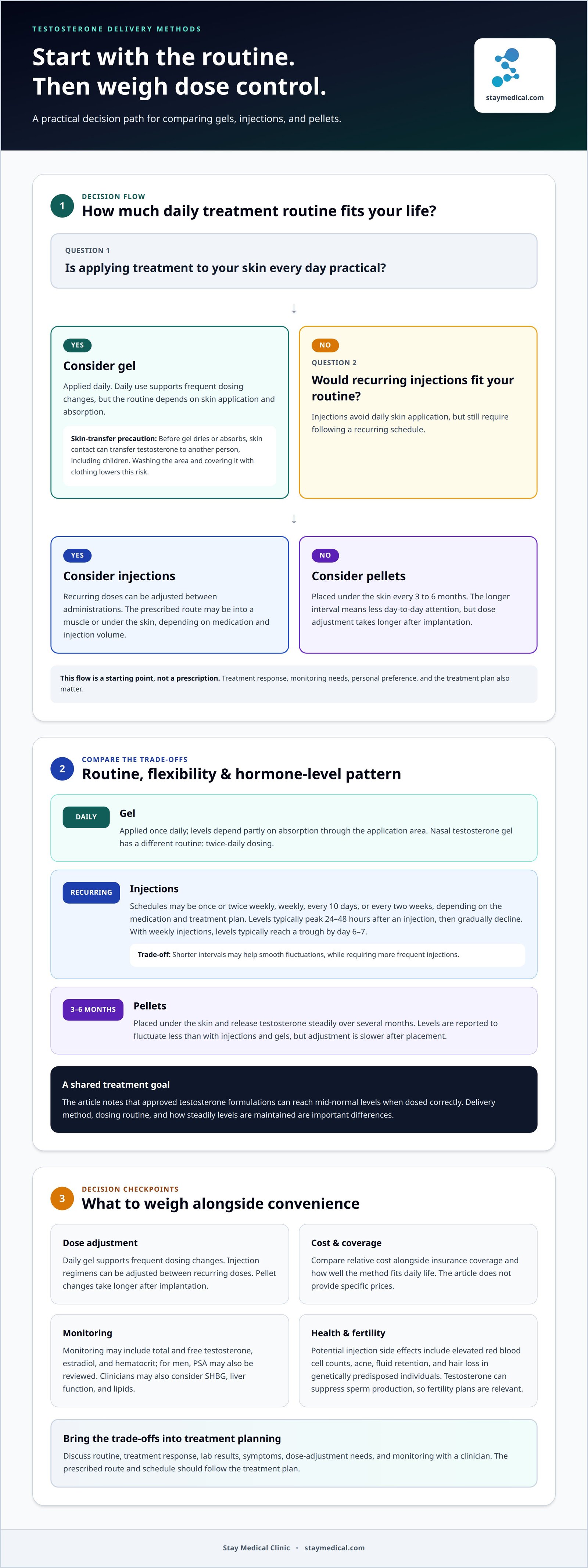
The most convenient testosterone option isn’t always the one that gives you the most control. A useful TRT delivery methods comparison starts with how often each method is used: injections follow a recurring schedule, gels are applied daily, and pellets can release testosterone for approximately three to six months. Each approach differs in how easily the dose can be adjusted and how much day-to-day attention it requires.
It makes sense to weigh convenience, hormone-level consistency, and cost together. A method requiring fewer applications may leave less room for quick dose adjustments, while a more frequent routine can offer greater flexibility.
This guide compares injections, gels, and pellets by dosing control, duration, hormone levels, cost considerations, and everyday convenience. You’ll see what each method involves and how personal preferences, treatment response, and monitoring needs can help shape a decision.
Key Takeaways
- Compare how each option balances dosing flexibility with the effort involved in keeping to its routine.
- Consider how hormone levels may shift between doses, not just how often treatment is administered.
- Factor in practical details such as skin-transfer precautions with gels and the in-office procedure involved with pellets.
- Weigh relative cost alongside personal preference, insurance coverage, and how well a method fits your daily life.
- Use your monitoring needs and ability to adjust treatment as key points in a conversation about the most suitable approach.
How Do Testosterone Injections Work?
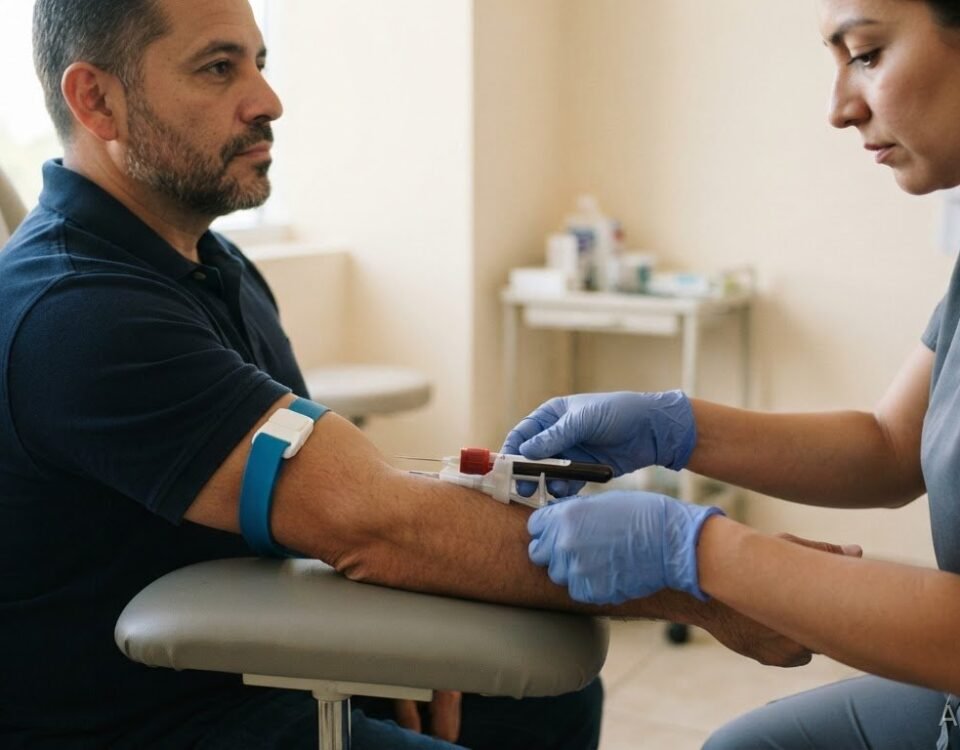
Injection schedules vary by medication and treatment plan: they may be weekly, every 10 days, or every two weeks; gels are applied daily, while pellets are placed every 3 to 6 months. Injections can be given into muscle or under the skin, depending on the medication and injection volume.
Monitoring may include total and free testosterone, estradiol, hematocrit, and, for men, PSA. Clinicians may also review SHBG, liver function, and lipids. Hematocrit matters because testosterone can raise red blood cell counts.
Intramuscular Injections
Intramuscular injections deliver testosterone into a muscle. They’re commonly scheduled weekly or every two weeks, though the medicine and treatment plan determine the interval. Compared with daily gels, injections require fewer application days. Unlike pellets, they don’t lock in a dose for several months, so the regimen can be adjusted without waiting for implanted medication to dissolve.
Subcutaneous Injections
Subcutaneous injections place testosterone under the skin rather than into a muscle. Whether this route is suitable depends on the medication and injection volume. Both injection routes use recurring doses, unlike daily gel application or pellets placed every 3 to 6 months. The prescribed route matters: the injection depth and schedule should follow the treatment plan.
Injection Schedules and Frequency
Many injection regimens use once- or twice-weekly dosing; other plans use weekly, every 10 days, or every two weeks. Testosterone levels typically peak 24-48 hours after an injection, then gradually decline. With weekly injections, levels typically reach a trough by day 6-7. Shorter intervals may help smooth these fluctuations, while requiring more frequent injections.
Dosing and Potential Side Effects
A typical weekly injection dose may be around 100 to 200 mg per week, depending on the patient, lab results, symptoms, and provider guidance. The dose and interval work together: splitting a weekly dose into twice-weekly injections may reduce peak-and-trough swings. Potential side effects include elevated red blood cell counts, acne, fluid retention, and hair loss in genetically predisposed individuals. Testosterone can also suppress sperm production, so fertility plans are relevant to treatment decisions.
| Option | Administration | Typical schedule | Dosing flexibility |
|---|---|---|---|
| Intramuscular injection | Into a muscle | Weekly or every two weeks | Recurring doses allow adjustment between administrations |
| Subcutaneous injection | Under the skin | Depends on medication and treatment plan | Recurring doses allow adjustment between administrations |
| Gel | Applied to the skin | Daily | Daily application supports frequent dosing changes |
| Pellets | Placed under the skin | Every 3 to 6 months | Adjustment takes longer after implantation |
Choose an injection schedule by balancing your dose-adjustment needs with a routine you can follow consistently.
How testosterone delivery methods affect hormone levels
According to the American Urological Association, any approved testosterone formulation can reach mid-normal levels when dosed correctly. Injections, gels, patches, pellets, and oral formulations can all be effective; their differences lie in delivery, dosing routines, and how steadily levels are maintained.
Testosterone Injections
Injections deliver testosterone on a recurring schedule, so levels can rise after a dose and decline before the next one. Splitting doses into shorter intervals may help smooth these changes, though it means injecting more often. Compared with daily gels or patches, injections reduce daily application tasks. Lab results and symptoms help guide dose adjustments over time.
Testosterone Gels
Skin gels are applied once daily, and hormone levels depend partly on absorption through the application area. Before the gel dries or absorbs, direct skin contact can transfer testosterone to another person, including children. Washing the application area and covering it with clothing lowers the risk of transfer. Nasal testosterone gel follows a different routine, with twice-daily dosing. Fertility is also important to discuss because testosterone therapy can suppress sperm production.
Testosterone Patches
Patches release testosterone steadily through the day and night, unlike injections, which can create peaks followed by gradual declines. This continuous delivery avoids a daily gel application, though the patch still requires routine use. As with other approved formulations, the goal is to dose appropriately and monitor whether levels reach the intended range.
Testosterone Pellets
Pellets release testosterone steadily over several months and are placed under the skin every 3 to 6 months. This longer interval can reduce the day-to-day attention required by gels or patches. Their levels are reported to fluctuate less than those associated with injections and gels. The trade-off is slower dose adjustment after placement.
Oral testosterone offers another routine: newer oral preparations require twice-daily dosing and avoid the liver first-pass pathway associated with earlier oral formulations. Timing with food or other medicines may matter for oral therapy, so the schedule is part of the treatment plan, not simply a matter of convenience.
Response also takes time. Some men notice changes within 4-6 weeks, while maximum benefits may take 3-6 months. Monitoring during that period helps assess hormone response and guide ongoing treatment decisions. For support aligning a formulation with your health needs, explore testosterone replacement care.
Testosterone pellet duration and implantation procedure
Testosterone pellets are placed under the skin during a minor in-office procedure, then release the hormone gradually. Their longer treatment interval can reduce daily upkeep, but makes dose changes less immediate than with a regularly adjusted regimen.
Pellet Placement and Insertion
During placement, pellets are inserted just under the skin in an in-office procedure. They then dissolve gradually, releasing testosterone into the body over time. Unlike gel, which is applied to the skin each day, pellets don’t require a daily application routine. The procedure is a distinct part of the trade-off: less frequent upkeep, with treatment delivered through an implant.
After implantation, the dose cannot be changed through a simple adjustment to the next application. Pellets can’t be removed without a procedure, so changing the dose may involve removal or waiting for them to dissolve naturally. This differs from treatment formats where the next dose can be adjusted at a later administration.
This distinction matters most when a person’s response needs reassessment before the pellets have worn off. With a daily or recurring dose, each new administration creates another opportunity to adjust treatment. Pellets continue releasing testosterone after placement, so the initial dose remains in place during that period.
Duration and Treatment Intervals
Testosterone pellets typically release hormone for approximately three to six months. They’re placed under the skin every 3 to 6 months, rather than applied daily like gel or given on a recurring injection schedule. This interval can suit someone seeking fewer treatment-day tasks, while requiring planning for each new placement.
The hormone enters the body gradually as pellets dissolve, rather than through a daily skin application. Their steady release over several months is one reason pellets can offer convenience between procedures. But the dose isn’t adjustable throughout that interval: changing it after implantation requires a procedure to remove the pellets.
If the treatment plan needs a different dose, timing matters. Changes take longer because existing pellets must wear off or be removed through a procedure. With treatment delivered in separate applications or injections, the next scheduled dose can be reconsidered without waiting for an implant to dissolve.
Pellets trade frequent administration for slower adjustment. Their months-long release can reduce routine handling, but the same duration limits how quickly treatment can change. Comparing pellets with gels or injections means weighing both practical details: how often treatment is handled and how readily the dose can be revised.
Choosing a method based on lifestyle, dosage, cost, and preference
A suitable testosterone replacement method needs to fit both treatment goals and everyday routines. A clinician weighs personal preference, insurance coverage, and individual response alongside dosing demands.
Dosage, Cost, and Preference
Injection schedules can involve weekly or twice-weekly dosing, while gels require daily application and pellets are placed every 3 to 6 months. Those differences affect how often treatment enters a patient’s routine and how readily the next dose can be adjusted. Injections are usually lower cost than gels or pellets, while insurance coverage can influence the practical choice.
Preference matters because a regimen works best when its routine is manageable. Someone comfortable with recurring injections may value fewer application days, while a person who prefers to avoid injections may favor a topical option. Pellets reduce frequent self-administration but make dose changes slower after placement.
Physiology, Goals, and Patient Needs
Different approved testosterone formulations can reach mid-normal levels when dosed correctly. Individual response still matters: follow-up monitoring helps show whether the selected dose is producing the intended hormone levels. If response or side effects prompt a change, a method with more frequent dosing opportunities may allow adjustments sooner than pellets.
Goals also shape the discussion. A patient prioritizing steady delivery may consider patches or pellets, while someone wanting more flexibility between doses may prefer injections or daily gel. Discuss fertility plans before testosterone therapy because it can suppress sperm production.
Bring practical details into the consultation. A weekly routine, daily skin application, or in-office pellet procedure each calls for a different kind of consistency. A clinician can compare these demands with your schedule, health priorities, treatment response, and preferences rather than treating convenience as a single measure.
- For fewer routine applications: pellets involve placement every 3 to 6 months, but dose changes take longer.
- For frequent dose opportunities: injections or daily gels create recurring points for treatment adjustments.
- For insurance considerations: coverage can affect the choice, alongside the relative cost of each method.
For example, someone who travels often may value fewer treatment-day tasks, while someone who wants more control over each next dose may favor a recurring regimen. Neither preference alone determines the best fit; the clinician also considers lab results, symptoms, and how the patient responds.
Compare your priorities in order: desired dosing flexibility, a routine you can maintain, cost and coverage, then response over time. This framework connects lifestyle needs with a treatment approach while leaving room to revisit the choice as monitoring provides a clearer picture.
Comparing dosing control across delivery methods
Dosing control has two parts: how steadily testosterone levels are maintained and how quickly treatment can be adjusted. A useful TRT delivery methods comparison considers both, since a method with steadier release may offer fewer opportunities for prompt dose changes. Pellets are associated with fewer hormone fluctuations, while recurring injections and applications create more points to review treatment.
Pellets release testosterone over several months, reducing routine handling and supporting steadier levels. Their limitation is adjustment: after implantation, the dose can’t be changed without a procedure to remove the pellets or by waiting for them to dissolve. This makes pellets less responsive if treatment needs change during their release period. In practice, fewer treatment days come with a longer wait to revise dosing.
Injections offer more opportunities to adjust treatment between doses. Levels can peak after an injection and decline before the next one, so shorter intervals may help smooth these fluctuations. The trade-off is a more frequent routine than pellets. For example, splitting a weekly dose into twice-weekly injections is one way to address peak-and-trough variation while retaining recurring opportunities to reassess dosing.
Daily gels also provide regular opportunities to revisit dosing, but absorption through the skin affects delivery. Application needs to be consistent, and direct skin contact before the gel dries or absorbs can transfer testosterone to another person. Patches release the hormone steadily through the day and night, offering a different routine from gel while still requiring regular use. The preferred approach depends on both delivery consistency and the practical routine a patient can sustain.
Newer oral testosterone preparations require twice-daily dosing. Timing with food or other medicines may matter, so control partly depends on following the daily schedule. Across formulations, the American Urological Association notes that any approved option can reach mid-normal testosterone levels when dosed correctly. A TRT delivery methods comparison therefore distinguishes how treatment is delivered and adjusted, rather than assuming one method can reach appropriate levels while another cannot.
Clinical monitoring connects dosing decisions with a patient’s response. Total and free testosterone can show hormone levels, while hematocrit tracks changes in red blood cells. Estradiol, SHBG, liver function, lipids, and PSA for men may also be reviewed. Results, symptoms, and side effects together help guide whether the dose or method needs adjustment.
For a practical decision, compare these control questions:
- How steady should delivery feel? Pellets and patches provide steadier release; injections can fluctuate between doses.
- How quickly might dosing need revision? Recurring doses or applications offer more adjustment points than implanted pellets.
- Which routine is sustainable? Consider daily application, twice-daily oral dosing, recurring injections, or periodic pellet placement.
The clearest takeaway is that steadiness and flexibility aren’t the same. A method that minimizes daily tasks may limit quick dose changes, while frequent dosing offers more opportunities to revise treatment. The clinical decision balances level patterns, absorption, side effects, monitoring results, and personal comfort.
Stay Medical Clinic
Stay Medical Clinic offers Testosterone Replacement for people weighing how a treatment routine fits their health needs and daily life. A consultation can bring together your preferences, dosing schedule, hormone-level goals, and questions about monitoring, helping you understand which factors matter when comparing delivery methods. The aim is to make the decision clearer and grounded in your individual care, rather than convenience alone.
If you’re ready to discuss your treatment options, contact Stay Medical Clinic.
Choose a routine you can sustain
The next step is to connect your treatment priorities with a plan that can be reviewed over time. A thoughtful TRT delivery methods comparison can clarify which trade-offs matter most to you, but your health history, treatment goals, and response should guide the decision. Bring questions about dosing, monitoring, and daily routine to a conversation with a clinician, then consider how those priorities may change as treatment progresses.
Stay Medical Clinic offers Testosterone Replacement alongside a Weight Loss Program and IV Therapy. If you’re considering testosterone treatment, a conversation can help you explore your questions in the context of your broader care.
With a clear plan and thoughtful follow-up, you can take your next step with greater confidence.
Frequently Asked Questions
What Is TRT and How Is It Delivered?
Testosterone replacement therapy, or TRT, uses prescribed testosterone to treat men with confirmed low testosterone. It can be delivered through injections, skin gels or creams, patches, pellets, and oral formulations. Before starting, clinicians confirm low testosterone with morning total testosterone measurements on more than one occasion. Treatment aims to bring levels into a suitable range while taking symptoms, health history, and monitoring needs into account.
Are Testosterone Creams a Good Option?
Testosterone creams may suit someone who prefers applying treatment to the skin rather than receiving injections. Their effectiveness depends on correct use and absorption, so a consistent application routine matters. Consider your home environment, too: direct contact with another person before the product dries or absorbs can transfer testosterone. A clinician can weigh these practical factors against your preferences and treatment goals.
Does insurance cover gel vs injections?
Insurance coverage varies by plan, but short-acting testosterone cypionate injections and transdermal gels are commonly covered. Coverage can affect which formulation is practical, so compare your plan’s terms for the prescribed medication and its administration. A covered option may still involve different out-of-pocket costs depending on benefits and clinical arrangements. Include coverage in the treatment discussion alongside routine and dosing preferences.
Injections, pellets or gels: which TRT method?
No single method is the best fit for everyone. Injections may suit someone comfortable with recurring doses, while gels fit people who prefer daily skin application. Pellets may appeal to someone seeking fewer treatment-day tasks, though dose adjustments are less immediate after placement. Consider how each routine fits work, travel, and personal comfort, then weigh those priorities against treatment response and monitoring.
Is oral testosterone safe for the liver?
Newer oral testosterone preparations avoid the liver first-pass pathway associated with earlier oral formulations. That feature alone doesn’t establish whether oral treatment is suitable for a particular person. Liver function may be included in TRT monitoring, and timing with food or other medicines can matter. Discuss your health history and current medications with a clinician before deciding whether an oral formulation fits your care.
Side by Side Summary: Which Method Fits Your Life?
Start with a routine you can realistically maintain. For example, frequent travel may make daily applications inconvenient, while someone who wants regular opportunities to revisit dosing may prefer a method with recurring doses. Also consider whether shared household contact makes skin-transfer precautions harder to manage. Bring these everyday details into your decision, then balance them with monitoring results, treatment goals, and your response.
What are the main testosterone replacement therapy delivery methods?
The main options include intramuscular or subcutaneous injections, topical gels and creams, patches, implanted pellets, and oral formulations. Nasal testosterone gel is another delivery option. These methods differ in how treatment is administered, how often the routine occurs, and how readily dosing can be adjusted. The prescribed formulation and treatment plan determine the available approach and schedule.
What are the average costs of TRT delivery methods in the United States?
A useful cost estimate depends on the formulation, insurance coverage, medication, and whether care includes laboratory testing or administration. Injections, gels, and pellets also involve different treatment routines, which can affect the overall cost structure. Rather than relying on a broad average, consider the prescribed method and what your coverage applies to. Cost is one factor to weigh alongside dosing control and convenience.
Disclaimer
This content is for informational purposes only and does not replace evaluation, diagnosis, or treatment by a medical professional. Always consult a qualified healthcare provider for personalized care.