

Weight Loss Clinic for Men in Coral Gables: GLP-1 Options
November 8, 2026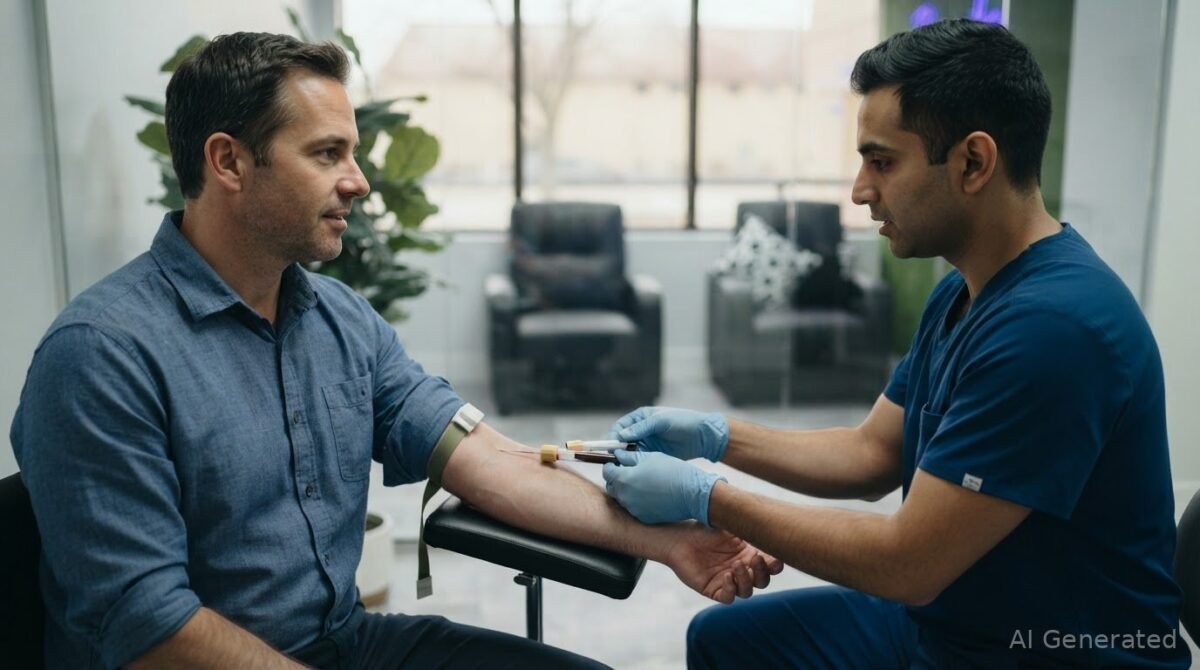
More testosterone doesn’t automatically mean a clearer mind. TRT for mental clarity and focus may help some men with clinically confirmed testosterone deficiency, but it isn’t an established treatment for brain fog, dementia, or age-related memory decline. Whether it’s appropriate depends on symptoms, blood test results, and an assessment of possible causes.
If your concentration has slipped or your memory feels less dependable, it’s understandable to wonder whether hormones are involved. Low testosterone can occur alongside fatigue, mood changes, and difficulty concentrating, but these symptoms can have other causes, too. This article explains how testosterone may affect brain function, what research says about memory and dementia concerns, and why treatment results can vary.
You’ll also learn how testing can guide a conversation with a doctor, what medical monitoring involves, and when testosterone replacement may be considered. The goal is to clarify the evidence and identify a grounded next step, not to assume TRT is a shortcut to sharper thinking.
Key Takeaways
- Sleep, exercise, nutrition, and stress management may support testosterone levels and overall mental well-being.
- Research on testosterone and cognitive health is mixed, so a possible link with memory changes doesn’t mean TRT prevents dementia.
- Brain fog and concentration problems can have several causes; look at the full pattern of symptoms rather than assuming hormones are responsible.
- Blood testing can help assess whether testosterone is low, while treatment decisions also consider potential underlying causes.
- Ongoing medical monitoring helps track testosterone levels and red blood cell counts during treatment.
How Does Testosterone Replacement Affect Brain Health?
Testosterone can influence brain function, but TRT isn’t a guaranteed route to sharper thinking. It’s most relevant when symptoms accompany medically confirmed testosterone deficiency. In the United States, TRT costs depend on the treatment formulation, testing, and monitoring. The price depends on the case and is given after a quote request; insurance coverage depends on the specific plan and its benefits.
Testosterone can cross the blood-brain barrier and act within the central nervous system. Testosterone receptors are found throughout the brain, including regions involved in memory, attention, and mood regulation. This helps explain why altered testosterone levels may be associated with changes in concentration or emotional well-being. A change in focus alone, however, doesn’t identify low testosterone as the cause.
The brain also converts testosterone into estradiol, a form of estrogen. This is one way sex hormones act in brain tissue, rather than evidence that testosterone has only one direct effect. Testosterone may help protect brain cells from damage, while hormone activity is also linked to connections between brain cells. These mechanisms provide biological context, but they don’t establish that TRT prevents cognitive decline.
Sleep offers a practical example of how effects can overlap. Testosterone influences sleep quality, and adequate sleep supports cognitive function and memory consolidation. If poor sleep contributes to fatigue or difficulty focusing, addressing sleep habits and possible sleep disorders matters alongside assessing hormone levels. Mental exhaustion may have causes that testosterone treatment won’t correct.
Daily habits can also affect testosterone levels and symptoms. A healthy diet, regular exercise, stress management, and sufficient sleep may support hormone health and help with symptoms of depression and anxiety. For example, ongoing stress and disrupted sleep can affect energy and mood, making concentration changes harder to interpret on their own. These measures support overall health, but don’t replace an assessment when persistent symptoms raise concern about deficiency.
TRT is intended for men diagnosed with hypogonadism or testosterone deficiency, not as a general brain-health enhancer. When deficiency is confirmed and treatment is medically appropriate, replacement can restore testosterone levels. A clinician considers symptoms and test results together, then discusses potential benefits and risks. Learn about testosterone replacement treatment as one part of that discussion. The central question is whether low testosterone is present, not whether more testosterone might improve cognition in someone with normal levels.
Is Low Testosterone Linked to Alzheimer’s and Dementia?
Low testosterone is associated with some cognitive symptoms, but an association doesn’t prove it causes dementia. Studies of older men and testosterone therapy report mixed cognitive outcomes.
Low Testosterone and Cognitive Symptoms
Low testosterone can occur alongside difficulty concentrating, cognitive decline, and mood instability. These changes can affect everyday tasks, such as following a conversation or keeping track of plans. On their own, they don’t establish testosterone deficiency or an Alzheimer’s diagnosis. This distinction matters because cognitive symptoms have multiple possible explanations, and hormone treatment is intended for confirmed deficiency, not as a general treatment for memory concerns.
Cognitive Outcomes in Older Men
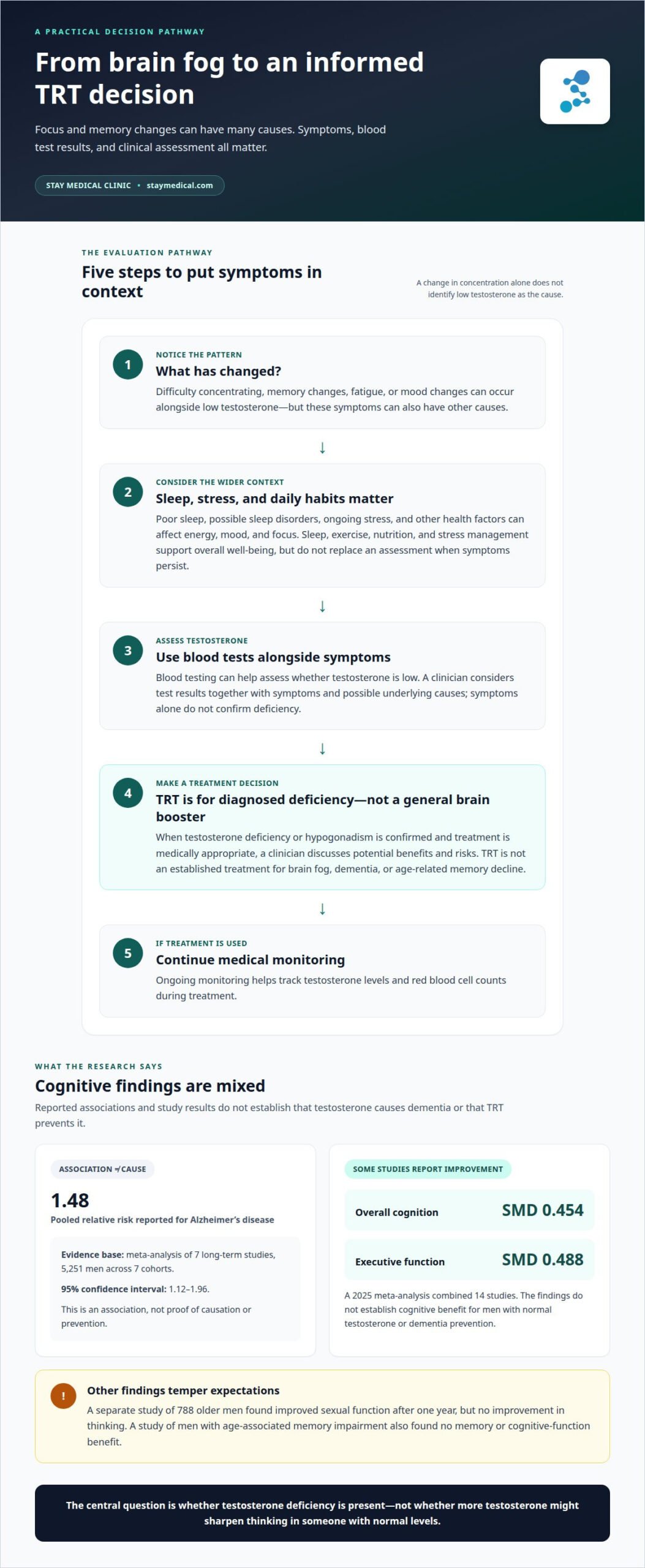
Studies in older men don’t show that mildly low testosterone inevitably leads to dementia. A meta-analysis combined seven long-term studies involving 5,251 men across seven cohorts. It found an association between low testosterone and Alzheimer’s disease, with a pooled relative risk of 1.48 and a 95% confidence interval of 1.12-1.96. This finding describes a statistical association, not proof that low testosterone causes Alzheimer’s or that raising testosterone prevents it.
Cognitive Benefits with Confirmed Deficiency
Testosterone therapy may affect cognitive function in some men, though the evidence is not conclusive. A 2025 meta-analysis combining 14 studies reported overall cognitive improvement, with an SMD of 0.454, and executive-function improvement, with an SMD of 0.488. These results may be relevant when a deficiency has been diagnosed. They don’t establish that therapy improves cognition in men whose testosterone levels are already normal, or that it prevents dementia.
Evidence on Therapy and Cognitive Function
Other findings temper expectations. The Testosterone Trials cognition study included 493 men aged 65 and older with low testosterone and mild memory complaints, who received treatment for a year. A separate study involving 788 older men found improved sexual function after one year, but no improvement in thinking. A study of men with age-associated memory impairment also found no memory or cognitive-function benefit.
More testosterone isn’t necessarily better for brain health. A 2021 study suggested higher testosterone levels may reduce younger males’ performance on thinking tasks; it doesn’t show that low doses or replacement therapy harm social cognition. Research has also associated low testosterone with Alzheimer’s risk, but evidence does not establish testosterone therapy as a way to slow cognitive decline or prevent Alzheimer’s disease. If memory or focus changes are affecting daily life, a conversation about your health can help place those symptoms in context.
Does Low Testosterone Cause Brain Fog or Memory Problems?
Low testosterone may be associated with memory changes, fatigue, irritability, and depression, but brain fog alone doesn’t identify the cause. Research on testosterone therapy suggests possible cognitive benefits for some men with deficiency, though results vary across memory and attention measures.
Concentration, Memory, and Processing Speed
Concentration means holding attention on a task, memory means retaining information, and processing speed describes how quickly someone handles it. These abilities work together, so difficulty following a conversation may feel like a memory problem even when attention is the main challenge. Low testosterone may occur alongside difficulty concentrating and fatigue. These symptoms can affect everyday tasks, such as completing a work assignment or remembering a conversation, but they don’t prove a hormone deficiency.
TRT may improve attention span and focus in men with low testosterone, and balanced levels support memory and recall. A 2025 meta-analysis of 14 studies reported a memory improvement of SMD 0.457 among men treated for hypogonadism. That result describes an average across studies; it doesn’t establish a predictable change in processing speed for every person. Evidence for clearer thinking is most relevant when testing confirms a deficiency.
Memory, Attention, and Concentration
Attention helps the brain take in information, while memory allows that information to be retained and recalled. If fatigue or low mood makes it harder to focus, details may not register clearly in the first place. For example, someone distracted during a meeting might later struggle to remember what was said. Low testosterone has been associated with concentration difficulty and mood changes, including depression, but these symptoms can have other causes.
Testosterone receptors are present in brain regions involved in memory, focus, and mood regulation. This provides a possible biological connection between hormone levels and cognitive symptoms, not proof that TRT resolves brain fog. Testosterone therapy isn’t established as a treatment for memory problems or brain fog. When attention, mood, and recall change together, considering the full symptom pattern is more informative than treating one complaint as a diagnosis.
Verbal and Spatial Memory
Verbal memory involves recalling words or conversations; spatial memory helps someone remember locations and routes. These abilities can be affected differently, so forgetting a name and losing track of a familiar route aren’t identical signs. Studies of testosterone therapy have examined cognitive outcomes, but findings don’t establish that treatment reliably improves both verbal and spatial memory for every man with low testosterone.
For men treated for hypogonadism, clearer focus, better attention, and stronger memory may develop after two to three months of therapy. Tracking a concrete example, such as recalling a recent conversation or staying focused through a task, can help describe changes during follow-up. If concentration remains difficult, discuss it alongside other symptoms rather than assuming testosterone is the cause.
Testing and treatment discussions with a doctor
Testing connects symptoms with testosterone levels and helps determine whether replacement therapy is appropriate. A doctor considers the results alongside health history and possible causes, rather than relying on concentration concerns alone.
Blood Testing and Treatment Monitoring
A blood test helps determine whether testosterone levels are below the expected range when symptoms suggest deficiency. The general range for men is 350 ng/dL to 1000 ng/dL, though a result needs clinical context. Men with symptoms and confirmed low testosterone may qualify for TRT when a clinician diagnoses testosterone deficiency or hypogonadism. A level within the range by itself doesn’t establish a need for treatment.
During therapy, follow-up blood tests track testosterone levels so the dose can be adjusted as needed. Monitoring also includes red blood cell counts, helping clinicians assess treatment safety. These checks provide more useful information than judging treatment only by changes in energy, anxiety, or ability to focus.
Personalized TRT Treatment
Personalized treatment takes into account a person’s test results, symptoms, and health context. Low testosterone can have underlying contributors, including obesity, sleep apnea, or pituitary disorders. When one of these conditions is causing low levels, addressing it before TRT may be recommended. This distinction matters because replacement therapy is intended to restore deficient levels, not raise normal levels for cognitive enhancement.
TRT isn’t a one-size-fits-all approach. A treatment discussion weighs symptom patterns, lab findings, possible causes, and follow-up results. Someone experiencing fatigue and low mood, for example, may need an assessment of both hormone levels and other health factors. Treatment goals focus on bringing testosterone into a normal, healthy range, rather than pursuing high doses to improve cognition.
Treatment Timelines
The time needed to notice mental health changes varies. Some men report feeling better within a few weeks, while others may take several months to experience the full benefits. Keep this range in mind when discussing progress: mood may change before focus does, and symptoms can have causes beyond testosterone.
Regular follow-up lets a clinician compare symptoms with blood test results over time. If treatment isn’t improving the concern that prompted testing, those findings can inform a discussion about dose adjustments or other contributing conditions.
Comparing TRT Delivery Methods
Testosterone treatment comes in several forms, including intramuscular injections, gels, topical patches, and pellets placed under the skin. Injections deliver testosterone into muscle; gels and patches provide topical delivery, while pellets release hormone over several months. These options differ in how treatment is delivered and maintained.
Intramuscular injections are typically administered every one to two weeks. The best fit depends on the person’s treatment plan and clinical considerations, not a promise that one form will improve focus more than another. Discussing the options alongside testing and monitoring can help clarify the next step. Explore a clinician-guided treatment discussion when considering testosterone replacement.
Medical supervision and monitoring
Medical supervision links testosterone replacement therapy to measured results and changing symptoms. The goal is to treat diagnosed deficiency, rather than use higher doses to pursue mental performance. At follow-up, the clinician considers testosterone results alongside changes in energy, mood, concentration, and overall health. For example, continued brain fog despite improved levels calls for reassessment, not an automatic dose increase.
Blood tests provide information that symptoms alone can’t show. Monitoring testosterone levels helps a provider decide whether the current dose needs adjustment. This comparison matters because feeling more focused doesn’t reveal your hormone level, and a laboratory result doesn’t explain every symptom. Reviewing both gives the clinician a fuller picture of treatment effects and whether the plan remains appropriate.
Red blood cell counts also need monitoring during TRT. The count helps the clinician assess a treatment-related change that may not cause an obvious day-to-day symptom. Follow-up testing makes that change visible and supports decisions about ongoing care. Results are interpreted alongside the treatment plan, not as a measure of mental clarity or memory.
Monitoring also includes changes in sleep and urinary health. TRT may worsen existing sleep apnea or contribute to its development, so new or worsening sleep concerns matter during treatment. Testosterone may enlarge the prostate and cause urinary symptoms, such as frequent urination, difficulty starting or stopping, or a weak stream. Reporting these changes gives the clinician relevant information when reviewing treatment effects.
Tracking symptoms between appointments can make follow-up more specific. A brief record might note when concentration feels difficult, whether fatigue affects work, and how sleep has changed. These examples help distinguish a persistent pattern from one difficult day. They also give the clinician concrete context when comparing reported symptoms with blood test results.
Discuss changes promptly rather than adjusting a dose yourself. A clinician considers test results, symptoms, and relevant health concerns before changing treatment. If anxiety, sleep disruption, or urinary changes appear, include those details in the discussion. Medical oversight helps keep treatment focused on appropriately restoring testosterone levels while watching for effects that could change the balance of care.
Stay Medical Clinic
Stay Medical Clinic provides personalized primary care to help you discuss changes in focus, memory, or energy. If symptoms raise questions about testosterone, a clinician can consider your health concerns and test results when discussing whether testosterone replacement is appropriate. Treatment is intended for diagnosed deficiency, not as a general remedy for brain fog or dementia.
This conversation can also place hormone concerns in a broader health context, including other factors that may affect mood, sleep, and concentration. Bring up the symptoms affecting daily life and discuss what evaluation or next steps may be suitable.
Make Your Next Step a Clear One
Before discussing your symptoms, decide what you most want to understand: whether hormone levels could be involved, what else might affect concentration, or how treatment decisions are made. A focused conversation can turn a broad concern into a useful clinical discussion. TRT for mental clarity and focus may be relevant when symptoms occur alongside confirmed testosterone deficiency, but it isn’t a substitute for assessing other possible causes.
You don’t need to arrive with a diagnosis. Start with the changes you’ve noticed and how they affect your work, relationships, or everyday routines. A clinician can then help consider testing and appropriate next steps in the context of your health. The aim is a thoughtful decision grounded in your needs, not pressure to pursue treatment.
Taking time to ask informed questions is a constructive step toward understanding your health and choosing a path that feels right for you.
Frequently Asked Questions
Does Treating Low Testosterone Improve Memory and Focus?
TRT may improve some aspects of memory or concentration in men with diagnosed testosterone deficiency, but it isn’t a dependable cognitive enhancer. For example, someone may notice better attention during routine tasks, while another person may not experience a change in memory. Improvement in one area doesn’t necessarily mean every cognitive skill will change. Treatment decisions should address confirmed deficiency, not memory concerns alone.
How do you fix low testosterone?
Start by discussing your symptoms and blood testing with a clinician, then address any underlying cause identified. For example, obesity, sleep apnea, or a pituitary disorder may contribute to low levels and may need attention. Healthy sleep, regular exercise, a balanced diet, and stress management can support overall health. Testosterone replacement is considered when deficiency is diagnosed and treatment is medically appropriate, rather than self-treating with hormone products.
Are there any risks or side effects associated with TRT?
Yes. TRT may worsen existing sleep apnea or contribute to its development, and it may enlarge the prostate, causing urinary symptoms such as a weak stream or difficulty starting urination. Treatment can also affect red blood cell counts, so medical monitoring matters. If your sleep or urinary patterns change after starting therapy, share the details with the prescribing clinician rather than changing the dose yourself.
Can TRT really help with depression and anxiety?
Testosterone treatment may help stabilize mood in some men with confirmed deficiency, and low testosterone symptoms can include mood changes. It doesn’t replace a full assessment of depression or anxiety, since these concerns may have other causes and may need different care. For example, tell a clinician whether low mood occurs alongside fatigue, reduced concentration, or changes in sleep. That pattern can guide an appropriate discussion.
How quickly will I notice improvements in mental clarity with testosterone therapy?
Timing varies: some men report feeling better within a few weeks, while others may take several months to experience the full effects. Changes in mental clarity may develop over two to three months, rather than immediately after treatment begins. Track practical changes, such as staying engaged through a work task or recalling a recent conversation, and discuss them during follow-up.
Is TRT Right for Your Mental Health?
TRT may be appropriate when symptoms occur alongside clinically diagnosed testosterone deficiency, but mental health concerns alone don’t establish a need for hormone treatment. A useful discussion includes the symptoms affecting daily life, when they began, and any changes in sleep or energy. For people seeking care in Miami, a clinician can interpret these details alongside test results and consider whether testosterone treatment fits the overall health picture.
Is TRT the Key to Sharper Thinking?
No single treatment is a universal key to sharper thinking. TRT is intended to restore testosterone in people with diagnosed deficiency, not raise levels above normal for cognitive enhancement. If your focus has changed, consider the circumstances: difficulty during poor sleep or high stress may point to factors worth discussing alongside hormone testing. A clear treatment goal should relate to a diagnosed health need, not an assumed cognitive boost.
Can TRT improve mental clarity, focus, and brain fog?
TRT for mental clarity and focus may be relevant for men with confirmed low testosterone, but it isn’t an established treatment for brain fog itself. Describe a specific example, such as losing track of a familiar task or struggling to follow a conversation. A clinician can assess whether low testosterone may be part of the picture and discuss other potential contributors before treatment decisions are made.
Disclaimer
This content is for informational purposes only and does not replace evaluation, diagnosis, or treatment by a medical professional. Always consult a qualified healthcare provider for personalized care.