
How to Tell Your Doctor You’re Switching and Arrange New Care
November 6, 2026
Weight Loss Clinic for Men in Coral Gables: GLP-1 Options
November 8, 2026
Testosterone therapy for mood improvement may help some people with confirmed low testosterone, but it is not a stand-alone cure for depression or a first-line depression treatment. Low testosterone and depression can share symptoms, including low mood and fatigue, so blood testing and a broader medical assessment are important before considering treatment.
If your mood has changed, it is reasonable to wonder whether hormones could be part of the picture. This guide explains how testosterone may affect mental health, what TRT may and may not do, and which potential risks deserve attention. You will also learn why symptoms alone cannot establish testosterone deficiency and what to discuss with a medical provider when deciding whether evaluation or treatment is appropriate.
Key Takeaways
- Low testosterone and depression can cause overlapping symptoms, so mood changes alone can’t identify the cause.
- Blood testing helps determine whether testosterone deficiency is present before treatment is considered.
- TRT may ease some depressive symptoms when low testosterone is confirmed, but it doesn’t address every cause of depression or hormonal decline.
- Consider how treatment risks, including effects on fertility and cardiovascular health, relate to your medical history.
- A medical conversation can help clarify whether hormone testing or another approach is appropriate for your symptoms.
Does low testosterone treatment cure the condition?
No. Testosterone treatment may ease depressive symptoms for some people with confirmed low testosterone, but it doesn’t cure depression or necessarily resolve the reason hormone levels declined. Symptoms linked to depression and low testosterone can overlap, so mood changes alone can’t establish the cause.
For men, low testosterone may accompany fatigue, depressed mood, heightened anxiety, and reduced sexual interest. Depression can also involve low energy and changes in emotional well-being, making the two conditions difficult to distinguish by symptoms alone. A blood test is needed to diagnose testosterone deficiency. Treatment for depression should not be replaced with testosterone without confirmed low levels.
Research findings show possible symptom relief, not a universal cure. An eight-week randomized placebo-controlled trial evaluated adjunctive transdermal testosterone for antidepressant-resistant major depression in women, according to The trial authors. The trial authors reported that the testosterone group’s mean MADRS score declined from 26.8 at baseline to 15.3 at week eight. That result describes a particular study group and treatment period; it doesn’t establish that testosterone treats every form of depression.
TRT also does not correct the underlying cause of hormonal decline. If treatment stops, symptoms may return. Improvements in mood or energy do not prove that depression has resolved, so ongoing symptoms still need attention as part of a person’s overall mental health.
People sometimes describe cognitive symptoms, such as difficulty concentrating or feeling mentally slowed. These experiences can occur alongside low mood or fatigue, but they do not identify low testosterone on their own. Stress, sleep problems, depression, and other health factors can affect mental processing too. A clinician considers the pattern of symptoms alongside blood-test results rather than treating one symptom as proof.
Common TRT delivery forms include injections, gels, patches, and pellets. They differ in how testosterone is delivered: injections use a needle, gels and patches deliver it through the skin, and pellets release the hormone over several months. Intramuscular injections are typically administered every one to two weeks.
In the United States, treatment costs vary with the formulation, insurance coverage, and related monitoring. The price depends on the treatment plan and is provided after a quote request; insurance benefits and out-of-pocket costs depend on the plan.
TRT is considered when symptoms align with low testosterone confirmed through blood tests. A blood test is needed to diagnose the deficiency, and symptoms alone are not enough to establish eligibility.
If testing does not show low testosterone, depression care may involve antidepressants alongside psychotherapy as a typical initial approach. The suitable option depends on symptoms and the broader health picture, rather than assuming hormones are the cause.
Are there any risks or side effects associated with TRT?
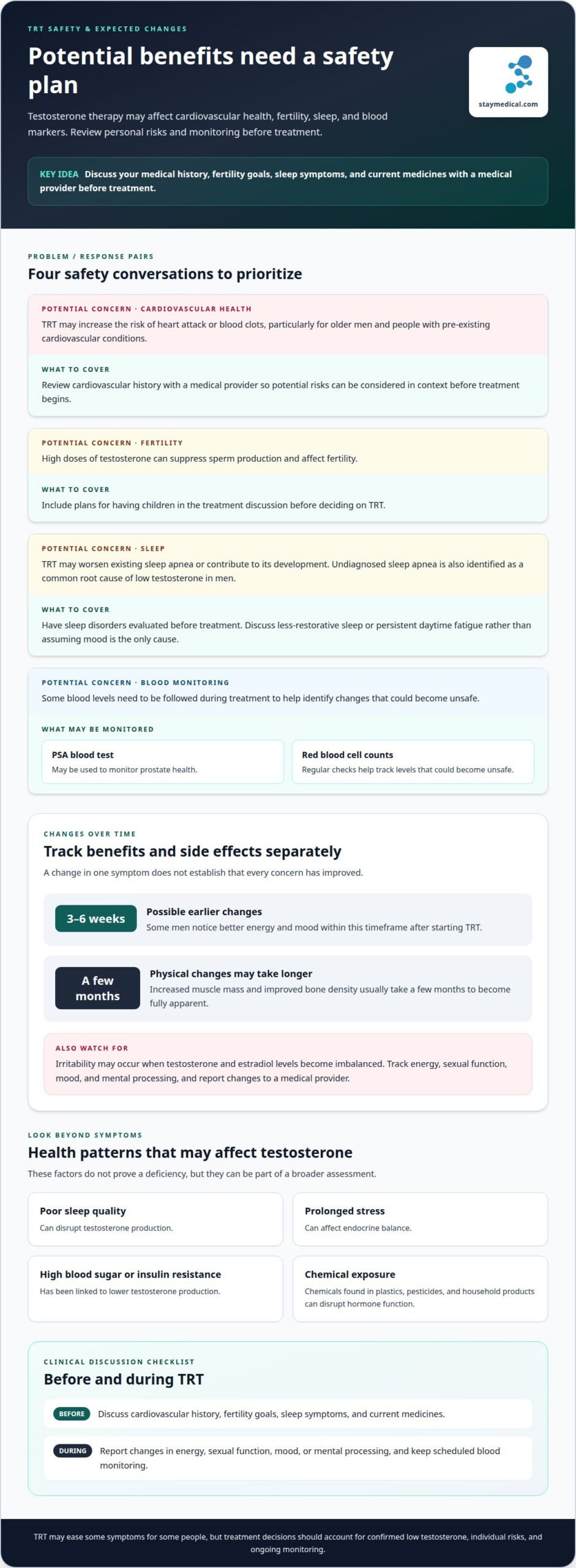
TRT can affect more than mood, so safety discussions should include cardiovascular health, sleep, fertility, and blood monitoring. Testosterone therapy may increase the risk of heart attack or blood clots, particularly for older men and those with pre-existing cardiovascular conditions. A thorough review of medical history helps put those risks in context before treatment begins.
Fertility is another important consideration. High doses of testosterone can suppress sperm production and affect fertility, so plans for having children belong in the treatment discussion. Monitoring matters during treatment, too. A PSA blood test may be used to monitor prostate health, and regular red blood cell counts help track levels that could become unsafe. These checks provide practical information alongside updates on symptoms.
Sleep can influence both hormone health and treatment safety. TRT may worsen existing sleep apnea or contribute to its development, so sleep disorders should be evaluated before treatment. Undiagnosed sleep apnea is also identified as a common root cause of low testosterone in men. If sleep becomes less restorative or daytime fatigue persists, discuss those changes rather than attributing every symptom to mood alone.
Some men notice better energy and mood within three to six weeks after starting TRT. That potential benefit should be weighed against effects such as irritability, which may occur when testosterone and estradiol levels become imbalanced. Libido, concentration, and emotional well-being are useful symptoms to track separately; a change in one does not establish that every concern has improved. Physical changes, including increased muscle mass and improved bone density, usually take a few months to become fully apparent.
Low testosterone can have contributors beyond age or hormone production. Poor sleep quality can disrupt testosterone production, prolonged stress can affect endocrine balance, and high blood sugar or insulin resistance has been linked to lower production. Exposure to chemicals found in plastics, pesticides, and household products can also disrupt hormone function. These factors do not prove a deficiency, but they help explain why a comprehensive assessment considers health patterns, not mood alone.
Before treatment, discuss cardiovascular history, fertility goals, sleep symptoms, and current medicines with a medical provider. During TRT, report changes in energy, sexual function, mood, or mental processing, and keep scheduled blood monitoring. For readers considering testosterone replacement care, these are useful topics to raise as part of an informed treatment discussion.
How Does Low Testosterone Affect Mental Health?
Testosterone is one part of the body’s hormone balance and also interacts with brain signaling. It has been shown to modulate GABA and serotonin levels and influence dopamine signaling. These pathways are involved in emotional responses, motivation, and a sense of well-being. This helps explain why a hormone deficiency may coincide with changes in mood, but it does not mean testosterone alone determines mental health.
A person experiencing low mood might also notice less interest in activities, reduced motivation, or greater anxiety. Fatigue can make everyday tasks feel more demanding, while persistent stress may shape how someone feels and responds emotionally. These experiences can affect work, relationships, and routines. They deserve attention as real symptoms, even when their cause is not clear from how a person feels alone.
Testosterone has also been described as neuroprotective and shown to increase neurogenesis. Those findings help frame possible connections between hormone activity and the brain, but they do not establish that TRT restores cognition or prevents a mental health condition. The distinction matters: a biological role is not the same as a proven treatment effect for everyone experiencing difficulty concentrating or low mood.
Mental clarity can be hard to describe. For example, someone may lose focus during a familiar task, struggle to organize thoughts, or find it harder to stay engaged in a conversation. These changes can occur alongside fatigue or mood disturbance, but they are not specific to low testosterone. Sleep quality, stress, and depression can also affect attention and mental processing, so a single lapse in concentration does not identify the cause.
Changes after starting treatment do not follow one fixed schedule. Some men report feeling better within a few weeks of starting TRT, while others may take several months to experience the full benefits. To make changes easier to discuss, note examples over time, such as energy during the workday, ability to focus on reading, or interest in usual activities. These observations add context beyond a general feeling of improvement.
Keep mood, energy, and concentration distinct when describing changes. For instance, improved energy may make a morning routine easier even if anxiety or low mood continues. Likewise, better focus during a meeting does not necessarily mean emotional symptoms have resolved. Clear examples help a medical provider understand which areas have changed and which still affect daily life.
TRT is not a substitute for a broader mental health assessment. If emotional symptoms persist or interfere with daily responsibilities, discuss them directly with a medical provider, including when they began and how they affect sleep, work, or relationships. That conversation can consider hormone results alongside other relevant factors, rather than treating every change in feeling or focus as a testosterone effect.
The relationship between testosterone deficiency and depression
Depression and low testosterone are associated, but that relationship doesn’t prove one causes the other. Men with lower testosterone levels have been linked with depression, while symptoms such as fatigue, low mood, and reduced sexual interest can overlap. For example, a person experiencing low energy and sadness needs more than a symptom checklist to identify the cause. A blood test helps establish whether testosterone deficiency is present.
That distinction matters for mild depression, too. Feeling less motivated or emotionally flat does not automatically mean testosterone is low, even when those changes appear alongside reduced libido. Sleep problems, stress, and other health factors can also affect mood and energy. A useful first step is to describe specific changes, such as losing interest in a usual activity or struggling to complete familiar tasks, then discuss them with a medical provider.
Evidence about treatment also needs careful interpretation. A meta-analysis found testosterone treatment was associated with alleviation of depressive symptoms in men, including men with overt hypogonadism and men with normal testosterone levels. This describes an association across studies; it does not establish testosterone replacement as a general depression treatment. For an individual, test results and the wider clinical picture matter alongside mood symptoms.
Depression treatment typically begins with approaches such as antidepressants alongside psychotherapy, rather than testosterone replacement. TRT is considered for depression only when low testosterone has been confirmed through blood tests. This helps distinguish a hormone deficiency that may contribute to symptoms from depression with another cause. If testing shows testosterone within a normal range, the next conversation can focus on depression care and other possible influences.
Women can also experience mood changes alongside testosterone deficiency. Lower salivary testosterone levels were associated with depressive symptoms in women in a cited study. Fatigue, low libido, and mood disturbances may also be attributed to other factors, which can contribute to underdiagnosis and undertreatment. That association is a reason to discuss persistent symptoms and testing, not a basis for assuming testosterone is the cause.
For a clearer discussion at a clinic, bring concrete examples rather than relying on a broad label such as “low mood.” Note whether changes involve sleep, daily energy, sexual interest, concentration, or enjoyment of familiar routines. A medical provider can consider those details alongside blood-test results and health history. If deficiency is confirmed, the goal of treatment is to address low testosterone, not to promise it will restore every aspect of mood or resolve depression on its own.
Talking with a medical provider about low testosterone
A focused conversation can help connect mood changes with the rest of your health. Describe what has changed, when you first noticed it, and how it affects daily life. For example, explain whether low mood occurs alongside fatigue, reduced libido, or difficulty concentrating. These details give a medical provider a clearer picture than the general statement “I feel different.”
If you are considering testosterone therapy for mood improvement, ask whether testosterone testing is appropriate. A blood test is needed to diagnose testosterone deficiency. Symptoms alone cannot confirm low testosterone, and reduced sexual interest does not establish its cause. Discuss test results alongside your symptoms and health history. The goal is to understand whether low testosterone may be relevant, not to assume it explains every emotional or physical change.
Patients can also mention changes that may seem unrelated at first. Describe persistent stress, poor sleep, or an exercise change, such as finding a familiar workout harder to complete. These examples help a provider consider broader health factors. If mood stability has become difficult, raise the possibility of low testosterone as part of a full medical discussion before considering prescription medication.
Use the appointment to make treatment expectations specific. If testosterone replacement therapy is being considered, discuss:
- Which symptoms treatment is intended to address, such as low energy or reduced libido.
- Potential effects on fertility, cardiovascular health, sleep apnea, and red blood cell counts.
- How progress and safety will be monitored, including whether PSA testing is appropriate.
- What ongoing symptoms could mean if mood or concentration doesn’t change.
These topics help patients weigh possible benefits against personal health priorities. For example, someone hoping to have children should raise fertility before starting treatment, since high testosterone doses can suppress sperm production. A history of cardiovascular conditions or sleep problems also belongs in the conversation. Clear priorities help shape an informed decision rather than treating a test result in isolation.
Ask what follows testing and how results will be considered alongside your symptoms. If testosterone levels do not indicate deficiency, ask how other causes of low mood or fatigue will be assessed. Depression care commonly involves antidepressants alongside psychotherapy as an initial approach. A discussion of testosterone therapy for mood improvement should also cover what care may address mood symptoms if low testosterone is not the cause.
Discuss testosterone replacement care
Stay Medical Clinic: Testosterone Replacement
Stay Medical Clinic offers Testosterone Replacement for people exploring care after symptoms and blood testing suggest low testosterone may be relevant. A conversation about mood, energy, libido, and health history can help clarify whether hormone treatment belongs in the broader care plan. Testosterone replacement is not a treatment for every cause of depression, so clear expectations matter.
If persistent mood changes or low energy have prompted questions about testosterone, Primary Care can support a broader discussion of your health concerns. Stay Medical Clinic connects the decision to your symptoms and medical needs, rather than treating a test result in isolation. Contact Stay Medical Clinic to discuss whether Testosterone Replacement may fit your care needs.
Take a considered next step
Choosing whether to explore testosterone therapy for mood improvement is best approached as a broader health decision, not a quick fix for difficult emotions. Use your next conversation to clarify what you want to change, which symptoms affect daily life most, and how progress would matter to you. That perspective can help keep treatment decisions grounded in your priorities.
Stay Medical Clinic offers Testosterone Replacement, IV Therapy, and a Weight Loss Program. If you are ready to discuss your concerns, share the changes you have noticed and what you hope to understand. A thoughtful conversation can help you consider a next step that fits your health needs.
Your questions are a meaningful place to begin, and you can take the next step at your own pace.
Frequently Asked Questions
What is Testosterone Replacement Therapy (TRT)?
TRT is medical treatment that provides testosterone when a person has symptoms and testing indicates a deficiency. The goal is to address low levels under clinical supervision, rather than to increase testosterone for performance or general enhancement. Treatment decisions consider symptoms, test results, health history, and personal priorities. For example, a patient may discuss low libido and persistent fatigue alongside laboratory findings before considering whether therapy is appropriate.
Can TRT really help with depression and anxiety?
TRT may ease depressive symptoms for some men with low testosterone, but it is not a general treatment for depression or anxiety. Anxiety can have causes unrelated to hormone levels, so a change in mood does not establish that testosterone is responsible. If anxiety or depression affects work, relationships, or daily routines, describe those effects during a medical assessment. That helps distinguish hormone-related concerns from other mental health needs.
How do I know if I have low testosterone?
Symptoms can raise the question, but a blood test is needed to diagnose testosterone deficiency. Changes worth discussing include reduced libido, fatigue, low mood, and difficulty concentrating. Keep track of when these began and how they affect ordinary activities, such as exercise or completing work. A clinician can consider this pattern alongside laboratory results and health history, rather than treating a single symptom as proof of low testosterone.
Is TRT right for treating depression?
TRT is generally not the first treatment for depression; it may be considered when low testosterone has been confirmed through blood testing. Depression care typically begins with antidepressants alongside psychotherapy. If someone has both depression symptoms and a confirmed deficiency, a provider can consider how each concern should be addressed. The treatment plan should account for mood symptoms and hormone health, rather than assuming one approach will resolve both.
Is There a Risk of Aggressive Behavior or Roid Rage?
Irritability can occur during TRT if testosterone and estradiol levels become imbalanced, but that doesn’t mean everyone experiences aggressive behavior. Doses associated with anabolic steroid abuse are reported as 5-15 times higher than doses used to treat low testosterone and male hormone imbalance. If someone notices a marked change in temper, sleep, or relationships after starting treatment, they should report it as a treatment-related symptom.
Is hormone therapy for men safe?
Testosterone therapy requires a careful review of individual risks and ongoing monitoring; it is not appropriate to describe it as risk-free. Relevant concerns include fertility, cardiovascular history, sleep apnea, prostate health, and red blood cell counts. For example, a man planning to have children should discuss fertility before treatment. Sharing medical history and new symptoms allows a provider to weigh potential benefits against safety considerations over time.
Can testosterone therapy improve mood or treat depression?
It may improve mood for some people with confirmed low testosterone, but it should not be relied on to treat depression by itself. A useful distinction is whether mood changes occur alongside other symptoms, such as reduced sexual interest or persistent fatigue, and whether testing supports deficiency. If depression continues despite addressing hormone concerns, discuss mental health care separately rather than assuming more testosterone is the answer.
What does research say about testosterone therapy and mood in men with low testosterone?
Research has associated testosterone treatment with reduced depressive symptoms in men, including men with overt hypogonadism. That finding supports further clinical consideration, but it does not show that TRT will work for everyone or replace established depression care. A useful discussion connects the evidence to an individual’s test results, symptoms, and treatment goals. Ask how mood changes will be assessed alongside other health outcomes during care.
Disclaimer
This content is for informational purposes only and does not replace evaluation, diagnosis, or treatment by a medical professional. Always consult a qualified healthcare provider for personalized care.