

Beauty IV Drip in Aventura for Hydration and Electrolytes
November 4, 2026
How to Tell Your Doctor You’re Switching and Arrange New Care
November 6, 2026
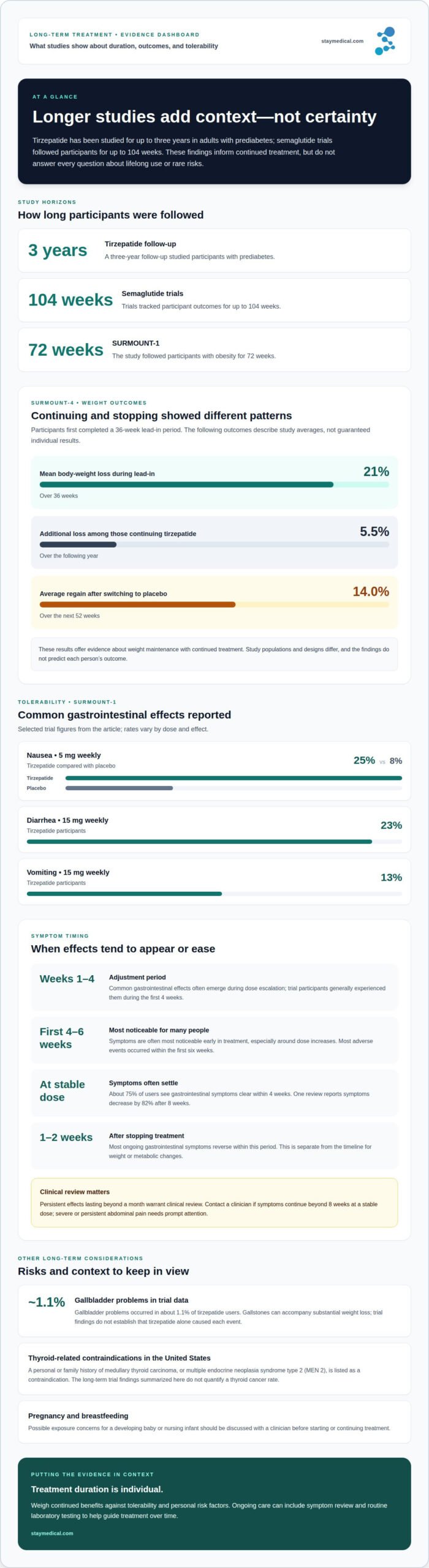
Long-term tirzepatide safety has been studied for up to three years in adults with prediabetes, while semaglutide trials have followed participants for up to 104 weeks. That evidence is reassuring about continued treatment, but it can’t answer every question about lifelong use or rare risks. Understanding tirzepatide long-term use safety means looking at both the duration of the studies and the monitoring that helps guide treatment over time.
It’s reasonable to want more than short-term results before considering ongoing medication. This article explains what longer studies show about tirzepatide and semaglutide, which side effects may occur and how long they can last, and what risks and monitoring matter during treatment. It also explores how long tirzepatide may be used, why stopping can affect weight and metabolic benefits, and how personalized medical care can help you weigh continued treatment against changing needs.
Key Takeaways
- Gastrointestinal effects often ease as the body adjusts, but symptoms that persist or become severe deserve clinical review.
- Longer studies offer useful evidence about tirzepatide and semaglutide, while treatment duration and study populations shape what their findings can tell us.
- Long-term risk discussions include gallbladder and kidney concerns, as well as preserving muscle during weight loss.
- Ongoing care can include symptom review and routine laboratory testing to help guide treatment and monitor health over time.
- There’s no single treatment length for everyone; continued use depends on its benefits, tolerability, and the person’s health goals.
How Long Do Tirzepatide Side Effects Typically Last?
Tirzepatide’s gastrointestinal effects are often most noticeable during the first 4 to 6 weeks, especially around dose increases. Their timing and duration can help patients distinguish expected adjustment from symptoms needing clinical review.
Pregnancy or breastfeeding raises a separate concern: exposure may affect a developing baby or nursing infant. Anyone who is pregnant, planning a pregnancy, or breastfeeding should discuss tirzepatide with a clinician before starting or continuing treatment.
Common Gastrointestinal Effects
Common gastrointestinal effects include nausea, diarrhea, constipation, vomiting, and abdominal discomfort. In SURMOUNT-1, nausea was reported by 25% of participants taking 5 mg weekly, compared with 8% receiving placebo. At 15 mg weekly, diarrhea was reported by 23% and vomiting by 13%. These figures show why tracking symptoms can help patients describe changes clearly during treatment.
Side Effects During Dose Escalation
Dose escalation means gradually increasing tirzepatide to a tolerated dose, and gastrointestinal symptoms often emerge during this adjustment. Trial participants generally experienced common effects during the first 4 weeks; most adverse events occurred within the first six weeks. Dose increases of 2.5 mg every 4 weeks allow tolerability to inform progression, rather than treating escalation as a race toward a higher dose.
Effects After Stopping Treatment
After treatment stops, most ongoing gastrointestinal symptoms reverse within 1 to 2 weeks. This timeline describes side effects, not the return of weight or metabolic changes, which follow different patterns. If nausea, vomiting, diarrhea, or constipation continues after stopping, the duration and severity provide useful details for a clinical assessment.
At a stable dose, about 75% of tirzepatide users see gastrointestinal symptoms clear within 4 weeks. A review reports that symptoms decrease by 82% after 8 weeks. These findings describe trends, not a guaranteed timetable for each patient. Dose, symptom severity, and how the body responds can affect the experience.
For practical monitoring, note when symptoms begin, whether they follow a dose increase, and how they affect eating or drinking. Persistent effects lasting beyond a month warrant clinical review because dose adjustment or treatment may be needed. Patients whose gastrointestinal symptoms continue beyond 8 weeks at a stable dose should contact their clinician. Severe or persistent abdominal pain also needs prompt attention.
Are there any long-term studies on the safety of semaglutide and tirzepatide?
Yes. Tirzepatide studies include follow-up lasting three years, while semaglutide trials have tracked outcomes for up to 104 weeks. The findings help describe weight maintenance and safety, but each trial’s duration and participants shape what its evidence can show.
Safety for Obesity and Weight Control
Longer studies assess whether weight loss continues and treatment remains tolerable over time. In SURMOUNT-4, participants lost a mean 21% of body weight during the 36-week lead-in period. Participants who continued tirzepatide after that period lost an additional 5.5% of body weight over the following year, according to SURMOUNT-4 study investigators. This offers evidence about maintenance with continued treatment, not a guaranteed outcome for every patient.
After the lead-in, participants who stopped and switched to placebo regained an average of 14.0% of body weight over the next 52 weeks. SURMOUNT-1 also followed participants with obesity for 72 weeks, while a three-year follow-up studied participants with prediabetes. Together, these trials add longer-term context, though their populations and study designs differ.
Complications Associated With Weight Loss
Gallstones and related gallbladder problems can accompany substantial weight loss, so changes in weight matter alongside medication effects. Gallbladder problems occurred in about 1.1% of tirzepatide users in trial data, and cholelithiasis was more frequent in tirzepatide groups than placebo during the SURMOUNT-1 three-year trial.
Rapid or substantial weight change can contribute to gallstones. Persistent abdominal pain, for example, needs clinical attention. Trial findings don’t establish that tirzepatide alone caused each event, because weight loss itself can affect gallbladder risk. A careful review considers symptoms, treatment course, and the amount of weight lost.
Thyroid Cancer Risk
For US use, the listed contraindications are a personal or family history of medullary thyroid carcinoma or multiple endocrine neoplasia syndrome type 2 (MEN 2). These histories matter when weighing tirzepatide, because they identify people for whom treatment is contraindicated.
The long-term trial findings summarized here don’t quantify a thyroid cancer rate. A clinician can assess relevant personal and family history before treatment. That is distinct from claiming that long-term studies establish zero risk.
In the United States, tirzepatide is used for weight control in obesity and for type 2 diabetes; dosing is increased in 2.5 mg increments every 4 weeks according to tolerability. Treatment cost varies with insurance coverage, pharmacy benefits, and the prescribed treatment, so there is no single cost that applies with or without insurance.
For tirzepatide long-term use safety, the practical takeaway is to weigh continued weight-management benefits against tolerability and individual risk factors. A personalized weight-loss program can support a discussion of treatment goals and ongoing care.
Potential long-term adverse events, including sarcopenia
Tirzepatide’s potential long-term risks include gallbladder events, kidney injury, and loss of lean tissue during weight loss. Pancreatitis appears to be a small potential risk; people with a history of pancreatitis are advised against GLP-1 receptor agonist use.
Adverse Events and Tolerability Over Time
Tolerability describes how well a person manages medication effects as treatment continues. Gastrointestinal effects may ease over time, but ongoing constipation, vomiting, or difficulty eating can still affect daily wellbeing. In the SURMOUNT-1 three-year trial, early discontinuation because of treatment-emergent adverse events was higher with tirzepatide than placebo.
That distinction matters: symptoms becoming less disruptive doesn’t mean every risk disappears. Note changes after dose adjustments and discuss whether symptoms interfere with hydration, meals, or everyday activities. A persistent pattern gives the clinician a clearer basis for reviewing the dose and whether to continue treatment.
Serious Adverse Events
Serious adverse events are health problems requiring substantial medical attention, rather than temporary discomfort alone. A review reports a serious-event risk below 1% for tirzepatide, but rare outcomes still matter when weighing prolonged treatment.
Available follow-up beyond 2 years is needed to better capture rare serious events and longer-term outcomes. This limitation makes symptom assessment important throughout treatment, not only during dose increases. Severe or persistent abdominal pain warrants prompt clinical attention, particularly when accompanied by vomiting or difficulty keeping fluids down.
Gallbladder Events and Rapid Weight Loss
Gallbladder events can occur alongside weight loss, making the pace and extent of change relevant to risk assessment. Gallbladder problems occurred in about 1.1% of tirzepatide users in trial data, and cholelithiasis appeared more frequently in tirzepatide groups than placebo during the SURMOUNT-1 three-year trial.
Significant weight loss can increase the risk of gallstones and may also raise the risk of cholecystitis or choledocholithiasis. Persistent upper abdominal pain, for example, merits clinical review. Both the medication and weight change belong in that conversation; trial observations alone don’t establish the cause of an individual event.
Potential Pancreatic and Kidney Problems
Pancreatitis is a potential concern, and available evidence suggests a small risk with GLP-1 receptor agonists. People with a history of pancreatitis are advised against using them. Severe, persistent abdominal pain should be assessed promptly rather than treated as routine digestive discomfort.
Acute kidney injury occurred in 0.5% of Zepbound-treated users and 0.2% of placebo users. Severe gastrointestinal symptoms can contribute to fluid loss, which may place additional strain on kidney function. Persistent vomiting or diarrhea therefore deserves attention, especially when drinking becomes difficult. Kidney function checks can help monitor patients during long-term use.
Clinical monitoring and laboratory checks
Long-term follow-up combines symptom review with laboratory testing to help clinicians assess tolerability and ongoing health needs. The monitoring plan can respond to changes such as persistent diarrhea, vomiting, or difficulty maintaining fluid intake.
Patient Monitoring and Management
Monitoring means tracking treatment effects and health changes over time, rather than focusing only on weight. At follow-up, describe when symptoms began, whether they followed a dose increase, and how they affected eating or drinking.
For example, ongoing vomiting or diarrhea matters because fluid loss can affect kidney function. Severe or persistent abdominal pain needs prompt clinical attention. Sharing these details helps the clinician assess whether symptoms call for closer review or a change to the treatment plan.
Provider Follow-Up and Laboratory Checks
Provider follow-up brings symptom reports and laboratory results together to guide continued treatment. Routine laboratory testing may be part of follow-up for people using tirzepatide. Periodic kidney function checks are especially relevant when gastrointestinal symptoms are severe.
Laboratory results can reveal information that symptoms alone may not. A clinician can consider them alongside treatment duration, dose changes, and reported effects. This supports a fuller assessment than weight change alone, particularly when vomiting or diarrhea persists.
Monitoring also means distinguishing short-lived effects from symptoms that continue. For example, reporting nausea after a dose increase gives the clinician a timeline to compare with later symptoms and laboratory findings. If symptoms ease, that change informs the next review; if they persist, it signals a need to reassess tolerability.
Trial findings add context, but they don’t replace individual follow-up. Gastrointestinal effects were common in tirzepatide studies, while severe events and their consequences require attention to the person’s symptoms and health. A reduction in symptoms over time is useful information, but scheduled laboratory checks remain valuable.
At each clinical review, follow a straightforward sequence: discuss symptoms, note their timing in relation to dose changes, and consider laboratory results together. Report persistent vomiting, diarrhea that affects fluid intake, or abdominal pain that doesn’t resolve. These details help focus follow-up on changes that matter for safe ongoing care.
Monitoring remains relevant during stable treatment, not only during dose titration. Periodic kidney checks and routine laboratory testing provide structured points for reviewing health over time. If gastrointestinal symptoms become severe, checking kidney function can connect a change you feel with a measure the clinician can assess.
Duration of long-term tirzepatide use
Long-term tirzepatide use means continuous treatment for one year or longer. For many people managing obesity or type 2 diabetes, treatment is intended to be chronic, so the decision isn’t simply whether to reach a target weight. It also involves reviewing benefits, tolerability, symptoms, and metabolic health as treatment continues.
Study duration helps explain what clinicians can evaluate. Tirzepatide trials commonly followed participants for 52 to 72 weeks, and clinical trials have followed patients for as long as 104 weeks. The SURPASS diabetes trials extended up to 40 weeks, while the SURMOUNT-1 obesity trial lasted 72 weeks. Each time frame offers evidence for its own study population and outcomes.
Longer follow-up adds perspective. In the SURMOUNT-1 three-year trial, participants with prediabetes received tirzepatide for 176 weeks, followed by 17 weeks off treatment. This helps show how weight and metabolic measures can change during extended treatment and after stopping. It does not mean every patient needs the same duration or follows an identical course.
Stopping is part of the duration question, not a separate endpoint. After participants stopped tirzepatide following 176 weeks of treatment, weight, type 2 diabetes risk, and blood pressure moved back toward baseline during the 17-week off-treatment period. SURMOUNT-4 also found average weight regain after participants switched to placebo. These findings make continued treatment and a plan for stopping important topics in ongoing care.
For an individual, the decision to continue weighs treatment benefits against adverse effects and changing health needs. Nausea or other persistent symptoms may influence tolerability, while improvements in weight or diabetes measures can inform the benefit side. Semaglutide studies provide a comparison, not a direct substitute for tirzepatide evidence: the SUSTAIN program evaluated semaglutide over 30 to 104 weeks.
There is no single treatment length that applies to every patient. The practical question is whether continued therapy remains appropriate as goals, symptoms, and metabolic health evolve. A scheduled review can bring those factors together: whether treatment is helping manage obesity or diabetes, whether side effects are manageable, and what changes may follow if treatment stops.
Stay Medical Clinic: Tirzepatide Miami
Stay Medical Clinic offers Tirzepatide Miami care for people considering medication as part of weight management. If you’re weighing long-term treatment, managing side effects, or considering whether to continue, a clinical conversation can help connect your goals with the safety and monitoring questions discussed above.
Stay Medical Clinic’s Weight Loss Program provides a setting to discuss treatment in the context of your broader health goals. The clinic also offers Testosterone Replacement and IV Therapy, which address different health needs and aren’t substitutes for tirzepatide care.
If you’re considering tirzepatide or want to discuss your current treatment, you’re welcome to contact Stay Medical Clinic.
Make Your Next Treatment Decision With Clarity
Moving from research to a treatment decision means clarifying what you want therapy to help you achieve. Discussion of tirzepatide long-term use safety is most useful when connected to your health goals, comfort with ongoing treatment, and concerns about possible risks. Bring forward questions that remain unresolved; you don’t need to feel pressured to decide all at once.
A focused conversation can organize questions about your goals, concerns, and what you would consider a meaningful outcome. Clear expectations make it easier to revisit decisions without treating treatment duration as fixed. Your priorities and experience can guide the next discussion.
An ongoing plan should leave room for reassessment. Changes in priorities, treatment experience, or health can shift what feels worthwhile. An open conversation can clarify those trade-offs and place weight management in the context of your broader care.
Your questions deserve thoughtful attention. Take the next step at a pace that feels right for you.
Frequently Asked Questions
Why Is This Important?
Understanding long-term safety helps you weigh continued treatment against possible risks and changing health goals. A person whose weight, blood sugar, or tolerance changes over time may need a different treatment discussion than someone whose circumstances remain stable. Ask how follow-up will assess your progress, side effects, and overall health, rather than judging treatment by weight alone. Clear monitoring plans make it easier to raise concerns early.
What are the known long-term side effects of tirzepatide?
Known concerns include gastrointestinal effects, gallbladder events, and kidney injury; pancreatitis is also a potential risk. In SURMOUNT-1, hair loss was reported in about 7% of female tirzepatide users and fewer than 1% of male users. These findings don’t mean every effect will occur, but they show why changes beyond appetite and weight deserve attention. Persistent symptoms or new health concerns are useful topics for follow-up.
What serious risks and boxed warnings are associated with tirzepatide?
A key thyroid-related restriction is that tirzepatide is contraindicated for people with a personal or family history of medullary thyroid carcinoma or with MEN 2. Other serious concerns include pancreatitis, gallbladder disease, and acute kidney injury. Severe or persistent abdominal pain needs prompt clinical attention, particularly if accompanied by vomiting. Share relevant personal and family medical history during treatment planning so these risks can be considered.
What do clinical trials show about tirzepatide safety after several years of use?
Three-year follow-up provides evidence about continued use, but its participants matter when applying results. The SURMOUNT-1 three-year trial enrolled 1,032 people with prediabetes; the mean baseline age was 48 years, and 64% were women. These characteristics describe the study group, not every person considering treatment. Longer observation can reveal patterns, while additional follow-up remains important for identifying rare events and outcomes beyond the trial period.
What happens to weight and health when tirzepatide is stopped?
Weight can return, and metabolic improvements may diminish after treatment ends. In the SURMOUNT-1 three-year follow-up, weight, type 2 diabetes risk, and blood pressure moved back toward baseline during the 17-week period after participants stopped treatment. If stopping is being considered, discuss how weight and relevant health measures will be followed afterward. Planning for that transition helps make the next steps deliberate rather than reactive.
How does tirzepatide’s long-term safety compare with semaglutide?
Both medicines can cause gastrointestinal adverse effects, and reported rates overlap. One review reported gastrointestinal event incidence of 67-72% for tirzepatide and 71-75% for semaglutide. Those ranges don’t establish that one medicine is safer for an individual: study designs, participants, doses, and follow-up differ. A useful comparison considers the person’s treatment goals, tolerability, medical history, and monitoring needs, not a single rate in isolation.
Disclaimer
This content is for informational purposes only and does not replace evaluation, diagnosis, or treatment by a medical professional. Always consult a qualified healthcare provider for personalized care.