

Lab tests for chronic fatigue: what they can reveal
October 27, 2026
TRT and Fertility: Exploring Clomiphene and Recovery Options
October 29, 2026
Tirzepatide weight loss results, month by month, tend to build gradually rather than arrive all at once. The usual schedule starts at 2.5 mg once weekly for weeks 1-4, with the dose adjusted over time as treatment progresses. Early changes may be subtle; the first month is often about adjusting to treatment and building routines that can support longer-term progress.
It’s natural to want a clear timeline, especially when you’re making a meaningful decision about your health. Tirzepatide is a prescription medication that acts on GIP and GLP-1 pathways involved in appetite and metabolic signaling, so its effects can unfold over time rather than follow a simple, identical pattern for everyone.
This guide explains what tirzepatide is, how progress may look in the first months and during longer-term treatment, and what studies report about weight changes after stopping. It puts month-by-month expectations in context, including why the early weeks may look different from the months that follow.
Key Takeaways
- Tirzepatide dosing typically starts low and increases gradually, so early treatment is focused on adjustment rather than rapid weight change.
- At 72 weeks, average weight loss in a major trial varied by dose, from 15.0% at 5 mg to 20.9% at 15 mg.
- Progress can become more noticeable over the first months and continue with sustained treatment, but the timeline differs from person to person.
- Weight regain can occur after stopping tirzepatide; the SURMOUNT-4 results help show why ongoing treatment decisions matter.
- Learn how trial averages relate to the 3-, 6-, 12-, and 18-month milestones, and what to consider when planning for long-term progress.
Average weight loss at 72 weeks by Zepbound dose
At 72 weeks, average weight reduction in Zepbound Study 1 differed across the 5 mg, 10 mg, and 15 mg weekly doses. Participants taking 5 mg lost an average of 15.0% of their body weight, while those taking 10 mg lost 19.5%. Participants taking 15 mg lost an average of 48.6 lb. These are group averages from a long-term trial, not a month-by-month prediction for each patient.
Zepbound and Mounjaro contain the same active ingredient, tirzepatide, so the medicine’s weight-loss effects are not inherently different because of the brand name alone. The figures here come from a Zepbound weight-management trial, not a direct comparison of Zepbound and Mounjaro.
The trial’s results also show the importance of reading percentages and pounds together. At 5 mg, the average reduction was 34.0 lb and 15.0% of starting body weight; at 10 mg, it was 45.5 lb and 19.5%. At 15 mg, participants lost an average of 48.6 lb. Different starting weights can make the same number of pounds represent different percentages, so neither measure tells the whole story.
- 5 mg weekly: 15.0% and 34.0 lb average weight loss after 72 weeks.
- 10 mg weekly: 19.5% and 45.5 lb average weight loss after 72 weeks.
- 15 mg weekly: 48.6 lb average weight loss after 72 weeks.
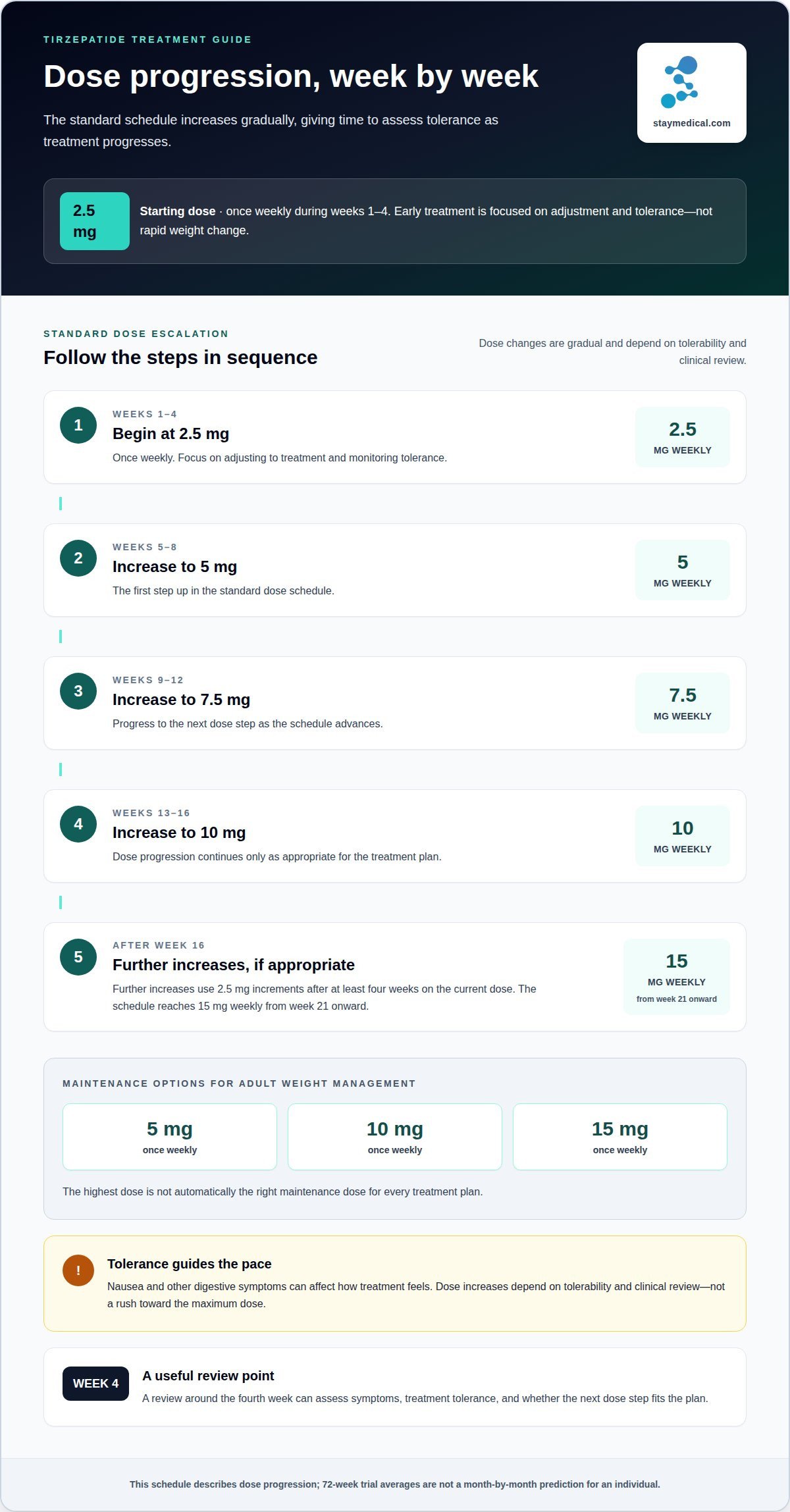
The standard dose escalation schedule begins with 2.5 mg once weekly during weeks 1-4, then increases to 5 mg during weeks 5-8. It advances to 7.5 mg during weeks 9-12 and 10 mg during weeks 13-16. Further increases use 2.5 mg increments after at least four weeks on the current dose; the schedule reaches 15 mg weekly from week 21 onward.
That gradual progression gives patients time to assess tolerance as the dose changes. Nausea and other digestive symptoms can affect how treatment feels, so dose increases depend on tolerability and clinical review, rather than a rush toward the maximum. For adult weight management, recommended maintenance doses are 5 mg, 10 mg, or 15 mg once weekly. The highest dose isn’t automatically the right maintenance dose for every treatment plan.
First-month treatment starts at 2.5 mg weekly, with adjustment and tolerance monitoring taking priority over rapid reduction. The 72-week averages describe weight outcomes, not insulin use or an individual patient’s early response. A review around the fourth week can help assess symptoms, treatment tolerance, and whether the next dose step fits the plan.
Do you regain weight after stopping tirzepatide?
Weight regain can follow treatment withdrawal. In the SURMOUNT-4 trial, participants first lost an average of 21% of body weight during 36 weeks on Zepbound. After switching to placebo, they regained 14% of their weight over the following year, according to JAMA. The study compared continued treatment with stopping the medication, rather than testing a brief interruption.
After the initial 36 weeks, 670 eligible participants were assigned either to continue tirzepatide or switch to placebo for 52 weeks. Participants who stopped remained almost 10% lighter than their initial weight after that year, despite regaining weight. The findings show that stopping can change the direction of weight progress, while also showing that regain did not erase all prior loss in this trial.
Tirzepatide acts on GIP and GLP-1 pathways involved in appetite, digestion, and metabolic signaling. It mimics hormones naturally released by the intestine after a meal. By affecting these signals, treatment can help patients feel fuller and experience less appetite. These effects can support weight management while treatment continues; stopping removes the medication’s ongoing influence on those pathways.
Appetite suppression may be noticeable within one to two weeks of starting treatment. The weekly injection begins at a lower dose, then increases gradually according to the treatment schedule and tolerance. Appetite changes may occur alongside digestive side effects, such as nausea, constipation, diarrhea, or vomiting. Contact a healthcare provider promptly about severe or persistent symptoms, ongoing vomiting, severe abdominal pain, signs of dehydration, or difficulty tolerating fluids.
There is no fixed week-by-week appetite pattern that applies to everyone. During the first weeks, the focus is adjusting to the injection and observing appetite and symptoms. As the dose changes, track fullness, hunger, eating routines, and side effects together. Monthly weight changes also depend on dose progression, treatment consistency, food choices, activity, and symptom management.
For weight management in the United States, the stated eligibility criteria are a BMI of at least 30, or at least 27 with a weight-related comorbidity. Tirzepatide and semaglutide act on overlapping but different pathways: tirzepatide works through GIP and GLP-1, while semaglutide works primarily through GLP-1. These mechanisms alone don’t establish which medication will produce greater weight loss for a particular patient.
Medication cost depends on formulation, pharmacy, and insurance coverage, and pricing is provided after a quote request. Insurance affects patient costs through plan coverage and cost-sharing; without coverage, the pharmacy and prescribed formulation remain relevant factors. A clinician can also weigh obesity-related health needs, appetite response, dose tolerance, and treatment goals when reviewing ongoing care. Weight-management support can help put those considerations into a clinical plan.
Weight-loss timeline during the first weeks and months
A guide to tirzepatide weight loss results month by month should distinguish early adjustment from longer-term change. Trial outcomes are measured over defined periods, while individual progress unfolds throughout treatment.
Early Changes Over Time
The early timeline describes how weight, appetite, and treatment tolerance may change during the first weeks. It matters because the response to a starting dose cannot predict the full course of treatment.
During weeks 1-4, some patients lose weight, while others see little scale change. This phase focuses on safe adjustment, monitoring tolerance, and establishing supportive habits. Meaningful weight loss may become apparent four to eight weeks after treatment begins. Appetite changes, eating patterns, and activity can influence what patients notice alongside the scale.
During the first two to three months, weight changes may become easier to measure. The standard dose schedule advances in steps, allowing time to observe changes between increases. At a provider review, describe appetite, symptoms, and consistency with injections. Considering these factors together gives more context than interpreting a single weigh-in.
Results Across Longer Treatment Periods
Longer trials show average outcomes beyond the initial adjustment period. These results matter because early changes alone do not represent the full results measured during sustained treatment.
A 2022 phase 3 randomized clinical trial found an average 20% body-weight reduction over 72 weeks. In SURMOUNT-3, participants taking tirzepatide achieved mean weight loss of 26.6% from study entry over 84 weeks. That total includes a 12-week lifestyle-intervention lead-in before the treatment period.
The measurements use different time frames and starting points. SURMOUNT-3 reports change from study entry, while the 72-week trial reflects its own study period. The results therefore aren’t interchangeable monthly estimates. Starting weight, dose progression, treatment duration, and blood sugar status also help explain why clinical trial averages may differ.
Average Results at Key Checkpoints
Three-, six-, twelve-, and eighteen-month checkpoints help organize progress into useful review periods. Treat them as opportunities to assess trends, not as promises of a particular amount of weight loss.
At three months, review the direction of change alongside dose progression and tolerance. At six months, consider whether the trend has continued as treatment advanced. Twelve months provides a broader view of response and habits. Eighteen months is closer to the extended treatment periods represented by 72- and 84-week trials.
When reviewing tirzepatide weight loss results month by month, don’t divide a trial average into equal monthly amounts. Studies report results at specific endpoints, not a steady rate for every month. Compare weight trends using consistent measurements, then consider dose, injection consistency, symptoms, and treatment duration together. This makes each checkpoint more useful while keeping trial findings in context.
Weight loss during sustained tirzepatide treatment
Sustained treatment involves continuing tirzepatide over an extended period while tracking body weight and treatment tolerance. Longer trials show that weight reduction may continue beyond the opening months, and why one early weigh-in cannot capture the full pattern. Trial averages provide helpful context, but results depend on each study’s population and duration.
In the SURMOUNT-OSA trials, participants with obesity and moderate-to-severe obstructive sleep apnea lost an average of 18-20% of body weight over 52 weeks. These findings demonstrate substantial average change during a sustained treatment period in that specific group. They don’t represent a month-by-month forecast or apply identically to every patient. The study population and health condition matter when interpreting the outcome.
SURMOUNT-3 offers another view of sustained treatment after a lifestyle intervention. Participants taking tirzepatide achieved an additional mean weight loss of 21.1% during the 72-week treatment period after the 12-week lead-in. The result measures change after randomization, not from the start of the lead-in. That distinction matters when comparing trial figures with personal progress measured from a different starting point.
For participants who continued tirzepatide in the continuation study, overall weight loss was about 25% after 88 weeks of treatment. Continued treatment and switching to placebo led to different weight trajectories, highlighting the role of ongoing medication exposure. A placebo comparison helps researchers assess treatment effects, but it doesn’t make the trial duration or participants interchangeable with other studies.
Diabetes status can also shape trial averages. In SURMOUNT-2, participants with type 2 diabetes taking 15 mg lost an average of 15.7% of body weight over 72 weeks. The placebo group with type 2 diabetes lost 3.3% over the same period. These results differ from studies enrolling participants without diabetes, so they should be read within their own clinical context.
Tirzepatide acts on GIP and GLP-1 pathways, including receptors involved in appetite and metabolic signaling. With sustained use, those effects can support reduced food intake and ongoing weight change. Dose tolerance remains relevant: nausea, vomiting, and diarrhea are among the digestive symptoms reported during treatment. Severe or persistent symptoms can disrupt daily routines and fluid intake, making symptom monitoring important throughout treatment.
Compare progress using the same measure over time, such as body-weight percentage, and note the treatment period alongside it. A trial’s 52-, 72-, or 88-week result describes an average across participants, not a uniform rate of reduction each month. Starting weight, diabetes status, dose, and study design all influence what each result means. That context makes sustained-treatment figures more informative than a single headline number.
What are average weight loss results with tirzepatide at 3, 6, 12, and 18 months?
There isn’t a separate trial average for each of these four calendar checkpoints. The major results discussed here report outcomes over longer, defined study periods, so they should not be divided into monthly estimates. Use the checkpoints to review your trend and treatment progression, then compare them with trial results measured over their actual durations.
At 3 months: this is an early review point, not a stand-alone trial endpoint. Consider the direction of weight change, dose progression, appetite, and treatment tolerance together. The standard schedule remains in its gradual escalation phase during this period, so the scale may not reflect the longer-term trial outcomes yet.
At 6 months: review the trend across the preceding months rather than treating one weigh-in as the result. Dose, consistency, and starting weight provide context. The 72-week trials extend beyond this checkpoint, so their averages don’t establish a six-month average.
At 12 months: sustained-treatment outcomes offer a more relevant comparison, but study populations matter. In SURMOUNT-2, participants with type 2 diabetes taking 15 mg lost an average of 15.7% of body weight over 72 weeks. The placebo group with type 2 diabetes lost 3.3% over that period. These are trial-period results, not 12-month figures.
At 18 months: the 72-week endpoint is a useful nearby reference, but it is not an exact 18-month measurement. In SURMOUNT-1, adults without diabetes taking 15 mg weekly lost an average of 20.9% of body weight over 72 weeks. The difference between SURMOUNT-1 and SURMOUNT-2 underscores why diabetes status and trial population should accompany any comparison.
Another example comes from SURMOUNT-3. Its efficacy estimand found a 21.1% decrease in body weight from randomization to week 72. Under its treatment-regimen estimand, the decrease was 18.4% over the same period. These figures use different analysis approaches, so they aren’t interchangeable or direct monthly forecasts.
For a practical checkpoint review, record weight using the same units and compare the trend across visits. Pair that record with current dose, missed administrations, appetite changes, and treatment duration. Then distinguish an individual trend from a study average: SURMOUNT-1, SURMOUNT-2, and SURMOUNT-3 used different participant groups and analyses. This context makes 3-, 6-, 12-, and 18-month discussions more meaningful without inventing results between trial endpoints.
Stay Medical Clinic: Weight Loss Program
Stay Medical Clinic’s Weight Loss Program is a next step if you’re considering tirzepatide or already tracking your progress. A consultation can put trial averages, dose changes, appetite shifts, and your health goals into context. Month-by-month results are only part of the picture: treatment tolerance and longer-term weight-management priorities matter, too.
If you’re weighing your options, bring questions about your timeline, progress, or next steps. The conversation can focus on what matters to your care, without treating study averages as a personal forecast.
To discuss your goals, contact Stay Medical Clinic.
Make your next step intentional
Start by clarifying what progress means to you beyond the number on the scale. Consider which changes matter most, what feels sustainable in daily life, and what you want to ask before making treatment decisions. This perspective can make discussions about tirzepatide weight loss results month by month more personal and useful.
Bring those priorities into a conversation about your health goals and the approach that suits them. A thoughtful plan considers your overall well-being, not just a target weight. Your questions deserve attention, and you should have room to make informed choices.
Every meaningful step starts with understanding what matters to you. Move forward with care and confidence.
Frequently Asked Questions
What is Tirzepatide?
Tirzepatide is a prescription medicine that acts on GIP and GLP-1 pathways involved in appetite, digestion, and metabolic signaling. It mimics hormones naturally released by the intestine after eating. For weight management, these actions can influence hunger and fullness over time. It is taken as a weekly injection, with the dose adjusted gradually as treatment progresses and tolerance is assessed.
What Happens During the First Month?
The first month typically begins with 2.5 mg once weekly during weeks 1-4. This starting dose gives patients time to adjust and allows tolerance and symptoms to be monitored. The focus is not rapid weight loss. If the treatment plan progresses as scheduled, the next dose step is 5 mg during weeks 5-8. Appetite changes and scale changes can differ between individuals.
What Side Effects Are Common?
Common side effects are usually digestive and may include nausea, constipation, diarrhea, vomiting, bloating, reflux, decreased appetite, and abdominal discomfort. For example, nausea or changes in bowel habits may occur when treatment begins or the dose changes. Track symptoms alongside injection timing and eating patterns. Contact a healthcare provider about symptoms that are severe, persistent, or concerning.
Will I Lose Weight During the First Month?
Some people lose weight during the first month, while others notice no significant change. The initial weeks focus on adjusting to the starting dose and monitoring tolerance, so an early scale result does not represent the full course of treatment. For a clearer picture, measure weight consistently over time and consider the trend alongside dose changes, appetite, and symptoms.
How much weight do people lose on tirzepatide month by month?
There is no single reliable monthly amount that applies to everyone. Results depend on factors such as dose progression, treatment duration, starting weight, diabetes status, appetite response, and tolerance. Clinical trials report averages over defined periods, not a fixed amount of loss for each calendar month. Comparing progress over several check-ins can be more useful than expecting the same reduction every month.
How quickly does tirzepatide start working for weight loss?
Appetite suppression may be noticeable within one to two weeks after starting treatment, while meaningful weight loss may become apparent four to eight weeks after the first dose. These are different milestones: appetite can change before the scale shows a clear trend. The starting dose and gradual dose increases also shape the early timeline, so track appetite, symptoms, and weight separately.
How do tirzepatide weight loss results vary by dose?
In Zepbound Study 1, average weight loss after 72 weeks was 15.0% at 5 mg weekly and 19.5% at 10 mg weekly. At 15 mg weekly, participants lost an average of 20.9% of body weight. These are study averages, not guaranteed outcomes. Dose escalation and maintenance choices depend on treatment progress and tolerance, not simply on choosing the highest dose.
What are common side effects and serious risks of tirzepatide?
Common side effects include nausea, vomiting, diarrhea, constipation, bloating, reflux, decreased appetite, and abdominal discomfort. Ongoing vomiting, severe abdominal pain, signs of dehydration, or inability to tolerate fluids require prompt attention. Contact your healthcare provider if these occur or if other symptoms are severe or persistent. Recording when symptoms begin, how severe they are, and whether the dose recently changed can help clarify the pattern.
Disclaimer
This content is for informational purposes only and does not replace evaluation, diagnosis, or treatment by a medical professional. Always consult a qualified healthcare provider for personalized care.