

Causes of High Blood Pressure: What Can Raise Your BP?
October 10, 2026
Cost of TRT in Miami: What Shapes Your Total in 2026
October 12, 2026
Weight changes with PCOS aren’t a measure of willpower, and a generic diet plan may not reflect what’s happening in your body. Choosing a PCOS weight loss doctor Miami patients can consult means making space to discuss your health history, concerns, and goals, not just a number on the scale.
If weight has been difficult to understand or manage, it makes sense to want individualized guidance. PCOS can be associated with metabolic and hormonal factors that may affect weight, so care should start with your circumstances rather than assumptions or blame.
This article explains how PCOS and weight may relate, what a medical evaluation can cover, and what follow-up may involve. It also outlines practical topics to raise during a consultation, including your health history, goals, and whether laboratory testing or medication management may be appropriate. Stay Medical Clinic’s weight loss program includes ongoing monitoring and clinical oversight. Located in Brickell, the clinic offers Miami-area patients a place to discuss a considered approach to weight care.
Key Takeaways
- PCOS-related weight changes can have several contributing factors, so they deserve a thoughtful, individualized conversation rather than blame.
- A medical evaluation may explore your health history, concerns, and goals, with examination or testing guided by your circumstances.
- Nutrition, movement, sleep, behavioral support, and medical care can all be part of the discussion. Medication decisions are personal and require clinical assessment.
- Prepare for an appointment by noting your goals, current medicines, relevant health history, and any prior test results or treatment information.
- A PCOS weight loss doctor Miami patients see at Stay Medical Clinic can discuss its weight loss program, which includes ongoing monitoring, medication management, and clinical oversight.
PCOS and Weight in Miami: Why the Story Is More Complex Than Willpower
Polycystic ovary syndrome (PCOS) is a hormonal condition that can affect ovulation and may involve signs of higher androgen levels, such as acne or increased facial hair. Despite its name, PCOS doesn’t mean a person necessarily has ovarian cysts. The condition can look different from one person to another, and weight alone cannot establish whether someone has it.
Weight concerns can be frustrating, especially when familiar advice doesn’t fit your experience. PCOS may be one part of the picture, but it isn’t a personal failing or a complete explanation for every change. A thoughtful discussion considers your health and goals without assuming that everyone with PCOS needs to lose weight.
A personal story can offer perspective, but it can’t predict another person’s experience. This video shares one individual’s account of weight loss with PCOS:
Can PCOS affect weight management?
Yes, weight management may feel different for some people with PCOS, while others have little or no difficulty with weight. Insulin resistance, which can affect how the body responds to insulin, is one possible clinical consideration. It isn’t present in everyone with PCOS and shouldn’t be treated as a universal explanation for weight changes. Other influences can include eating patterns, movement, sleep, stress, medications, and individual health circumstances.
PCOS is generally assessed through a person’s symptoms and clinical findings, not weight alone. An assessment may involve evaluating signs such as irregular ovulation, higher androgen levels, and ovarian appearance, while considering other possible explanations. For a general overview of symptoms and associated conditions, see Polycystic Ovary Syndrome (PCOS). Educational information can help you prepare, but it can’t determine your diagnosis.
Why weight alone cannot describe health
A number on the scale can’t capture the full context of your wellbeing. Your symptoms, medical history, daily routines, and personal priorities matter too. Weight changes don’t confirm or rule out PCOS, and a person’s weight doesn’t define their health or worth.
If weight is one of your concerns, describe what you’ve noticed and what you hope to address. You might want to understand a change, support broader health, or explore options with a clinician. A PCOS weight loss doctor Miami patients consult should consider these details rather than defaulting to a single plan. Care begins with a conversation, not blame, and next steps should reflect your circumstances.
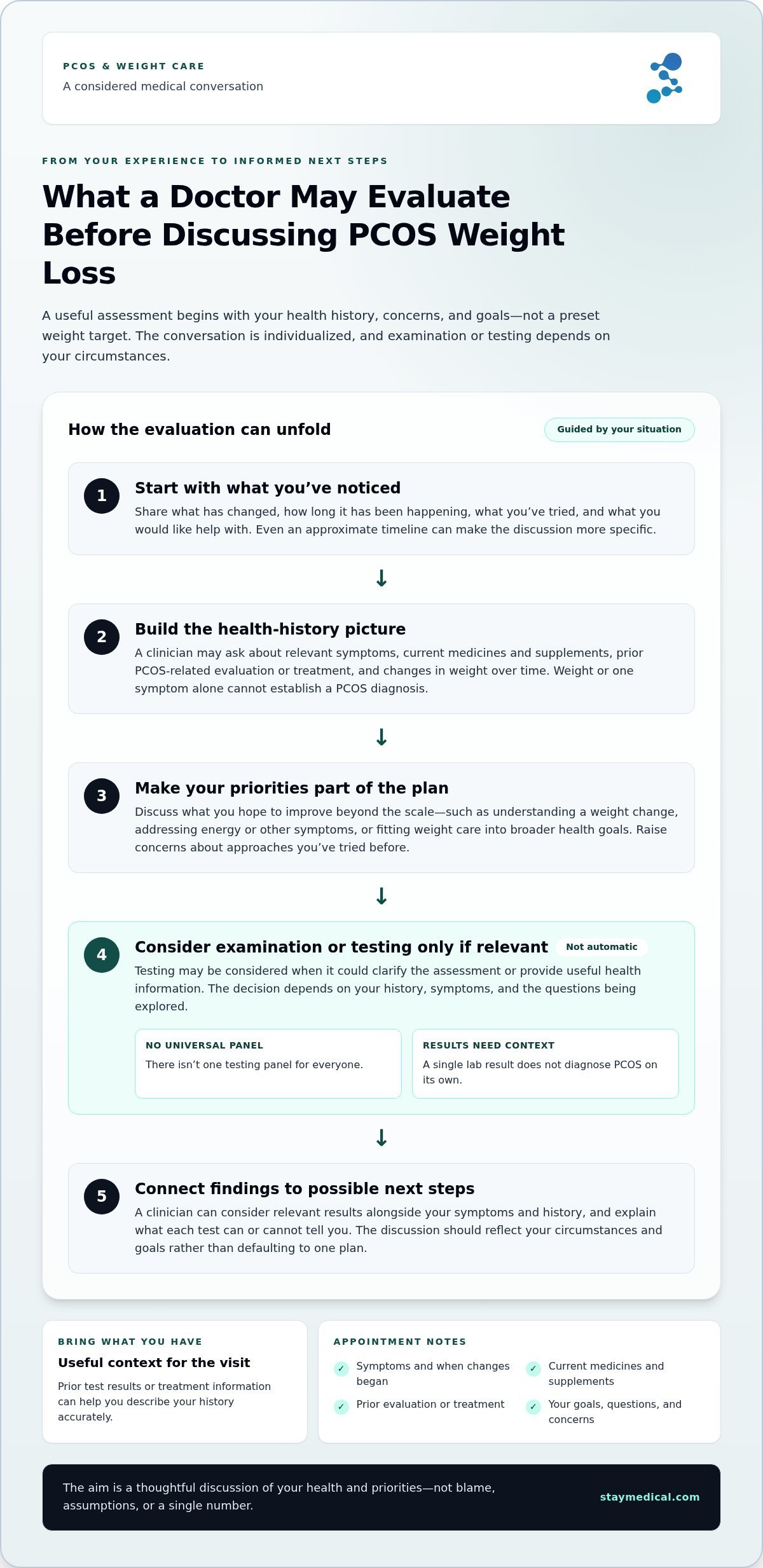
What a Doctor May Evaluate Before Discussing PCOS Weight Loss
A useful medical conversation starts with your experience, not a preset weight target. A clinician may ask what changes you’ve noticed, how long they’ve been happening, what you’ve tried, and what you’d like help with. That context helps guide whether weight-focused care fits your goals and what questions to consider before discussing options.
Good assessment is individualized because the same concern can have different causes, health implications, and priorities for each person. A PCOS weight loss doctor Miami patients consult may consider your broader health picture rather than relying on weight or a single symptom to shape the discussion.
Health history, symptoms, and personal goals
Before your visit, consider writing down relevant symptoms, current medicines and supplements, any prior PCOS-related evaluation or treatment, and broad changes in your weight over time. You don’t need a perfect timeline. Even noting when you first noticed a change can make the conversation more specific.
Think, too, about what you want to improve beyond the scale. You might want to better understand a change in weight, discuss energy or other symptoms, or explore how weight care fits your overall health goals. Share what matters to you, including questions or concerns about past approaches. A checklist can help you prepare, but it can’t diagnose PCOS; a single symptom or number isn’t enough to establish a diagnosis.
When laboratory testing may inform the discussion
Testing may be considered when it could help clarify a clinician’s assessment or provide useful information about your health. The decision depends on your history, symptoms, and the questions being explored. There isn’t one universal testing panel for everyone, and a single lab result doesn’t diagnose PCOS on its own. A clinician may consider results alongside other relevant information and explain what each test can or can’t tell you.
Stay Medical Clinic offers laboratory testing as part of its primary care services. If blood work is relevant to your evaluation, its laboratory testing in Brickell can support a broader, individualized discussion. Bring prior results or treatment information if you have them. They can provide context and help you describe your history accurately.
At a consultation, it’s reasonable to ask what the clinician is evaluating, why an examination or test is being considered, and how the findings might inform next steps. Examination and testing aren’t automatic; they should relate to your circumstances. To talk through your health history and weight goals, explore a medical consultation at Stay Medical Clinic.
Comparing PCOS Weight-Loss Approaches Without One-Size-Fits-All Claims
There isn’t one PCOS weight-loss plan that suits everyone. Nutrition, movement, sleep, behavioral support, and medical care can be considered together, but each person’s priorities and circumstances differ. One person may want practical help building consistent routines; another may want to discuss medical options or how existing health concerns affect their goals. When weighing possible approaches, consider what you want help with, what feels manageable in your routine, and whether clinical oversight is relevant. The aim is to find a thoughtful approach, not to rank options or apply every one of them.
| Approach | Potential role | How it can be individualized |
|---|---|---|
| Nutrition | Support nourishing, sustainable eating habits. | Consider preferences, routine, culture, and practical access to food. |
| Movement | Build activity that feels manageable and supports overall wellbeing. | Adapt to ability, schedule, interests, and starting point. |
| Sleep | Make rest and daily patterns part of the health conversation. | Discuss personal routines and barriers to adequate rest. |
| Behavioral support | Help with planning, consistency, and responding to setbacks. | Choose goals and strategies that feel realistic for your life. |
| Medical care | Review health context and consider whether clinical options are relevant. | Base decisions on individual assessment, preferences, and follow-up. |
Lifestyle support as part of a broader plan
Habits can be useful areas to explore, not a guaranteed treatment or a test of discipline. Rather than adopting a restrictive diet or pushing for rapid results, consider what changes could fit your routine and be maintained over time. You could start by identifying one practical goal, such as planning movement you enjoy or noticing patterns in sleep, then discuss what feels realistic to review and adjust.
When medication may enter the conversation
Weight-management medication isn’t necessary or appropriate for everyone with PCOS. A clinician may discuss medicines such as semaglutide or tirzepatide only after assessing your health history, potential benefits and risks, other medicines, and individual circumstances. You should have room to ask questions, share preferences, and understand what monitoring may involve before deciding together whether medication belongs in your plan.
Care can evolve as your needs, goals, and clinical information change. Follow-up offers an opportunity to discuss what feels manageable, review progress in context, and reconsider next steps without treating one measure as the whole story. Stay Medical Clinic’s weight loss program in Brickell includes ongoing monitoring, medication management, and clinical oversight. For anyone considering a PCOS weight loss doctor Miami, look for a discussion that makes room for medical guidance and personal choice.
How to Prepare for a PCOS Weight-Loss Appointment in Miami
A little preparation can help you use your appointment to discuss what matters most, without feeling you need to arrive with all the answers. Bring what you know, note what you’re unsure about, and be ready to talk about your health and priorities. A PCOS weight loss doctor Miami patients consult can use these details to make the conversation more relevant to your circumstances.
What to bring and what to write down
Before the visit, jot down relevant symptoms, changes in weight over time, current medicines and supplements, and any previous evaluations or treatment. Bring past test results or records related to your concerns if you have them. You don’t need to gather a complete medical file; even a short timeline can help you explain what you’ve noticed.
It may also help to identify what you hope to improve beyond the number on the scale. For example, you might want to build sustainable routines, understand a change in your health, or discuss how weight care fits your wider goals. Use this checklist to organize your thoughts:
- Symptoms or health changes you want to discuss
- Weight history and any approaches you’ve tried
- Current medicines, supplements, and relevant prior care
- Available test results or treatment information
- Personal goals, including priorities beyond weight
This list is a prompt for discussion, not a diagnostic tool or a substitute for clinical assessment. It’s fine to bring questions you haven’t fully formed yet.
Questions that can make the visit more useful
Clear questions can help you understand the reasoning behind possible next steps. Consider asking how your goals will be set, what information may guide recommendations, and how progress will be reviewed. You can also ask what monitoring or follow-up might involve, and how an approach could be adjusted if it doesn’t feel manageable.
If medication comes up, ask how a clinician would assess possible benefits and risks in light of your health history, current medicines, and preferences. You can ask what side effects or other concerns deserve attention and what follow-up would look like. You don’t have to decide on a treatment before you understand the options.
Stay Medical Clinic is located in Brickell, at 33 SW 2nd Ave, Suite 502, Miami. Its primary care services provide a setting to discuss your health context and weight goals. Bringing your notes can help make that conversation more focused and personal.
PCOS Weight-Loss Care at Stay Medical Clinic in Brickell
PCOS and weight concerns can be part of the same health conversation, but that doesn’t mean every person with PCOS needs the same plan. Stay Medical Clinic is a primary care clinic in Brickell, Miami, offering a weight loss program with ongoing monitoring, medication management, and clinical oversight. A consultation is an opportunity to discuss your health context and weight goals, then consider whether weight-focused care aligns with your needs.
What medically supervised weight care can involve
Medical oversight means weight-related decisions are considered in the context of your circumstances. A consultation provides space to discuss your health history, concerns, priorities, and questions. If a treatment or medication is considered, the decision depends on clinical assessment and a conversation about potential benefits, risks, and your preferences. Medication isn’t automatically part of care, and no particular treatment is right for everyone.
Follow-up matters, too. Stay Medical Clinic’s program includes ongoing monitoring and clinical oversight, along with medication management. These elements support a continuing clinical conversation, rather than leaving you to interpret changes on your own. The approach doesn’t promise a particular amount of weight loss or improvement in PCOS symptoms; individual experiences and care needs vary.
Learn more about the clinic’s weight loss program in Brickell and how it fits into a broader discussion of personalized care. A PCOS weight loss doctor Miami patients consult should discuss how weight-focused care relates to the person’s health goals, while keeping treatment decisions individualized.
A local next step in Brickell, Miami
Stay Medical Clinic is located at 33 SW 2nd Ave, Suite 502, Miami, FL 33130, in Brickell, and is open Monday through Saturday. Its local primary care setting offers Miami-area patients a place to discuss weight goals and personal health context with clinical oversight.
Before you begin, it may help to bring a brief note about what you’d like to address and what questions you want answered. You can ask how progress is monitored, what follow-up may involve, and how any medication decision would be tailored to your circumstances. A supportive conversation should leave you with a clearer understanding of possible next steps, not pressure to choose a particular path.
For readers seeking weight-related medical care in Miami, Stay Medical Clinic offers a local program grounded in ongoing monitoring and clinical oversight. Explore the program and start a conversation about your goals.
Take a Thoughtful First Step Toward Individualized Care
You don’t need to arrive with a complete plan or certainty about which treatment you want. Start with the questions that matter most to you, and give yourself room to discuss your health goals without judgment. A PCOS weight loss doctor Miami patients see can help frame that conversation around personal circumstances and possible next steps, rather than assumptions or pressure.
Progress can begin with understanding your options and deciding what feels appropriate to explore. Whether you’re looking for guidance, considering medical support, or ready to talk through changes you’ve noticed, a conversation can help make the path ahead clearer. Your goals deserve careful attention, and decisions can be made one step at a time.
You deserve care that respects your experience and supports informed choices. Explore Stay Medical Clinic’s weight loss program to start a conversation about your goals.
Frequently Asked Questions
Can PCOS make it harder to lose weight?
Yes, PCOS can make weight management more challenging for some people, though experiences vary. Hormonal or metabolic factors may be relevant, alongside sleep, stress, medicines, activity, and other health circumstances. A pattern that’s difficult to explain deserves a clinical conversation, not self-blame. Noting when changes began and what else changed can help a clinician consider the bigger picture without assuming PCOS is the only factor.
Do you have to be overweight to have PCOS?
No. People of different body sizes can have PCOS, and being overweight isn’t required to have the condition. Weight alone can’t confirm or rule it out. If you notice concerns such as cycle changes or signs of higher androgen levels, discuss them with a clinician rather than relying on a weight category or online checklist. A diagnosis requires consideration of your individual clinical picture.
Does losing weight cure PCOS?
No, losing weight doesn’t cure PCOS. Weight changes can’t guarantee that symptoms will resolve or prevent them from returning. If weight management is one of your goals, talk with a clinician about what you hope to address and how progress might be assessed beyond scale changes. Care decisions should reflect your broader health needs, not a promise that one outcome will eliminate the condition.
What tests might a doctor consider when discussing PCOS and weight?
Depending on your symptoms and history, a clinician may consider blood tests related to hormone levels or metabolic health, such as glucose or cholesterol testing, and may discuss other evaluation methods. There’s no single blood test that confirms PCOS, and testing needs vary. Bring earlier lab reports if you have them so results can be considered in context rather than viewed in isolation.
Are weight-loss medications appropriate for everyone with PCOS?
No. Weight-loss medicines, including semaglutide or tirzepatide, aren’t appropriate or necessary for everyone with PCOS. A clinician considers the purpose of treatment, your health history, current medicines, potential benefits, and possible risks. You can ask what a medicine is intended to address, what monitoring it may involve, and what alternatives could fit your goals. Don’t change a prescription without clinical guidance.
How often should a doctor review a medical weight-loss plan?
There isn’t one review schedule that fits every medical weight-loss plan. Follow-up timing can depend on the approach, your health history, medication use, and how you’re responding. During reviews, you may discuss tolerability, changes in goals or routines, and whether monitoring or testing is appropriate. Ask when to schedule your next check-in and how to raise concerns between planned visits.
Can a primary care clinic discuss weight management when I have PCOS?
Yes. A primary care visit can be a place to discuss weight goals, related health concerns, and laboratory testing. A PCOS weight loss doctor Miami search can lead to a primary-care discussion at Stay Medical Clinic, where weight care includes monitoring, medication management, and clinical oversight. The Brickell clinic serves patients from Miami, Aventura, Bal Harbour, Bay Harbor Islands, Biscayne Park, Coral Gables, Cutler Bay, Doral, El Portal, Florida City, Golden Beach, Hialeah, Hialeah Gardens, and Key Biscaya.
Disclaimer
This content is for informational purposes only and does not replace evaluation, diagnosis, or treatment by a medical professional. Always consult a qualified healthcare provider for personalized care.