

Blood Tests: What They Measure, How to Prepare, and What Results Mean
October 7, 2026
Diet Plan for Tirzepatide Users: A Practical, Flexible Guide
October 9, 2026
A high blood pressure reading is a clue, not a complete explanation. The causes of high blood pressure can include several factors working together, and one elevated result doesn’t always show whether the change is temporary or part of an ongoing pattern. Stress, recent activity, health conditions, medications, and everyday habits may all be relevant, but a reading alone can’t confirm the cause.
It’s understandable to wonder whether something you can change, or an underlying health issue, is affecting your numbers. This article explains common causes and contributing factors, clarifies the difference between a cause, a risk factor, and a symptom, and outlines what to track. You’ll learn why repeated readings matter, which details to record alongside them, and when to discuss your results with a clinician. Reviewing your readings and health history can put the numbers in context and help guide next steps, including testing when clinically appropriate.
Key Takeaways
- The causes of high blood pressure may involve several overlapping influences, an underlying condition, or a substance.
- Health history, daily habits, medications, and personal circumstances can contribute without making high blood pressure inevitable.
- Proper measurement preparation, including sitting quietly and choosing a correctly sized cuff, supports more reliable readings.
- Record your readings and relevant context to give a clinician a clearer picture during follow-up.
- A primary care clinician can review your readings and health history and consider laboratory testing when appropriate.
What causes high blood pressure, and why can one reading be misleading?
A single elevated blood pressure measurement doesn’t establish a diagnosis or reveal what caused it. Blood pressure can shift with circumstances, and the causes of high blood pressure may involve a longer-term pattern rather than one obvious trigger. Clinicians consider repeated, properly taken readings alongside your health history and other relevant details.
Temporary high reading: a rise measured at a particular moment that may be influenced by short-term factors or measurement conditions. Ongoing hypertension: a pattern of elevated readings that a clinician assesses over time and in context. Under 2025 American Heart Association and American College of Cardiology guidance, high blood pressure in adults is defined as readings of 130/80 mm Hg or higher, but one measurement alone doesn’t confirm hypertension.
How do blood pressure numbers work?
Blood pressure describes the force of blood pushing against artery walls. It’s written as two numbers: the top, or systolic, number measures pressure as the heart beats; the bottom, or diastolic, number measures pressure between beats. Together, they offer a snapshot, not a complete account of your health.
A clinician interprets the numbers using repeat measurements and information such as your medical history, medications, and the conditions in which the readings were taken. Guidance also recommends confirming suspected hypertension with measurements outside the clinic, such as home or ambulatory monitoring. For a broader overview of hypertension and its types, see Hypertension Wikipedia.
Can a temporary factor raise a reading?
Yes. Several short-term influences can affect an individual reading without proving that you have chronic hypertension. Stress or anxiety, recent physical activity, caffeine, nicotine, and discomfort may all be relevant. The measurement setup matters, too: talking during the reading, sitting without support, or using an incorrectly sized cuff can affect the result.
That’s why context matters. If a reading is higher than expected, note what was happening beforehand instead of deciding on a cause immediately. For example, record whether you’d recently exercised, had coffee, used nicotine, or were experiencing pain or stress. Include the time and reading, along with any medications you took or changes to your routine.
When possible, take another measurement after sitting quietly, following the monitor’s instructions and keeping your arm supported. A lower repeat reading can be reassuring, but it doesn’t explain the first result or rule out an ongoing pattern by itself. Repeated high readings are worth discussing with a clinician, who can review them alongside your health history and advise on appropriate follow-up. A primary care visit in Brickell at Stay Medical Clinic provides an opportunity to review your readings in context.
How do primary and secondary causes of high blood pressure differ?
High blood pressure is generally grouped into two broad patterns. Primary hypertension, also called essential hypertension, develops over time without one identifiable cause. Secondary hypertension occurs when another health condition or a substance, including some medicines, contributes to elevated pressure. These categories help clinicians consider what may be behind a pattern, but they can’t be identified reliably by matching a symptom to a list.
In short, primary hypertension usually reflects several influences accumulating over time, while secondary hypertension is associated with an identifiable condition or substance. The distinction isn’t a judgment about someone’s habits or health choices. A clinician assesses the whole picture before drawing conclusions about the causes of high blood pressure.
What contributes to primary hypertension?
Primary hypertension often reflects interacting influences rather than a single trigger. Inherited susceptibility and age can shape a person’s baseline risk, while long-term lifestyle and health factors may also contribute. The CDC High Blood Pressure Risk Factors page describes factors that can and can’t be changed. A risk factor can inform prevention and care, but it doesn’t guarantee that someone will develop hypertension.
Two people with similar routines may have different readings, and a person with high blood pressure may not be able to point to one reason for it. This isn’t evidence of personal failure. It’s one reason clinicians consider patterns and context rather than assigning blame or assuming that changing one habit will explain every reading.
What health conditions or substances can contribute to secondary hypertension?
Possible contributors include kidney conditions, sleep apnea, endocrine disorders that affect hormone balance, and some prescription or over-the-counter medicines. A substance may contribute by affecting the body’s regulation of blood pressure, but its presence doesn’t prove it’s responsible for a particular person’s readings.
To investigate, a clinician may consider when the elevated readings began, how they have changed, relevant health history and symptoms, and all medicines or supplements being used. A new or unusual pattern may prompt a closer review, but symptoms alone can’t confirm a secondary cause. Testing may be considered when an individual assessment supports it.
If you suspect a medicine is affecting your readings, don’t stop or change a prescribed medication on your own. Record its name and when you take it, then discuss your concern with a clinician. They can weigh the possible effect against the reason it was prescribed and guide any appropriate changes.
For repeated elevated readings, a primary care visit in Brickell at Stay Medical Clinic can put the numbers alongside your health history, symptoms, and medication use. A careful review can help clarify which questions or next steps are relevant to you.
Which risk factors and misconceptions deserve closer attention?
High blood pressure rarely has one simple explanation. Health history, everyday habits, medicines, and circumstances can overlap, so a risk factor is a clue to discuss, not proof of what caused a person’s readings. Some influences can be changed or managed; others, such as age or family history, can’t. The American Heart Association’s risk factor guidance also distinguishes between factors people may influence and those outside their control.
One misconception is that you can tell whether your blood pressure is high by how you feel. Hypertension often causes no noticeable symptoms, so feeling well doesn’t confirm that readings are normal. It’s also not limited to older adults or people who appear visibly unhealthy. Appearance, age, or energy level can’t substitute for checking blood pressure and considering individual health context.
Which contributing factors can someone discuss changing?
Food choices, including how much sodium you eat, physical activity, tobacco use, alcohol intake, and body weight may all be relevant to blood pressure and overall health. These factors don’t affect everyone in the same way, and changing one doesn’t guarantee that hypertension will resolve. A clinician can help put possible adjustments in context, particularly if you have other health conditions or take medication. For instance, if staying active is complicated by nerve discomfort or numbness, specialized providers like Restore Chiropractic Center can help address peripheral neuropathy as part of a broader health routine.
Think in terms of a sustainable conversation, not a blame-focused checklist. You might discuss what your usual meals look like, how active your routine is, whether you use tobacco or drink alcohol, and what changes feel realistic. The goal is to understand your personal picture and identify appropriate steps, not to assume lifestyle alone explains elevated readings.
Miami’s warm climate is part of local life, but it isn’t a standalone explanation for chronic high blood pressure. Heat, hydration, and activity may affect how someone feels in the moment; they don’t establish the cause of a persistent pattern. Note relevant circumstances, but avoid treating the weather as a diagnosis.
Which factors are not a matter of willpower?
Age, family history, some chronic conditions, and social circumstances can shape risk. Access to nutritious food, opportunities for physical activity, stress, and daily responsibilities may also influence the choices available to someone. These factors can interact with habits and health over time. They’re part of a person’s circumstances, not evidence of a moral failing.
Two people with similar routines may have different blood pressure patterns, and someone with several risk factors may not develop hypertension. Rather than comparing your experience with a relative’s or friend’s, share your own history and concerns with a clinician. If you’d like to review how personal health context fits into your readings, personalized primary care in Brickell at Stay Medical Clinic offers a setting for that conversation.
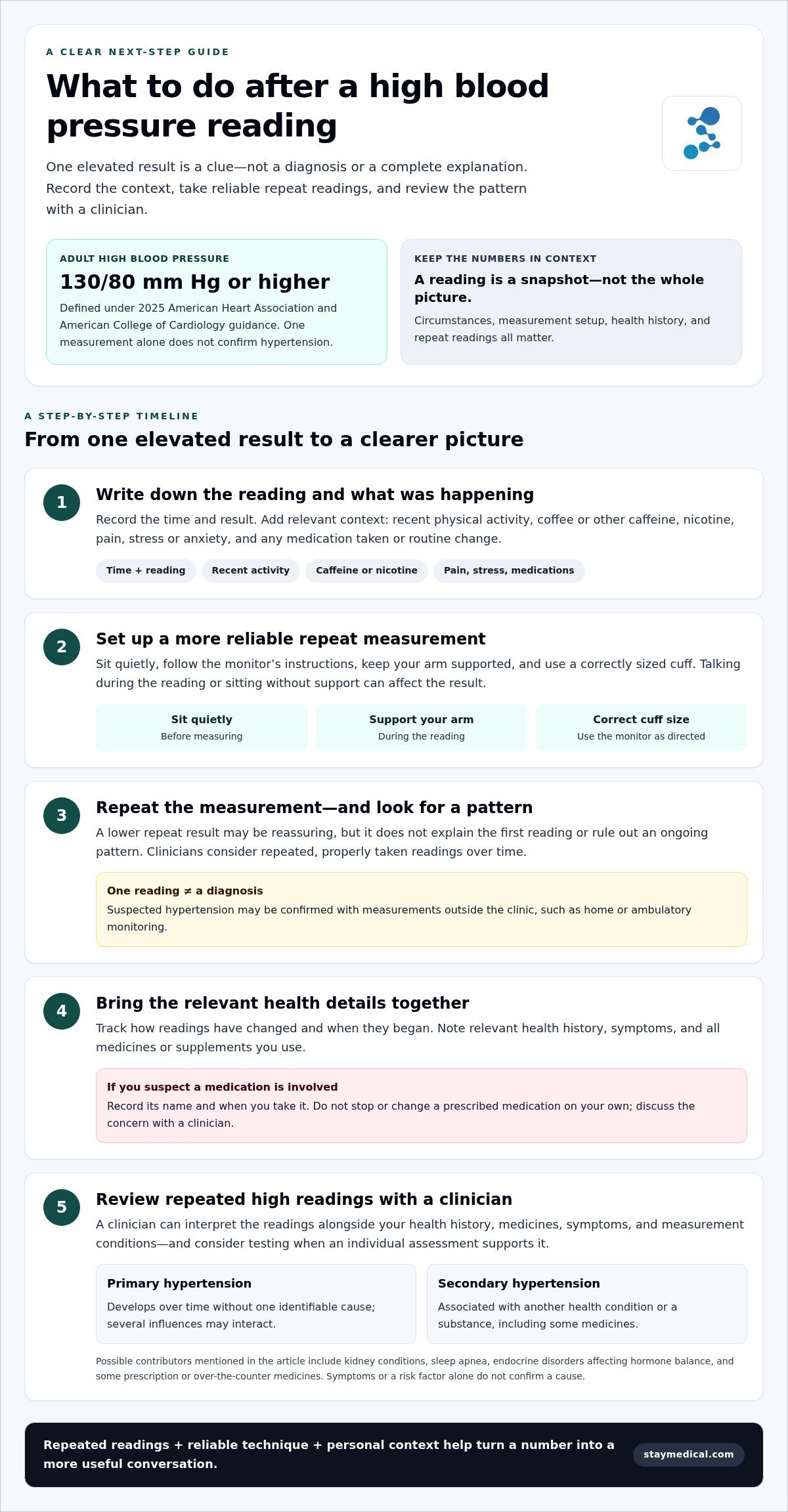
What should you do after a high blood pressure reading?
An unexpectedly high result can be unsettling, but a measured next step is more useful than guessing at the cause. If you feel well, check your posture and cuff placement, then repeat the measurement according to the monitor’s instructions. If the reading remains elevated on different occasions, arrange clinical follow-up. A record of readings can help a clinician understand the pattern and consider possible causes of high blood pressure in the context of your health history.
For a more reliable measurement, sit quietly first, with your back supported, feet flat, and legs uncrossed. Place a correctly sized cuff on your bare upper arm, keep the arm supported around heart level, and avoid talking during the measurement. Follow the device instructions, since positioning and cuff fit can affect the result.
How can you make home readings more useful?
Try to measure under similar conditions each time, and follow your monitor’s guidance on how to take and repeat a reading. Record the date, time, both numbers, and anything that may help explain the circumstances, such as recent activity, discomfort, stress, or when you took medication. Consistency makes it easier to compare results rather than treating each number as a separate verdict.
Bring the log and an up-to-date medication list to your appointment. Include prescribed medicines, over-the-counter products, and supplements. Don’t change a dose or stop a medication based on a home result unless a clinician advises you to. Your log supports a clinical assessment; it doesn’t replace one.
When should a high reading prompt urgent care?
The American Heart Association identifies a reading above 180 systolic and/or 120 diastolic as severely high. If you get a result in that range and have no concerning symptoms, wait at least one minute and measure again. If the repeat reading is still that high, contact a healthcare professional immediately for guidance.
Don’t wait to repeat the measurement if you have severe symptoms. Chest pain, shortness of breath, back pain, numbness or weakness, a change in vision, or difficulty speaking alongside a severely high reading may signal a medical emergency. Call 911 or your local emergency number. Don’t delay emergency care to take another reading, and don’t drive yourself if you need emergency help.
A high reading that doesn’t reach the severe range may still deserve follow-up, especially if it recurs. Share your recorded results and medication list with a clinician, who can advise on the appropriate next step. A primary care visit can help review repeated readings and your health history in context.
How can primary care in Brickell help investigate high blood pressure?
Repeated elevated readings are useful information, but they don’t explain themselves. In a primary care appointment, a clinician can consider the measurements alongside your health history, medications, symptoms, and day-to-day context. This broader review can help identify what may warrant follow-up, without assuming that one cause explains every person’s blood pressure pattern.
A primary care visit at Stay Medical Clinic in Brickell, Miami, gives you an opportunity to discuss your readings and questions in the context of your overall health. Additional evaluation depends on the clinician’s assessment and your individual circumstances. Laboratory testing may be considered when it could help inform that assessment.
What might a clinician review during an appointment?
Expect the conversation to include how and when your readings were taken, whether they’ve been consistently elevated, and any relevant health conditions or symptoms. Your family history can offer useful context, too. Share prescription medications, over-the-counter products, and supplements, including any recent changes. These details may help the clinician consider whether a medicine or an underlying health issue could be relevant.
Lifestyle and practical circumstances can round out the picture, including activity, food habits, tobacco or alcohol use, stress, and barriers that affect your routine. No single detail confirms the cause. Based on your history and examination, the clinician may recommend monitoring, follow-up, or further evaluation. If testing is appropriate, Stay Medical Clinic provides laboratory testing in Brickell to help assess aspects of health relevant to your care. The decision to test is guided by the individual assessment, not by a standard panel assumed to suit everyone.
How can you prepare for a primary care conversation?
A little preparation can make the discussion more focused. Bring a log of your blood pressure readings, with dates and times, and note any circumstances that may help explain a result. Include a current list of your medications and supplements. If you’ve noticed symptoms, changes in your health, or a connection between readings and a particular routine, write those down as well.
It can also help to bring questions, such as: “Could any of my medicines affect my readings?” or “What follow-up makes sense based on this pattern?” Share relevant health and family history openly, even if you’re unsure whether a detail is connected. The clinician can help decide what matters and whether further assessment is warranted.
Follow-up doesn’t mean you should assume the worst. It’s a practical way to replace uncertainty with a more informed understanding of your readings and possible next steps. Stay Medical Clinic provides primary care in Brickell, Miami, where you can discuss your health concerns with a clinician and consider relevant testing when appropriate.
Take the Next Step With Confidence
You don’t have to work out what’s behind your readings on your own. Rather than trying to identify the causes of high blood pressure by guesswork, use your questions and observations to start a focused conversation about what matters for your health. A clear next step can turn uncertainty into a plan grounded in your individual circumstances.
At Stay Medical Clinic, patient-centered primary care in Brickell can provide space to discuss your concerns, while laboratory testing may be considered when appropriate to your assessment. Stay Medical Clinic serves people in Brickell and across Miami, including Aventura, Bal Harbour, Bay Harbor Islands, Biscayne Park, Coral Gables, Cutler Bay, Doral, El Portal, Florida City, Golden Beach, Hialeah, Hialeah Gardens, and Key Biscaya.
Paying attention to your readings is a meaningful act of care. Bring your questions forward, and take the next step with confidence.
Frequently Asked Questions
Can stress cause high blood pressure?
Stress can temporarily raise blood pressure as the body responds to a stressful situation, but a brief increase doesn’t establish ongoing hypertension. The relationship between long-term stress and persistent high readings can be complex, and stress may coincide with other influences, such as disrupted sleep or changes in routine. While clinical guidance is essential, complementary wellness care from providers like Chiropractic Lifestyle Family Practice can support the body in managing physical tension and maintaining alignment. If you notice a pattern, note when readings occur and discuss it with a clinician rather than assuming stress is the only explanation.
Is high blood pressure usually caused by one specific thing?
No. For many adults, there isn’t one identifiable cause; a combination of influences may contribute over time. In other cases, an underlying condition or substance may be involved. Trying to pinpoint the cause from one meal, stressful day, or isolated reading can be misleading. A clinician can consider your measurement history and health background together to decide whether a particular explanation or further evaluation is plausible.
Can a medication make your blood pressure go up?
Yes. Some medicines can contribute to higher readings, including certain cold remedies with decongestants, anti-inflammatory pain relievers, and corticosteroids. The effect can depend on the medication and your health circumstances. Keep a current list of prescriptions and nonprescription products, and ask a clinician or pharmacist whether any might affect your blood pressure. Don’t stop a prescribed medicine or change its dose without medical guidance.
Does high blood pressure have symptoms?
Often, it causes no noticeable symptoms, so feeling normal can’t confirm that your blood pressure is in a healthy range. Headache, fatigue, or feeling flushed can happen for many reasons and can’t reliably identify high blood pressure. Checking with a properly used monitor is more informative than trying to judge by how you feel. Severe symptoms such as chest pain or difficulty breathing call for urgent attention, not self-diagnosis.
Can young adults have high blood pressure?
Yes. High blood pressure can affect young adults, even if they feel well or don’t consider themselves at risk. Family history, certain health conditions, medications, and daily habits may all be relevant at any age. Don’t dismiss repeated elevated readings because you’re young. If you live or work near Brickell in Miami, Stay Medical Clinic provides primary care where a clinician can help put your measurements and personal health history in context.
Can high blood pressure go away on its own?
A temporary rise may settle when a short-term influence passes, but that doesn’t mean an ongoing pattern has resolved. Blood pressure can also improve with appropriate health changes or treatment, yet a few lower readings aren’t a reason to assume the issue is gone. Continue monitoring as advised, and talk with your clinician before changing any treatment. They can help determine whether the trend is stable and what follow-up makes sense.
What should I do if I have a high reading but feel fine?
Feeling fine doesn’t rule out a concerning reading. Sit quietly and repeat the measurement using your monitor’s instructions, then record both results and arrange clinical follow-up if readings remain elevated. If a reading is above 180 systolic and/or 120 diastolic, wait at least one minute and recheck; if it remains that high, seek immediate medical guidance. With severe symptoms, call 911 or your local emergency number without waiting to remeasure.
To discuss repeated high blood pressure readings, schedule a primary care visit with Stay Medical Clinic in Brickell, Miami.
Disclaimer
This content is for informational purposes only and does not replace evaluation, diagnosis, or treatment by a medical professional. Always consult a qualified healthcare provider for personalized care.