

How Long Does IV Therapy Last? Session Time and Effects Explained
September 30, 2026
Primary Care Clinic in Miami: How to Choose the Right Fit
October 2, 2026
What if the cause of your fatigue isn’t the one you suspect? If you’ve been wondering, “is low testosterone causing my fatigue,” it’s a reasonable question, especially when persistent tiredness is affecting work, exercise, or daily routines. Low testosterone can contribute to low energy, but fatigue alone doesn’t point to one diagnosis. Sleep problems, chronic stress, depression, and other health conditions can feel similar.
You deserve a clear explanation, not a rushed assumption or treatment decision. This guide explains when testosterone may play a role, what other causes a clinician may consider, and how to prepare for an evaluation so you can discuss useful next steps.
We’ll cover symptoms that may matter alongside fatigue and why blood-test results need to be interpreted in context. Diagnosis typically requires relevant symptoms and consistently low testosterone on at least two separate early-morning blood tests. At Stay Medical Clinic in Brickell, Miami, primary care and appropriate laboratory testing can help guide an assessment. Testosterone replacement therapy is a clinician-directed option only when appropriate, not an automatic response to feeling tired.
Key Takeaways
- Fatigue has several possible causes, so symptoms alone can’t confirm low testosterone.
- If you’re asking “is low testosterone causing my fatigue,” notice whether other changes accompany the tiredness and share them during an evaluation.
- A clinician can review your symptoms and health context before deciding whether testosterone testing is appropriate.
- Testosterone results need careful interpretation. A single result or online symptom check can’t establish a diagnosis.
- Before an appointment, track your symptoms and relevant health information, then discuss possible next steps with a clinician in Brickell, Miami.
Could Low Testosterone Be Causing Your Fatigue?
Persistent fatigue can make ordinary tasks feel harder and leave you searching for a clear explanation. But asking “is low testosterone causing my fatigue” online can’t tell you what’s behind your symptoms. Tiredness has many possible causes, so look at the broader picture instead of settling on one explanation too soon.
Testosterone is a hormone involved in several aspects of adult health, including sexual function and the maintenance of muscle and bone. Fatigue may be associated with low testosterone, but tiredness alone can’t confirm that low T is the cause. Your symptoms and a medical evaluation matter.
This video from UAMS Health Urology offers an overview of low testosterone, its symptoms, and treatment options:
How might testosterone levels relate to energy?
Hormones interact with multiple systems in the body, so changes in testosterone may coincide with changes in well-being, including energy. That connection doesn’t establish cause and effect for any one person. Poor sleep, stress, mood changes, medications, and other health concerns can also leave you feeling drained. A clinician can assess these possibilities alongside hormone levels instead of treating fatigue as proof of low testosterone.
The medical term hypogonadism describes impaired function of the reproductive glands, which may result in low sex hormone levels. Causes can differ, so identifying a low result is only part of understanding what it means for your health.
What other symptoms may make low testosterone worth discussing?
Fatigue may be more useful to discuss when it appears alongside other changes, though none of these symptoms confirms a diagnosis. You might notice:
- Less interest in sex or changes in sexual function
- Changes in mood or motivation
- Reduced muscle strength or changes in body composition
These experiences vary and can overlap with other health conditions. For an overview of additional possible signs, read about common signs of low testosterone in men. If fatigue is persistent, a primary care evaluation can help put the symptoms in context. Stay Medical Clinic offers primary care in Brickell, Miami, where a clinician can discuss whether further evaluation or testing may be appropriate.
Why Fatigue Has Many Possible Causes Beyond Low Testosterone
Feeling tired can affect concentration, patience, exercise, and everyday routines. Testosterone is one possible factor, but it’s only part of a much broader picture. Fatigue has multiple possible causes and needs context. The symptom alone can’t identify what’s responsible.
If you’re asking “is low testosterone causing my fatigue,” consider what else may have changed. A demanding stretch at work, disrupted sleep, emotional strain, or a recent medication change could all be relevant details to share with a clinician. These possibilities aren’t diagnoses, and more than one factor may be involved.
Which everyday and health factors can affect energy?
Sleep quality matters, not just the number of hours spent in bed. Frequent waking or a sleep condition may leave you unrefreshed. Work demands, changes in activity, irregular meals, and emotional well-being can also affect how you feel, without implying that you’ve done anything wrong.
Health conditions, including sleep apnea, thyroid problems, or anemia, may contribute to fatigue. Some medications can also affect energy. Don’t stop or change a prescribed medicine on your own. Bring a current medication list to an appointment and ask whether any medicines could be relevant. The symptoms and treatment of low testosterone can overlap with other concerns, which is one reason a wider review matters.
When should fatigue prompt medical attention?
Consider arranging a medical evaluation if fatigue persists, worsens, or interferes with your usual activities. Keep track of when it began, how it affects your day, and any other changes you’ve noticed. These details can help a clinician decide what questions to ask and whether testing is appropriate.
Seek urgent medical care for severe or sudden symptoms, such as chest pain, difficulty breathing, fainting, or sudden confusion. This isn’t a complete list. If symptoms feel dangerous or rapidly worsen, seek emergency help rather than waiting for a routine appointment.
A careful evaluation can consider sleep, mood, medications, general health, and hormone results instead of assuming fatigue has a single cause. Stay Medical Clinic offers primary care in Brickell, Miami, as one route to discussing persistent tiredness. To learn more about the clinic’s primary care and laboratory testing services, visit Stay Medical Clinic.
How Clinicians Evaluate Possible Low Testosterone and Fatigue
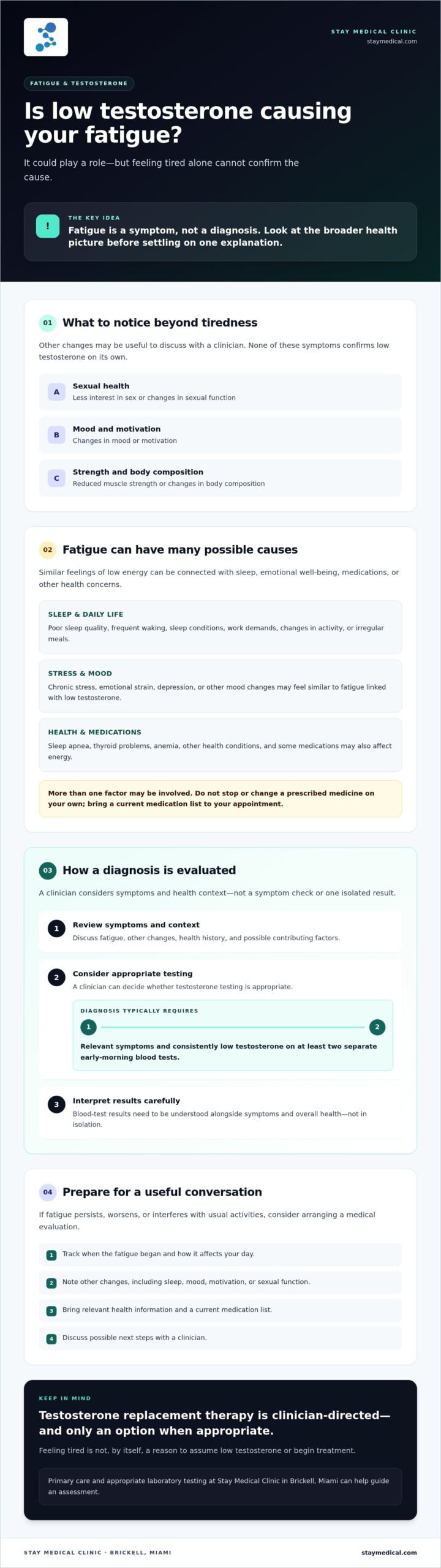
A thoughtful evaluation doesn’t begin and end with a blood test. If you’re wondering “is low testosterone causing my fatigue,” a clinician can consider your symptoms, health history, and test results together. That broader assessment helps determine whether low testosterone is a possibility and what else may deserve attention.
The process often follows a few connected steps:
- Discuss symptoms: Describe when the fatigue began, how it affects your routine, and any other changes you’ve noticed.
- Review health context: Consider sleep, medications, medical history, and other factors that may affect energy or hormone levels.
- Consider testing: A clinician can decide whether testosterone testing is appropriate and how it should be collected.
- Interpret results: Review findings alongside symptoms and testing circumstances before discussing next steps.
Testosterone levels can vary, so clinical guidance generally calls for testing in the early morning and confirming a low result with a second, separate early-morning test. A clinician should interpret results using current guidance and the details of your situation, rather than treating a number in isolation. Stay Medical Clinic offers laboratory testing in Brickell. Whether testing is appropriate depends on an individual evaluation.
What should you share during an evaluation?
Before an appointment, note when the fatigue began, whether it is changing, and how it affects work, exercise, or daily routines. Mention any other symptoms or concerns, even if they seem unrelated. Sleep patterns, prescribed and nonprescribed medications, and relevant health history can help a clinician understand the broader picture and consider whether other causes need evaluation.
You don’t need to arrive with a diagnosis. Clear observations are more useful than trying to interpret each symptom on your own. If you noticed a change in sleep, medication, or health around the time your fatigue began, include that detail.
Why is one testosterone result not the whole answer?
A single result may not reflect a consistent pattern, and its meaning depends on when and how the sample was collected. Clinicians consider repeated, appropriately timed results alongside symptoms and health context. A low lab value alone doesn’t establish why fatigue is happening or determine whether testosterone replacement therapy (TRT) is appropriate. That decision calls for a clinician-directed discussion after assessment.
This measured approach helps avoid jumping from tiredness to treatment while still taking persistent symptoms seriously. The goal is to understand what the evidence supports and identify reasonable next steps, whether or not testosterone is involved.
Low Testosterone, Fatigue, or Another Cause: Compare the Next Steps
If you’re asking “is low testosterone causing my fatigue,” the next step doesn’t have to be a decision about treatment. You can move from noticing symptoms to seeking a broader assessment, then discuss treatment only if the evaluation supports it. Each route can offer a different level of understanding.
| Next step | What it can help establish | What it can’t establish |
|---|---|---|
| Symptom-only self-assessment | Helps you notice patterns and prepare questions. | Can’t diagnose low testosterone or determine what’s causing fatigue. |
| Clinical evaluation | Allows a clinician to review symptoms, health history, and whether testing or further assessment may be useful. | Doesn’t guarantee one test or appointment will identify the cause. |
| Treatment discussion | Explores whether testosterone replacement therapy (TRT) is appropriate, including potential benefits, risks, monitoring, and personal goals. | Doesn’t mean treatment is indicated or promise a particular change in energy. |
When is a broader primary care evaluation a sensible first step?
A primary care evaluation can put fatigue in the context of your overall health rather than focusing on testosterone alone. A clinician may ask about sleep, mood, medications, and other symptoms, then decide whether testing or follow-up is appropriate. The evaluation is individualized, and not everyone needs the same tests. Stay Medical Clinic offers primary care visits in Brickell for people seeking a starting point for these concerns.
An online quiz or symptom list can help you organize what you’ve noticed, but it can’t distinguish low testosterone from other possible causes. Keep a brief record of when fatigue occurs and how it affects your routine. Bring that context to a clinician instead of using a self-assessment to decide on treatment.
When might a testosterone treatment discussion follow?
TRT may be discussed after an appropriate clinical assessment supports low testosterone and a clinician has considered your symptoms and test results. The conversation should cover possible benefits and risks, how treatment would be monitored, and whether it aligns with your health needs and goals. A lab result by itself doesn’t decide whether TRT is right for you.
If you’re ready to discuss persistent fatigue in the context of your health, consider an evaluation with Stay Medical Clinic in Brickell, Miami.
Your Next Steps for Fatigue Evaluation in Brickell, Miami
If fatigue is affecting your routine, you don’t need to arrive with a diagnosis. A few simple steps can make a conversation with a clinician more focused and help you understand what to consider next, including whether testosterone testing may be appropriate.
- Track the pattern. Note when your fatigue began, whether it varies, and how it affects work, exercise, or daily tasks.
- Gather useful context. Write down sleep changes, medications, relevant health history, and any other symptoms or concerns.
- Arrange an evaluation. Discuss your concerns with a clinician rather than relying on an online symptom check to identify the cause.
- Review the findings. Ask what the results may mean, whether follow-up is needed, and what options fit your situation.
How can you prepare for an appointment?
Bring your notes, a medication list, and any existing lab results you have available. Include prescribed and nonprescribed medicines, and mention changes you’ve noticed without assuming they’re related. Don’t start or stop a prescribed medication without medical advice. It can also help to write down questions in advance, such as whether fatigue could have more than one cause or what a proposed test would clarify.
What can local care in Brickell help you clarify?
Stay Medical Clinic in Brickell offers primary care, laboratory testing, and testosterone replacement therapy with clinical oversight. A clinician-led discussion can help put symptoms and relevant test results in context and consider appropriate follow-up. Testing or treatment isn’t automatic, and the right next step depends on your individual assessment.
If you’re still wondering “is low testosterone causing my fatigue,” a conversation with a clinician can help you explore that possibility without overlooking other explanations. Explore care options at Stay Medical Clinic and consider what support fits your needs.
Stay Medical Clinic is located in Brickell, Miami. Its local context may be relevant to people in Aventura, Bal Harbour, Bay Harbor Islands, Biscayne Park, Coral Gables, Cutler Bay, Doral, El Portal, Florida City, Golden Beach, Hialeah, Hialeah Gardens, and Key Biscaya. Contact Stay Medical Clinic to discuss your concerns and ask about arranging an evaluation.
Take a Clear, Thoughtful Next Step
If you’re still asking “is low testosterone causing my fatigue,” remember that tiredness alone can’t answer that question. Low testosterone may be one possibility, but sleep, stress, medications, and other health concerns can also affect energy. A clinician can review your symptoms and health context, decide whether testing is appropriate, and interpret results before discussing treatment.
You don’t have to arrive with a diagnosis or a decision about testosterone replacement therapy. Bring your questions and any notes about how fatigue affects your routine. A measured evaluation can help clarify what to explore next and whether treatment is clinically appropriate for you.
Stay Medical Clinic in Brickell, Miami, offers primary care and laboratory testing, along with testosterone replacement therapy under clinical oversight. The focus is on understanding your concerns and discussing suitable next steps, not assuming a particular cause or outcome.
Persistent fatigue deserves attention, and seeking a thoughtful assessment is a practical place to begin. You can take the next step at your own pace.
Frequently Asked Questions
Is fatigue a common symptom of low testosterone?
Fatigue can occur with low testosterone, but tiredness alone can’t confirm a hormone problem. Sleep difficulties, stress, mood changes, medications, and other health conditions may also affect energy. Notice how long fatigue has lasted, whether it’s worsening, and how it affects your daily routine. If it persists or disrupts usual activities, discuss it with a qualified clinician, who can advise whether testing is appropriate.
Can low testosterone cause fatigue even if I have no other symptoms?
It’s possible to feel fatigued without noticing other symptoms associated with low testosterone, but that doesn’t make low testosterone the likely cause. Sleep patterns, stress, medications, and other health concerns may also be relevant. A clinician can review your health history and the timing of your symptoms, then decide whether testosterone testing or another kind of evaluation makes sense for your circumstances.
How is low testosterone diagnosed when fatigue is the main concern?
A clinician assesses symptoms and medical history alongside appropriately collected blood-test results. Testing time, whether repeat testing is needed, and interpretation should follow current clinical guidance and account for individual circumstances. One result alone shouldn’t be treated as a diagnosis. Because fatigue has several possible explanations, a clinician may also consider other aspects of your health and recommend further evaluation based on your history and findings.
Can I tell if I have low testosterone from symptoms alone?
No. A symptom checklist can help you organize your concerns, but it can’t reliably diagnose low testosterone. Fatigue and other possible symptoms can overlap with different health conditions, and experiences vary from person to person. Use your observations to prepare for a healthcare conversation, not to self-diagnose or start treatment. A clinician can determine whether testing is warranted and explain what the results mean.
Should I start testosterone treatment if I feel tired?
No. Feeling tired on its own isn’t a reason to start testosterone replacement therapy (TRT). Treatment should be considered only after an appropriate medical assessment, with a clinician discussing whether it suits your situation. Ask about potential benefits, risks, monitoring, and other possible contributors to fatigue. Don’t use testosterone or nonprescription hormone products without qualified medical guidance.
Where can I get evaluated for fatigue and low testosterone in Brickell, Miami?
Stay Medical Clinic is located in Brickell, Miami, and offers primary care, laboratory testing, and testosterone replacement therapy with clinical oversight. An evaluation can help you discuss fatigue and consider appropriate next steps. Testing or treatment depends on clinical assessment. The clinic may be relevant to people in Brickell and nearby areas, including Aventura, Bal Harbour, Bay Harbor Islands, Biscayne Park, Coral Gables, Cutler Bay, Doral, El Portal, Florida City, Golden Beach, Hialeah, Hialeah Gardens, and Key Biscaya. Contact the clinic to ask about appointments and how to prepare for a visit.
Disclaimer
This content is for informational purposes only and does not replace evaluation, diagnosis, or treatment by a medical professional. Always consult a qualified healthcare provider for personalized care.