

Pain Killer Injection in Miami: Fast, Targeted Relief in Brickell
July 11, 2026
Adult Primary Care in Miami: A Modern Approach to Longevity and Wellness
July 15, 2026
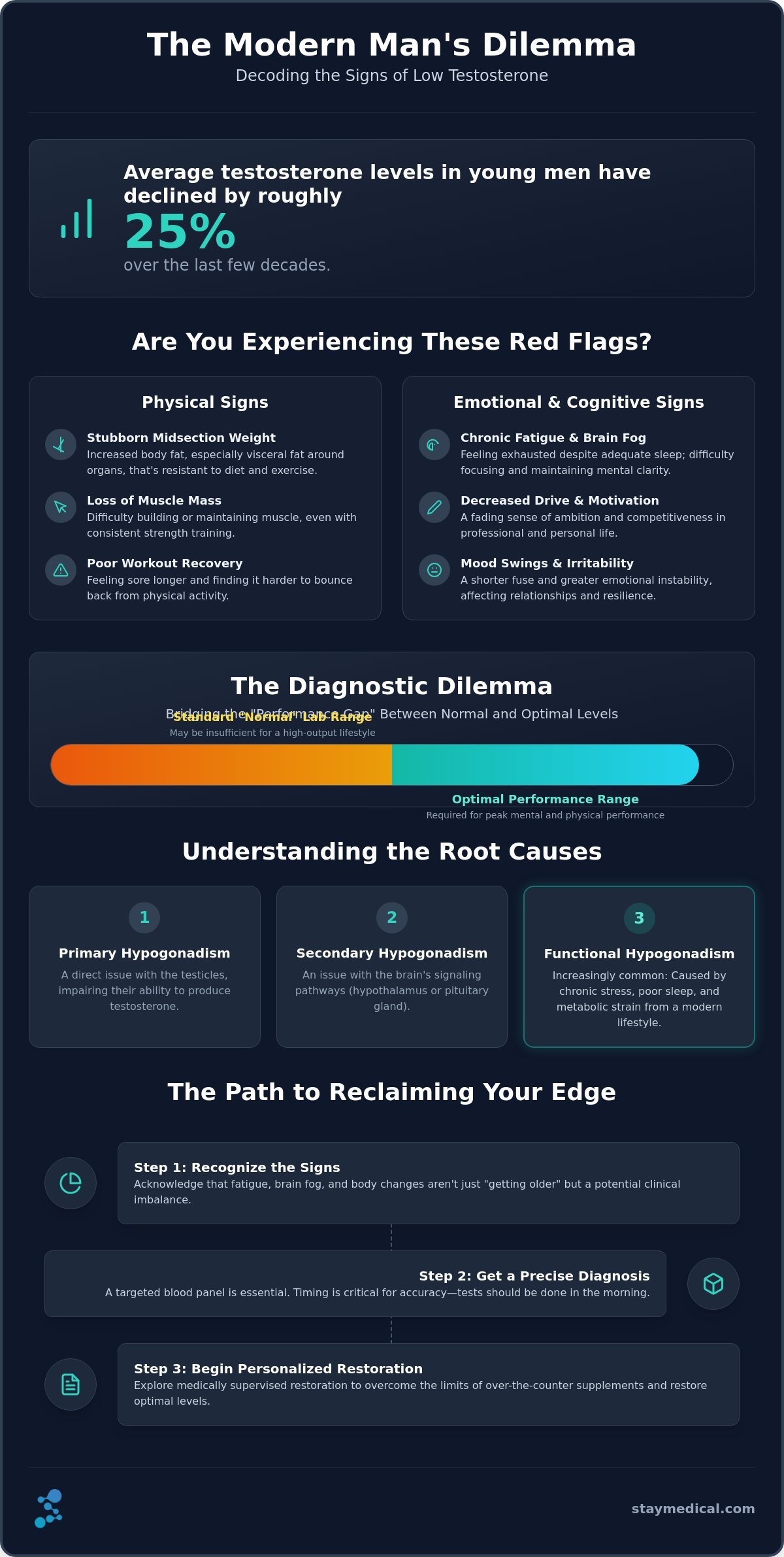
Did you know that average testosterone levels in young men have declined by roughly 25% over the last few decades? This startling shift explains why so many men feel like they’re losing their edge well before they should. If you’ve noticed a stubborn layer of weight around your midsection or a persistent fog that makes professional focus feel like a chore, you aren’t just getting older. These are often the primary signs of low testosterone in men, and they deserve a more sophisticated response than just another cup of coffee or a harder workout.
We understand how frustrating it is to wake up feeling exhausted despite a full night of sleep. It feels like your body is no longer following the rules you’ve lived by for years. In this 2026 guide, we’ll help you distinguish between natural aging and a manageable clinical imbalance. You’ll learn how to identify the emotional and physical symptoms that signal a need for professional intervention. We’ll provide a clear path toward reclaiming your mental clarity and physical performance through the clinical precision of a targeted blood panel and personalized care.
Key Takeaways
- Learn why “feeling your age” is often a clinical imbalance rather than a natural decline, and how to bridge the gap between average health and peak performance.
- Identify the subtle physical and emotional signs of low testosterone in men, ranging from chronic fatigue that sleep cannot fix to stubborn changes in body composition.
- Understand the critical difference between standard “normal” lab reference ranges and the optimal hormonal levels required for a high-achieving lifestyle.
- Discover the streamlined process for diagnostic testing in Brickell, including why the timing of your blood draw is essential for clinical accuracy.
- Explore how medically supervised restoration can overcome the limitations of over-the-counter supplements to help you reclaim your professional and personal edge.
Understanding Low Testosterone: More Than Just ‘Getting Older’
In the high-stakes environment of Brickell, where professional excellence is the expected baseline, many men dismiss a fading sense of drive as a simple byproduct of a busy life. However, testosterone is much more than a fuel for the gym. It’s the chemical foundation of your metabolic health, muscle preservation, and cognitive sharpness. While the medical definition of hypogonadism often focuses on a total failure of the body to produce sufficient hormones, the modern reality is far more nuanced. We frequently see what we call the “Miami Performance Gap.” This occurs when men who technically fall within a standard lab range still struggle with the debilitating signs of low testosterone in men because their levels are insufficient to support their high-output lifestyles.
Clinically, we categorize this decline into primary hypogonadism, which originates in the testicles, and secondary hypogonadism, which involves the brain’s signaling pathways. Yet, a third category known as “functional hypogonadism” has become increasingly prevalent in 2026. This happens when your biology is capable of production, but chronic stress, poor sleep, and metabolic strain cause your levels to plummet. It’s a clear signal that your lifestyle and your biology have collided, leaving you feeling like a shadow of your former self.
Why Testosterone Matters for Men in 2026
Recent clinical data has reinforced that maintaining healthy testosterone levels is vital for cardiovascular protection and metabolic stability. It’s no longer just about physical strength. Healthy levels are essential for the mental resilience and professional drive required to lead in a competitive urban landscape. Testosterone acts as a multi-system coordinator that optimizes everything from your heart health and bone density to your focus and emotional equilibrium.
The Gradual Decline: What Science Says About Aging
Traditional medical literature suggests that testosterone levels naturally drop by about 1% each year after a man reaches age 30. While this is a biological reality, modern environmental factors are accelerating this process in younger men. This creates a significant disconnect between your chronological age and your biological hormonal age. You might be 38 on paper, but if your body is experiencing the signs of low testosterone in men typically seen in someone much older, your quality of life will suffer. Recognizing that this decline isn’t an inevitable sentence is the first step toward seeking testosterone replacement that restores your natural vitality and edge.
The Physical and Emotional Signs of Low Testosterone
Identifying the specific signs of low testosterone in men often begins with a sense that your body’s internal rhythm has shifted. While many associate hormonal decline strictly with a fading libido, the reality is a complex web of physical and emotional changes that can impact every facet of your life. If you find that eight hours of sleep in Miami still leaves you reaching for a third espresso by noon, your cellular energy production might be lacking the necessary hormonal signals. This chronic fatigue isn’t just about being tired; it’s a fundamental lack of vitality that sleep alone cannot repair. It’s the feeling of running on an empty tank, even when you’ve done everything right.
One of the most frustrating signs of low testosterone in men is a sudden, stubborn resistance to exercise and diet. You might be hitting the gym with your usual intensity, yet your muscle definition is fading while your midsection expands. This shift toward visceral fat is more than an aesthetic concern. Low testosterone encourages fat storage around the organs, which then produces inflammatory cytokines that further suppress your natural hormone production. This cycle makes traditional weight management nearly impossible without addressing the underlying hormonal deficit through a structured weight loss program tailored to your unique biology.
Physical Red Flags You Shouldn’t Ignore
Beyond the scale, your body provides other physiological clues. You might notice a loss of lean muscle mass despite regular strength training or a newfound difficulty in recovering from workouts. Some men experience hair thinning or a subtle reduction in bone density, though the latter is often only caught through clinical screening. These changes occur because testosterone is your body’s primary anabolic hormone. Without it, your system struggles to repair tissue and maintain its structural integrity. If you’ve noticed these physical shifts, it may be time to consult with a specialist who understands the nuances of hormonal health.
Sexual health is another critical pillar, yet it involves more than just desire. While a drop in libido is common, the loss of spontaneous morning erections is a more precise physiological marker of decline. This is often where clinical guidance becomes essential. When diagnosing and managing low testosterone, we look at these biomarkers to understand the depth of the deficiency. If your performance or drive has changed, it’s a signal that your internal chemistry needs recalibration to restore your confidence and well-being.
Mental and Emotional Indicators
The emotional impact of low T is often described as a loss of your professional “edge.” You might feel more irritable, anxious, or less motivated to tackle the complex tasks that used to excite you. This is frequently accompanied by persistent brain fog that makes concentration difficult. You aren’t losing your intelligence; you’re losing the hormonal support that facilitates focus and mental resilience. Understanding these shifts is the first step toward restoration. For a deeper look at how targeted treatment can reverse these effects, you can explore the core benefits of TRT for men.
The Diagnostic Dilemma: Normal vs. Optimal Testosterone Levels
Many men walk into a clinic feeling the unmistakable weight of hormonal decline, only to be told their lab results are “normal.” This creates a frustrating disconnect. Standard reference ranges are statistical averages of a broad population, but being “average” isn’t the same as being healthy or high-performing. If you’re experiencing the persistent Low Testosterone (Low T) symptoms we’ve discussed, a number on a page shouldn’t be the final word on your vitality. Clinical decisions should prioritize the severity of a patient’s symptoms alongside their biochemical data to ensure a truly personalized approach to care.
Understanding the difference between Total and Bioavailable testosterone is essential for an accurate diagnosis. Your Total Testosterone is the entire amount in your bloodstream, but much of it is bound to proteins, making it biologically inactive. It’s common for a man with a level of 350 ng/dL to feel significantly worse than a man at 250 ng/dL if his body isn’t actually able to use the hormone it’s producing. This is why looking at the signs of low testosterone in men through a narrow lens often leads to missed opportunities for restoration.
Age often clouds the diagnostic picture as well. While decline is expected as the years pass, we’re seeing an increasing number of men in their 20s and 30s struggling with clinical deficiencies. Dismissing these concerns because a patient is “too young” ignores the modern environmental and lifestyle factors that impact hormonal health. Your biological age and your chronological age are not always in sync.
Why ‘Normal’ Ranges Can Be Misleading
Reference ranges are based on the general public, a population whose metabolic health has been steadily declining for decades. Furthermore, your Sex Hormone Binding Globulin (SHBG) levels can act like a chemical lock, binding to your testosterone and preventing it from reaching your tissues. If your SHBG is high, your “Total T” might look acceptable while your “Free T” is critically low. This nuance is why many men continue to suffer from the signs of low testosterone in men despite having labs that fall within a traditional, albeit broad, “normal” range.
The Importance of Comprehensive Lab Panels
To gain a clear understanding of your health, checking testosterone in isolation is never enough. We need a full metabolic picture to identify why your levels have shifted. This requires sophisticated Laboratory Testing Services in Brickell that look beyond the basics. A comprehensive panel should include Luteinizing Hormone (LH) and Follicle-Stimulating Hormone (FSH) to check brain-to-testicle signaling, along with Estradiol and Prolactin to rule out other hormonal imbalances. Only with this level of detail can we create a path toward true, long-term vitality.
How to Get Tested and Diagnosed in Brickell, Miami
Navigating the path to hormonal restoration requires more than a simple lab order. It demands a clinical environment where your symptoms are evaluated with the same weight as your data. If you’ve been tracking the signs of low testosterone in men, the first step is to transition from self-observation to professional diagnosis. At Stay Medical Clinic, this begins with a comprehensive primary care visit in Brickell. During this initial consultation, we look beyond the surface to understand your lifestyle, stressors, and long-term vitality goals.
The diagnostic process is methodical and precise. Following your consultation, you’ll undergo a morning blood draw. This timing is essential because testosterone levels naturally peak in the early hours; a late afternoon test can lead to an artificially low reading and an inaccurate diagnosis. We then combine these lab results with a thorough physical exam and medical history review. This holistic approach ensures we rule out other potential causes for your symptoms, such as thyroid dysfunction or chronic inflammation, before finalizing a treatment plan. The final step is a personalized review where we discuss your numbers in the context of “optimal” targets rather than just the population average.
Preparing for Your Testosterone Blood Test
Accuracy in hormonal testing depends heavily on preparation. To ensure your results reflect your true baseline, we require a fasting blood draw performed before 10:00 AM. Certain medications and lifestyle factors, such as extreme caloric restriction or acute illness, can temporarily suppress your levels. We recommend bringing a symptoms journal and a list of current supplements to your appointment. This data helps us correlate your biochemical markers with the physical signs of low testosterone in men you’re experiencing daily.
The Stay Medical Approach to Diagnosis
Our clinic offers a boutique experience designed for the modern professional. We prioritize intentional, unhurried care where you’re treated as a partner in your health journey. This integrated model allows us to pair hormonal restoration with supportive treatments like IV therapy to optimize your recovery and energy levels. By choosing a local provider in Brickell, you ensure consistent, long-term monitoring that is both convenient and clinically rigorous. Ready to reclaim your edge? Schedule your diagnostic consultation today.
Reclaiming Your Edge: The Path to Hormonal Restoration
Once you’ve identified the signs of low testosterone in men, the conversation naturally shifts toward restoration. Many men spend months or even years experimenting with over-the-counter “natural boosters” or extreme lifestyle changes. While sleep and nutrition are foundational, they often lack the biochemical potency required to reverse a clinical deficiency. If your body’s production machinery has stalled, a lifestyle hack isn’t a substitute for medical precision. True restoration requires a data-driven approach that addresses the root cause of your decline rather than just masking the symptoms.
This is where Testosterone Replacement Therapy (TRT) becomes a transformative tool. Rather than simply “boosting” your levels to unnatural heights, TRT works to restore your natural physiological balance. There’s also a powerful synergy between hormonal health and metabolic success. When your testosterone is optimized, your body becomes more responsive to a weight loss program, allowing you to shed stubborn visceral fat that was previously resistant to effort. It’s a comprehensive recalibration of your entire system.
Medically Supervised TRT vs. DIY Solutions
The rise of “underground” or non-prescribed hormone use presents significant risks to your long-term health. Without professional oversight, it’s impossible to manage the delicate balance of your endocrine system. Professional monitoring is the only way to prevent side effects like elevated red blood cell counts or high hematocrit, which can increase cardiovascular strain if left unchecked. By using pharmaceutical-grade testosterone under strict medical supervision, you ensure that your treatment is both safe and effective. We prioritize your long-term wellness over short-term gains, utilizing ethical, evidence-based protocols that supplements simply cannot match.
Next Steps: Your Journey Back to Vitality
Restoration is a process, not an overnight event. In the first 90 days, most men report a steady improvement in mental clarity, mood stability, and physical energy. You’ll begin to notice that the signs of low testosterone in men that once defined your daily life are receding into the background. We’ve designed our protocols to fit seamlessly into a busy Miami professional schedule, ensuring that your health journey supports your career rather than complicating it. You don’t have to accept a diminished version of yourself as an inevitable part of aging. Schedule your consultation at Stay Medical Clinic today and take the first step toward reclaiming your edge.
Step Into Your Most Vibrant Future
Your journey toward peak performance starts with the courage to acknowledge that you don’t have to settle for a diminished version of yourself. We’ve explored how the signs of low testosterone in men often masquerade as simple aging, from persistent brain fog to stubborn weight gain around the midsection. By shifting the focus from “normal” lab results to your individual optimal health, you open the door to a life defined by clarity and strength.
At Stay Medical Clinic, we provide more than just a medical protocol; we offer a dedicated partnership in your long-term vitality. Our services are medically supervised by Miami experts who understand the unique demands of your high-achieving lifestyle. With our on-site laboratory for rapid results and personalized plans that integrate weight loss and hormonal restoration, we ensure every step is both precise and intentional. It’s time to reclaim the edge you thought was lost. You deserve a healthcare experience that is as sophisticated and dedicated as the goals you pursue.
Book Your Comprehensive Testosterone Evaluation in Brickell
Frequently Asked Questions
What are the most common signs of low testosterone in men over 40?
Chronic fatigue, loss of lean muscle mass, and a noticeable decline in libido are the most frequent indicators for men in this age group. You might also notice a stubborn increase in abdominal fat and a fading sense of motivation. These signs of low testosterone in men are often wrongly attributed to “just getting older,” but they usually signal a clinical shift that requires professional attention.
Can low testosterone cause anxiety or mood swings?
Yes, hormonal imbalances directly impact your emotional stability and can lead to increased irritability or anxiety. Testosterone helps regulate various neurotransmitters in the brain that influence how you process stress and maintain a steady mood. When levels are insufficient, many men report feeling less resilient, more prone to worry, or experiencing a persistent loss of their usual competitive drive.
Is it possible to have low T symptoms even if my lab results are ‘normal’?
It’s very common for men to experience significant symptoms while falling within a standard lab reference range. These ranges are broad statistical averages that don’t account for your unique biological baseline or how effectively your receptors use the hormone. We prioritize your symptoms and personal performance goals, focusing on reaching “optimal” levels rather than simply staying above a clinical deficiency floor.
How long does it take to see results after starting TRT?
Most men begin to feel a shift in their energy levels and mental clarity within the first three to four weeks of treatment. Emotional stability and libido often improve shortly after, while physical changes like increased muscle definition and fat loss typically take three to six months to become fully apparent. Consistency in your protocol and regular monitoring are essential for achieving these long-term results.
Can lifestyle changes like diet and exercise fix low testosterone?
While a healthy lifestyle is vital, it rarely reverses a true clinical deficiency on its own. Heavy lifting and optimized sleep can provide a modest boost to your natural production, but they can’t overcome a fundamental signaling failure or age-related decline. We view lifestyle improvements as a powerful companion to medical restoration, ensuring your body has the foundation it needs to thrive.
Is testosterone replacement therapy safe for long-term use?
Testosterone replacement is safe for long-term use provided it’s managed by an expert medical team with consistent blood monitoring. Modern protocols are designed to maintain physiological balance and prevent complications like elevated red blood cell counts. By staying under professional oversight, you ensure the therapy remains a sustainable and effective tool for maintaining your health and vitality as you age.
Do I need to see a specialist in Miami for a testosterone test?
Choosing a specialist in the Brickell area ensures you receive a diagnostic approach tailored to a high-performance lifestyle. While a general doctor can order a basic test, they may lack the specialized experience to interpret results through the lens of “optimal” health. Local, specialized care allows for the frequent, intentional monitoring required to fine-tune your dosage and ensure your long-term success.
What is the difference between Total and Free testosterone?
Total testosterone measures the entire amount of the hormone in your blood, but much of it is bound to proteins and inactive. Free testosterone is the unbound portion that your tissues can actually use for energy, muscle repair, and cognitive function. Many men suffer from the signs of low testosterone in men because their “Free” levels are low, even if their “Total” levels appear normal.
Disclaimer
This content is for informational purposes only and does not replace evaluation, diagnosis, or treatment by a medical professional. Always consult a qualified healthcare provider for personalized care.