
Compare TRT delivery methods by cost, control, and convenience
November 24, 2026
Medical Weight Loss in Aventura: Personalized Care and Follow-Up
November 26, 2026
The lower upfront bill isn’t always the lower long-term cost. In a two-year comparison, bariatric surgery cost approximately 18% less than medication treatment, but insurance coverage and how long treatment continues can change the balance. The cost of tirzepatide vs bariatric surgery depends on more than the first bill.
It makes sense to compare these options carefully: tirzepatide can involve ongoing medication costs, while bariatric surgery involves a procedure and recovery. This comparison explains how insurance may affect out-of-pocket costs, what expenses to include over time, and why clinical suitability and surgical risks matter alongside price.
You’ll come away with a clearer framework for comparing the options, including the costs that can be easy to overlook and the personal considerations that matter alongside price. The goal isn’t to declare one approach right for everyone, but to help you understand what each path may mean for your health and budget.
Key Takeaways
- Compare ongoing medication expenses with surgery-related and follow-up costs to see how each option may affect your budget over time.
- Insurance coverage can change the out-of-pocket difference, so understand how benefits and eligibility shape each treatment path.
- Look beyond the initial expense: treatment duration, continued care, and the possibility of weight regain can influence long-term value.
- Weigh potential financial savings alongside surgical risks, recovery, and the level of ongoing medical support each approach involves.
- Use the decision guide to identify which cost and care considerations deserve the most attention in your personal comparison.
Average cost savings with bariatric surgery
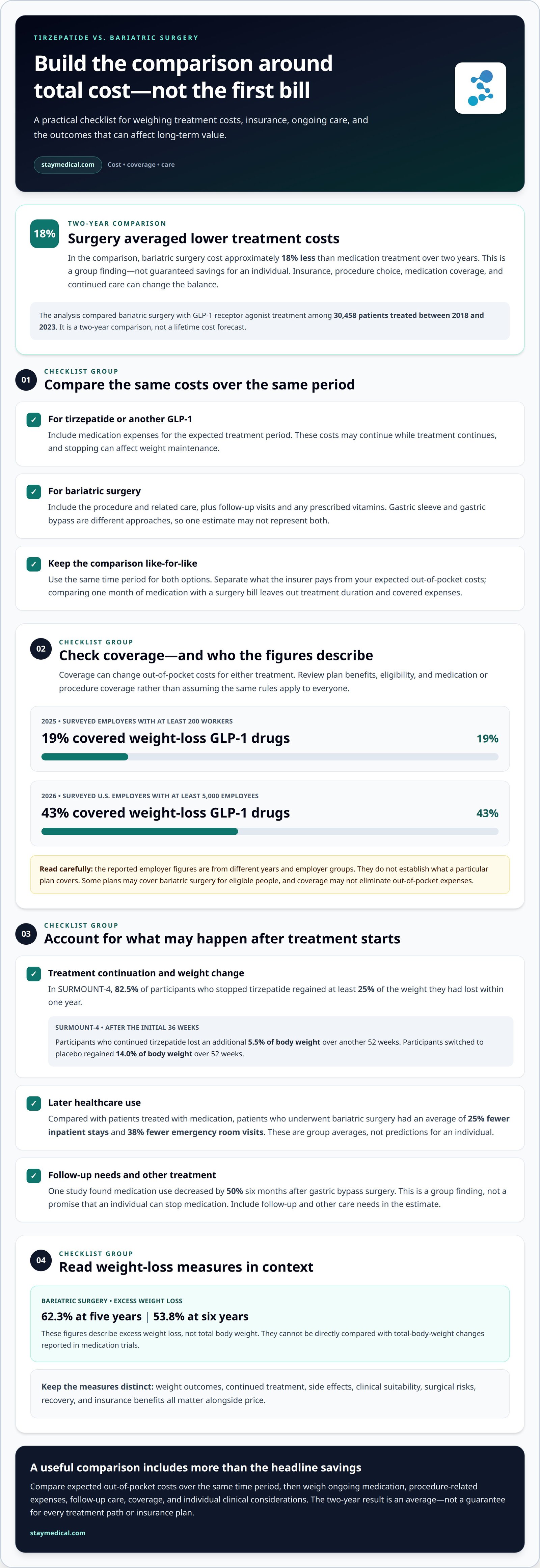
Over two years, bariatric surgery resulted in approximately 18% lower costs than medication treatment. These figures compare treatment costs across groups, not guaranteed savings for every person. The calculation can shift with insurance benefits, medication coverage, procedure choice, and ongoing care. For a practical comparison, separate initial expenses from costs that continue after treatment begins.
An analysis compared bariatric surgery with GLP-1 receptor agonist treatment among 30,458 patients treated between 2018 and 2023. It examined costs and clinical side effects for managing class II and class III obesity. The findings appeared in JAMA Surgery on Sept 17. This evidence offers a two-year comparison, not a lifetime cost forecast. It also does not mean every medication, surgery, or insurance plan carries the same expense.
Coverage can change the amount paid directly by patients. Some surveyed employers offered weight-loss GLP-1 coverage, with reported results varying by employer size and year. In 2025, 19% of surveyed employers with at least 200 workers covered these drugs. In 2026, the figure was 43% among surveyed U.S. employers with at least 5,000 employees. Coverage can vary by plan, and some plans may cover bariatric surgery for eligible people.
| Option | Cost pattern | Coverage consideration | What to compare |
|---|---|---|---|
| Tirzepatide or another GLP-1 | Medication expenses may continue during treatment. | Medication coverage and expected treatment duration. | |
| Bariatric surgery | Costs center on the procedure and related care. | Eligibility, benefits, and personal out-of-pocket costs. |
The table shows why the lowest initial expense may not lead to the lowest total. Medication costs can accumulate while treatment continues, whereas surgery concentrates more of the expense around the procedure. Insurance may reduce costs for either option, depending on your plan, but surgery coverage does not necessarily eliminate out-of-pocket expenses.
Procedure type matters. Gastric sleeve surgery and gastric bypass are different approaches, and their costs depend on the procedure and insurance coverage. If paying yourself, compare the expected medication treatment period with the surgical estimate. If insured, review your plan’s benefits for both categories of treatment. Comparing one month of medication with a surgery bill leaves out treatment duration and covered expenses.
For a useful estimate, compare the same time period and include ongoing medication, procedure-related expenses, and follow-up care. Separate what the insurer pays from what you pay yourself. The two-year analysis points to lower average costs for surgery, but your coverage and treatment path can change the result. Weigh the expected out-of-pocket total against clinical suitability rather than relying on one headline savings figure.
Long-term cost-effectiveness of bariatric surgery
Long-term tirzepatide costs depend on how long treatment continues, while stopping can affect weight maintenance. In SURMOUNT-4, 82.5% of participants who stopped tirzepatide regained at least 25% of their lost weight within one year. Ongoing medication can therefore mean continued expense, while stopping may bring weight regain and renewed care needs.
The financial comparison extends beyond medication and procedure costs. Patients who underwent bariatric surgery had an average of 25% fewer inpatient stays than patients treated with medication. They also had an average of 38% fewer emergency room visits. These findings suggest that later healthcare use may differ between treatment groups, adding another consideration to a long-range budget.
Differences in healthcare use do not mean every patient will avoid hospital or emergency care after surgery. These are group averages, not individual predictions. For a personal comparison, separate treatment spending from other healthcare use, then consider how both may change over time. Clinical needs, insurance coverage, and whether treatment continues all affect the overall picture.
Weight outcomes can also shape value. A systematic review found average excess weight loss of 62.3% five years after bariatric surgery and 53.8% six years after surgery. These percentages describe excess weight, not total body weight. That distinction matters: the measure reflects weight above a reference point, so it cannot be directly compared with total body weight changes reported in medication trials.
In SURMOUNT-4, participants who continued tirzepatide after the initial 36 weeks lost an additional 5.5% of their body weight over another 52 weeks. Participants switched to placebo regained 14.0% of their body weight over 52 weeks. These results illustrate how continued therapy and stopping can lead to different weight trajectories, with different implications for ongoing treatment costs.
Surgery also involves continuing care. A long-term comparison should include follow-up visits and any prescribed vitamins, as well as the initial gastric procedure. Gastric bypass and sleeve gastrectomy may have different care requirements, so one estimate cannot represent both. Side effects, follow-up needs, and insurance benefits can also affect spending after treatment begins.
Medication use may shift after surgery. One study found medication use decreased by 50% six months after gastric bypass surgery. This is a group finding, not a promise that an individual can stop medication. Still, it shows why the total cost comparison should account for potential changes in other treatment needs, rather than counting the operation alone.
To compare long-term costs, use the same time period for both options. Include continued tirzepatide treatment, potential treatment after weight regain, surgical follow-up, and later healthcare use. Then weigh those costs against weight outcomes and the clinical effects that matter to you. A higher upfront expense does not necessarily mean a higher total cost over time.
Surgical risks and complications
Bariatric surgery carries risk, so cost comparisons should include safety alongside expected weight changes. The reported approximate mortality rate is 0.03-0.1%. A separate U.S. estimate reports a 0.1% risk of in-hospital death after bariatric surgery. These figures describe mortality, not the full range of possible complications. They also do not predict an individual patient’s outcome.
The two mortality figures are close but describe different measures. One is an approximate rate range; the other concerns in-hospital death in the United States. Do not add them together or treat them as separate risks. They indicate that surgery has a measurable but uncommon risk to consider as part of an informed comparison.
Procedure type matters when discussing surgical risk. Gastric sleeve and gastric bypass are different operations, so their risks and follow-up considerations should not be assumed identical. The cost analysis comparing surgery with GLP-1 receptor agonists examined class II and class III obesity, but its reported cost savings do not erase surgical risks. A lower average cost is not, by itself, a reason to choose surgery.
Medication treatment has its own potential downsides. In a cited analysis, gastrointestinal side effects occurred in approximately 63% of tirzepatide-treated participants. This is a different kind of risk measure from surgical mortality, so the percentages cannot be compared as though they represent the same outcome. One concerns reported gastrointestinal effects; the other concerns death associated with surgery.
For a balanced decision, separate the comparison into three parts:
- Safety outcome: distinguish surgical mortality estimates from medication side-effect findings.
- Treatment commitment: consider the continuing nature of medication therapy versus an operation and its follow-up.
- Personal context: account for obesity-related conditions, current medications, and the treatment goals being considered.
Those steps prevent a single figure from dominating the decision. For example, the 0.1% in-hospital death estimate does not describe every possible complication, just as the approximately 63% gastrointestinal side-effect figure does not mean every participant had the same experience. Each statistic measures a specific outcome in a particular treatment group.
Diabetes can also affect the clinical discussion. The research comparison included people with class II and class III obesity, but the choice between metabolic surgery and medication depends on each person’s health circumstances. Insurance coverage is a separate issue: benefits affect out-of-pocket costs, not whether a treatment is safe or suitable for you.
Before comparing costs, consider the risks and expected care pathway for each option. Account for possible surgical complications and follow-up, as well as medication side effects and continued use. Treat reported mortality estimates as context, not as a personal prediction. A careful comparison of tirzepatide and surgery weighs safety, cost, coverage, and health needs together.
What is the average cost of tirzepatide (Zepbound) for weight loss in the United States without insurance?
For someone paying without insurance, Zepbound’s total cost depends on treatment duration, medication pricing, and any available savings. There is no single out-of-pocket total that applies to everyone. Estimate the full treatment period rather than just one prescription fill, since continued use can make the cumulative expense very different from a short-term comparison.
Separate medication costs from the rest of the care plan. Zepbound is only one part of the total if clinical visits, follow-up, or other care are involved. These expenses depend on the treatment arrangement. For a fair comparison with bariatric surgery, include the same categories of care for both options.
Duration is a major factor. A monthly medication expense repeats for as long as treatment continues, so a longer course raises cumulative spending. If a person stops and later resumes, the cost timeline changes again. The SURMOUNT-4 trial also showed why duration matters clinically: participants who stopped tirzepatide regained weight, while those who continued treatment lost additional weight.
Dosage and insurance coverage can affect what a patient pays. Benefits may reduce medication expenses when a plan covers weight-loss treatment; without coverage, the patient generally pays the cost without that benefit. Pharmacy terms and manufacturer savings offers may also affect the amount due. A personalized estimate based on the treatment period and payment terms is more useful than one national figure.
When comparing Zepbound with surgery, use the same time period and include costs that might otherwise be overlooked:
- Medication: account for each month of planned treatment and any change in dose.
- Clinical care: include visits or follow-up associated with the treatment plan.
- Coverage: distinguish the uninsured amount from any benefit or savings offer.
- Long-term planning: consider how continued treatment or stopping may affect future spending.
A 72-week phase 3 trial provides context for the treatment period, not a price estimate. Adults with obesity taking tirzepatide had mean weight reductions of 15.0%, 19.5%, and 20.9% at doses of 5 mg, 10 mg, and 15 mg, respectively. The placebo group had a mean reduction of 3.1%. These results help explain why treatment duration and dose belong in a cost discussion, but they do not determine an individual’s expenses or outcome.
For a practical estimate, map the expected treatment period, payment terms, and associated care, then compare the total with surgical costs over the same period. A short course of medication can have a different total from a longer plan. Compare like with like, rather than setting the cost of one prescription beside the full cost of surgery.
Stay Medical Clinic: Tirzepatide Miami
Stay Medical Clinic offers Tirzepatide Miami care and a Weight Loss Program for people considering medication as part of weight management. After comparing medication costs with surgery, the next step is to discuss how tirzepatide may fit your health goals and ongoing care preferences. Treatment choice involves more than price, including your medical context and comfort with long-term medication versus a surgical approach.
A conversation about your goals can help clarify whether medication-based weight management is the direction you want to explore. Contact Stay Medical Clinic to discuss your next step.
Make Your Next Step Personal
The tirzepatide vs bariatric surgery cost question is a useful starting point, not the whole decision. Consider the care you can sustain, the changes you hope to make, and how treatment fits your broader health priorities. These factors can turn a financial comparison into a more personal conversation.
Before deciding, write down the questions you want answered and the factors you will not compromise on. Discussing your health history, current medications, and treatment preferences can help clarify which approach deserves closer consideration. Your choice should reflect more than price: it should be informed and aligned with your needs.
Each thoughtful step can help you move toward a plan you feel confident about.
Frequently Asked Questions
Which Costs Less: GLP-1s or Bariatric Surgery?
In the two-year comparison discussed above, bariatric surgery had lower average costs than medication treatment. The tirzepatide vs bariatric surgery cost comparison can change with treatment duration, insurance benefits, procedure choice, and follow-up care. Compare both options over the same period, separating insurer payments from out-of-pocket expenses. A lower monthly medication payment may not reflect the full cost of ongoing treatment.
Are there non-surgical options to treat obesity?
Yes. Non-surgical approaches include prescription medications such as tirzepatide and structured, lifestyle-based weight management. Medication avoids an operation but may involve ongoing expenses and clinical follow-up. A useful comparison takes health history, treatment goals, and willingness to continue medication into account. In Miami, Stay Medical’s Weight Loss Program can place medication within a broader care plan, rather than treating the prescription as the only consideration.
But What About Surgery Risks?
Bariatric surgery has risks, including a reported approximate mortality rate of 0.03-0.1%. That figure addresses mortality, not every possible complication or an individual’s risk. Medication has different potential adverse effects: gastrointestinal side effects occurred in approximately 63% of tirzepatide-treated participants in a cited analysis. These measures describe different outcomes, so they aren’t directly interchangeable. Weigh relevant risks alongside expected care and health goals.
Weight Loss Surgery vs GLP-1 Receptor Agonists-Which is Better?
Neither approach is universally better; the comparison depends on medical suitability, treatment preferences, and long-term care plans. Surgery may be considered for people who meet clinical criteria, while GLP-1 receptor agonists offer a medication-based path that may require continued use. Consider whether you prefer an operation with recovery and follow-up or ongoing medication management. Weight-loss goals, other health conditions, side effects, and coverage also shape the decision.
What is the average out-of-pocket cost of bariatric surgery in the United States?
The amount depends on insurance benefits, eligibility, and procedure-related expenses. Self-pay estimates differ from costs for insured patients, so a quoted procedure amount may not represent your personal bill. A useful estimate separates the total surgical charge, the portion covered by your plan, and what you pay directly.
Does health insurance cover bariatric surgery, and what eligibility requirements apply?
Some health insurers cover bariatric surgery for eligible patients, but coverage depends on the insurer’s criteria. Gastric bypass may be recommended for people with a BMI of 40 or higher, or 35 or higher with an obesity-related condition. People with diabetes and a BMI between 30 and 35 may also be considered for bypass. Clinical eligibility and insurance approval are related, but they are not the same determination.
What follow-up care, supplements, and potential complication costs come with bariatric surgery?
Follow-up care may include ongoing checkups and vitamins. That figure describes routine continuing care, but may not cover every complication or individual need. The procedure and care required after surgery influence the follow-up plan and its total cost.
Over five years, what is the total cost of tirzepatide compared with bariatric surgery?
A five-year tirzepatide vs bariatric surgery cost comparison should include treatment duration, coverage, procedure expenses, and follow-up. Medication spending accumulates for as long as treatment continues, while surgery-related costs include the procedure and subsequent care. Insurance can change out-of-pocket totals for either option. Compare both over the same period and include what you would personally pay, rather than relying on one headline figure.
Disclaimer
This content is for informational purposes only and does not replace evaluation, diagnosis, or treatment by a medical professional. Always consult a qualified healthcare provider for personalized care.