

Toradol Injection for Pain Near Me: What It Treats and How It Works
November 1, 2026
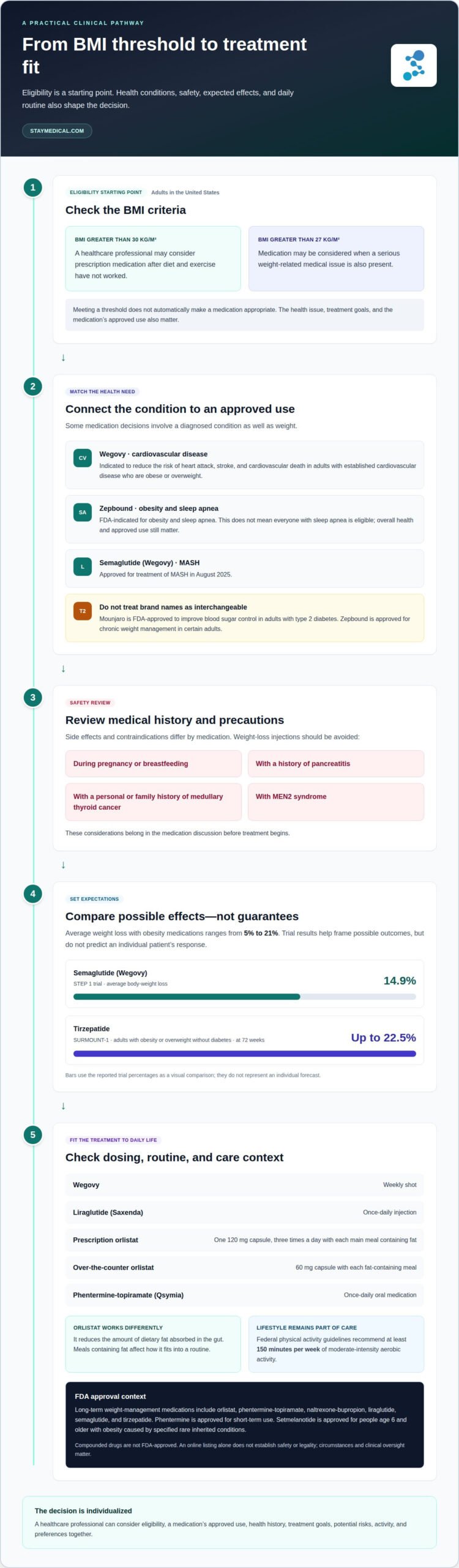
The best weight loss medication isn’t the same for everyone. In the United States, a healthcare professional may consider prescription medication for an adult with a BMI greater than 30 kg/m² after diet and exercise haven’t worked, or a BMI greater than 27 with a serious weight-related medical issue, according to the National Institute of Diabetes and Digestive and Kidney Diseases. These criteria are a starting point, not a substitute for choosing treatment around your health and circumstances.
It’s understandable to want a clear answer about which medication works best, whether it’s covered, and what happens if you stop taking it. The best weight loss medication depends on factors such as your health conditions, potential side effects, treatment goals, and whether ongoing care is manageable.
This article explains who may qualify, how medication relates to other conditions and weight regain, and why coverage and out-of-pocket costs vary. You’ll also find key questions to discuss with a healthcare professional before deciding on treatment.
Key Takeaways
- Eligibility depends on BMI and weight-related health conditions, but meeting a threshold is only one part of the assessment.
- Some medications may also be indicated for specific health conditions, so treatment choices can involve more than weight alone.
- Insurance coverage and out-of-pocket costs vary; your plan and the medication prescribed can affect what you pay.
- Weight may return after medication is stopped, making treatment duration and long-term maintenance important topics to discuss.
- A clinician can help weigh your health history, treatment goals, potential risks, and preferences when comparing options.
Who can take weight-loss drugs?
Prescription weight-loss medications are intended for people who meet eligibility criteria and whose health needs fit a medication’s approved use. The choice also depends on expected effects, dosing, safety considerations, and how treatment fits alongside lifestyle changes.
Eligibility isn’t the only question. Medication effectiveness varies: average weight loss with obesity medications ranges from 5% to 21%. In the STEP 1 trial, semaglutide (Wegovy) produced an average loss of 14.9% of body weight. In the SURMOUNT-1 trial, adults with obesity or overweight without diabetes who took tirzepatide achieved up to 22.5% average body-weight reduction at 72 weeks. These results help frame possible outcomes, but medications differ and trial results don’t predict an individual patient’s response.
Dosing also varies. Wegovy is administered as a weekly shot, while liraglutide (Saxenda) is injected once daily. Prescription orlistat is one 120 mg capsule three times a day with each main meal containing fat. Phentermine-topiramate (Qsymia) is taken by mouth once a day. These differences matter when considering a treatment routine and discussing how medication could fit daily life.
Orlistat works differently from injectable medications: it reduces the amount of dietary fat absorbed in the gut. Its recommended prescription dose is taken with meals containing fat, so meal patterns can affect how it fits into a routine. The over-the-counter formulation contains 60 mg capsules taken with each fat-containing meal.
Side effects and contraindications
Side effects are unwanted effects of treatment, while contraindications are circumstances in which a medication should be avoided. Both matter because the safest option depends on a patient’s medical history and the specific drug. Weight-loss injections should be avoided during pregnancy or breastfeeding and by people with a history of pancreatitis or a personal or family history of medullary thyroid cancer or MEN2 syndrome. These considerations belong in a medication discussion before treatment begins.
Approval and safety of weight-loss drugs
FDA-approved medications for long-term weight management include orlistat, phentermine-topiramate, naltrexone-bupropion, liraglutide, semaglutide, and tirzepatide. Phentermine is approved for short-term use, while setmelanotide is approved for people age 6 and older with obesity caused by specified rare inherited conditions. Compounded or online weight-loss drugs aren’t automatically equivalent to FDA-approved medications. Compounded drugs aren’t FDA-approved, and an online listing alone doesn’t establish safety or legality; the circumstances and clinical oversight matter.
Medication remains one part of care. Federal physical activity guidelines recommend at least 150 minutes per week of moderate-intensity aerobic activity, according to the U.S. Department of Health and Human Services. A clinician can consider medication eligibility, activity, health history, and treatment preferences together, rather than treating a drug’s average result as the only measure of fit.
Are obesity medications indicated for the treatment of other health conditions?
Weight-management medication may be considered alongside health conditions linked to excess weight. In the United States, the National Institute of Diabetes and Digestive and Kidney Diseases says a healthcare professional may consider prescription medication for an adult with a BMI greater than 30 kg/m² after diet and exercise have not worked. An adult with a BMI greater than 27 and a serious weight-related medical issue may also qualify.
These BMI thresholds guide eligibility, but they don’t automatically mean medication is appropriate. A BMI between 25 and 30 is considered overweight. The health issue, treatment goals, and medication’s approved use also matter. A patient with overweight and a weight-related condition may have different considerations from someone whose BMI exceeds 30 without a documented related condition.
Some medications have indications tied to specific health outcomes, not weight management alone. Wegovy is indicated to reduce the risk of heart attack, stroke, and cardiovascular death in adults with established cardiovascular disease who are obese or overweight. This indication connects the treatment decision to both weight status and existing cardiovascular disease.
Zepbound is FDA-indicated for obesity and sleep apnea. This can make sleep apnea relevant to a medication discussion, alongside BMI and other health considerations. The indication doesn’t mean everyone with sleep apnea is eligible; overall health and the medication’s approved use remain central to a clinical assessment.
Semaglutide (Wegovy) was approved for treatment of MASH in August 2025. This adds a liver-related condition to the discussion of how obesity medications may intersect with other health needs. A patient’s health profile can therefore involve more than weight alone, including whether an approved indication relates to a diagnosed condition.
Diabetes also calls for careful attention to the specific medication and its purpose. In the United States, Mounjaro is FDA-approved to improve blood sugar control in adults with type 2 diabetes. Zepbound, by contrast, is approved for chronic weight management in certain adults. Similar active ingredients don’t make the brands’ approved uses interchangeable.
For a useful clinical discussion, connect the BMI threshold with the health condition being treated. For example, note whether cardiovascular disease, sleep apnea, MASH, or type 2 diabetes is part of your medical history. Then consider whether the medication’s indication addresses weight management, another health outcome, or both.
This distinction helps clarify eligibility: BMI is one factor, while a related condition may shape the treatment rationale. The approved indication, existing diagnoses, and treatment goals all inform the decision. Knowing these details can help you have a focused conversation about which options fit your health priorities.
Insurance coverage and out-of-pocket costs
Coverage for weight-management medication varies by health plan, prescribed drug, and treatment purpose. Reviewing these details before choosing a medication can help you understand potential out-of-pocket expenses.
Insurance coverage for medication
Insurance coverage determines whether a plan helps pay for a prescribed medication and under what conditions. It matters because two medications used for weight management may receive different coverage under the same plan. Medicare covers obesity medications for qualified individuals as of July 2026. That rule doesn’t mean every medication or person qualifies; coverage depends on eligibility and the plan’s terms.
Start with your plan’s drug list and look for the exact medication name, such as Zepbound. Then review the pharmacy benefit and any requirements listed for that drug. A plan may treat medications differently based on their approved use. For example, a prescription for a weight-related indication may be reviewed differently from one for another health condition.
Ask which costs apply under your specific benefit: deductible, copay, or coinsurance. These terms describe different ways a plan may assign costs to you. Check whether the amount changes after you meet the deductible and whether pharmacy benefits differ from medical coverage. This gives you a clearer picture than assuming all injectable drugs follow the same coverage rules.
Coverage can also depend on the medication selected. Phentermine is an oral medication, while Zepbound is an injectable option. A plan’s preferred-drug list may distinguish between these types or specific prescriptions. Eating patterns, appetite goals, and digestive concerns can inform the clinical choice, but they don’t determine insurance coverage.
Out-of-pocket costs and savings options
Out-of-pocket cost is what you pay after insurance benefits are applied, or the full cost when coverage doesn’t apply. It matters because affordability can affect whether ongoing treatment is manageable. Compare the plan’s stated member cost for each prescribed option instead of assuming phentermine, Zepbound, and other drugs cost the same.
To understand your options, match the medication name and intended use to your plan’s drug list. Then review the deductible, copay, coinsurance, and coverage conditions that apply. If a prescribed medication has a higher member cost, discuss whether another clinically appropriate, covered option could meet the same treatment goal.
Savings depend on the plan and medication. Review any savings programs mentioned in your insurance materials, including eligibility conditions and limits. A promotional offer doesn’t prove that insurance covers the medication or that it will lower every patient’s cost. Compare the amount you would owe under the plan with any savings option for which you qualify.
Before settling on a treatment, discuss the medication name and coverage details with your clinician. A drug that supports appetite management may still be difficult to sustain if its cost doesn’t fit your budget. Considering coverage alongside approved use, eating habits, and digestive effects helps you weigh practical access against treatment needs.
How do they affect weight regain?
Weight-management medication can involve ongoing treatment, response reviews, and planning for maintenance. Stopping may change the balance, particularly with GLP-1 medications.
Treatment duration and response
Treatment duration depends partly on whether a medication helps and remains tolerable. This matters because the first response review can guide whether to continue, adjust, or consider another option. Most weight loss while taking medication occurs within the first 6 months of starting treatment. Patients often use weight-loss injections for several months or longer, depending on response and weight maintenance.
Response is assessed against starting body weight, not only the number on the scale. A healthcare professional may suggest another treatment if a patient hasn’t lost at least 5% of body weight after taking the full dose for 3 to 6 months. Another stopping benchmark applies when a patient hasn’t lost at least 5% of starting weight after 12 weeks on the full medication dose. These timelines reflect different descriptions of evaluating response.
For phentermine-topiramate, the advice is more specific: gradual discontinuation if weight loss greater than 5% hasn’t occurred after 12 weeks at the maximum dose. This is a medication-specific criterion, not a general stopping rule for every obesity drug. The dose and duration already tried therefore matter when interpreting progress.
Stopping treatment and weight regain
Stopping treatment means ending medication, while weight regain describes weight returning afterward. This distinction matters because a medication’s effect during treatment doesn’t necessarily continue after it ends. Weight often returns after stopping GLP-1 receptor agonist medications, so the decision to stop can affect long-term weight maintenance.
Long-term weight-management medications may continue while they benefit the patient and don’t cause serious side effects. That approach treats obesity as a condition requiring continued management, rather than assuming medication is always a short course. By contrast, phentermine alone is FDA-approved for short-term weight-loss use, defined here as less than 12 months. Medication type shapes the duration discussion.
Rare genetic obesity has a distinct treatment pathway. Setmelanotide is limited to people with one of four specified rare genetic disorders confirmed by genetic testing. It isn’t a general medication for obesity. The diagnosis and test confirmation determine whether this treatment applies, making the underlying cause central to treatment planning.
Studies show why medication and lifestyle changes are considered together: medication used alongside lifestyle changes can support greater weight loss than lifestyle changes alone. Average results don’t predict an individual outcome, but tracking weight and treatment response gives the care team a basis for reviewing progress. If the response falls short of the medication-specific benchmark, the next step may be a treatment change rather than continuing unchanged.
Before stopping, discuss the medication’s response, side effects, and maintenance goals with a healthcare professional. For GLP-1 medications, the possibility of weight returning after treatment ends makes that conversation especially relevant. A plan can account for the drug used, the response achieved, and the patient’s longer-term needs.
Choosing a medication with a health care professional
Choosing treatment means weighing eligibility, health history, medication effects, and practical fit. A focused conversation can compare these factors instead of treating one drug as the automatic choice.
In the United States, according to the National Institute of Diabetes and Digestive and Kidney Diseases, a healthcare professional may consider prescription weight-loss medication for an adult with a BMI greater than 30 kg/m² after diet and exercise have not worked. The same organization says medication may be considered for a person with a BMI greater than 27 and a serious weight-related medical issue.
To get a prescription for weight-loss medication in the United States, discuss your weight, health history, and previous lifestyle changes with a healthcare professional. They can assess whether you meet eligibility criteria and whether a medication’s approved use fits your health needs.
Choosing the best weight loss medication starts with sharing useful context. Include diagnosed conditions, current medications, previous weight-management approaches, and concerns about side effects. A history of cardiovascular disease, sleep apnea, MASH, or type 2 diabetes may affect which approved indication is relevant. Pregnancy, breastfeeding, pancreatitis history, or a personal or family history of medullary thyroid cancer or MEN2 syndrome also matter when considering certain injections.
Compare medications by more than expected weight change. Semaglutide and tirzepatide are injectable options, while other prescriptions are taken orally. A weekly injection, daily injection, or oral dose can fit differently into your routine. Ask how to use the medication, what effects to monitor, and when your response will be reviewed.
Stomach-related concerns and other side effects deserve a clear place in the conversation. Share past medication reactions and digestive issues before choosing a prescription. Your clinician can consider the specific drug’s safety profile alongside your other medications and health conditions. The best weight loss medication is selected with these personal factors in mind, not by name alone.
Set treatment goals together. Discuss the health outcome you want to address, the role of lifestyle changes, and how progress will be measured. Weight is one measure; changes in a related condition may also matter when the medication has an approved indication for it.
Before leaving your appointment, make sure you understand the selected medication’s dose, timing, expected review points, and what to do if side effects arise. If the response is insufficient, medication-specific criteria can guide whether to continue or consider another option. A clear follow-up plan turns an initial prescription into monitored care.
For a treatment discussion grounded in your health history and goals, explore weight-loss care.
Stay Medical Clinic: Weight Loss Program
Stay Medical Clinic’s Weight Loss Program is a next step if you’re considering medication as part of weight management. It provides a setting to discuss your goals and how treatment choices relate to your health history.
Consider the program when weighing options such as semaglutide or tirzepatide, reviewing how treatment fits your needs, or thinking about longer-term weight maintenance. Bring questions about medication effects, side effects, and your care priorities. These details can help shape a thoughtful conversation about possible next steps.
For a wider view of your health, Stay Medical Clinic also offers Primary Care. Care can reflect your individual circumstances, rather than focusing on a medication name alone.
Visit staymedical.com to learn more about Stay Medical Clinic’s Weight Loss Program.
Make your next conversation count
Your next step can be a focused conversation about what you want treatment to support in daily life. Before an appointment, consider your priorities, routines, medication concerns, and what ongoing care would feel manageable. These details help make the discussion personal and practical, rather than centered on a drug name alone.
The best weight loss medication is the option that fits your health needs and treatment goals, not simply the one receiving the most attention. Stay Medical Clinic offers a Weight Loss Program, Testosterone Replacement, and IV Therapy as part of its broader range of medical services.
Bring your questions and make space for a thoughtful discussion about possible next steps.
A considered choice can begin care that feels clearer, more intentional, and connected to your well-being.
Frequently Asked Questions
How much do they cost without insurance?
Without insurance, the amount depends on the medication, prescribed formulation, and dispensing terms. There isn’t one standard out-of-pocket cost for all weight-management drugs. Injectable medicines such as Wegovy and Zepbound may cost differently from oral options, and the prescription selected affects what you pay. Compare the specific medication and dose with the pharmacy’s quoted amount before factoring cost into your treatment decision.
Can medications replace physical activity and healthy eating habits as a way to lose weight?
No. Weight-management medication is used alongside lifestyle changes, not as a replacement for eating habits or physical activity. Medication can support weight loss, while activity and nutrition remain part of a broader approach to health and maintenance. For example, a treatment plan can account for both the medication’s effects and your usual meals and movement. A prescription alone doesn’t address every part of weight management.
How do weight management medications work?
Weight-management medications work through different mechanisms. Some affect appetite and fullness, which can influence how much a person eats. Orlistat works in the digestive tract by reducing dietary fat absorption. Other medications have distinct actions and dosing schedules, so their effects and practical fit differ. The medication class, approved use, and your health profile help explain why one drug may be considered over another.
Is Mounjaro® the Same as Zepbound®?
Mounjaro and Zepbound both contain tirzepatide, but their FDA-approved uses in the United States differ. Mounjaro is approved to improve blood sugar control in adults with type 2 diabetes. Zepbound is approved for chronic weight management in certain adults. The shared active ingredient doesn’t make the brand names or approved indications interchangeable. The intended health goal is central to which prescription is considered.
What Is the Difference Between Wegovy® and Zepbound®?
Wegovy contains semaglutide, while Zepbound contains tirzepatide. Both are used for weight management, but they have different active ingredients and prescribing considerations. Wegovy also has an indication to reduce certain cardiovascular risks in adults with established cardiovascular disease who are obese or overweight. A useful comparison considers approved purpose, personal health history, dosing routine, and potential side effects, rather than brand names alone.
Which weight loss medication is most effective, and how much weight do patients typically lose?
No medication is the most effective choice for every patient. Average weight loss with obesity medications varies from 5% to 21%, depending on the medication and study context. Across adults using prescription medication alongside lifestyle changes, treatment can produce 3% to 12% more loss of starting body weight after one year than lifestyle changes alone. These comparisons help frame expectations, but don’t rank every drug for an individual.
How do Wegovy, Zepbound, Saxenda, and Contrave compare?
Wegovy is semaglutide, Zepbound is tirzepatide, and Saxenda is liraglutide. Wegovy and Saxenda are injections, with Wegovy administered weekly and Saxenda daily. Contrave contains naltrexone and bupropion and is taken by mouth once or twice daily. Differences include active ingredients, dosing routines, and approved uses. These distinctions can help focus a discussion on treatment priorities and practical preferences.
Who qualifies for prescription weight loss medication based on BMI and health conditions?
In the United States, a healthcare professional may consider prescription weight-loss medication for an adult with a BMI greater than 30 kg/m² after diet and exercise haven’t worked. Medication may also be considered for someone with a BMI greater than 27 and a serious weight-related medical issue. BMI is one eligibility factor; the related condition, medical history, and the medication’s approved use also inform the assessment.
Disclaimer
This content is for informational purposes only and does not replace evaluation, diagnosis, or treatment by a medical professional. Always consult a qualified healthcare provider for personalized care.