

Post-workout recovery IV drips in Coral Gables
October 30, 2026
Toradol Injection for Pain Near Me: What It Treats and How It Works
November 1, 2026
Getting back on track doesn’t require a harsher diet or punishing workouts. Overcoming weight loss frustration starts with manageable changes: return to regular meals, choose movement you can sustain, and notice how stress affects your eating and motivation. Progress can vary, and one difficult stretch doesn’t mean you’ve failed.
It’s understandable to feel discouraged when your effort doesn’t seem to show on the scale. A realistic plan can help you focus on habits you can maintain instead of changing everything at once. This article explores how stress, restrictive eating, exercise choices, missed meals, and unsupportive relationships may affect your progress. You’ll find practical ways to reset with patience, build a sustainable routine, and seek support when it would help.
Key Takeaways
- Break long-term goals into manageable daily actions, and focus on habits you can sustain through stressful periods.
- Avoid overly restrictive eating; build a flexible approach that leaves room for satisfying, varied food choices.
- Pair movement with thoughtful nutrition rather than relying on exercise alone to support progress.
- Use reminders and hunger and fullness cues to help re-establish a regular meal routine.
- Tell supportive people what would help, and set boundaries with anyone who undermines your efforts.
1. Stress and Weight Loss: What’s the Connection?
Stress can affect appetite, digestion, sleep, and eating choices. During the fight-or-flight response, the body releases hormones such as adrenaline and cortisol. Stress may slow digestion, contribute to stomach discomfort, and disrupt sleep, which can also affect eating habits. Emotional eating can follow: a work problem or relationship conflict triggers overeating, guilt builds, and distress fuels another episode.
Make the next step smaller than the whole goal. Instead of imagining how difficult healthy habits will feel over the next 10 years, choose one manageable action for today, such as adding fruit to breakfast or taking a short walk. Early weight loss may include several pounds, but that initial excitement can fade when progress slows. A pause on the scale doesn’t erase the habits you’re building.
There’s no single typical length for a weight-loss plateau. The scale may slow or fluctuate while you continue working on your routine, so focus on whether your daily habits remain manageable instead of reacting to every change.
There’s no single weekly rate of weight loss that suits everyone. It depends on factors such as your starting point, health, eating habits, activity, and whether your changes are sustainable. A plan you can maintain is more useful than pushing harder to match someone else’s pace.
Stress can intensify cravings, while overly restricting calories, repeating the same meals, or removing every treat may make cravings harder to manage. Try satisfying portions of varied, nourishing foods and allow occasional treats. Fresh fruit, vegetables with low-fat dip, nuts, or popcorn without butter can offer alternatives when you want a snack. Yoga, meditation, or deep breathing may help you respond to stress before reaching for comfort food.
To track food without becoming obsessive, keep a brief diary of what and how much you eat, when you eat, your feelings, and your hunger level. Add a simple note about activity, such as whether you walked or stretched, without turning meals or movement into a score. Use your notes to spot patterns, then adjust one habit at a time.
Talk with a doctor if you continue to lose weight unintentionally over a short period. If you’re having ongoing difficulty losing weight, a doctor or registered dietitian can help you consider your health, eating routine, activity, and stress together. Bring a few practical examples, such as when cravings arise or which changes have been hard to maintain.
If emotional eating feels difficult to manage alone, consider support from a mental health professional. Forgive yourself after a difficult episode, identify the trigger, and make a specific plan for next time, such as pausing to breathe deeply or delaying a grocery trip until strong emotions settle. Small, repeatable responses make overcoming weight loss frustration more practical than self-criticism.
2. Avoiding excessive dietary restriction
Strict food rules can make everyday eating feel like a test you’re always at risk of failing. Cutting out entire food groups or sharply limiting portions may be difficult to maintain alongside work, family meals, and social plans. Dieting can lead to weight cycling, where weight is lost and regained, and that cycle can worsen health conditions associated with higher weight. As a long-term strategy, dieting is often ineffective.
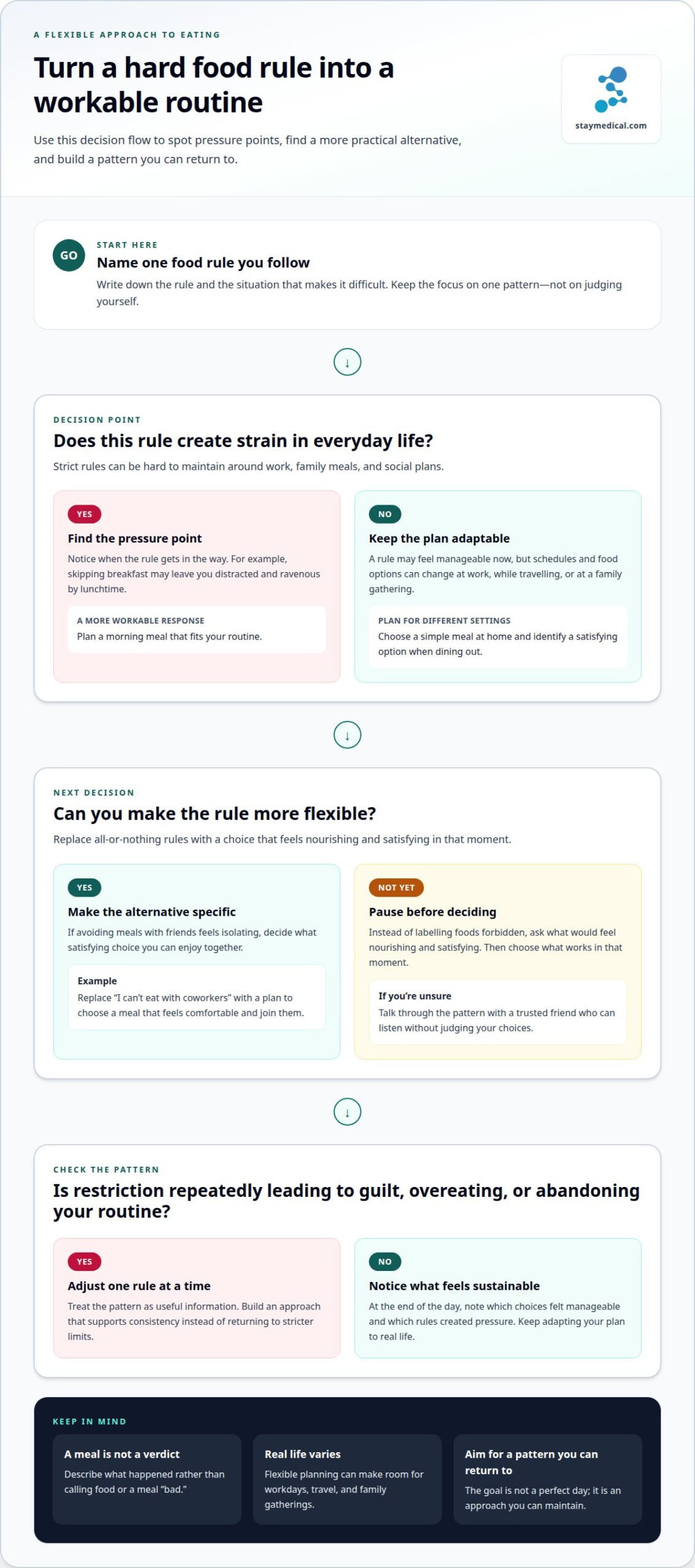
Start by noticing which rules create the most strain. If skipping breakfast leaves you distracted and ravenous by lunchtime, for example, plan a morning meal that fits your routine. If avoiding meals with friends makes your plan feel isolating, decide what satisfying choice you can enjoy together. The goal is a pattern you can return to, not a perfect day.
Replace all-or-nothing rules with flexible actions. Instead of declaring certain foods forbidden, pause before eating and ask what would feel nourishing and satisfying. Then make a choice that works in that moment. This approach leaves room for preferences and changing schedules without treating one meal as proof that you’ve failed.
Try this practical reset: write down one food rule you follow, the situation that makes it hard, and a more workable alternative. If your rule is “I can’t eat with coworkers,” for instance, a new plan might be to choose a meal that feels comfortable and join them. If you’re unsure what to change, discuss the pattern with a trusted friend who can listen without judging your choices.
Pay attention to how you talk about food. Calling a meal “bad” can turn a decision into a verdict about your character. Instead, describe what happened: “I ate while working and barely noticed the meal.” That observation points to a useful next step, such as taking a screen-free break, without demanding stricter rules.
Keep your plan adaptable. A busy workday, travel, or a family gathering may change what’s available, so decide on a few options that work in different settings. For instance, choose a simple meal at home and identify a satisfying option when dining out. Flexible planning helps healthy routines fit real life, rather than requiring real life to revolve around a rigid diet.
Review the pattern instead of judging a single meal. At the end of the day, note which choices felt sustainable and which rules created pressure. If restriction repeatedly leads to guilt, overeating, or abandoning your routine, treat that as useful information. Adjust one rule at a time and build an approach that supports consistency, rather than returning to stricter limits.
3. Exercise versus nutrition
Exercise supports health and can become a meaningful part of a weight-loss routine, but it doesn’t replace attention to eating habits. A trainer’s example makes the distinction clear: someone could exercise 2 hours per day, seven days per week, while still avoiding dietary change. The point isn’t to dismiss movement. It’s to avoid treating workouts as the only lever for progress.
Nutrition changes are often easier to connect to everyday choices than to an ambitious exercise schedule. Start with one repeatable adjustment, such as choosing a filling lunch before a busy afternoon or planning a meal instead of relying on whatever is nearby. Make the change specific enough to practice during an ordinary workday. A routine that fits your life is more useful than a demanding plan you can’t sustain.
Exercise can help establish structure. Choose an activity you’re willing to repeat, such as walking after work, cycling, or a strength session. Then consider what would make it easier to return: setting out walking shoes, choosing a familiar route, or scheduling movement around a regular commitment. These practical habits make activity part of your week without requiring every workout to be intense.
Why can weight loss stall even when you’re eating less and exercising? Progress on the scale can slow or vary from week to week, even while you continue making changes. Revisit your actual routine, including food choices and movement, rather than reacting to a short-term pause by eating less or adding punishing workouts.
Review your routine with two questions. First, what nutrition habit have you been able to repeat, such as preparing lunch before work? Second, what movement feels manageable, such as a walk during a break? If either answer is “nothing consistent,” choose one small adjustment to test. Avoid changing every meal and workout at once, because that makes it harder to tell which habit fits.
Match your activity to your routine and preferences. If a gym feels uncomfortable, take a walk outdoors or follow a simple home routine. If you enjoy group movement, invite a friend to join a class or walk. A trainer can also help you build strength gradually toward exercises that once felt out of reach. Choose activity you can practice without making exercise a punishment for eating.
When progress feels slow, return to the basics: make a sustainable nutrition change and choose movement you can repeat. For example, plan a nourishing dinner and take a short walk afterward, rather than trying to compensate for dinner with an exhausting workout. Consistency on ordinary days gives you a clearer basis for assessing your habits and deciding what to adjust next.
4. Getting back to regular meals
Stress can affect appetite, so you may miss a meal without meaning to. Start by noticing your hunger and fullness cues instead of following rigid food rules. For example, pause before lunch and ask whether you feel physical hunger, low energy, or distraction. That simple check-in can help you respond to your body instead of waiting until you feel ravenous.
If stress makes meals easy to forget, use a phone or computer reminder as a gentle prompt. Choose a time that fits your day, such as before a busy afternoon meeting. When it appears, take a short break and decide what you can eat. A reminder is a practical cue, not a demand to eat a particular food or finish a set portion.
Keep convenient choices available for days when planning feels difficult. Foods with protein or fiber can be useful options as you work toward a steadier routine. For example, pair a protein-rich food with fruit, or include vegetables alongside a meal. If a favorite food makes a meal more inviting, include it in a balanced plate rather than treating it as something you must earn.
Movement can also shape how you plan meals. If you exercise while stress has affected your appetite or weight, have a snack or small meal afterward to restore energy. Choose something easy to manage, such as a simple snack you already enjoy. Planning that option before a walk or workout can make eating afterward part of your routine, not another task to postpone.
A regular eating schedule can support mood, energy, and the immune system. To build one, connect meals with existing parts of your day: breakfast after getting ready, lunch during a work break, or dinner after arriving home. If work disrupts lunch, keep a practical option ready or set a reminder. Aim for a pattern that works with your real schedule.
When your appetite feels unpredictable, track the pattern without judging it. Notice whether stress, a packed calendar, or exercise tends to come before skipped meals. Then make one adjustment, such as keeping a snack near your desk or scheduling a meal break. If you miss a meal, return to your next planned opportunity instead of treating the day as ruined.
Rebuilding regular meals can also strengthen trust in your body. Hunger and fullness can guide decisions, while a flexible routine gives those cues room to emerge. Try checking in before and after a meal, then note what helped you feel comfortable. Repeating this practice can make eating feel less like a test and more like a steady part of caring for yourself.
5. Handling unsupportive relationships
Comments from people close to you can affect motivation and eating habits. A relative might offer food after you’ve said you’re full, or a friend might joke about your goals. Before the next gathering, decide what support would help. You could say, “I’m working on habits that support my well-being, and I’d appreciate encouragement rather than comments about my food.”
Be specific about what you’re asking for. Instead of expecting someone to understand your goal automatically, request one practical action, such as avoiding weight-focused jokes or joining you for a walk. Explain that your efforts are about your well-being, not criticism of anyone else’s choices. A clear request gives the other person something constructive to do.
Notice the difference between a clumsy comment and repeated efforts to undermine you. If someone continues pressuring you to abandon your plans after you’ve explained your needs, set a boundary. For example, change the subject when food criticism begins, leave a conversation that becomes disrespectful, or spend less time with that person. Creating distance can protect your focus when respectful requests don’t change the pattern.
A spouse or partner may worry that new routines will change your relationship. Choose a calm moment to explain what the changes mean to you and reassure them that shared time still matters. For example, suggest keeping a regular dinner together while making other routine adjustments separately. Ask what concerns them, then listen without promising to abandon choices that support your health.
If conversations become tense, consider discussing them with a counselor. Counseling may help partners express fears, understand each other’s needs, and work through conflict without turning meals or exercise into arguments. You might begin by saying, “I want us to talk about these changes without blaming each other.” A shared conversation can make room for reassurance while respecting your personal goals.
Build support beyond one relationship. Identify a friend or family member who listens without judging, then tell them what kind of check-in would feel useful. You might ask for a brief weekly message about how your routines are going, rather than comments about your body or the scale. An online support group can also offer a place to share challenges with people working on similar habits.
Keep your boundary simple and repeatable. If a friend repeatedly pressures you to eat after you’ve declined, say, “Thanks, I’m comfortable with my choice.” If the pressure continues, step away or change the subject. Supportive relationships respect your decisions, even when others would choose differently. That respect helps you focus on habits that fit your life.
Stay Medical Clinic: Weight Loss Program
Stay Medical Clinic’s Weight Loss Program is a next step if repeated setbacks make it difficult to build a sustainable routine. Bring the questions that have been hardest to resolve, such as how stress affects your eating, which changes feel manageable, or how to approach progress that has slowed. A conversation about your goals can help you consider a path that fits your circumstances rather than relying on stricter rules or more demanding workouts. Weight loss is personal, and support can be useful when you want to review your approach with a medical team. For a next step, contact Stay Medical Clinic to discuss the Weight Loss Program.
Choose a next step that feels sustainable
Your next move doesn’t need to be a dramatic reset. Choose one change you’re ready to practice, then give yourself room to learn how it fits your real life. If it needs adjusting, adapting your plan is part of progress, not a reason to judge yourself. Overcoming weight loss frustration can also mean redefining what a successful week looks like: showing up for your routine, asking for support, or treating yourself with patience during a difficult stretch.
If you’d value guidance as you consider your weight-loss goals, Stay Medical Clinic offers a Weight Loss Program. The clinic also offers Testosterone Replacement and IV Therapy for different health needs. Take the next step when you’re ready to talk through the support that may suit you.
Keep moving forward with curiosity and self-respect. One realistic next step is enough to begin.
Frequently Asked Questions
How to get back on track?
Start by identifying where your routine first became difficult, then choose one practical reset. If a late workday led to a skipped dinner and unplanned snacking, prepare an easy meal option for the next busy evening. Don’t try to compensate for a setback by restricting food or adding extra exercise. A workable next step gives you a clear way forward without treating one difficult day as a verdict.
Stress and Weight Loss: What’s the Connection?
Stress can affect appetite, digestion, sleep, and food choices, making routines harder to maintain. Notice what happens before a craving: a tense conversation, a difficult task, or feeling tired. Name the trigger and try a short pause, such as a few slow breaths, before deciding what you need. This can help you distinguish emotional urges from physical hunger without judging yourself for either.
How can I set weight loss goals that don’t rely only on the scale?
Choose goals based on actions and well-being, not only the number on the scale. For example, aim to prepare a nourishing lunch before work, take movement breaks you enjoy, or notice whether an evening routine helps you feel more rested. Keep a brief record of the habits you practiced and how they affected your day. This gives you meaningful signs of progress when weight alone feels discouraging.
What practical steps help overcome a weight loss plateau?
Review your routine before making a drastic change. Look for a recent shift, such as less planned movement, more meals eaten while distracted, or disrupted sleep. Choose one adjustment that addresses what you noticed, then see whether it feels sustainable. Scale changes can vary, so consider your consistency and daily well-being rather than reacting to one weigh-in with stricter rules.
How do sleep, stress, hormones, and medications affect weight loss?
Stress-related sleep disruption can affect cortisol production and eating habits, while stress may also influence digestion and appetite. Hormone and medication questions are personal, so discuss specific changes or concerns with a doctor rather than guessing about their effects. People across Miami, including Brickell, Coral Gables, Doral, Aventura, Bal Harbour, Bay Harbor Islands, Biscayne Park, Cutler Bay, El Portal, Florida City, Golden Beach, Hialeah, Hialeah Gardens, and Key Biscaya, can bring these questions to a local medical visit.
What are the risks of crash diets and very low-calorie diets?
Severe restriction can be difficult to sustain and may intensify cravings, especially if it removes favorite foods or relies on repetitive meals. Dieting can also contribute to cycles of weight loss and regain, which may worsen health conditions associated with higher weight. Rather than tightening food rules after a setback, consider whether your routine allows satisfying meals, variety, and flexibility. A sustainable pattern is more practical for long-term change.
How can I stay motivated after a setback or regain weight?
Separate what happened from what you tell yourself it means. If a stressful week disrupted your plans, write down the specific obstacle and one response you could try next time. Keep a record of useful wins, such as returning to a planned meal or asking someone for support. Those examples make progress visible beyond weight changes and can help you restart without comparing your journey with someone else’s.
Disclaimer
This content is for informational purposes only and does not replace evaluation, diagnosis, or treatment by a medical professional. Always consult a qualified healthcare provider for personalized care.