

TRT and Fertility: Exploring Clomiphene and Recovery Options
October 29, 2026
Overcoming weight loss frustration with realistic changes
October 31, 2026
The workout may be over, but recovery still deserves attention. A post-workout recovery IV drip in Coral Gables is an IV therapy session that delivers fluids and selected nutrients through a vein after exercise. It is not a substitute for rest, food, or medical attention for symptoms that need evaluation.
It’s understandable to look for support when you feel worn down after training. IV therapy is one option to discuss, but understanding what it involves and whether it suits your needs matters as much as the idea of recovery itself.
This guide explains how IV therapy works, what a session may involve, and the safety considerations to keep in mind. It also offers practical ways to decide whether this approach fits your recovery routine.
Key Takeaways
- Plan for an IV appointment to take 30-45 minutes, and consider how its timing fits around your workout and recovery routine.
- Match the discussion of an IV formulation to your goal, whether that’s energy, immune support, or post-exercise recovery.
- Understand what IV therapy can and can’t address when considering muscle soreness; recovery also involves the broader habits that support your body after exercise.
- Review your health history and safety considerations before treatment, including whether IV therapy is appropriate for you.
- Stay Medical Clinic offers IV Therapy and Primary Care, which can help connect questions about recovery with your broader healthcare needs.
Appointment hours and treatment duration
Each practice sets its own appointment hours, so there is no universal schedule for IV therapy in Coral Gables. Plan around the appointment time and your training routine. For example, a session after an evening workout may suit someone who wants to avoid rushing straight back to work. Allow time for preparation, infusion setup, and treatment.
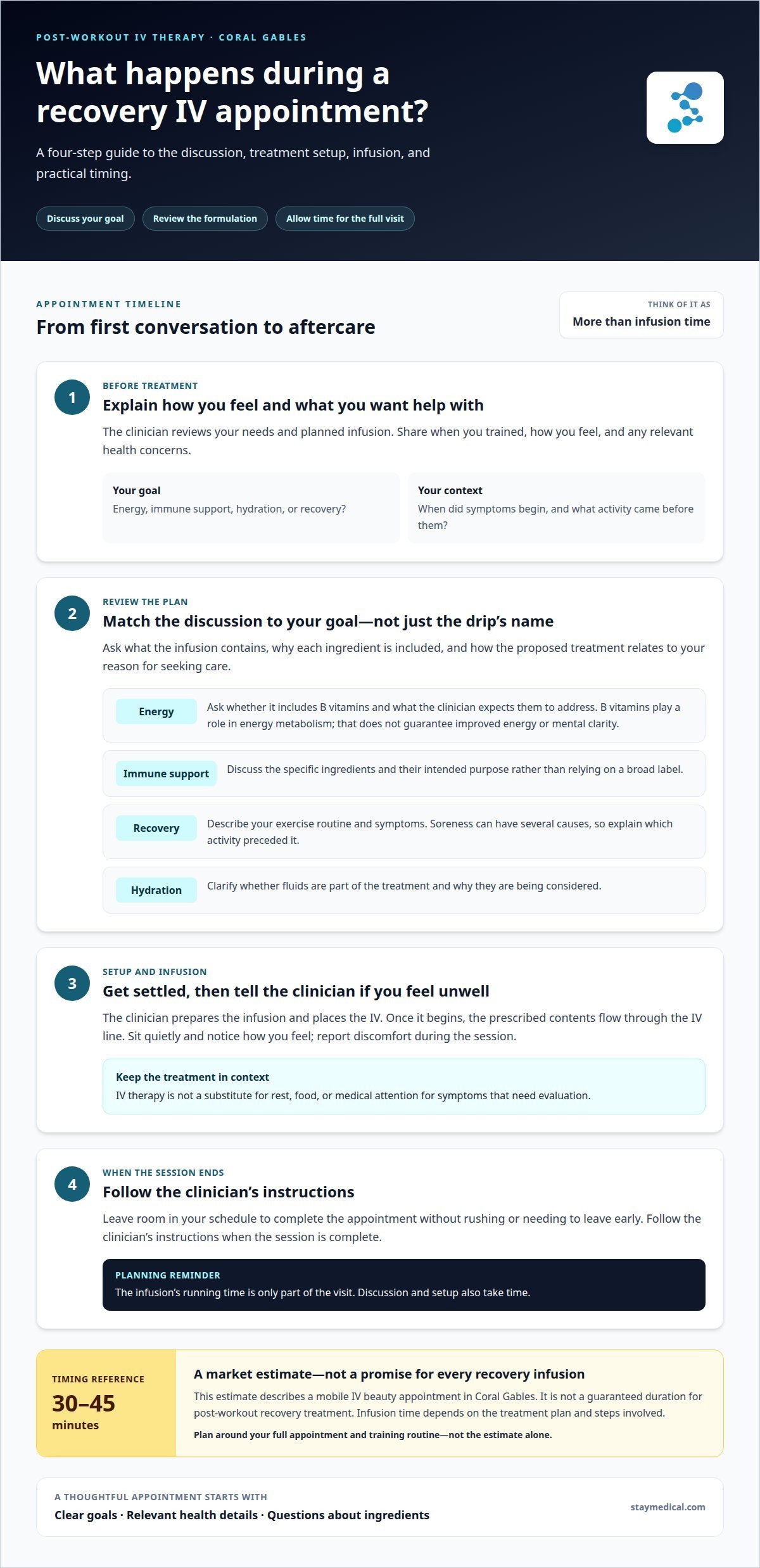
A market estimate for a mobile IV beauty appointment in Coral Gables is 30-45 minutes. That figure describes a beauty appointment, not a guaranteed duration for every post-workout recovery treatment. The time for an infusion depends on the treatment plan and the steps involved. Keep enough room in your schedule to complete the session without needing to leave early.
Before treatment begins, the clinician reviews your needs and the planned infusion. This is the moment to explain when you trained, how you feel, and whether you have relevant health concerns. The clinician can use that information to guide the session. Clear communication at the start helps keep the appointment focused on your reason for seeking IV therapy.
During setup, the clinician prepares the infusion and places the IV. Once it begins, the prescribed contents flow through the IV line. Use this time to sit quietly and notice how you feel. If you feel discomfort or become unwell, tell the clinician during the session rather than waiting until it ends.
Think of the appointment as a sequence, not just the time the infusion is running:
- Discuss your recovery goal and relevant health details.
- Review the planned treatment and prepare for IV placement.
- Receive the infusion while seated, and report any discomfort.
- Follow the clinician’s instructions when the session is complete.
For example, after a morning workout, leave time for the appointment instead of scheduling another commitment immediately. A post-workout recovery IV drip in Coral Gables is a medical treatment, so allow time for discussion and setup. The infusion’s running time does not represent the full appointment.
When planning, ask yourself whether you can attend without rushing, remain for the full session, and give the clinician your attention. Those practical steps make it easier to approach IV therapy thoughtfully. Don’t treat the 30-45-minute estimate for mobile IV beauty appointments as a universal time allowance for every recovery infusion.
Which IV drip is best for energy versus immunity versus recovery?
In Coral Gables, look for a clinic that provides IV therapy and considers your health history and goals before discussing a formulation. Choose a post-workout recovery treatment based on your situation, not simply because its name promises energy, immune support, or recovery.
These labels describe intended goals, not guaranteed results. A formulation marketed for energy may include B vitamins, while another may focus on hydration or ingredients positioned for immune support. Ask what the infusion contains, why each ingredient is included, and how the proposed treatment relates to your reason for seeking care.
B vitamins play a role in the body’s energy metabolism. That does not mean an infusion automatically improves energy or mental clarity after exercise. Feeling depleted can have different causes, and a vitamin formula does not identify them. Tell the clinician when the tiredness began, how it relates to training, and whether it affects your concentration. This context helps inform the discussion.
Use your main goal to guide the conversation:
- Energy: Ask whether the formulation includes B vitamins and what the clinician expects them to address.
- Immune support: Discuss the specific ingredients and intended purpose, rather than relying on a broad label.
- Recovery: Explain your exercise routine and symptoms, then ask how the proposed infusion fits that context.
- Hydration: Clarify whether fluids are part of the treatment and why they’re being considered.
For example, if you feel mentally foggy after training, describe that symptom rather than choosing an “energy” drip by name. If you’re focused on muscle recovery, explain which workout preceded the discomfort. These examples can guide a clinical discussion, but they do not establish that a particular IV ingredient treats either concern.
Compare the actual formulation, not just the package title. The clinic’s explanation should connect the ingredients to your stated goal and distinguish intended use from a promised outcome. If the explanation focuses only on a catchy label, ask for the ingredient list and the reason for each component.
B vitamins may also be available through other forms of care, including vitamin injections. An injection and an IV infusion are different ways of receiving treatment, so ask the clinician which option fits your needs. A thoughtful decision starts with your health context and a clear discussion of the proposed treatment.
Formulations vary. An energy-focused drip may include B vitamins, while other options may emphasize hydration or ingredients positioned for immune support. Ask the clinic for the specific ingredient list and the reason for each component.
Muscle recovery and post-exercise soreness
Post-exercise soreness can have several causes, so describe the activity and symptoms clearly. A focused consultation can help distinguish a recovery goal from concerns that need separate evaluation.
Amino Acids and Muscle Repair
Amino acids are building blocks the body uses to make proteins, including proteins involved in muscle tissue. When discussing an infusion, look beyond an “amino acid” label: ask which ingredients are included and how they relate to your stated goal.
For example, explain whether soreness followed strength training, a long run, or a new exercise. That context makes the conversation more specific. An ingredient list alone does not show that an infusion will repair muscle or improve performance.
Athletic Performance and Recovery
Training and recovery are connected: a demanding workout can leave soreness that affects your next session. Track the exercise, the affected area, and how the discomfort changes your routine. These details are more useful than a general goal such as “better performance.”
During a consultation, explain what you expect an IV treatment to address. Separate that goal from other aspects of wellness, such as training load, hydration, and rest. A recovery infusion should not be presented as proof of improved athletic performance or as a replacement for a considered training plan.
Muscle cramping deserves a separate discussion. Magnesium and calcium are minerals involved in normal muscle function, but cramps alone do not identify a specific cause or establish that an infusion is appropriate. Describe when a cramp occurs, which muscle is involved, and whether it follows a particular activity. Share relevant health information before discussing ingredients or treatment.
For a practical record, note your workout and symptoms afterward. Include whether soreness is localized or affects several areas, and whether it interferes with movement. This gives the clinician concrete information to consider alongside your recovery goals.
- After strength training: Identify the exercises and the muscles that feel sore.
- After endurance exercise: Describe the activity and how symptoms affect your next workout.
- With cramps: Record the muscle involved and the circumstances surrounding the cramp.
Immune support and mental clarity are different goals from muscle repair. If those concerns matter to you, raise them separately rather than assuming one formula addresses everything. Ask about the purpose of each proposed ingredient and how it relates to your symptoms. This keeps the discussion grounded in your experience rather than broad wellness claims.
Eligibility and safety considerations
IV hydration is a medical treatment, so eligibility depends on your health context, not your workout schedule. Before an infusion, discuss your medical history, current supplements, medications, and the symptoms you want addressed. A clinician can use this information to assess the proposed treatment and ingredients.
Pregnancy and breastfeeding are important considerations. People who are pregnant or breastfeeding should not engage with this form of wellness therapy. Share this information before discussing treatment, even if your goal is simply post-exercise hydration.
Receive IV therapy from a trained medical professional. In Florida, the professional’s role and qualifications matter, and the person administering an infusion should have appropriate medical training. Ask who will assess you and administer the IV, and seek a clear answer to your questions about the process.
Consulting a physician before starting a treatment or therapy program is a prudent step. Bring a current list of prescriptions and supplements, and describe any prior reaction to an infusion or injection. For example, if an ingredient caused a reaction during earlier care, explain what happened and when.
Review the ingredients rather than relying on a package name. If a proposed formula includes amino acids, vitamins, or minerals, ask why each component is being considered for your goal. This helps distinguish the treatment’s stated purpose from a general wellness claim. Do not assume a supplement is appropriate simply because it appears in an infusion.
Ask how the provider handles sterile preparation and what components are used. Trained medical professionals should administer the treatment with proper attention to the infusion setup. A careful discussion of the ingredients and process gives you a clearer basis for deciding whether to proceed.
Minor side effects associated with IV beauty therapy may include bruising at the insertion site or temporary flushing. Tell the clinician promptly if you notice either during or after an infusion. Discuss any new or concerning reaction with a medical professional rather than treating it as a routine part of recovery.
- Before treatment: Share health history, medications, supplements, and pregnancy or breastfeeding status.
- During the discussion: Ask about the ingredients, their purpose, and who administers the IV.
- After setup: Report discomfort or a reaction such as bruising or flushing.
A useful safety discussion is specific to the planned treatment. For example, a runner seeking hydration should still discuss health history and ingredients before an infusion. Clear answers about the clinician, components, and process help you make an informed decision about IV therapy.
IV drip packages and add-on ingredients
There is no standard ingredient list for every recovery infusion; the formulation determines its contents. Before an appointment, ask for the specific ingredients and the reason each is included.
IV Drip Packages
A package name may describe a treatment’s intended focus, but it does not tell you everything in the infusion. Compare the listed contents, the purpose of the base formula, and any proposed additions. For example, a package labeled for recovery may differ from one focused on hydration. The actual ingredient list matters more than a broad label.
Before choosing, describe your goal in practical terms, such as feeling depleted after a run or wanting to discuss post-exercise hydration. Then review how the proposed formula relates to that goal. Ask what the base infusion includes, whether anything is optional, and how the treatment will be administered. This helps you understand the appointment before it begins.
Included Ingredients and Add-Ons
Ingredients depend on the selected formulation. Ask for the complete list, including any add-ons, and have the clinician explain their intended role. If a formula mentions nutrients, vitamins, minerals, or amino acids, clarify which are included and whether they are part of the base infusion or an optional addition.
An add-on should have a clear purpose, not simply sound appealing. If an ingredient is presented as supporting energy, for instance, ask how that relates to your concern. If another is associated with recovery, ask what it is intended to address. A clear explanation separates the formulation’s purpose from assumptions based on its name.
Use these questions to compare options during the treatment discussion:
- What nutrients are included in the base infusion?
- Which ingredients are optional add-ons?
- What is the purpose of each ingredient for my goal?
- How will the infusion be prepared and administered?
Keep your health context in mind as you review a package. Share relevant medical history, medications, and supplements before an infusion is prepared. This gives the clinician information to consider when discussing ingredients and the proposed treatment. If a label is unclear, ask for a plain-language explanation rather than guessing from marketing terms.
For example, when comparing two packages, write down each formula’s ingredients and intended purpose. This makes differences easier to see and supports a more focused conversation. Choose based on a clear understanding of the contents, not the promise implied by a package name.
Stay Medical Clinic: Weight Loss Program
Stay Medical Clinic offers IV Therapy for people exploring clinician-guided infusion care as part of their broader wellness needs. If your goals also include weight management, its Weight Loss Program may be a more relevant place to start than focusing only on post-workout recovery.
For ongoing fatigue or other health concerns affecting exercise, Primary Care offers a broader setting to discuss your health. The right service depends on what you want to address, whether infusion care, weight management, or general medical support. This keeps your next step connected to your needs.
Contact Stay Medical Clinic to learn more about its care options.
Make Your Next Recovery Decision With Clarity
Your next step can be simple: define what you want support with before arranging care. If you’re considering a post-workout recovery IV drip in Coral Gables, bring a clear account of your training, symptoms, and broader health goals to the conversation. This helps focus the discussion on your needs rather than a treatment label.
Recovery choices should fit your full routine. Consider how you feel between workouts, what affects your daily activities, and whether a concern extends beyond exercise. These observations can help you have a more useful conversation with a medical professional. You do not need a perfect explanation; honest details about what you’re experiencing are a practical place to start.
Consider what you want your next step to accomplish. A focused conversation can help you weigh care options against your priorities and overall health. Stay Medical Clinic offers a Weight Loss Program, Testosterone Replacement, and IV Therapy.
Approach recovery with curiosity and care. A thoughtful next step can begin with a conversation about what matters to you.
Frequently Asked Questions
What Is IV Therapy?
IV therapy delivers fluids or other ingredients into a vein through a small catheter. A clinician selects and administers the infusion as a medical treatment, based on its intended purpose and the person’s health context. For example, someone in Coral Gables considering an infusion after exercise should distinguish a hydration goal from concerns such as persistent fatigue or pain, which may need a broader medical discussion.
How is IV therapy different from taking oral supplements?
IV therapy delivers ingredients into a vein, while oral supplements are swallowed and pass through the digestive system. The routes differ, but that alone does not establish which option is more suitable or effective for a particular concern. For example, someone already taking a multivitamin should tell the clinician before discussing an infusion. The full ingredient list matters because overlapping nutrients may be relevant to assessing treatment.
Why does physician supervision matter for IV therapy?
Physician involvement helps connect the proposed infusion with your medical history, symptoms, and other treatments. Before a session, share medications, supplements, allergies, and any previous reaction to an infusion. In Coral Gables, this context can help the clinician assess whether the proposed ingredients fit your reason for seeking treatment. A physician consultation is also advised before starting an IV therapy program.
Do Coral Gables IV clinics require a medical consultation or prescription before treatment?
A physician consultation is advised before starting an IV therapy program. It gives the clinician a chance to review your health history, current medications, symptoms, and the infusion’s intended use. Prescription requirements are part of a clinic’s treatment process, not something you can infer from the term “IV drip.” Before proceeding, be ready to discuss what you hope treatment will address.
How long does a recovery IV drip appointment take, and is same-day booking available?
Appointment length depends on the specific treatment and its setup. The 30-45-minute estimate for mobile IV beauty appointments in Coral Gables shouldn’t be treated as a fixed duration for every recovery infusion. Same-day booking depends on scheduling capacity and whether there’s time for the clinical assessment and treatment. Plan around the full appointment rather than assuming infusion time is the only time needed.
How do IV drips compare with oral hydration and electrolyte supplements after exercise?
Oral fluids and electrolyte products are taken by mouth; an IV infusion delivers fluids through a vein. These are different routes, and a workout alone does not establish that an IV is necessary. After a routine training session, for example, consider what you drank and ate, how you feel, and whether symptoms persist. A clinician can discuss whether IV hydration fits your health context and recovery concerns.
What are the risks and side effects of IV hydration therapy?
Possible side effects reported with IV beauty therapy include bruising at the insertion site and temporary flushing. Tell the clinician if either occurs during or after treatment, and mention any previous infusion reaction beforehand. Discussing the planned ingredients and your health history helps put the treatment in context. Seek medical attention for symptoms that feel severe or concerning rather than assuming they’re routine.
Who should avoid post-workout IV drips or get medical approval first?
People who are pregnant or breastfeeding should not engage with this form of wellness therapy. Others should discuss their health history, medications, and supplements with a physician before starting an IV program. For example, if you’ve had a previous reaction to an infusion, mention it before any new treatment. Explain the workout-related concern too, so the consultation considers your broader health, not only exercise recovery.
Disclaimer
This content is for informational purposes only and does not replace evaluation, diagnosis, or treatment by a medical professional. Always consult a qualified healthcare provider for personalized care.