

BP Reasons: Common Causes of High Blood Pressure
October 3, 2026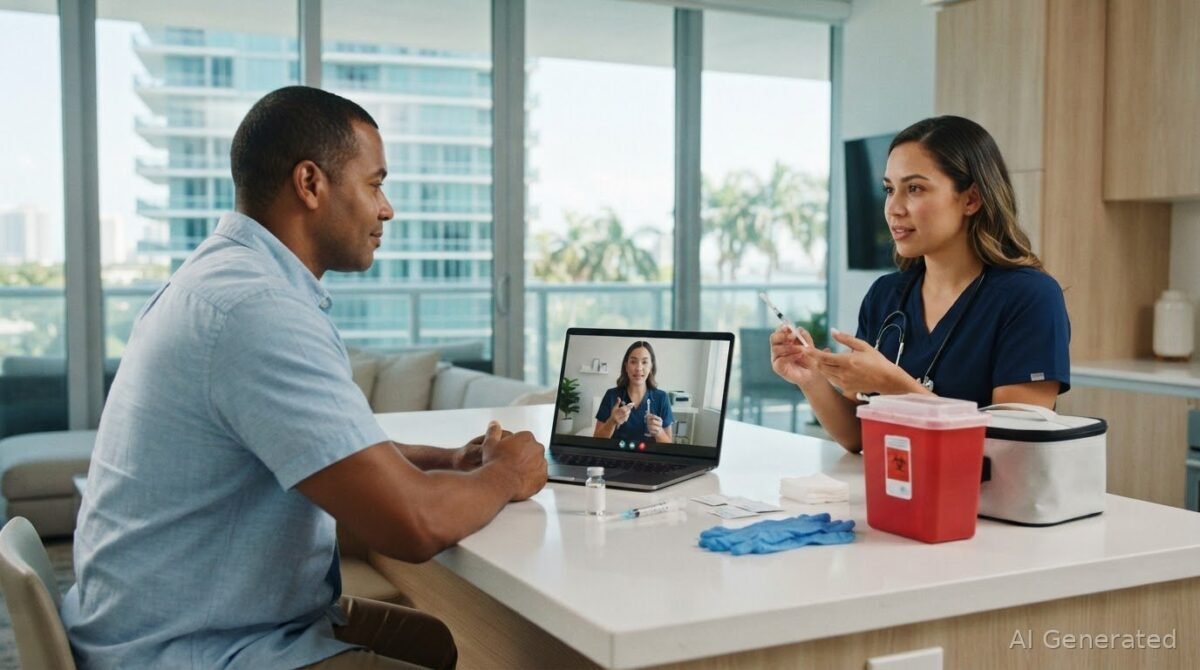
Learning how to administer TRT injections at home starts with your prescription, not a generic online routine. Before handling medication and injection supplies, make sure you understand the instructions for your treatment. Whether home injections are appropriate depends on your individual plan, including the prescribed dose and injection route, and the guidance you receive from your clinician.
This guide covers what to clarify before your first injection, how to prepare using your clinician’s directions, and what to know about supplies, storage, and sharps disposal. It also explains what to do if you miss a dose, feel uncertain about an injection, or notice an unexpected reaction. Safe TRT treatment depends on medical oversight, not guesswork. With clear instructions and follow-up, you can approach home injections with greater confidence and know when to pause and contact your care team.
Key Takeaways
- Home TRT injections should follow your prescription and clinician-provided instructions, not a one-size-fits-all routine.
- Before learning how to administer TRT injections at home, understand your prescribed dose, route, schedule, and the supplies specified for your treatment.
- Intramuscular and subcutaneous injections use different routes. Your medication and prescription determine which applies to you.
- Follow your care team’s aftercare and dose-recording instructions, and put used sharps in an appropriate sharps container.
- Personalized medical oversight and laboratory testing can support TRT follow-up at Stay Medical Clinic in Brickell, Miami.
Can You Administer TRT Injections at Home? Start With Your Prescription
Questions about self-injection are normal, and it’s best to raise them before you begin. Home administration means following a prescribed treatment plan after receiving instruction from your clinician. It does not mean choosing a dose, route, or schedule yourself, or assuming another patient’s routine is right for you.
General information can explain injection terms, but only your clinician’s instructions can guide your treatment. Your prescription determines the medication, dose, route, and timing, as well as whether home injections are appropriate. If any part of the plan is unclear, pause and ask your care team for clarification rather than guessing.
Who may be considered for home TRT injections?
Your prescribing clinician determines whether self-injection is appropriate for your treatment plan. Your comfort with handling supplies, ability to follow instructions, and access to follow-up can inform that discussion, but they do not form a universal checklist. A method that works for one patient may not be suitable for another, and home injection is not automatically right for everyone receiving TRT.
The route matters, too. Some testosterone prescriptions use an intramuscular route, but your medication and plan determine what applies to you. A general overview of intramuscular injections can explain the term. It cannot replace prescription-specific instruction or tell you where and how to inject.
What must your clinician explain before the first home dose?
Before injecting at home, ask your clinician to demonstrate the process and provide written instructions you can refer to later. You should be able to identify the medication on its label and understand the prescribed dose, route, and schedule. Ask what to do if you miss a dose, and whom to contact if the label differs from your instructions or a step is unclear.
- Match the medication and dose on the prescription label to your written instructions.
- Know the prescribed injection route and schedule.
- Review the preparation steps and supplies specified by your care team.
- Get missed-dose instructions before you need them.
Don’t use a generic tutorial to fill gaps in your training. To discuss clinician-guided treatment, individualized instructions, and monitoring, explore testosterone replacement therapy in Brickell. A clear plan helps you understand how to administer TRT injections at home while keeping decisions connected to your care.
How to Prepare for a Prescribed TRT Injection at Home
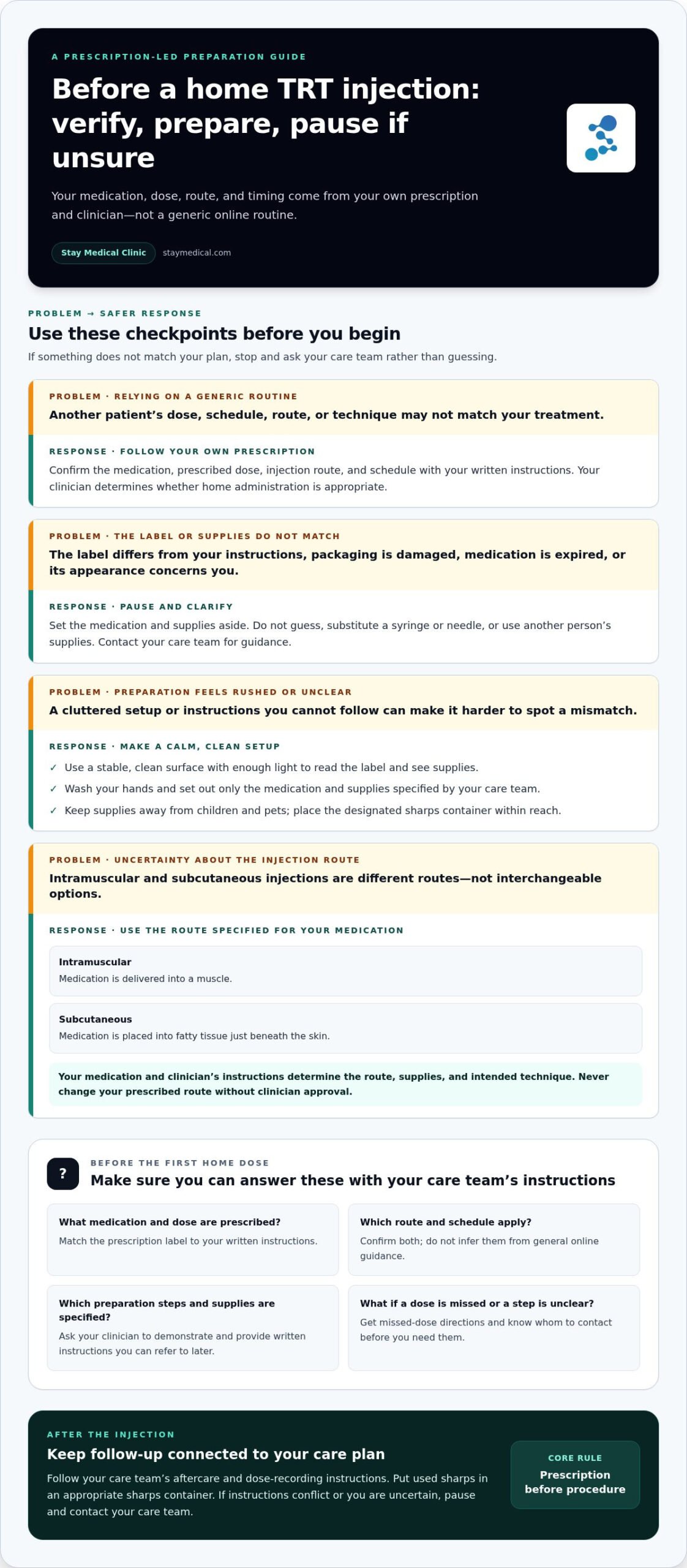
Use a preparation checklist approved for your prescription. It supports, but does not replace, your clinician’s demonstration or instruction. A calm, organized setup can help you notice a mismatch before you start. Never change a prescribed dose or route based on online instructions. If online information differs from your clinician’s directions, follow your prescription-specific plan and contact your care team to clarify the difference.
Check the medication and supplies before starting
Before preparing a dose, read the medication label and compare it with your written instructions. Follow the label and your clinician’s directions for storage, expiration, and handling. Use only the medication prescribed for you and the supplies designated by your care team. Don’t substitute a syringe or needle, and don’t use another person’s supplies.
Pause if the label doesn’t match your instructions, the packaging is damaged, the medication is expired, or its appearance concerns you. Don’t guess or use a general online demonstration to resolve uncertainty. Set the medication and supplies aside and contact your care team for guidance.
Set up a clean, calm space
Choose a stable, clean surface with enough light to read the label and see your supplies clearly. Wash your hands, then arrange only the items specified for your injection so you can keep track of them. Keep medication and supplies away from children and pets. Put the designated sharps container within reach before you begin, and don’t leave used supplies unsecured.
- Review the label, expiration, storage directions, and written instructions.
- Set out only the prescribed medication and approved supplies.
- Prepare a clean, well-lit workspace and wash your hands.
- Keep the sharps container nearby and supplies out of reach of children and pets.
If your prescribed route is intramuscular, read about intramuscular medication for general context. MyHealth Alberta also offers a general guide to how to give an intramuscular shot. These resources can help explain the topic, but they don’t replace instructions for your medication and route. For questions about your TRT plan or preparation, contact Stay Medical Clinic’s care team.
Injection Routes, Common Concerns, and When to Get Help
Learning how to administer TRT injections at home also means knowing which route your prescription specifies and when to seek medical advice. Intramuscular and subcutaneous injections are different routes, not interchangeable options. Your medication formulation and clinician’s instructions determine the method for your treatment.
Intramuscular or subcutaneous: why the prescription matters
An intramuscular injection delivers medication into a muscle. A subcutaneous injection places it into the fatty tissue just beneath the skin. Your prescription and clinician’s demonstration should identify the route and the supplies and technique intended for your medication.
Never change your prescribed injection route without your clinician’s approval. Not every testosterone formulation is intended for every route. Don’t use online guidance about needles, injection sites, or technique to adapt your injection. If the route on the medication label seems inconsistent with your written plan, pause and contact your care team before injecting.
| Route | What it means | What guides your technique |
|---|---|---|
| Intramuscular | Medication is injected into a muscle. | Your prescription-specific directions and clinician demonstration. |
| Subcutaneous | Medication is injected into fatty tissue beneath the skin. | Your prescription-specific directions and clinician demonstration. |
Which symptoms need a call to the care team?
A small amount of brief tenderness or mild soreness at the injection site can occur. Notice whether it changes. Contact your clinician if pain, redness, warmth, or swelling persists or worsens, or if you notice another reaction that concerns you. Your prescriber can advise you based on your medication and health history.
Seek urgent medical assessment for signs of a severe allergic reaction, chest pain, or difficulty breathing. Don’t wait for a routine follow-up if these symptoms occur. For other possible side effects or questions about what to expect with your specific formulation, contact the prescribing care team rather than relying on general advice.
What to Do After a Home TRT Injection
After an injection, follow the aftercare directions provided for your prescription. Avoid adding steps based on general online advice, since instructions can vary by medication and route. Record each dose as your care team directs, and note questions or changes you want to discuss at follow-up.
Track treatment and follow-up as directed
A private dose log can help you track administration dates and bring useful details to your next appointment. Include relevant questions or concerns, such as a missed dose or a change at the injection site. Your clinician determines the timing of follow-up visits and laboratory testing based on your treatment plan. Learn more about laboratory testing in Brickell.
If you miss a dose, don’t improvise a correction or double a later dose. Follow the missed-dose instructions your clinician provided. If you don’t have clear guidance, contact your care team before making changes.
Store and dispose of supplies responsibly
Put used needles and other sharps directly into an appropriate sharps container immediately after use. Don’t leave them on a counter, reuse them, or place loose needles in household trash or recycling. Follow local disposal guidance, since options can vary by location. Store medication and unused supplies according to the label and your clinician’s instructions, including directions for transport.
After-injection checklist
- Follow the aftercare directions for your prescription.
- Record the dose and date as instructed, and note questions for your care team.
- Put used sharps directly into an appropriate sharps container.
- Store medication and unused supplies according to the label and clinician guidance.
- For a missed dose or unclear instruction, contact your care team instead of guessing or doubling a later dose.
This checklist is a reminder, not a replacement for the training and written directions that guide how to administer TRT injections at home. Keep your clinician’s instructions accessible and use them to support consistent treatment and individualized follow-up.
Getting Clinician-Guided TRT Support in Brickell, Miami
Safe home treatment is one part of a wider care plan, not a stand-alone technique. Care begins with a clinical evaluation and a discussion of whether TRT is appropriate for you. If treatment is prescribed, your medication, dose, route, and schedule should be defined for your individual plan. Before administering a dose at home, make sure you understand the directions and know where to bring questions.
Preparation and follow-up are important, too. Use only the medication and supplies designated for your prescription, follow the label and clinician’s directions, and keep a record of doses as instructed. If you’re uncertain about a step in how to administer TRT injections at home, don’t guess. Contact your care team for guidance specific to your treatment.
What ongoing medical oversight can contribute
Follow-up gives you and your clinician an opportunity to review your treatment, discuss concerns, and consider testing as directed by your care plan. Laboratory testing can help inform clinical decisions, while the timing and interpretation belong within your individualized care. Any adjustment to your dose, route, or schedule should come from the prescribing clinician, not online advice or another person’s experience.
For broader context on treatment, explore the testosterone replacement therapy page. You can also bring a short list of questions to follow-up, such as what to do after a missed dose or what changes should prompt a call. Clear communication can make your plan easier to understand and follow.
A clear next step for Miami-area patients
Stay Medical Clinic provides personalized testosterone replacement care and laboratory testing in Brickell, Miami. The clinic is located in Brickell and serves patients across the Miami area, including Aventura, Bal Harbour, Bay Harbor Islands, Biscayne Park, Coral Gables, Cutler Bay, Doral, El Portal, Florida City, Golden Beach, Hialeah, Hialeah Gardens, and Key Biscaya. If you’re considering TRT or have questions about your plan, speak with the care team about your concerns and clinician-directed monitoring. Home injections should remain guided by your prescription and care team, from evaluation through follow-up.
No online guide can determine your treatment needs or eligibility. Those decisions belong in a conversation with a clinician who can consider your individual health information.
Move Forward With a TRT Plan You Understand
Safe home injections start with a treatment plan tailored to you. Before deciding how to administer TRT injections at home, make sure your prescribing clinician has explained your medication, dose, route, timing, and what to do if you miss a dose. A demonstration and written instructions can help you feel prepared without relying on a generic online routine.
Keep preparation and aftercare consistent: use only the supplies specified for your prescription, record doses as directed, and put used sharps in an appropriate container. If something is unclear or you notice a concerning reaction, pause and contact your care team rather than changing the plan yourself. Follow-up and laboratory testing should reflect your clinician’s guidance and individual needs.
Stay Medical Clinic offers testosterone replacement therapy and laboratory testing as part of personalized care in Brickell, Miami. If you have questions about TRT or want to explore your care options, talk with the care team about a next step that fits your needs.
With clear instructions and ongoing clinical oversight, you can approach treatment one informed step at a time.
Frequently Asked Questions
Can I administer TRT injections at home?
Yes, some patients can administer prescribed TRT injections at home, but your prescribing clinician determines whether it’s appropriate and explains how to do it safely. Home injection means following your medication label, prescribed dose, route, and schedule after receiving instruction. Before your first dose, get written, prescription-specific directions and a demonstration, including guidance for missed doses. If you’re unsure whether self-injection fits your plan, pause and discuss it with your care team.
How do I know whether my TRT injection is intramuscular or subcutaneous?
Check your prescription label and written instructions, and confirm the route with your clinician if it isn’t clear. Intramuscular injections deliver medication into a muscle; subcutaneous injections place it into fatty tissue beneath the skin. The medication formulation and prescription determine the intended route and technique. Don’t infer the route from the needle or copy another person’s method. If label directions and your care plan seem inconsistent, pause and contact your care team.
What should I do if I miss a TRT injection?
Follow the missed-dose instructions your prescribing clinician provided. If you don’t have clear guidance, contact your care team for advice specific to your medication and schedule. Don’t double your next dose or change the timing to make up for the missed injection unless your clinician directs you to. Keeping a dose record can make it easier to explain what happened and get guidance for your next step.
Is it normal to have soreness after a TRT injection?
Mild, short-lived soreness or tenderness at the injection site can happen. Notice whether it settles or worsens, and follow the aftercare directions provided for your prescription. Contact your clinician if pain, redness, warmth, or swelling persists or gets worse, or if another reaction concerns you. Your care team can advise you based on your medication and health history rather than a general online description.
How should I dispose of needles after a TRT injection at home?
Place used needles and other sharps directly into an appropriate sharps container after the injection. Don’t leave them unsecured, put loose needles in household trash or recycling, or reuse them. Follow local disposal guidance, since options and requirements can vary by location. If you’re unsure what container or disposal method to use, ask your care team or check your local health department’s guidance before your next injection.
Do I need blood tests while receiving TRT?
Blood tests may be part of TRT follow-up, with the timing and testing plan determined by your clinician. Results can help the care team assess your response and guide treatment decisions. Don’t adjust your dose based on results without your prescriber’s direction. Stay Medical Clinic offers TRT and laboratory testing in Brickell, Miami, serving patients in Miami, Aventura, Bal Harbour, Bay Harbor Islands, Biscayne Park, Coral Gables, Cutler Bay, Doral, El Portal, Florida City, Golden Beach, Hialeah, Hialeah Gardens, and Key Biscaya.
When should I seek urgent help after a TRT injection?
Seek urgent medical assessment if you develop symptoms of a severe allergic reaction, chest pain, or difficulty breathing after an injection. Don’t wait for a routine appointment if these occur. For persistent or worsening injection-site concerns, contact your prescribing care team. If you’re uncertain whether a symptom is urgent, seek prompt medical help and share the medication and dose information with the clinician assessing you.
Disclaimer
This content is for informational purposes only and does not replace evaluation, diagnosis, or treatment by a medical professional. Always consult a qualified healthcare provider for personalized care.