

Physician-Led Weight Loss Program in Miami: The 2026 Guide to Sustainable Results
September 19, 2026
What if the stubborn weight you’re carrying isn’t a failure of willpower, but a silent signal from your endocrine system? For many, the frustration of persistent abdominal fat and chronic fatigue continues even with a perfect diet. It’s a cycle that feels impossible to break, leaving you feeling misunderstood by traditional weight loss advice that ignores the complexities of your unique biology.
We understand that your body’s chemistry is the true driver of your metabolic success. Recognizing the specific signs of hormone imbalance causing weight gain is the first step toward moving past the “eat less, move more” narrative. You deserve validation that your struggle is biological rather than a lack of discipline, and this guide provides the clinical clarity you’ve been seeking.
In the following sections, we will identify the hormonal red flags that sabotage your progress and explain how an intentional, medical approach can restore your health. We’ll explore how specific shifts in insulin, cortisol, or testosterone create roadblocks and how modern treatments like GLP-1 medications or TRT can help you finally reset your metabolic baseline.
Key Takeaways
- Understand why your hormonal thermostat dictates fat storage, shifting the focus from simple calorie counting to internal biological signaling.
- Identify the primary signs of hormone imbalance causing weight gain, such as persistent midsection fat and intense afternoon energy crashes.
- Learn why standard blood panels often overlook metabolic roadblocks and which specific laboratory markers are required for a complete diagnosis.
- Discover how medically supervised treatments, including GLP-1 medications, work to recalibrate your body’s insulin and hunger pathways.
- Gain a clear path toward sustainable weight loss by addressing the underlying endocrine issues that willpower alone cannot overcome.
The Biological Blueprint: Why Hormones Control Your Weight
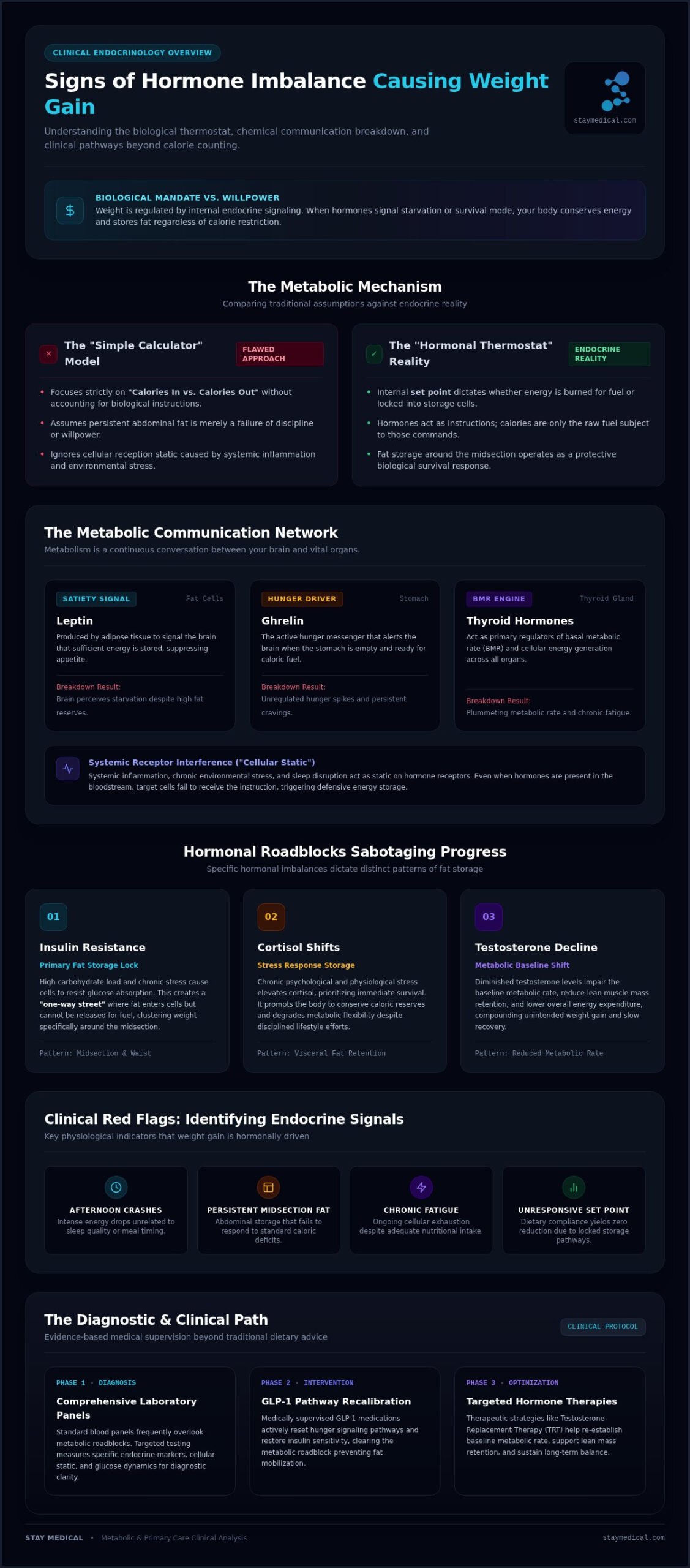
Your body doesn’t function like a simple calculator. While the “calories in, calories out” model is a staple of traditional fitness advice, it often fails because it ignores the complexity of your internal chemistry. Your weight is actually managed by a delicate “hormonal thermostat” that determines whether you store energy as fat or burn it for fuel. When your endocrine signals are crossed, your body might stay in storage mode regardless of how little you eat or how much you exercise. This set point is controlled by a complex network of glands and messengers that prioritize survival over your fitness goals.
Living in a high-energy environment like Miami often introduces chronic stress, environmental toxins, and sleep disruptions that further scramble these signals. These lifestyle factors can trigger the subtle signs of hormone imbalance causing weight gain, making it feel like you’re fighting an uphill battle against your own biology. It isn’t just about the food on your plate; it’s about how your cells interpret that energy and where they decide to put it.
To better understand this concept, watch this helpful video:
The Communication Breakdown
Metabolism is essentially a series of conversations between your brain and your organs. The human endocrine system uses chemical messengers like leptin and ghrelin to dictate when you feel hungry and when you’ve had enough. When these lines of communication are open, your body maintains a healthy weight with ease. However, several factors can disrupt this flow:
- Leptin: Produced by fat cells to tell your brain you have plenty of energy stored.
- Ghrelin: The “hunger hormone” that signals your stomach is empty and ready for fuel.
- Thyroid Hormones: The primary regulators of your basal metabolic rate and energy production.
When these signals break down, your metabolic rate can plummet. Willpower simply cannot override a biological mandate to conserve energy when your brain thinks you’re starving, even if you have plenty of stored fat.
When Your Body Refuses to Let Go
Systemic inflammation often acts as “static” on your hormone receptors, preventing them from receiving the messages they need to function. This resistance means your body might hold onto fat as a survival mechanism, particularly around the midsection. Persistent weight gain is rarely a cosmetic issue; it’s frequently the first visible symptom of a deeper metabolic shift that requires clinical attention. Identifying the signs of hormone imbalance causing weight gain is the first step toward a personalized solution.
Scheduling a primary care visit in Brickell allows you to establish a clinical baseline and identify these imbalances before they lead to chronic conditions. We believe in looking past the scale to see the person and the biology behind the numbers. Hormonal weight gain is a protective biological response gone wrong, where the body prioritizes energy storage over metabolic flexibility.
The ‘Big 4’ Hormones Linked to Stubborn Weight Gain
When your body stores weight in specific patterns, it’s often a direct reflection of which chemical messenger is out of sync. While calories provide the fuel, hormones provide the instructions. Understanding these signs of hormone imbalance causing weight gain allows you to move beyond general advice and target the specific biological roadblock holding you back. Your body isn’t failing; it’s simply following a set of instructions that prioritize storage over energy expenditure.
Insulin Resistance and the Midsection
Insulin is your primary fat storage hormone. In a healthy state, it helps your cells absorb glucose for energy, but chronic stress or high-carbohydrate diets can lead to resistance. This creates a “one-way street” where fat enters cells but can’t be released for fuel, often resulting in unintentional weight gain clustered around the waist. High insulin levels essentially lock your fat stores, making it physiologically difficult to lose weight through exercise alone. Similarly, chronically high cortisol levels signal the body to store visceral fat around internal organs, creating the firm “cortisol belly” that resists traditional dieting efforts.
The Thyroid-Metabolism Connection
Your thyroid acts as the metabolic spark for every cell in your body. When T3 and T4 levels are suboptimal, your entire system slows down at the cellular level to conserve energy. This sluggishness is a hallmark sign of hormone imbalance causing weight gain, manifesting as a weight that feels “heavy” and is frequently accompanied by persistent fatigue. Many patients find their TSH levels fall within a “normal” range on standard lab tests even when they feel highly symptomatic. This gap highlights the critical difference between clinical and subclinical hypothyroidism, where your metabolism is functioning below its potential despite technically being within range.
Sex Hormones and Fat Distribution
Sex hormones like estrogen and testosterone dictate where fat is distributed and how muscle is maintained. Estrogen dominance often leads to weight gain specifically in the hips and thighs, while low testosterone in men is a major driver of visceral fat accumulation and a loss of lean muscle mass. For men, utilizing testosterone replacement in Brickell can help recalibrate this balance, supporting a leaner body composition and improved metabolic health. These shifts, especially during perimenopause or andropause, can trigger fat storage that willpower alone cannot reverse without clinical intervention.
If these biological patterns feel familiar, we invite you to explore our medically supervised weight loss program to see how we address these underlying hormonal hurdles with a personalized approach.
10 Signs of Hormone Imbalance Causing Weight Gain
Recognizing the signs of hormone imbalance causing weight gain is often the first step toward reclaiming your metabolic health. Many people attribute their physical changes to aging or a lack of discipline, but your biology often tells a different story. When your internal messengers are out of sync, your body stops responding to traditional weight loss methods. Identifying these red flags allows you to move away from frustration and toward a clinical solution that respects your unique physiology.
While every individual experiences hormonal shifts differently, these ten indicators are common markers of an endocrine system in distress:
- Unexplained weight gain: Putting on pounds despite no changes in your caloric intake or exercise routine.
- The 3 PM Crash: Experiencing intense fatigue and overwhelming sugar cravings in the mid-afternoon.
- Cushingoid features: Developing a “moon face” (rounded facial appearance) or a “buffalo hump” (fat deposit between the shoulders), which are specific indicators of high cortisol.
- Thyroid signals: Noticing thinning hair, brittle nails, and a constant feeling of being cold.
- Low testosterone markers: A combination of muscle loss, decreased libido, and increased abdominal fat.
- Acanthosis Nigricans: Darkening of the skin in folds, such as the neck or armpits, signaling insulin resistance.
- Persistent bloating: Chronic water retention that doesn’t resolve with proper hydration or dietary adjustments.
- Brain fog: A persistent inability to focus on complex tasks or a feeling of mental cloudiness.
- Blood sugar irritability: Feeling “hangry” or experiencing extreme mood shifts when a meal is delayed.
- Disrupted sleep: Consistently waking up between 2 AM and 4 AM, often due to cortisol spikes or blood sugar drops.
Physical Red Flags You Can See
Your skin and body shape often act as a visual map of your internal health. For instance, hormonal imbalances can cause specific fat distribution patterns that defy targeted exercise. You might notice weight accumulating exclusively in the midsection while your limbs remain thin, or persistent swelling in the ankles and face. Changes in skin texture, like sudden adult acne or the aforementioned darkening of skin folds, are often the body’s way of signaling that insulin or androgen levels are rising too high. If you’ve noticed these shifts, a comprehensive laboratory test in Brickell can provide the diagnostic clarity needed to stop the guesswork.
Emotional and Cognitive Symptoms
The impact of hormones extends far beyond physical weight. Cognitive decline and emotional volatility are frequently rooted in metabolic dysregulation. Brain fog isn’t just “tiredness”; it’s a sign that your brain isn’t receiving a steady supply of energy due to insulin issues or low thyroid function. Similarly, the irritability caused by blood sugar crashes can strain personal relationships and professional productivity. When you’re waking up in the middle of the night with a racing heart, it’s often a sign that your adrenal glands are overcompensating for a drop in blood sugar, preventing the deep, restorative sleep necessary for fat loss.
The Diagnostic Path: Testing for Hormonal Clarity
Standard blood panels often fail to capture the dynamic nature of your metabolism. A typical annual physical might measure your glucose or TSH, but these broad markers frequently miss the nuanced signs of hormone imbalance causing weight gain that occur at the cellular level. We believe that data without context is incomplete. Our approach at Stay Medical Clinic involves digging deeper into your unique biology to find the exact mechanism sabotaging your weight loss efforts through comprehensive lab testing in Brickell. During a clinical evaluation, we look beyond the surface to understand how your body processes energy and manages stress.
To get a clear picture, we prioritize testing markers like fasting insulin, free T3, and DHEA-S. Fasting insulin reveals how hard your pancreas is working long before your blood sugar levels actually rise. Free T3 measures the active thyroid hormone available for energy production, while DHEA-S provides a window into your adrenal health and overall vitality. These specific markers help us identify why your body might be stuck in a storage cycle despite your best efforts at the gym.
Optimal vs. Normal Laboratory Ranges
The lab range for a specific hormone might be vast, but your personal “sweet spot” for health is likely much narrower. Most “normal” ranges are statistical averages of the general population, which includes many individuals who aren’t feeling their best. At Stay Medical Clinic, we focus on optimal ranges, which represent where you function with peak energy and metabolic efficiency. Our clinical expertise allows us to interpret these results in the context of your specific symptoms rather than just checking a box on a lab report. Comprehensive panels are superior to basic metabolic profiles because they identify the subtle cross-talk between different glands that simple screenings often overlook.
The Role of Specialized Diagnostics
Metabolic health isn’t just about one hormone; it’s about the balance of the entire adrenal-pituitary-thyroid axis. We evaluate this system to ensure that your stress response isn’t directly competing with your thyroid function. We also test for micronutrient deficiencies, such as low Vitamin D or B12, which can mimic hormonal issues and stall fat loss. By identifying markers of systemic inflammation like C-reactive protein, we can see if your body is too “inflamed” to release stored fat. This specialized diagnostic path ensures that every roadblock is identified and addressed with clinical precision.
Book your comprehensive laboratory testing in Brickell
Medically Supervised Solutions: Beyond the Diagnosis
Once you identify the signs of hormone imbalance causing weight gain through diagnostic testing, the focus shifts from investigation to clinical correction. The Weight Loss Program at Stay Medical Clinic isn’t a generic diet; it’s a sophisticated integration of hormonal health and modern pharmacology. By addressing the root biological signals, we help you move past the cycle of temporary loss and inevitable regain. We believe that true transformation happens when your biology is finally aligned with your wellness goals.
Modern science has introduced powerful tools like Semaglutide and Tirzepatide that directly address the insulin resistance discussed in previous sections. These GLP-1 medications work by correcting the communication between your gut and your brain, effectively resetting your internal metabolic thermostat. They don’t just suppress appetite; they improve insulin sensitivity and slow gastric emptying, allowing your body to finally access stored fat for energy. When paired with Testosterone Replacement Therapy (TRT) or vitamin-rich IM injections, these treatments support lean muscle mass and a higher metabolic rate, ensuring that your weight loss is healthy and functional.
Hormonal Optimization and GLP-1 Therapy
These medications mimic natural hormones to regulate hunger and satiety signals that may have been disrupted for years. However, high-end weight loss requires more than just a prescription. Medical oversight is vital to ensure you’re losing fat rather than vital muscle tissue, which is why the team at Stay Medical Clinic monitors your progress with clinical precision. We often recommend combining your protocol with IV therapy in Miami to provide the micronutrient support necessary for cellular repair and energy production during your transformation. This holistic view ensures your body has the raw materials it needs to thrive as your metabolism recalibrates.
The Stay Medical Clinic Difference in Brickell
Choosing a boutique clinic means choosing a partner who values your long-term vitality over quick, unsustainable results. The Stay Medical Clinic difference lies in our concierge approach that prioritizes patient trust and deep personal connection, ensuring you’re never just a number on a chart. We provide customized monitoring and medication management based strictly on your unique lab results and lifestyle goals. This intentional approach allows us to adjust your roadmap as your body changes, ensuring you feel supported at every stage of the journey. If you’re ready to stop guessing and start healing, the next step is to schedule your initial consultation and comprehensive lab work to build your personalized roadmap for health.
Reclaiming Your Metabolic Vitality
Realizing that your body is responding to internal signals rather than a lack of discipline is the first step toward lasting change. By identifying the specific signs of hormone imbalance causing weight gain, you move from frustration to a clinical strategy that respects your biology. We’ve explored how insulin, cortisol, and sex hormones dictate your fat storage patterns and why standard blood panels often fail to provide the full picture of your health.
At Stay Medical Clinic, we provide the personalized care and expert medical oversight needed to navigate these complexities. From on-site comprehensive diagnostic testing to supervised protocols for Semaglutide and TRT, our boutique Brickell team acts as your dedicated partner in wellness. You don’t have to navigate this journey alone or rely on willpower that is fighting against your own chemistry.
Your path to vitality starts with understanding your unique blueprint. We’re here to help you turn those biological roadblocks into a clear, sustainable path forward.
Frequently Asked Questions
Can hormone imbalance cause weight gain even if I exercise daily?
Yes, hormonal imbalances can stall weight loss regardless of your physical activity level. When hormones like cortisol or insulin remain chronically elevated, they signal the body to store fat rather than burn it for fuel. This leads to the frustrating signs of hormone imbalance causing weight gain that many Brickell residents experience despite active lifestyles. Without addressing these underlying signals, exercise alone may not overcome a biological mandate to conserve energy.
What is the most common hormone that causes weight gain in women?
Insulin is often the primary driver of stubborn weight gain in women, frequently leading to insulin resistance. This condition creates a cycle where the body overproduces insulin to manage blood sugar, which simultaneously blocks the breakdown of stored fat. Estrogen dominance is another frequent culprit, especially during perimenopause. Both can cause significant metabolic shifts that require a medically supervised approach to correct, rather than just traditional dieting or calorie counting.
How do I know if my weight gain is thyroid-related or just stress?
Distinguishing between thyroid dysfunction and chronic stress requires specific diagnostic testing. While both can cause fatigue and weight gain, thyroid issues often include cold intolerance and thinning hair; whereas “stress fat” typically accumulates as visceral tissue around the midsection. Our clinic in Brickell utilizes comprehensive laboratory testing to measure active thyroid hormones and cortisol levels. This data helps us determine if your metabolism is sluggish or if your adrenal-pituitary-thyroid axis is overtaxed.
Can low testosterone cause belly fat in men?
Low testosterone is a major contributor to increased abdominal fat and a loss of lean muscle mass in men. Testosterone naturally helps regulate fat distribution and metabolic rate; when levels drop, the body begins to prioritize fat storage over muscle maintenance. Many men in Miami find that addressing these signs of hormone imbalance causing weight gain through testosterone replacement therapy (TRT) helps restore their body composition, energy levels, and metabolic health effectively.
Will balancing my hormones help me lose weight without a restrictive diet?
Balancing your hormones allows your metabolism to function efficiently, which can make weight loss possible without extreme calorie restriction. While healthy nutrition is always essential for vitality, correcting hormonal roadblocks like insulin resistance or low thyroid function means your body finally responds to moderate lifestyle changes. Our goal is to create a sustainable metabolic environment where you don’t have to rely on willpower alone to see progress and maintain long-term results.
What kind of doctor should I see for hormonal weight gain in Miami?
You should consult a primary care provider or a metabolic specialist who focuses on hormonal optimization and medically supervised weight loss. Stay Medical Clinic in Brickell offers a concierge experience where we combine family medicine with specialized diagnostics to identify the root cause of your weight gain. Our team understands the high-stress lifestyle of Miami professionals and provides the intentional, trust-based care required to navigate complex endocrine issues effectively.
How long does it take to see weight loss results after starting hormone therapy?
Most patients begin to notice changes in their energy levels and appetite within the first few weeks of starting a tailored program. However, significant weight loss and body composition shifts typically occur over three to six months as your hormones stabilize. Because every biological blueprint is unique, we provide ongoing monitoring and medication management in Brickell to ensure your progress remains steady and your health markers continue to improve throughout the journey.
Is Semaglutide safe for people with hormonal imbalances?
Semaglutide is highly effective for individuals with hormonal imbalances, particularly those involving insulin resistance or metabolic syndrome. It works by mimicking natural GLP 1 hormones to regulate blood sugar and appetite signals, which directly addresses the biological roadblocks that often cause weight gain. At Stay Medical Clinic, we provide expert medical oversight for Semaglutide and Tirzepatide, ensuring these treatments are integrated safely into your comprehensive hormonal optimization plan for the best possible outcomes.
Disclaimer
This content is for informational purposes only and does not replace evaluation, diagnosis, or treatment by a medical professional. Always consult a qualified healthcare provider for personalized care.