

Natural Testosterone vs. TRT: 2026 Vitality Guide
September 15, 2026
Non-Surgical Weight Loss Options in Aventura: A Comprehensive 2026 Guide
September 17, 2026
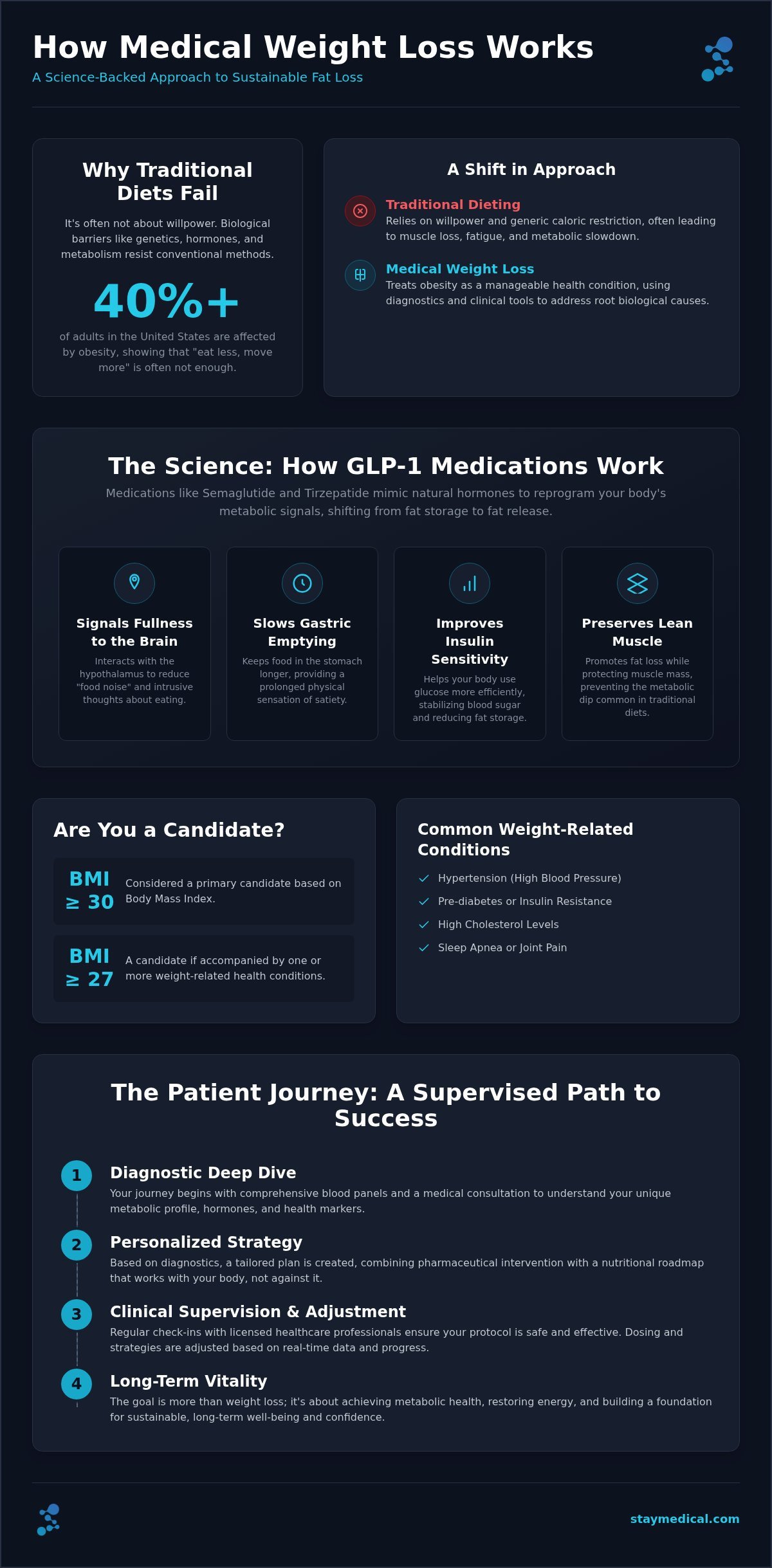
What if the reason you haven’t reached your weight goals isn’t a lack of willpower, but a biological barrier your body is hardwired to protect? With obesity now affecting over 40% of adults in the United States, it’s clear that traditional “eat less, move more” advice often falls short for the majority. You might find yourself wondering, how does medical weight loss work to break this cycle when other methods fail? Unlike standard diets that often trigger muscle loss and fatigue, a clinical approach focuses on the underlying hormonal and metabolic signals that dictate how your body stores and burns fat.
It’s completely normal to feel overwhelmed by conflicting nutritional advice or the fear of side effects from new medications. We understand that you’re looking for more than a temporary fix; you want a sustainable transformation that restores your vitality and confidence. In this guide, we’ll explore the science behind GLP-1 medications like semaglutide and tirzepatide, the importance of diagnostic-led personalization, and how professional oversight ensures you lose fat while preserving lean muscle. You’ll discover how a tailored medical strategy can finally turn metabolic resistance into measurable, long-term success.
Key Takeaways
- Learn why biological factors like genetics and hormones often override willpower, and how clinical interventions address these root causes.
- Understand how does medical weight loss work through GLP-1 medications that signal fullness to the brain and optimize your metabolic rate.
- Discover the vital role of professional medical supervision in managing side effects and ensuring your program is both safe and effective.
- Explore the diagnostic process, including comprehensive blood panels, that allows for a weight loss strategy tailored to your unique health profile.
- Find out how a boutique clinical environment in Brickell provides the compassionate, personalized support needed for long-term health and vitality.
Defining Medical Weight Loss: More Than Just a Prescription
Medical weight loss is a clinical discipline that treats obesity and weight gain as chronic, manageable health conditions rather than failures of willpower. While the fitness industry often focuses on aesthetic changes, a medical approach prioritizes metabolic health and internal balance. To truly understand how does medical weight loss work, we must look past the scale and into the complex internal chemistry that dictates how our bodies store and burn energy. It’s a journey that replaces the guesswork of fad diets with the precision of diagnostic science.
For many, the struggle to lose weight is rooted in biological barriers that exercise alone cannot overcome. Genetics, hormonal imbalances, and metabolic adaptation often work against your best efforts. Modern anti-obesity medications and clinical protocols are designed to address these specific hurdles. Unlike commercial weight loss programs that rely on generic meal replacements or self-guided apps, a medical program is integrated into your broader healthcare strategy. This ensures that every shift in your weight is monitored by professionals who understand your unique medical history and long-term health goals.
The Core Components of a Medical Program
A sophisticated weight loss program in Brickell is built on three pillars: clinical supervision, pharmaceutical innovation, and metabolic insight. At its heart, the process involves regular check-ins with licensed healthcare professionals who adjust your protocol based on real-time data. This includes the use of FDA-approved medications like Semaglutide and Tirzepatide, which help regulate appetite and insulin sensitivity. We combine these with comprehensive metabolic testing to create a nutritional roadmap that works with your body, not against it.
Who is a Candidate for Medical Weight Loss?
Determining candidacy involves more than just looking at a number on a scale. While a Body Mass Index (BMI) of 30 or higher is a common starting point, we also look for a BMI of 27 or higher when accompanied by weight-related health conditions. These conditions often include:
- Hypertension or high blood pressure
- Pre-diabetes or insulin resistance
- High cholesterol levels
- Sleep apnea or joint pain
By addressing weight through a primary care lens, we can often improve these chronic markers simultaneously. This makes medical weight management a powerful tool for preventive care, helping you avoid more serious health complications while restoring your vitality and confidence. For individuals who have developed spine-related issues due to weight strain, specialized resources like Minimally Invasive Neurosurgery of Texas offer valuable insights into how advanced spinal care and minimally invasive techniques can support recovery.
The Biological Mechanism: How Medical Interventions Shift Metabolism
Reprogramming the Hunger Signal
The hypothalamus serves as the command center for your appetite and energy expenditure. Medical interventions interact directly with this region to silence what many call “food noise,” which are those intrusive, constant thoughts about the next meal. By slowing down gastric emptying, medications like Semaglutide ensure that food stays in the stomach longer, providing a physical sense of satiety that lasts. This biological shift allows you to make intentional nutritional choices without the constant pressure of physiological hunger. It’s a method of reclaiming control over your impulses through science rather than just sheer effort.
Metabolic Optimization vs. Caloric Restriction
Traditional dieting often relies on extreme caloric deficits that can inadvertently trigger muscle wasting and a sluggish metabolism. In contrast, weight loss programs designed by medical experts prioritize the preservation of lean muscle mass. By targeting fat stores while maintaining protein synthesis, these programs ensure that your basal metabolic rate remains healthy even as you lose weight. This is critical for preventing the “yo-yo” effect common with commercial diets.
For many, the missing link in this optimization is hormonal balance. If your testosterone levels are depleted, your body may struggle to build muscle or burn fat efficiently regardless of your diet. Integrating testosterone replacement into a weight management strategy can provide the necessary foundation for vitality and strength. This holistic view of health is what makes a clinical approach so much more effective than a standard diet. If you’re ready to see how these mechanisms can work for your specific profile, our team in Brickell is here to guide your transition toward lasting wellness.
Safety and Supervision: The Advantage of Clinical Oversight
The rise of popular weight loss medications has led to a surge in online platforms offering quick prescriptions without meaningful patient interaction. While convenience is tempting, bypassing a physician’s care can be dangerous. Without a physical exam or a review of your medical history, you risk taking medications that might conflict with existing conditions or undiagnosed health issues. Real success in medically supervised weight loss depends on a clinician’s ability to monitor your body’s response in real time. This professional partnership ensures that your journey is as safe as it is effective, protecting your long-term health while you pursue your aesthetic and wellness goals.
A primary question for many is, how does medical weight loss work to keep side effects in check? The answer lies in proactive management. Symptoms like nausea, fatigue, or digestive changes are common when starting GLP-1 medications, but they don’t have to be a permanent part of your experience. A dedicated medical team uses your feedback to adjust your protocol immediately. This might involve changing the timing of your dose, suggesting specific nutritional tweaks, or prescribing supportive therapies. This level of care transforms a potentially stressful process into a well-managed clinical experience where you feel supported at every step.
Customized Dosing Protocols
Effective medical weight management is never a one-size-fits-all approach. We follow a “start low and slow” philosophy, known as titration, which allows your body to acclimate to the medication gradually. This minimizes discomfort and helps us find the lowest effective dose for your unique biology. During your visits, we monitor vital markers including blood pressure, heart rate, and kidney function. These regular check-ins allow us to make personalized adjustments based on how you feel and what your data says, ensuring your progress never comes at the expense of your safety.
Addressing Underlying Health Triggers
Weight gain is often a symptom of a deeper physiological imbalance. Our diagnostic-first approach utilizes comprehensive laboratory testing to screen for triggers that often go unnoticed, such as thyroid dysfunction, PCOS, or significant hormonal shifts. If we identify these barriers, we treat them alongside your weight loss program for better, faster results. We also prioritize your energy levels and nutritional status throughout the process. To combat the fatigue that sometimes accompanies metabolic shifts, we often integrate IV therapy to deliver essential hydration and micronutrients directly into your system. This holistic oversight ensures you don’t just lose weight, but that you feel vibrant and energized while doing so.
The Patient Journey: What to Expect During Your Program
Entering a professional weight loss program feels different because it’s built on a foundation of medical integrity. You aren’t just another patient; you’re an individual with a unique biological story. When people ask, how does medical weight loss work in a real-world setting, they’re often surprised by the depth of the initial assessment. We start with a comprehensive health history review that goes far beyond the scale, looking at your lifestyle, stress levels, and previous attempts at weight management. This ensures every recommendation we make is intentional and safe.
The process is methodical and purposeful, designed to move you toward your goals with confidence:
- Step 1: The Consultation. A deep dive into your medical background and wellness aspirations.
- Step 2: Diagnostic Testing. Utilizing precise laboratory testing to uncover hidden metabolic barriers.
- Step 3: The Roadmap. Designing a strategy that combines clinical interventions with personalized nutritional guidance.
- Step 4: Ongoing Support. Regular monitoring to ensure your safety, adjust dosages, and celebrate your milestones.
The Power of Diagnostic-First Care
We believe that effective treatment is impossible without accurate data. By analyzing your blood work for markers like fasting insulin, C-reactive protein, and lipid profiles, we identify why your body might be resisting fat loss. An annual physical exam is often the best starting point for this discovery. It allows us to address underlying inflammation or glucose issues that might otherwise sabotage your results. This diagnostic approach is central to how does medical weight loss work to deliver predictable, science-based outcomes that generic diets simply can’t match.
Long-Term Sustainability and Maintenance
True success is measured by where you are a year from now, not just a month from now. As you move from the initial loss phase into maintenance, we help you solidify the metabolic shifts you’ve achieved. This often involves the strategic use of IM injections to maintain optimal vitamin levels and energy during your transition. We focus on building a lifestyle that feels natural rather than restrictive, ensuring your results are as permanent as they are transformative.
Schedule your consultation at Stay Medical Clinic
Choosing Medical Weight Loss in Brickell: The Stay Medical Approach
Living and working in the heart of Brickell requires a level of energy and focus that can be difficult to maintain when your metabolic health is out of sync. At Stay Medical Clinic, we recognize that our neighbors in Miami’s financial district don’t just want to lose weight; they want to optimize their entire lives. While previous sections explored the biological mechanisms, understanding how does medical weight loss work within your specific lifestyle is the key to local, personalized care. Our approach is intentionally boutique, moving away from the crowded waiting rooms of traditional healthcare toward a space where your health goals are treated with the moral integrity and attention they deserve.
We’ve designed our clinic experience to respect your time. From efficient scheduling to a high-end environment, every detail is curated for the Miami professional. Our comprehensive wellness ecosystem allows you to address multiple facets of health in one location. For many men, this includes exploring TRT in Miami alongside their weight management protocol. By treating the body as a whole system, we act as a dedicated partner in your journey toward sustained energy and peak performance.
Your Next Steps to a Healthier Lifestyle
Preparing for your first visit is the beginning of your transformation. To make the most of your initial consultation, we recommend gathering a few key items:
- A list of current medications and supplements
- Recent blood work results if available from the last six months
- A brief summary of your previous weight loss attempts
- Specific questions about how does medical weight loss work for your unique biology
When you arrive at our Brickell clinic, you’ll find a team ready to listen. We aren’t here for a one-time fix; we’re here to provide the clinical expertise and empathetic support needed for a lifetime of health.
Your Path to Lasting Metabolic Health
Achieving a sustainable transformation requires shifting the focus from temporary restriction to permanent metabolic optimization. We’ve explored how does medical weight loss work by addressing the physiological triggers of hunger and insulin resistance through a diagnostic-led approach. By utilizing advanced medications like Semaglutide and Tirzepatide under the careful titration of experienced professionals, you can finally move past weight plateaus with confidence. This clinical intervention isn’t just about losing pounds; it’s about resetting your body’s internal chemistry for a healthier, more vibrant future.
At Stay Medical Clinic, we provide a boutique experience in the heart of Brickell that prioritizes your individual health profile. Our comprehensive oversight ensures that every step of your journey is safe, energized, and tailored to your specific needs. From detailed blood panels to ongoing lifestyle support, we treat you as a whole person rather than just a clinical case. You don’t have to navigate the complexities of metabolic health alone; you deserve a partner dedicated to your long-term vitality and personal success.
It’s time to reclaim your energy and rediscover a version of yourself that feels vibrant, strong, and fully in control of your health journey.
Frequently Asked Questions
Is medical weight loss better than traditional dieting?
It’s often more effective because it targets the underlying biological barriers that diets ignore. Traditional methods rely on willpower, which can’t always overcome hormonal resistance. When you consider how does medical weight loss work, it’s the integration of diagnostic data and clinical support that makes the difference. This approach helps prevent the metabolic slowdown and muscle loss often seen in self-guided dieting, leading to more sustainable and predictable outcomes.
How much weight can I expect to lose on a medical program?
Individual results vary, but clinical research offers promising data for those in supervised programs. For instance, studies on Tirzepatide have shown that patients can lose up to 22% of their body weight when the medication is combined with lifestyle changes. Understanding how does medical weight loss work involves recognizing that these results are achieved through metabolic reprogramming. Our team in Brickell monitors your progress to ensure you’re losing fat while maintaining vital lean muscle.
What are the most common medications used in medical weight loss?
We primarily utilize GLP-1 receptor agonists such as Semaglutide and Tirzepatide, which are at the forefront of modern metabolic medicine. There are currently nine FDA-approved medications for weight management, and we select the one that best fits your diagnostic profile. Whether you’re visiting us from Coral Gables or living in Brickell, our goal is to provide a pharmaceutical strategy that works in harmony with your body’s unique hormonal needs for the best results.
Are the results of medical weight loss permanent?
The results are designed to be lasting because we focus on shifting your metabolic set point. Unlike fad diets that lead to weight cycles, a clinical approach builds a foundation for permanent change. We provide the tools and coaching necessary to transition into a maintenance phase that feels natural and sustainable. Success is achieved when you combine medical support with the healthy habits we help you develop during your time at our Miami clinic.
Does insurance cover medically supervised weight loss programs?
Insurance coverage for weight management is highly dependent on your individual plan and employer. While some policies cover diagnostic laboratory testing and primary care visits, coverage for specific GLP-1 medications can be more complex. We encourage patients in Miami and Aventura to contact their insurance provider to discuss their benefits for medically supervised programs. Our clinic focuses on transparency, helping you understand your options for care while prioritizing your long-term health and vitality.
What is the difference between Semaglutide and Tirzepatide?
The primary difference lies in how they interact with your metabolic receptors. Semaglutide targets the GLP-1 receptor to improve satiety and slow digestion. Tirzepatide is a dual-agonist that targets both GLP-1 and GIP receptors, which can offer a more robust metabolic response for some individuals. During your consultation at Stay Medical, we analyze your blood work to determine which medication will be the most effective for your specific body chemistry and health goals.
Can I do medical weight loss if I have other health conditions?
Absolutely, as medical weight loss is often the most effective way to manage weight-related health issues. We frequently work with patients who have hypertension, PCOS, or pre-diabetes. Whether you are visiting from Doral or Brickell, we integrate your weight loss protocol with your existing medical needs. We use detailed diagnostics to ensure the program enhances your overall wellness, helping you improve your metabolic markers while safely reaching your target weight.
How long does a typical medical weight loss program last?
The duration of your program is tailored to your specific health profile and goals. Many patients experience initial shifts within the first month, but a comprehensive journey typically lasts six months or longer to reach a stable maintenance phase. We treat weight management as a chronic condition that requires ongoing attention rather than a temporary event. This ensures that you have the professional support needed to navigate every stage of your metabolic transformation safely.
Disclaimer
This content is for informational purposes only and does not replace evaluation, diagnosis, or treatment by a medical professional. Always consult a qualified healthcare provider for personalized care.